Inside the U.S. Air Force’s $240 Million Joint Strike Missile Deal for the F-35A Fleet

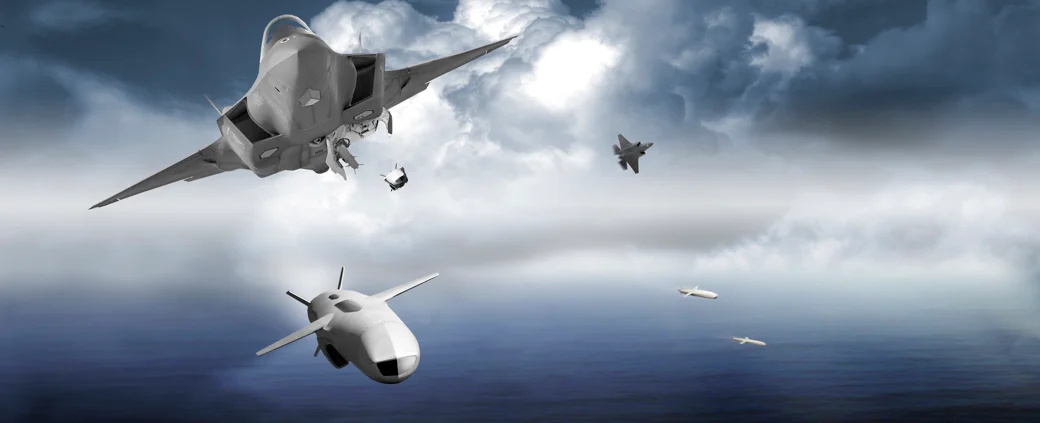
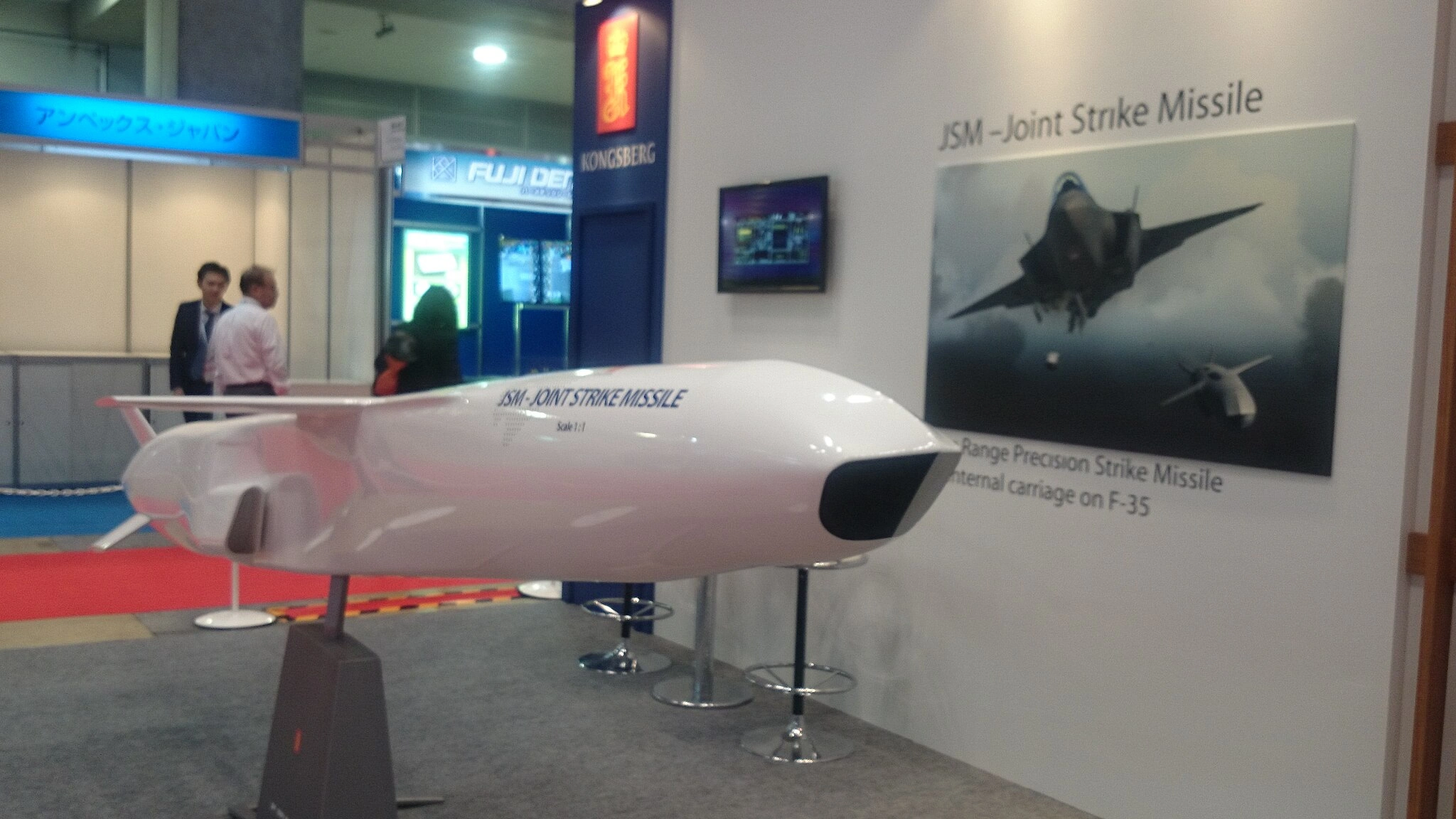
On 12th December 2025, The U.S. Air Force (USAF) has awarded a $240.9 million firm-fixed-price contract to Kongsberg Defence & Aerospace, of Kongsberg, Norway, for the production of Joint Strike Missiles (JSM) intended for integration on Lockheed Martin F-35 Lightning II fighter jets. Work on the contract will be performed at Kongsberg’s facilities in Norway. The award is the second lot production contract for JSMs following an earlier Lot 1 order, underlining the USAF’s continued investment in stand-off weapons for fifth-generation platforms.

This significant reinforcement of long-range precision strike capability for the U.S. military’s stealth fighter fleet is expected to sustain production through November 30, 2028. Under the terms of the contract, the USAF’s Air Force Life Cycle Management Center at Eglin Air Force Base, Florida will obligate funding drawn from both Fiscal Year 2024 and 2025 procurement appropriations to support production of missiles, containers, test hardware, and associated support equipment.

Photo: Konsberg

Joint Strike Missile (JSM) overview

Attribute Details
Missile name Joint Strike Missile (JSM)
Manufacturer Kongsberg Defence & Aerospace
Qualification & integration Fully qualified and integrated with funding support from the Royal Norwegian Air Force (RNoAF)
Technology lineage Derived from the Naval Strike Missile (NSM), leveraging more than 50 years of Kongsberg missile development experience
Contracting activity Air Force Life Cycle Management Center, Eglin AFB (Florida)
Design focus Optimized through operational analysis emphasizing survivability, lethality, and target selectivity
Missile role Long-range, precision air-launched strike weapon
Weapon integration Designed for internal carriage on F-35 Lightning II stealth fighters
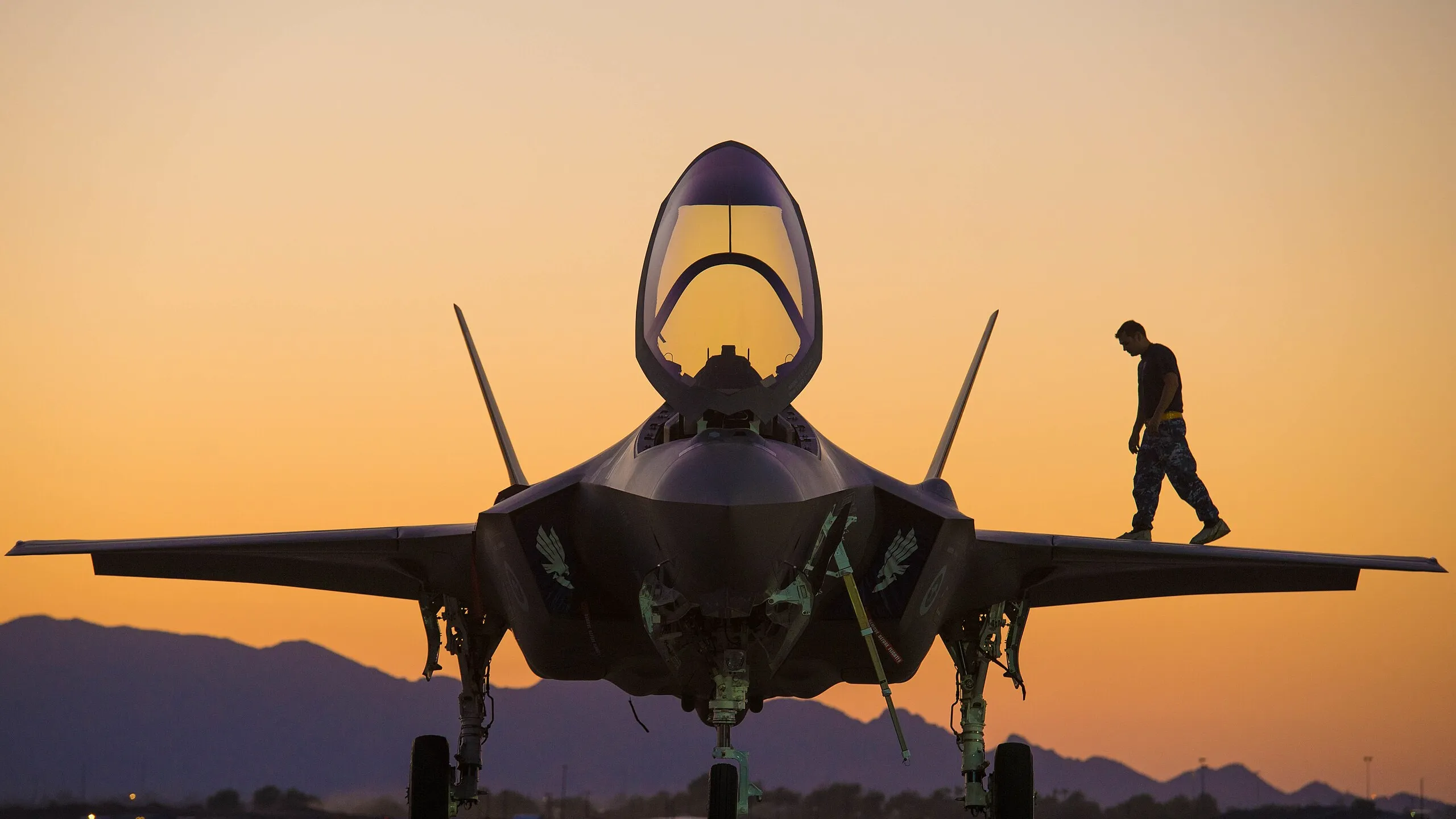
Photo: United States Air Force

Pilot Ejects As F-35 Crashes During Take-Off At Albuquerque International Airport

Strategic Importance of JSM for F-35

The Joint Strike Missile represents a pivotal upgrade to the strike capabilities of the F-35 Lightning II, particularly for missions requiring long-range engagement against high-value targets across maritime and land domains. Some of the features of the JSM include:

  • GPS guidance
  • Inertial navigation
  • Terrain-following flight
  • Imaging infrared seeker

According to Defence Blog, JSM is “intended to operate in contested environments where air defenses and electronic warfare systems are present“, and that the US pursuing this weapon us a “part of broader efforts to expand long-range strike options for fifth-generation fighters without relying solely on larger or external munitions“:

“The Joint Strike Missile is expected to complement other U.S. Air Force and Navy strike weapons by providing a survivable option for penetrating defended airspace. When carried internally by the F-35, the missile allows aircraft to strike targets from extended ranges while reducing exposure to enemy air defenses”.

Photo: Strak Jegan | Wikimedia Commons

JSM Missile Physical Characteristics

Parameter Specification
Speed High subsonic
Weight 416 kg (917 lb)
Length 4.00 m (156 in)
Range Greater than 350 km (189 nautical miles)

Unlike many external weapons, the JSM is optimized for internal carriage within the F-35’s weapons bay, enabling the aircraft to retain stealth characteristics while carrying potent standoff ordnance. This internal carriage capability is critical because reduced radar cross-section is central to the F-35’s design philosophy.

Traditional external stores degrade stealth performance, and therefore the integration of internally-carried precision weapons like JSM enhances strike reach without compromising survivability in contested airspace environments.

Photo: USAF

Background of the JSM program

The Joint Strike Missile originated from Kongsberg’s Naval Strike Missile (NSM) program, a long-range anti-ship weapon with proven maritime strike performance. Note that NSM is Royal Norwegian Navy’s frigates and coastal corvettes’ main weapons. According to Konsberg, some of the successfully demonstrated capabilities of NSM include the following:

  • Autonomous Target Recognition (ATR)
  • Missile approach from over land against targets close to shoreline
  • Precision land attack
  • Attack from the sea with target close to shoreline
  • Extreme maneuverability

Over time, Kongsberg engineers adapted the NSM’s proven guidance and flight control technologies to a larger air-launched configuration suited for fifth-generation fighters like the F-35. Let’s look at the specifications of the NSM:

Parameter Specification
Speed High subsonic
Weight 407 kg (897 lb)
Length 3.96 m (156 in)
Range Greater than 300 km (162 nautical miles)

The resulting JSM has advanced navigation capabilities, making it a strong match for integration on stealth aircraft seeking to expand deep-strike and anti-surface lethality. The NSM has “very high survivability against modern Air Defence systems“, and the following systems help achieve this:

  • Terrain following flight
  • Passive sensors
  • High agility with selectable end-game flight profiles
  • Very low signature
  • Extremely low sea skimming altitude

NSM’s development segued into JSM development which has also drawn international interest, with multiple allied nations selecting the missile to equip their own F-35 fleets. For example, Germany and Australia have pursued government-to-government acquisitions that mirror broader trends in allied precision strike modernization. [Note: Germany was the fifth nation to select JSM for its F-35 fleet]

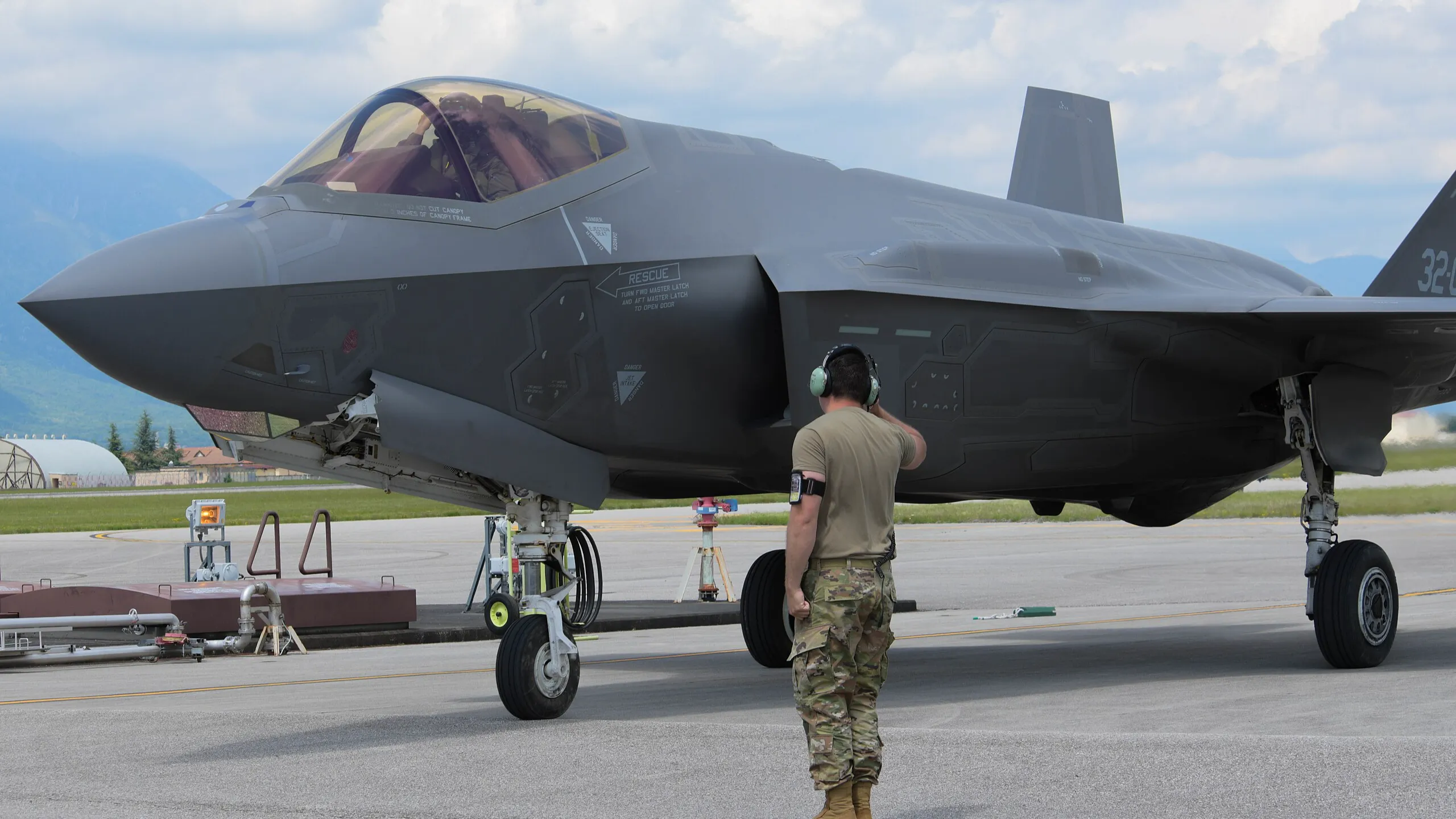
Photo: U.S. Air Force photo by Staff Sgt. Jensen Stidham | Wikimedia Commons

Legal and Procurement Framework of JSM for US Defense

Here’s U.S. Air Force Lot Two JSM Procurement and Funding Plan outlined by Army Recognition:

Parameter FY 2024 FY 2025
Quantity (All-Up Rounds) Up to 48 Up to 50
Related Support Equipment Included Included
Gross Weapon System Cost $161.011 million $165.909 million
Unit Cost per Missile ~$3.354 million ~$3.318 million
Developmental Test & Evaluation Sep 2025 Sep 2025
Operational Test & Evaluation May 2026 May 2026
Planned Initial Deliveries May 2026 March 2027
Notes Quantities and costs may vary; tied to network-enabled weapons integration on F-35A Quantities and costs may vary; tied to network-enabled weapons integration on F-35A
Photo: Konsberg

Similar Defense Procurement Cases

Below is a table comparing recent major U.S. Air Force or allied precision weapon procurement awards to contextualize the JSM contract:

Joint Strike Missile (JSM) Acquisition by F‑35 Operators

Country F‑35 Variant JSM Status Details / Quantity Source
Norway F‑35A Operational user Selected and receiving JSMs; first deliveries completed; JSM integrated as standard long‑range strike weapon Royal Norwegian Air Force received JSM in April 2025; JSM community includes Norway. Wikipedia+1
Japan F‑35A / F‑35B Active procurement Multiple orders placed since 2018; latest valued at NOK 1.9 billion for continued JSM deliveries Kongsberg JSM contracts with Japan; multiple follow‑on orders. kongsberg.com+1
Australia F‑35A Contracted Contract signed for JSM deliveries (initially ~NOK 1 billion); enhances strike capability Kongsberg to deliver JSM to Australia for F‑35A.
United States F‑35A / F‑35C Contracted / planned USAF signed contract actions for JSM delivery (initial lot ~$141 M); further contracts awarded (e.g., $240 M Lot 2) USAF JSM contracts and deliveries planned.
Germany F‑35A Approved/intended Government approved JSM procurement via Norway FMS framework; expected deliveries for Luftwaffe F‑35s Germany becomes fifth JSM user; Bundestag approval.
Belgium F‑35A Approved procurement Council approved JSM purchase as part of ammunition plan to arm F‑35A fleet Belgium approved JSM purchase linked to F‑35 expansion, reported Army Recognition
Finland F‑35A (planned) Under consideration JSM listed as under evaluation or consideration (no final contract as of available reports) JSM evaluation noted in Army Recognition summary.
Photo:U.S. Air Force photo by Airman 1st Class Brooke Keisler | WIkimedia Commons

Which Countries Have the Most F-35s?

Operational and Strategic Implications

The integration of JSM into the F-35A and potentially other F-35 variants carries far-reaching implications for U.S. and allied operational posture. The long-range standoff capability permits engagement of high-value targets while minimizing exposure to integrated air defense systems. JSM’s internal carriage means fighter squadrons can preserve low observability — a key enabler of modern fifth-generation air operations.

JSM’s survivability capabilities include the following:

  • Sensor approach: Uses passive sensors to minimize electromagnetic emissions and reduce detection risk

  • Flight profile: Operates at extremely low sea-skimming altitudes to enhance survivability against air defenses

  • Navigation: Employs terrain-following flight capability to mask the missile’s approach in complex environments

  • End-game performance: Features high agility with selectable terminal attack profiles to counter defensive systems

  • Mission precision: Delivers highly accurate designated time-on-target execution for coordinated strike operations

Defense analysts note that enhancing precision strike capacity serves deterrence objectives in contested environments, particularly in Indo-Pacific and European theaters where anti-access/area-denial (A2/AD) challenges are evolving rapidly.

Photo: VynedJ | Wikimedia Commons

JSM Target Selectivity Capabilities

Capability Area Key Features
Target detection Advanced target detection and identification systems
Autonomy Autonomous Target Recognition (ATR)
Discrimination Effective target discrimination in cluttered environments
Rules of engagement Fully compatible with ROE-based targeting constraints
Photo: Julian Herzog | Wikimedia Commons

All in All

As the F-35 fleet continues to expand and modernize, the integration of advanced strike munitions like JSM will remain central to future combat frameworks. After all. it has the following lethal capabilities:

Capability Area Key Features
Targeting accuracy Precise aimpoint engagement
Warhead effectiveness Optimized warhead effects for mission-specific targets
Damage control Built-in collateral damage mitigation mechanisms

Leave a Comment

Your email address will not be published. Required fields are marked *

Scroll to Top