Emirates (EK), which only a week ago added a fifth daily flight to Cairo, has announced that it will introduce a third daily flight between Dubai International Airport (DXB) and Nairobi’s Jomo Kenyatta International Airport (NBO) from 1 June 2017, marking a significant capacity expansion on one of its busiest African routes.
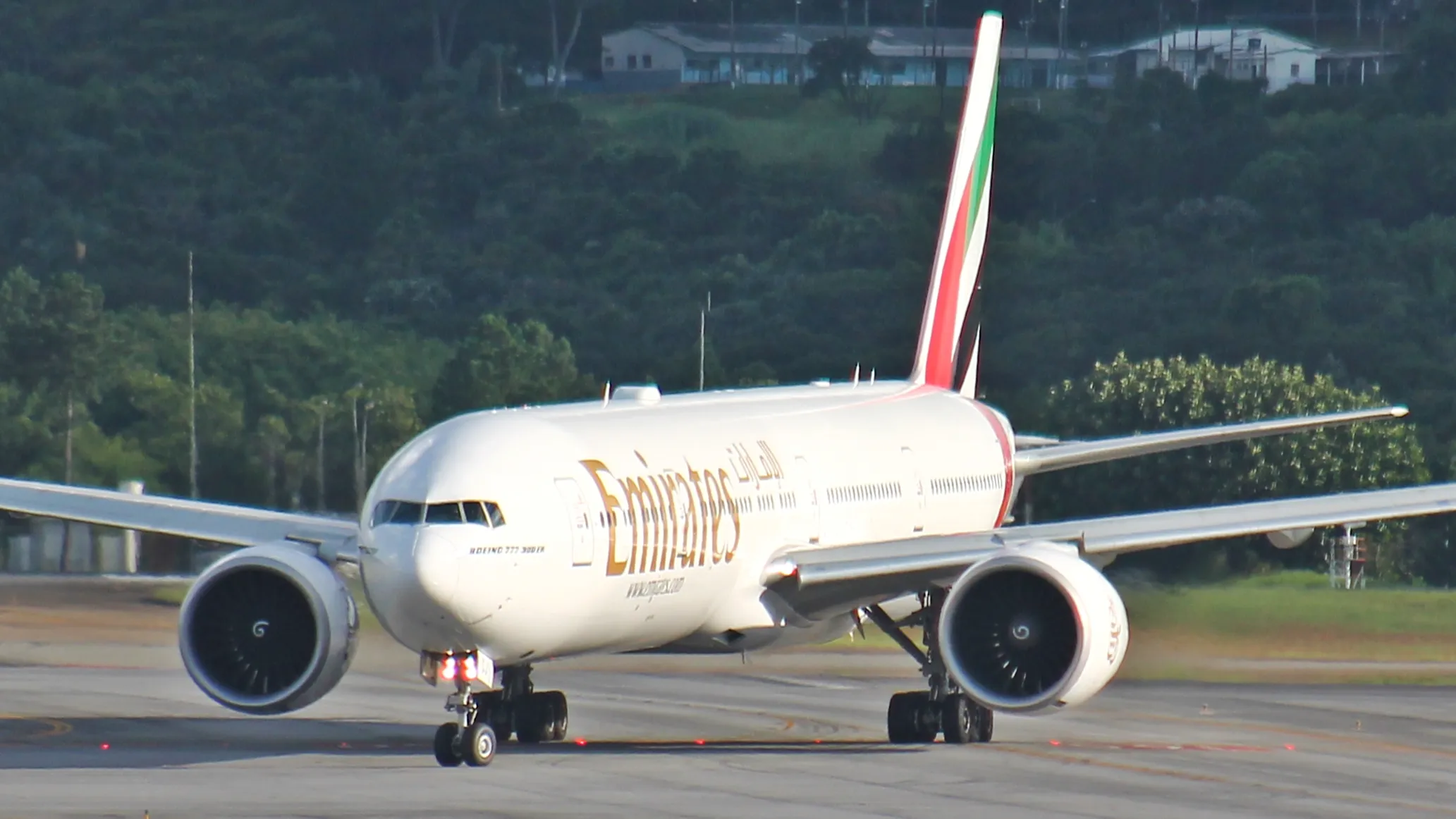
Emirates Airline Overview
| Category | Details |
|---|---|
| ICAO Code | UAE |
| Country | United Arab Emirates |
| Headquarters | Dubai, UAE |
| Primary Hub | Dubai International Airport (DXB) |
| Founded | 1985 |
| Parent Company | The Emirates Group |
| Ownership | Fully owned by the Government of Dubai |
| Fleet Size | ~270 aircraft (Airbus A380 & Boeing 777 family) |
| Widebody Fleet Only? | Yes — operates exclusively widebody aircraft |
| Destinations | 140+ destinations in 70+ countries |
| Key Aircraft Types | Airbus A380, Boeing 777-300ER, Boeing 777-200LR |
| Alliance Membership | None (operates independent partnerships & codeshares) |
| Frequent Flyer Program | Emirates Skywards |
| Subsidiaries | Emirates SkyCargo, Emirates Executive |
| Notable Strengths | Long-haul global network, premium cabins, Dubai hub connectivity |

Emirates Expands to Oslo with Airbus A350’s Premium Economy Experience
Emirates’ Expansion to Boosting Nairobi-Dubai Connectivity
Emirates, the busiest carrier in the Middle East. attributes the new flight to strong demand and the strategic importance of Nairobi, the capital of Kenya, as a commercial and tourism hub. By operating a third daily service, the airline aims to offer greater flexibility to passengers arriving from Europe, India and elsewhere, allowing them to connect more conveniently via its Dubai hub. In the carrier’s own words, the flight is set to “enhance two-way connectivity with key European destinations, including the UK, France, Norway and Italy, as well as the US“.
Emirates’ move falls in line with Kenya’s tourism goals, which aims to bring 5 million international tourists in this nation that is named after its highest mountain, Mount Kenya.
Emirates had announced such an expansion of its operations in Nairobi in 2017 too, and this additional service was hoped would bring almost 5,000 additional seats (in Economy Class) onto the city pair each week. This would have brought the inventory just under 15,000 seats, but in a move that was a surprise to Emirates itself, the Kenyan government stalled the move, saying that it intended to review the bilateral air service agreement between the two nations, reported Aviation Week.
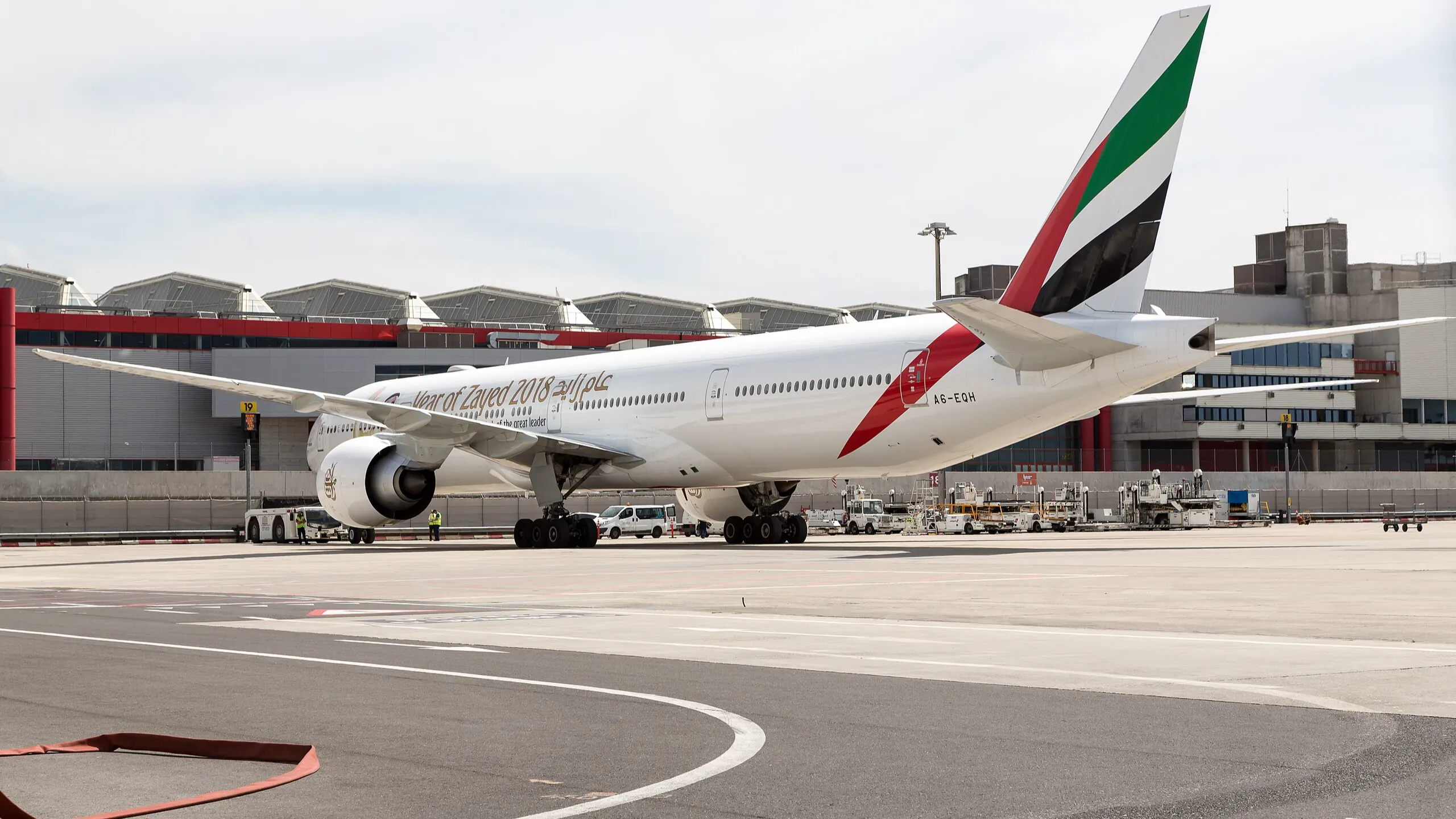
Emirates’ Nairobi Expansion: Aircraft and Scheduling Details
The following table gives us an idea about the Emirates’ schedule into Nairobi.
| Category | EK717 | EK718 |
|---|---|---|
| Route | Dubai (DXB) → Nairobi (NBO) | Nairobi (NBO) → Dubai (DXB) |
| Departure Time | 00:55 hrs | 06:50 hrs |
| Arrival Time | 05:05 hrs | 12:50 hrs |
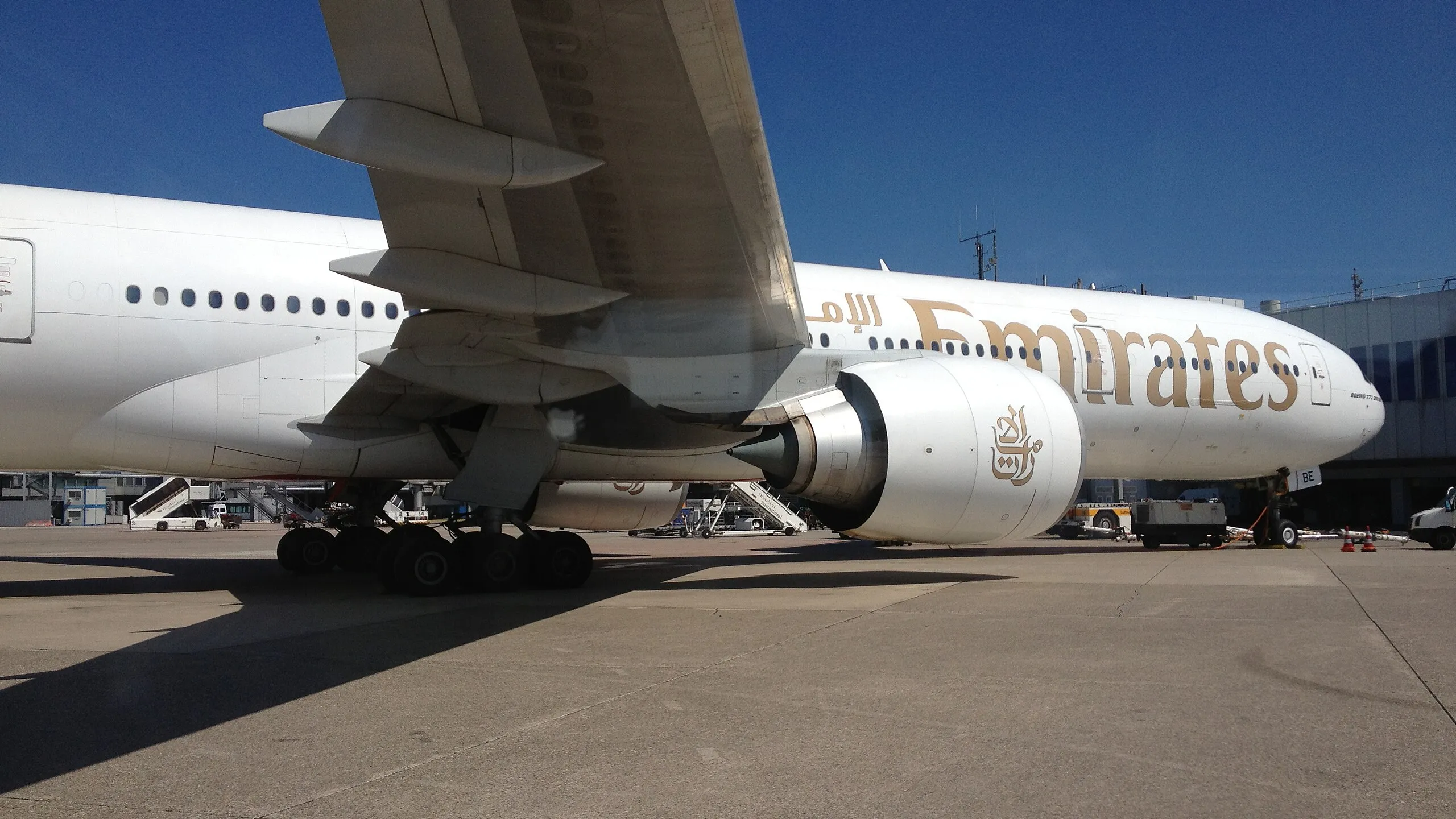
Emirates, which won Forbes’ Best International Airline Award, operates a total of 269 aircraft, has only one aircraft type of the Boeing family: the Boeing 777. And it is this aircraft it is set to deploy on the route. Emirates’ Boeing 777-300ER configure for three-classes is set to operate on the DXB-NBO route. Emirates has 118 Boeing 777-300ERs and these average 12.4 years.
According to data from planespotters.net, Emirates’ youngest Boeing 777-300ER is registered A6-EQP and was delivered to the carrier in November 2018. The oldest of these is registered A6-EBM and the carrier received it in 2006.
Emirates says that the 777-300ER it will operate on this route will have:
- Eight First Class suites
- 42 lie-flat Business seats
- 304 Economy seats
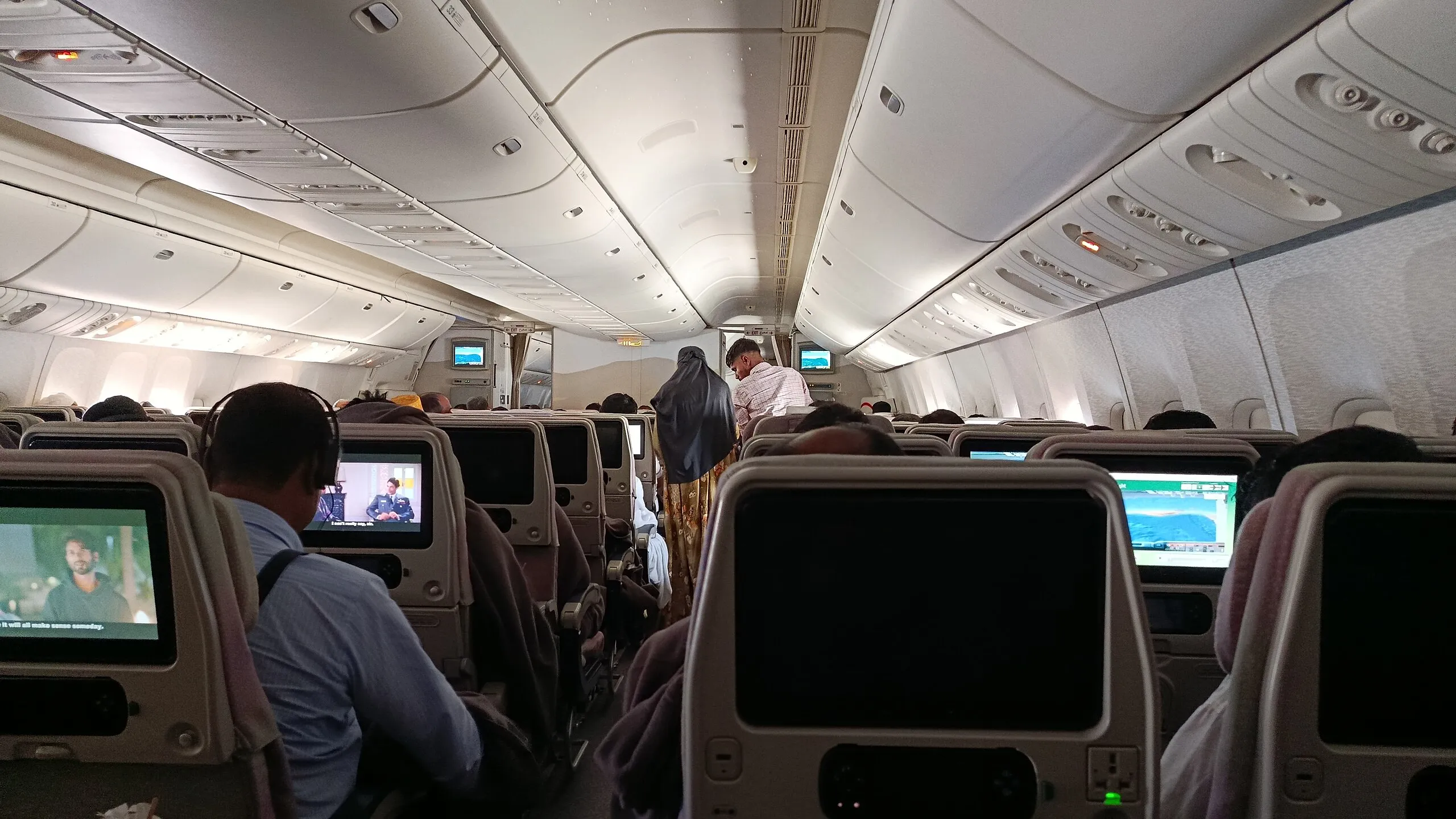
Let’s look at the details of this configuration in the following table:
Emirates 777-300ER Aircraft Cabin Configuration
| Feature | First Class | Business Class | Economy Class |
|---|---|---|---|
| Layout & Seats | 6 suites in 1‑1‑1 layout; full-height screens and folding privacy doors; middle suites with virtual windows | 42 Collins Aerospace seats in 2‑3‑2 layout; privacy screen and low-level nook for shoes/items | 306 seats in 3‑4‑3 layout; 4-way adjustable headrest, retractable bi-fold table |
| Bed / Recline | Converts to 79″ fully-flat bed | Converts to 69″ fully-flat bed | Recline 6″ |
| Seat Width | 26″ | 20.5″ (between armrests) | 17.1″ (between armrests) |
| Pitch / Space | N/A | Row pitch 60″ | Row pitch 32″ |
| Entertainment | Static 32″ HD touchscreen | Static 23″ HD touchscreen | Pivoting 13.3″ HD touchscreen |
| Power Options | Universal 110V AC + 2 USB-A | Universal 110V AC + USB-A | Universal 110V AC (shared) + USB-A |
| Additional Features | Full-height wardrobe, floor locker, small storage nooks, front cabinet with soft drinks, fold-up makeup mirror, snack basket | Bi-fold table, privacy screen, shoe/personal item nook | Adjustable headrest, bi-fold table |
Beyond passenger demand, the larger 777-300ER brings additional belly-hold capacity — about 16 tons of extra cargo capacity weekly, supporting Kenya’s export industries (flowers, fresh produce) and key imports like pharmaceuticals.
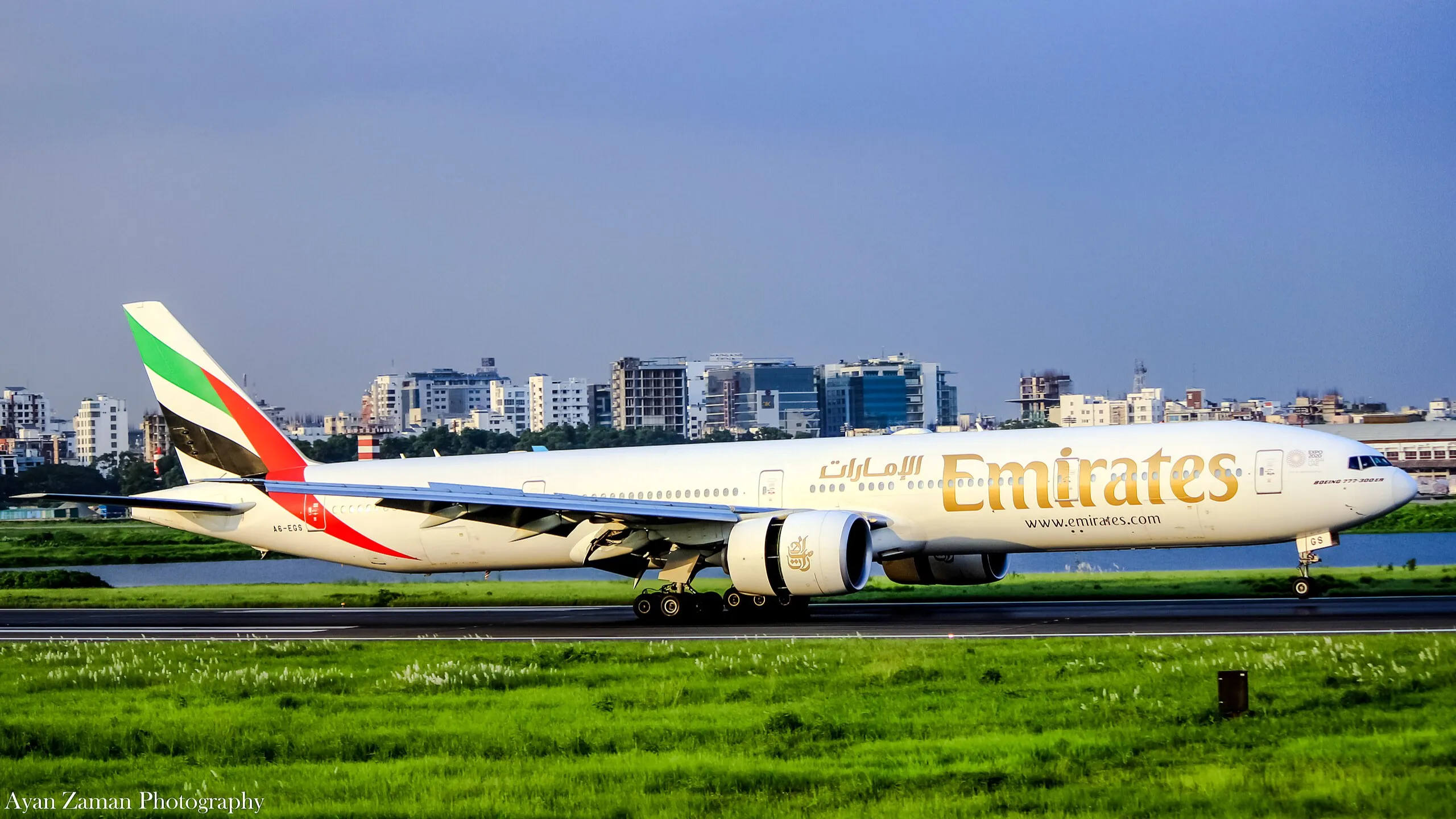
Emirates turbulence reduction technologies: SkyPath, Lido mPilot, and IATA integration
Evolution of Emirates’ Expansion in Kenya
Emirates, which is the first began services to Nairobi in October 1995, and over the decades the route has become one of its most significant in Africa. In recent years, Emirates has also deepened its partnership with Kenya Airways (KQ) via an interline agreement signed in 2023, enabling seamless connections across Emirates’ and KQ’s networks. Since this agreement between the two airlines, over 31,000 passengers had benefited, with a near 50/50 split of bookings.
According to Business Traveler, by the time this agreement was signed, the carrier had transported over five million years throughout the years, and that the partnership would lead to “customers of both airlines can access new destinations on each other’s network with a single itinerary“
“By way of the partnership, Emirates passengers can fly to 28 destinations on the Kenya Airways network using Nairobi as the gateway to destinations such as Nampula, Bangui, Bujumbara, Kigali, Dzaoudzi, Lubumbashi, Kinshasa, Kilimanjaro, Juba, and Zanzibar, among other regional points across Africa. Likewise, Kenya Airways passengers travelling from Nairobi and Mombasa can access the Emirates’ network and seamlessly connect through Dubai to 23 destinations including Singapore, Tokyo, Bangkok, Ahmedabad, Beirut, Hong Kong, Jakarta, and Seoul, among others.”
On 29 October 2025, Emirates celebrated 30 years of operations to Nairobi, having carried more than 6.6 million passengers on over 34,250 flights. AeroTime also reported that Emirates’ operation in Nairobi also had economic benefits for Kenya:
-
In 2024, Emirates SkyCargo carried more than 16,000 tons of fresh-cut flowers from Kenyan farms to florists around the world.
-
The airline has provided significant employment opportunities for Kenyans, both locally and internationally:
-
About 50 people are employed at Emirates’ Nairobi office
-
Over 1,100 Kenyans work across the Emirates Group globally in areas such as human resources, sales, marketing, and flight operations
-
-
Among these employees, 254 Kenyans serve as cabin crew within Emirates’ multinational team, while 41 work as pilots
In 2024, Nairobi opened itself up to Africa’s first Emirates World Store. The store which is at the Cube building on Riverside Drive showcases Emirates’ redesigned retail concept, featuring knowledgeable travel consultants, interactive displays, and a premium shopping experience. Emirates remains the only airline providing first class seating on flights to and from Kenya.
Regulatory Hurdles: Initial Resistance from Kenya
As we touched upon previously, Emirates’ announcement of the third flight to Nairobi isn’t the first one. the Kenyan government initially blocked the third daily flight in early 2017. Moreover, the flight numbers that Emirates announced in 2017 was the same as it announced today. Emirates had hoped that it would operate Boeing 777-300ER on this route back then.
It was also hoped that the additional 16 tonnes of cargo capacity of the ER would help transport Kenya’s main exports such as fresh fruits, flowers, and vegetables, whilst also help in import of pharmaceuticals, garments, etc.
However, Transport Principal Secretary Irungu Nyakera informed Emirates that previously granted approval was revoked, citing a planned review of the bilateral air services agreement between Kenya and the UAE. Forbes suggested that the move might have been put into place by the Kenyan government to “restrict Gulf airlines’ access in order to protect their own flag carriers“:
” The paper said the decision was taken following informal discussions between the authorities in Kenya and the UAE, and that Kenya now intends to review the bilateral air service agreement between the two countries. At Emirates, where profits slumped alarmingly last year, there has also been talk of job cuts and efficiency savings. The Dubai-based airline reported an AED786m ($214m) profit for the six months to 30 September 2016, marking a 75% year-on-year fall. “
Nyakera was quoted in Aviation Week as having said in the letter: “Our earlier approval for flight EK717/718 is subsequently withdrawn…The republic of Kenya is unable to grant a third daily passenger frequency to Emirates Airline before the review.” This ban of the third flight was then temporarily lifted, as the carrier was allowed to operate between the two cities between July and October 2017.

Emirates Flight EK9788 Crashes, Two Security Staff Dead in Hong Kong
All in All
Emirates’ Country Manager for Kenya, Christophe Leloup, had said that since launch of the flights between Nairobi and Dubai, the Kenyan capital had been “the most consistently busy destinations on our African network, not just with international tourists but with corporate travellers connecting with one of the continent’s major economic hubs“:
“Over the last three decades, we have steadily and strategically expanded our operations both in the skies and on the ground to provide our renowned world-class experience in Kenya. We are proud to play a key role in Kenya’s aviation, tourism and trade journey and remain committed to the destination for the decades to come.”
According to TravelNews.co.uk, Emirates is “the only airline serving Kenya with private, enclosed First Class cabins“. The Dubai based carrier also offers “one of the most generous baggage allowances on the market“:
- Two bags at 23KG per passenger in Economy Class
- Two bags at 32KG each in First and Business Class
Kenya’s trade, economy, tourism are likely to foster with Emirates’ introduction of its third flight to Nairobi, but such was the excitement almost a decade ago too.

.jpg)
.jpg)


