A Frontier passenger flying out of Harry Reid International Airport (LAS) had his boarding pass rejected at the gate even as his wife’s pass scanned successfully. According to 9News, it took roughly 45 minutes before a Frontier supervisor told him the airline had changed to a smaller aircraft, cutting the flight’s capacity to 180 seats for 186 booked passengers.
Frontier told local station KHOU that delays earlier in the day prompted the aircraft change, and that gate agents at LAS had to deny boarding to some passengers and rebook them because the replacement plane held fewer seats. The airline said its records showed some passengers volunteered to give up their seats before others were involuntarily bumped. Frontier reportedly offered the affected passenger a $250 flight voucher.
The Regulatory Distinction
Federal rules treat aircraft-related bumping differently from a standard oversale. Under 14 C.F.R. § 250.5, passengers involuntarily denied boarding on a qualifying oversold domestic flight are generally entitled to compensation: nothing if substitute transportation arrives within one hour of the original schedule, 200% of the one-way fare (capped at $1,075) for a one-to-two-hour delay, and 400% of the fare (capped at $2,150) for longer delays.
A separate provision, 14 C.F.R. § 250.6(b), exempts airlines from that payout when a passenger cannot be accommodated because the carrier substituted an aircraft with fewer seats “when required by operational or safety reasons“. According to Simple Flying, the Department of Transportation still counts these passengers as involuntarily denied boarding in its statistics, even though they are not owed mandatory compensation.
William McGee, a retired FAA-licensed aircraft dispatcher and consumer advocate, said the case illustrates a gap in the rules. He told KHOU that loopholes exist in this area, and that airlines are still required to seek volunteers before bumping passengers and that clearer communication and compensation should apply even when an aircraft swap causes the disruption.
Where the Rule Gets Complicated
The exception is intended for cases where an aircraft swap, not overbooking, causes the shortfall. But the two can overlap. If a flight already has more confirmed passengers than its original aircraft holds, and the airline then substitutes an even smaller plane, some portion of the resulting denied boardings stems from the original overbooking and the rest from the swap — while both portions can potentially be classified under the same operational exception.
For example: a flight with 190 confirmed passengers booked onto a 186-seat aircraft is already 4 passengers over capacity. Replacing that aircraft with a 180-seat plane raises the shortfall to 10 passengers, 6 of whom are short a seat specifically because of the smaller aircraft. Under current DOT rules, airlines are not required to separately compensate the 4 passengers affected by the original overbooking once an aircraft substitution is involved.
Frontier’s 2025 Figures
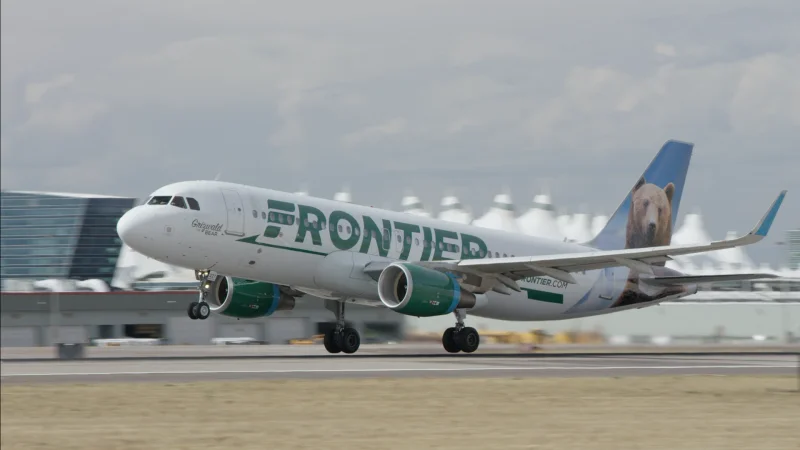
DOT’s 2025 Air Travel Consumer Report shows Frontier reported 8,087 involuntary denied boardings out of about 32.3 million passenger boardings, a rate of 2.51 per 10,000 passengers — the highest among reporting carriers and about nine times the industry average of 0.28 per 10,000.
Of those 8,087 cases, 3,760 qualified for mandatory federal compensation, while 4,327 — about 54% — were classified under the aircraft-substitution exception, meaning Frontier was not required to pay them. Frontier accounted for roughly 63% of all passengers industry-wide who were classified under that same exception in 2025.
The figures do not establish that Frontier deliberately used aircraft substitutions to avoid paying compensation. Maintaining a spare aircraft specifically to trigger the exception would carry its own costs, since idle aircraft generate no revenue. But the concentration of cases under a single exception, at a rate well above the rest of the industry, is drawing attention to how individual substitutions are being justified.
A Precedent at JetBlue
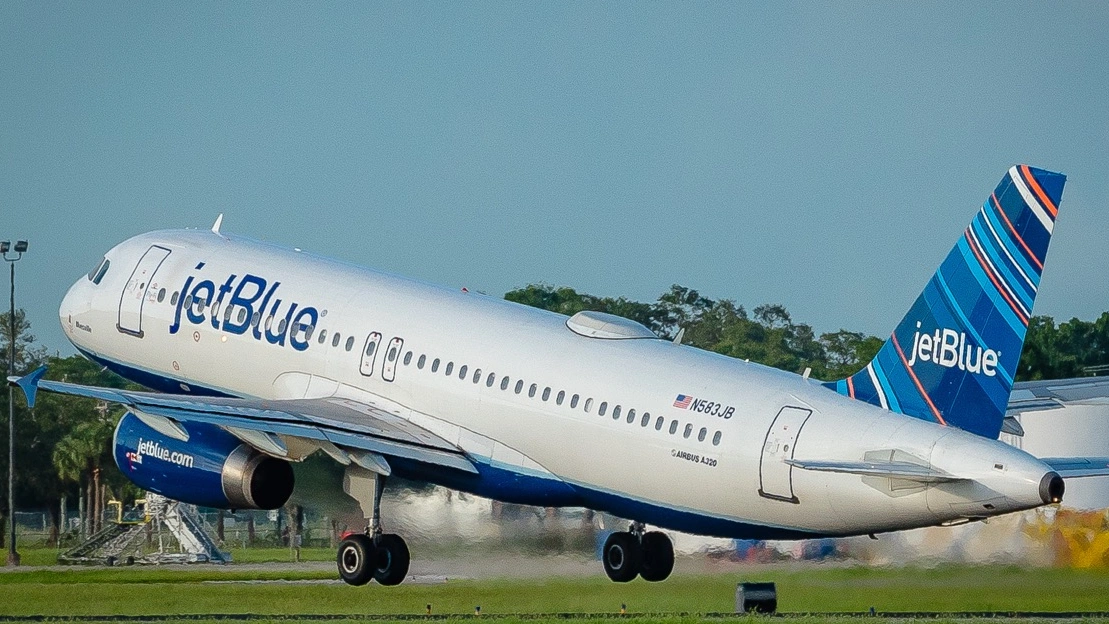
Frontier is not the first carrier to report heavy use of the aircraft-substitution exception. In 2016, JetBlue reported 3,176 involuntary denied boardings, of which 3,121 — or 98.3% — were attributed to smaller-aircraft substitutions, largely tied to downgrading Airbus A321s to A320s.
That pattern has since reversed. In 2025, JetBlue reported 195 total involuntary denied boardings, with 171 eligible for compensation and 24, or about 12%, attributed to aircraft substitutions. JetBlue now overbooks flights, a departure from its earlier practice, making its historical figures a point of reference rather than a direct comparison.
Past Enforcement Action
Frontier has been penalized before over its denied-boarding practices. In 2017, the DOT fined the airline $400,000 after finding it had failed to properly solicit volunteers before involuntarily bumping passengers, failed to provide required written notices of passenger rights, and failed to pay compensation in a timely manner. The order also found Frontier had failed to post required disclosures about overbooking and boarding procedures at certain airports.
That enforcement action predates the 2025 data and does not establish wrongdoing in the current cases. It does show that compliance with denied-boarding procedures has been a recurring issue for the airline.
Vouchers vs. Federal Compensation
Frontier has said that all involuntarily bumped passengers received some form of compensation, whether cash or a voucher. That statement does not mean every passenger received the compensation required under federal rules. A goodwill voucher, such as the $250 offered in the Las Vegas case, is discretionary.
Compensation under 14 C.F.R. § 250.5 is mandatory for passengers who qualify. For those denied boarding because of an aircraft substitution, the determining factor is whether DOT’s exception applies — not whether the airline offered something in its place.