

Just because an aircraft takes off (or lands in) from a certain stretch of land, one cannot deem the area an ‘airport’. After all, aircraft are capable of landing on a highway too. During an emergency, a Piper PA-28 landed on a New York City interstate highway, reported the BBC. Various nations have flight test centers, where newly developed aircraft – whether it be civil or military – are tested but such expanses aren’t dubbed to be airports either. According to Ernest J. Gentle’s Aviation and Space Dictionary, an airport is defined as:
“An area of land or water that is used or intended to be used for the landing and takeoff of aircraft, and includes its buildings and facilities, if any. The term airport is normally used to describe U.S. civil facilities whereas airfield is a U.S. military facility. Aerodrome is an international term.”
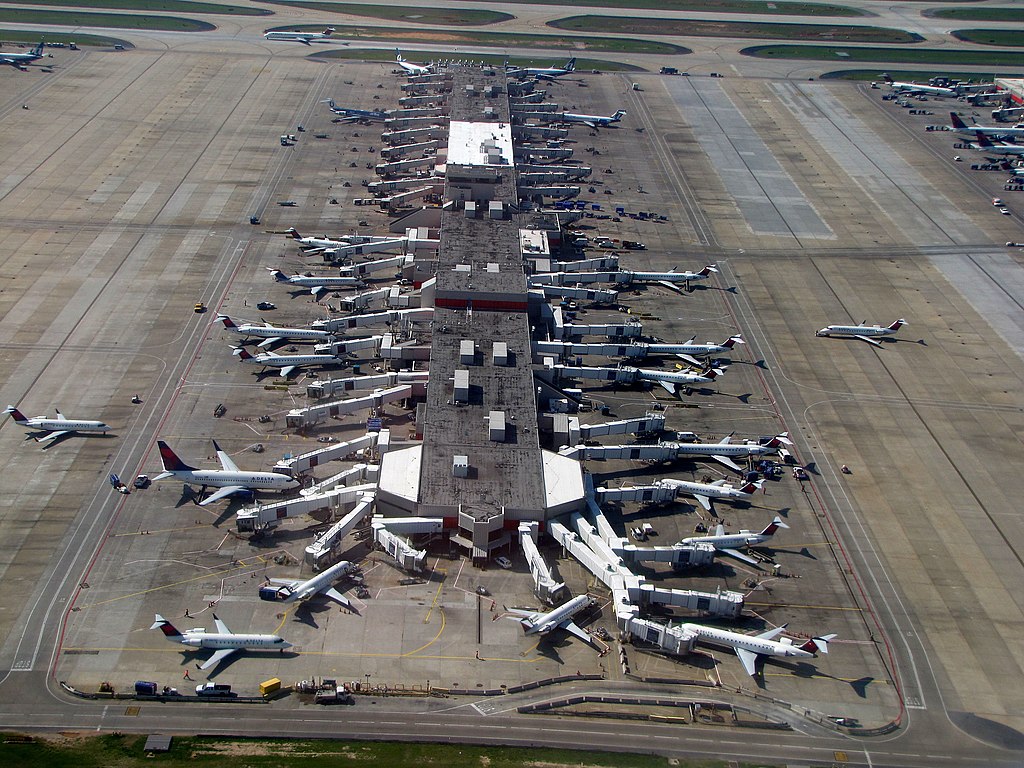
Image: redlegsfan21 | Wikimedia Commons
If an aircraft devoid of passengers takes off and lands from one field and lands on another then, the “field” cannot be termed “airport/ aerodrome/ airstrip”. If this were not the case, the first ever flight (conducted by the Wright Brothers) would have meant that Kill Devil Hills – the place in North Carolina where they took the first heavier-than-air machine to the skies – was the oldest airport. But this is not the case, despite their aircraft flying for 12 seconds above the sand dunes of Kitty Hawk.
Though on 14 May 1908, Wright brothers made history again with the world’s first two passenger airplane flights, Kill Devil Hills is still not considered as the oldest airport in the world. It’s dubbed as “Field of firsts”, or the First Flight Airport (FAA). The Field of Firsts was established in 1928 but the date of establishment of the oldest airport in the world is 1909.
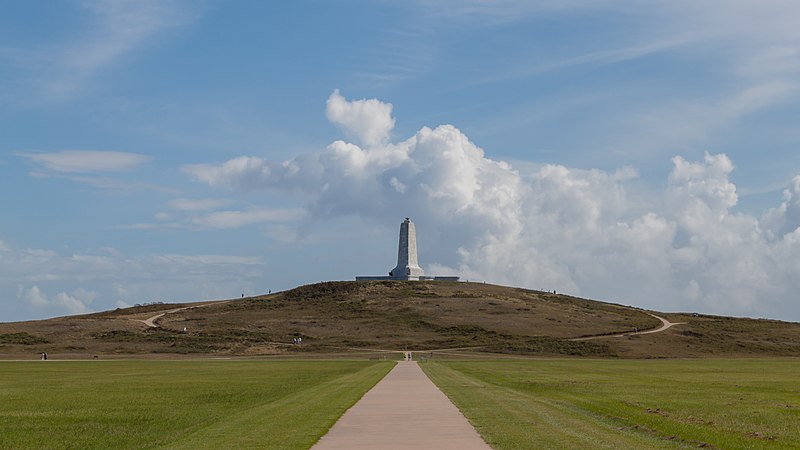
The area near which the Wright Brothers took to the skies has now turned into ” Wright Brothers National Memorial” near Kitty Hawk
Photo: Kip Robinson | Wikimedia Commons
In this article, we will take a look at the oldest airports in the US. Despite these being the oldest airports in the US (and one of them also being the oldest airport int he world), none of these airports fall in the list of the busiest airports in the world.
5. Chicago Midway Airport (MDW)
Owner: The City of Chicago
Established in: 1927
Hub for: Southwest Airlines (operates 229 daily flights- more than any other U.S. airport that Southwest flies from.)
Airport type: Public
Airport property
Location: Chicago’s Southwest Side between 55th and 63rd Streets and Cicero and Central Avenues
Area coverage: 640 acres (approximately)
Chicago Midway International Airport (MDW) is the second- largest airport in Chicago, consisting of 1 terminal with 3 concourses. There are 43 aircraft gates among which three gates serve as inbound international passengers. Midway became home to 15 scheduled airlines by 1950.
The Chicago Department of Aviation (CDA) manages MDW. Commissioner Jamie L. Rhee has been managing this airport and also been serving in it over the course of 29 years by being in multiple positions.
| 4 runways | Length (meter) | Width (meter) | Type | Condition | Light intensity |
| 13R/31L | 1,176 | 18 | Concrete | Excellent | Medium |
| 13C/31C | 1,988 | 46 | Concrete | Good | medium |
| 4R/22L | 1,964 | 46 | Asphalt /concrete/grooved | Excellent | High |
| 4L/22R | 1,679 | 46 | Asphalt | Good | Medium |
How was the airport named?
The Chicago Midway Airport was renamed Midway in honor of the hard fought Battle of Midway in the Pacific during World War II.

Photo: Ken Lund | Wikimedia Commons
4. Long Beach Airport (LGB)
Owner and operator: The City of Long Beach
Established in: 1924
Airport type: Public
Airport property
Location: City of Long Beach, California
Area coverage: 1,166 acres
Long Beach Airport (LGB) has 11 gates with a single terminal. The intuitive layout makes the navigating operation easier in this airport and the presence of three baggage claim areas enhances the overall travel experience, making it easy for passengers to retrieve their luggage quickly. It offers service to 24 nonstop destinations around the nation.
Cynthia Guidry is the director of this airport. She was honored by The Conference of Minority Transportation Officials (COMOTO) during the national organization’s 12th annual “Women Who Move the Nation” award ceremony in 2023. The honor was bestowed upon her for her efforts to leading the airport through COVID -19, alongside overseeing “several major developments as part of LGB’s ongoing $110 million multi-year, Phase II – Terminal Area Improvement Program”
| 3Runways
Type: Asphalt |
Length (meter) | Width (meter) | Used by | Light intensity |
| 12/30 | 3,048 | 61 | Passenger Airlines and cargo services | High (Edge lighting) |
| 8L/26R | 1,887 | 46 | Commercial and General Aviation (GA) | Medium |
| 8R/26L | 1,194 | 30 | GA | High |
How was the airport named?
Long Beach Airport is known as Daugherty Field. It is because former Army Air corps flight instructor Earl Daugherty started a 20- acre flight training field. Also, Daugherty was a plane builder and “the greatest stunt pilot” of his time.
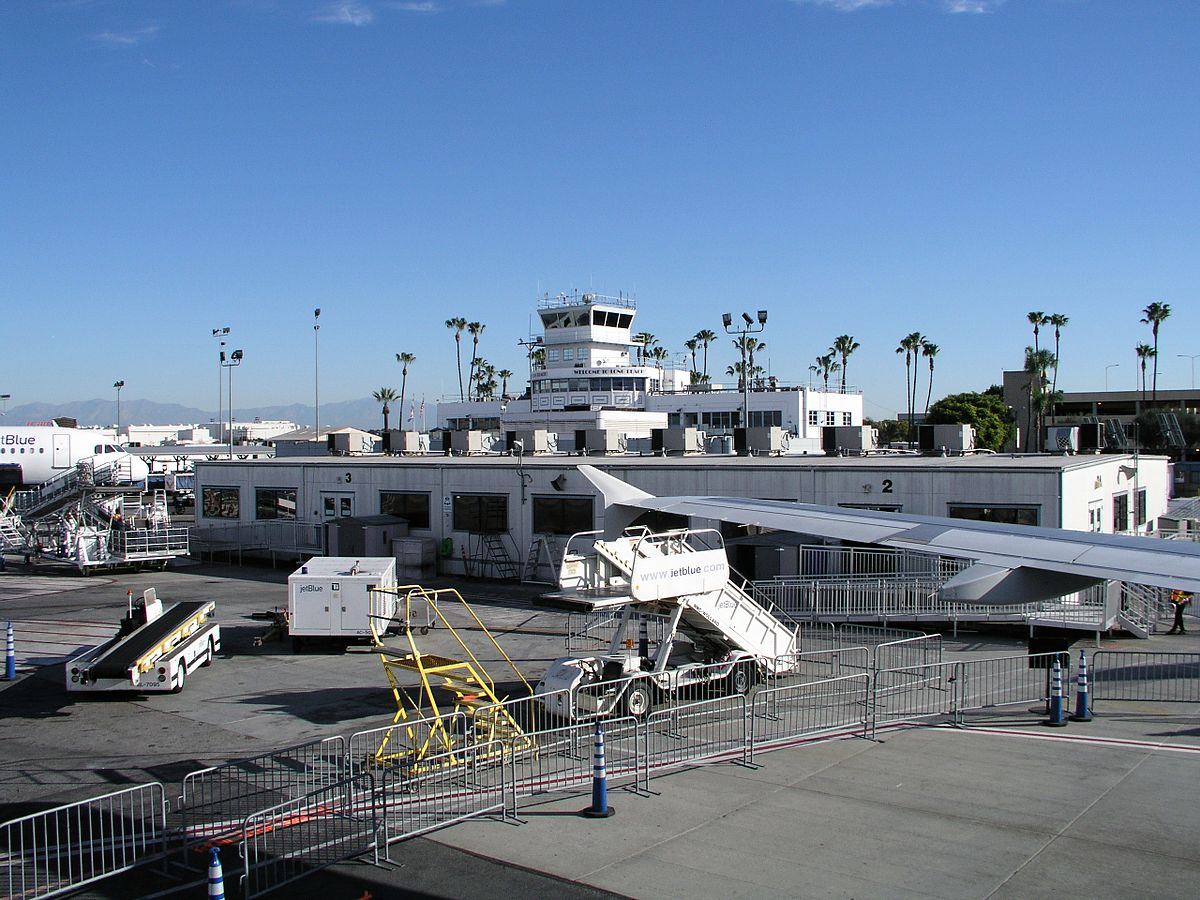
Photo: Merikamp | Wikimedia Commons
3. Minneapolis Saint Paul International Airport (MSP)
Owner: The Metropolitan Airports Commission (MAC)
Established in: 1920 (104 years ago)
Airport type: Joint Civil-military public international airport
Hub for: Delta Airlines (2nd largest hub)
Notable operator:
- Sun Country Airlines (hometown carrier)
Sun Country Airlines. Photo: Wikimedia Commons

Photo: Cory W. Watts | Wikimedia Commons
Airport property
Location: Minnesota
Area coverage: 3,400 (approx.)
Terminal buildings: 2 (Terminal 1 and Terminal 2)
Minneapolis Saint Paul International Airport offers non-stop flights to 114 domestic and 20 international markets. Minneapolis Saint Paul International Airport boasts two terminals and four runways. Metropolitan Airports Commission is the owner and operator of Minneapolis Saint Paul International Airport. Brian Ryks is the CEO and Executive Director of the Minneapolis Airport Commission.
| 4 Runways Type: concrete | Length (meter) | Width (meter) | Light intensity | Purpose |
| 4/22 | 3,355 | 46 | Medium | A longer runway for takeoff and landing |
| 12R/30L | 3,048 | 61 | A PAPI system | Peak traffic periods and when flight factors promote a north flow |
| 12L/30R | 2,499 | 46 | Medium | For arrivals and departures |
| 17/35 | 2,438 | 46 | Centerpoint lights and a PAPI system | Departures to the south to augment flow of air traffic |
Note: PAPI = Precision Approach Path Indicator
- Runways 30L and 30R (parallel runways): first priority for arrivals since aircrafts approach MSP from the southwest over industrial use areas.
- Runways 12 L and 12R: lowest priority for arrivals from the northwest since aircraft approach MSP over densely- populated residential areas.

Photo: Michael Barera | Wikimedia Commons
2. Stinson Municipal Airport (SSF)
Owner: The City of San Antonio
Established: 1915
Airport type: Private and corporate travel/ General aviation
Airport property
Location: seven miles south of downtown San Antonio in Bexar County, Texas
Area coverage: 500 acres of farmland
Terminals: One (historic 1930s era bulding renovated in 2006-2008)
The City of San Antonio is the operator of Stinson Municipal Airport. It was established by the Stinson family of aviation pioneers. It is funded by the City of San Antonio and Texas Department of Transportation. Until the late 1920s and early 1930s, Stinson Municipal Airport was used by barnstormers and experimental pilots. A major capital project to expand the terminal was completed in 2008.
| 2 runways Type: Paved /Asphalt | Length | Width | Light intensity (runway edge light) | Purpose |
| 09/27 | 1,524 | 30 | Medium | Aircraft takeoff and landing |
| 14/32 | 1,258 | 30 | Medium | Improves aircraft circulation |
Updates of Stinson Municipal Airport:
Since Stinson Municipal Airport serves as a backup for San Antonio International Airport, in March 2024, Ron Nirenberg, mayor of San Antonio, Texas in an announcement hinted about how the airport is likely to grow in size in next few years:
“ San Antonio International Airport is in the midst of a very historic time, this is our time…By mid 2028, you’ll be walking in a brand new terminal with up to 17 additional international gates and this means greater connectivity for our region spurring jobs, international mobility, economic development and strategic growth.”
In the same event, director of SAT, Jesus Saenz Jr. added that both SAT and SSF are worthy of making an impression on international level.
1. College Park Airport (ICAO: KCGS, IATA and FAA LID: CGS)
Owner: Maryland-National Capital Park & Planning Commission
Established in: 1909
Airport type: Public
Status: Operational
Airport property
Location: College Park, Maryland
Area coverage: 70 acres of land
Maryland-National Capital Park & Planning Commission is the operator of the oldest airport in the US – the College Park Airport. It was established by the United States Army Signal Corps. Initially, it was built to serve as a training location for Wilbur Wright to instruct two military officers to fly in the government’s first airplane. Leo Sommer is the Airport manager and Drew Myers is the Assistant Airport Manager at CGS, Maryland.
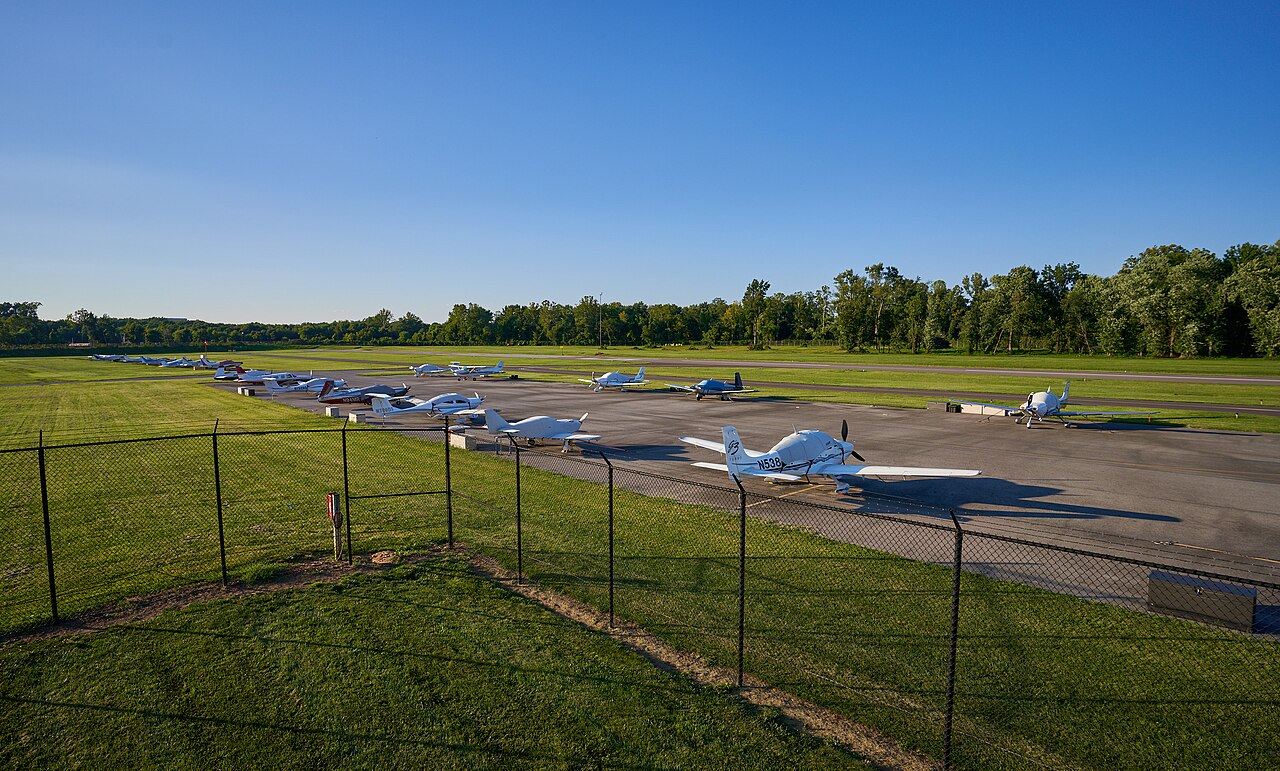
Photo: Black Tupelo | Wikimedia Commons
| Runway | Length | Width | Type | Condition | Light intensity |
| 15/33 | 908 m | 18 m | Asphalt | Good | Medium |
.jpg)

.jpg)


One response to “5 Oldest Airports in the US”
[…] Airports in the US have also accelerated their efforts to create an inclusive travel environment for air travel. According to the FAA, the airline providing assistance to a passenger who is not independently mobile because of a disability “must not leave the passenger unattended for more than 30 minutes“. There are plenty of other measures that the US government has taken into stride, too. Among the many ways in which U.S airports are adapting to cater to travelers with accessibility requirements, here are the top five. […]