Wizz Air (W6), the Budapest-headquartered ultra-low-cost carrier (ULCC) that serves approximately 950 routes across Europe and beyond, announced on 8 June 2026 that it has signed an agreement with SpaceX’s Starlink to deploy fleet-wide satellite Wi-Fi connectivity across all its aircraft, with the rollout scheduled to begin in 2027, as the airline described itself as the “first European ultra-low-cost carrier” to commit to the satellite-based service, AeroTime reported. The announcement marks a notable strategic inflection for a segment of the airline industry that has historically deprioritised inflight connectivity as incompatible with its ultra-lean cost architecture.
The agreement arrives at a moment of deliberate brand repositioning for Wizz Air. The carrier launched its “Customer First Compass” transformation framework in April 2025, backed by an investment commitment of €14 billion over three years, with the four stated pillars of Product, Price, Service, and Communication. The Starlink partnership represents the most headline-grabbing product announcement to emerge from that framework since its inception and extends a global wave of Starlink aviation deals that now spans legacy carriers, full-service groups, and — for the first time in Europe — a ULCC.
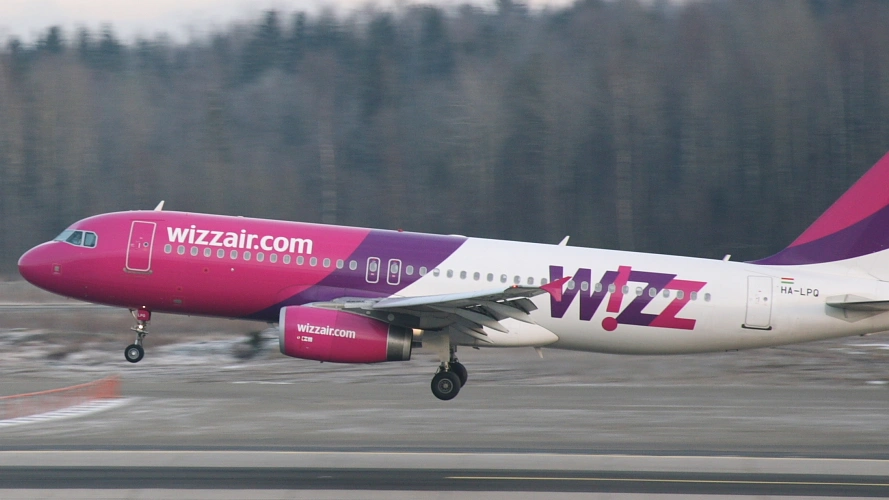
The Scope of Wizz Air’s Starlink Commitment
The announcement, made on 8 June 2026, confirmed that all Wizz Air aircraft will eventually be equipped with Starlink, providing what the carrier described as a “consistent onboard experience” regardless of route or destination. According to AertoTime, the rollout is scheduled to begin in 2027, though neither Wizz Air nor SpaceX disclosed specific timelines for completing fleet-wide installation, the number of aircraft to be initially equipped, or the financial terms of the agreement.
Wizz Air Chief Commercial Officer Ian Malin framed the deal in explicit terms of democratisation. “Ultra-low-cost travel has always been about making opportunities accessible to more people,” he said in the airline’s announcement:
“In 2027, we’re taking that philosophy into the space era. Our customers shouldn’t have to choose between affordable fares and reliable internet onboard to stay connected to the people, work, and moments that matter most. We’re proud to lead that change by collaborating with Starlink to bring maximum benefit to Wizz Air!”
Jason Fritch, Vice President of Starlink Enterprise Sales at SpaceX, confirmed the significance of the partnership from the technology side. “We’re thrilled to bring Starlink onboard Wizz Air and transform the travel experience for millions of its customers,” he said:
“Keeping passengers and crew seamlessly connected at 30,000 feet is exactly what this technology was built to do. We look forward to delivering reliable, high-speed internet from departure to arrival.”

Why ULCCs Have Resisted Inflight Wi-Fi Until Now
The decision by Wizz Air to commit to Starlink is commercially counterintuitive in a narrow sense. Ultra-low-cost carriers have traditionally viewed inflight connectivity as a cost-driver incompatible with their per-seat cost disciplines. As recently as March 2026, only 43 percent of low-cost airlines offered inflight Wi-Fi, compared to 89 percent of legacy carriers. The expense of installing and operating onboard connectivity systems, including hardware acquisition, certification, maintenance, and ongoing satellite service fees, has kept most ULCCs on the sidelines of a market that legacy operators entered years ago.
Starlink’s aviation business plan starts at approximately $2,000 per month per aircraft, a figure that must be offset against either passenger charging for the service or ancillary revenue generated through its availability. Wizz Air has not yet disclosed its pricing model for the onboard Wi-Fi — whether it will be free to all passengers, charged as an ancillary add-on, or offered within a loyalty or subscription framework — a decision with material implications for whether the investment anchors new revenue or functions purely as a service differentiator.

Wizz Air’s Broader Transformation
The Starlink announcement is not an isolated product decision. It sits within a broader and deliberate strategy to redefine what passengers should expect from a ULCC. The Customer First Compass framework, launched in April 2025 with a €14 billion, three-year investment commitment, rests on four pillars — Product, Price, Service, and Communication — and was explicitly framed as a response to the reputational damage Wizz Air sustained during the post-pandemic operational disruptions.
At an event marking the framework’s first anniversary in April 2026, Ian Malin stated that Wizz Air had achieved a 10 percent improvement in overall customer satisfaction and a 99.5 percent flight completion rate, while operating 7 percent more flights than in 2024. The carrier carried 68.6 million passengers in 2025 and is targeting 80 million in 2026, supported by a peak operational capability of up to 1,200 flights per day. With 40 percent of tickets available for less than €40, Wizz Air is keen to demonstrate that its cost leadership is not synonymous with inferior service.



