This is How 70 United Airlines Frequent Flyers Completed an Epic 7-Hub Marathon in a Single Day

On Saturday, June 6, 2026, approximately 70 ardent United Airlines (UA) loyalists — drawn from the highest echelons of the carrier’s MileagePlus program — undertook one of commercial aviation’s most audacious community challenges: the “UA 7 Hub Run,” a self-organized race to touch down at all seven of United’s continental United States hub airports within a single calendar day. The participants flew 3,788 miles across six consecutive flights, departing Newark Liberty International Airport (EWR), Newark, New Jersey at 6:00 a.m. and arriving at San Francisco International Airport (SFO), San Francisco, California at 11:18 p.m. — with just 42 minutes to spare before midnight.

The 2026 edition of the run marked the event’s second consecutive year, and it was anything but serene. A maintenance-induced delay of over two hours on the second leg, from Washington Dulles International Airport (IAD) to Chicago O’Hare International Airport (ORD), very nearly derailed the entire undertaking within hours of departure, Paddle Your Own Kanoo flagged. What saved the group from premature failure was a combination of fortuitous cascading delays, the airline’s proprietary AI-driven ConnectionSaver technology, and — by all accounts — a genuine willingness on United’s part to keep its most valuable customers’ ambitious plans intact.
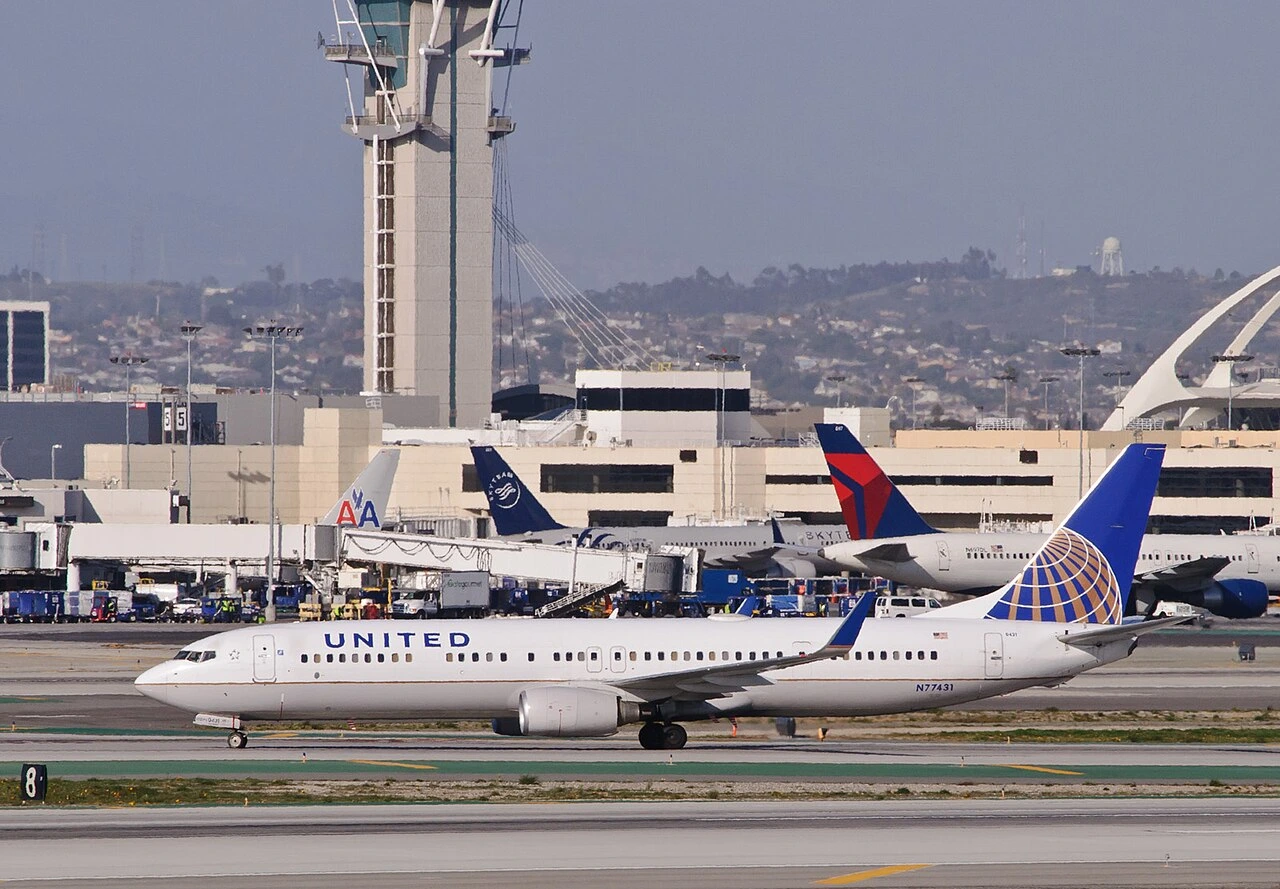
Photo: InSapphoWeTrust | Wikimedia Commons

UA 7: Seven Hubs, Six Flights, One Punishing Day

The UA 7 Hub Run is a same-day mileage run that visits all seven United Airlines hubs in a single day — seven hubs, six flights. It starts at a hub, so there is no seventh boarding. The complete routing flown on June 6 was as follows:

  • UA504 — Newark Liberty International Airport (EWR) → Washington Dulles International Airport (IAD) | Departs 6:00 a.m., arrives 7:22 a.m.
  • UA1775 — Washington Dulles (IAD) → Chicago O’Hare International Airport (ORD) | Departs 8:15 a.m., arrives 9:36 a.m.
  • UA723 — Chicago O’Hare (ORD) → George Bush Intercontinental Airport (IAH), Houston | Departs 10:30 a.m., arrives 1:26 p.m.
  • UA1246 — George Bush Intercontinental (IAH) → Denver International Airport (DEN) | Departs 3:00 p.m., arrives 4:44 p.m.
  • UA2240 — Denver International (DEN) → Los Angeles International Airport (LAX) | Departs 6:05 p.m., arrives 7:40 p.m.
  • UA2056 — Los Angeles International (LAX) → San Francisco International (SFO) | Departs 9:34 p.m., arrives 11:02 p.m.
As you would expect, those are all legal connections, though the itinerary leaves little room for things to go wrong, especially early in the day. The planned schedule afforded a minimum connecting window of roughly one hour at each hub.

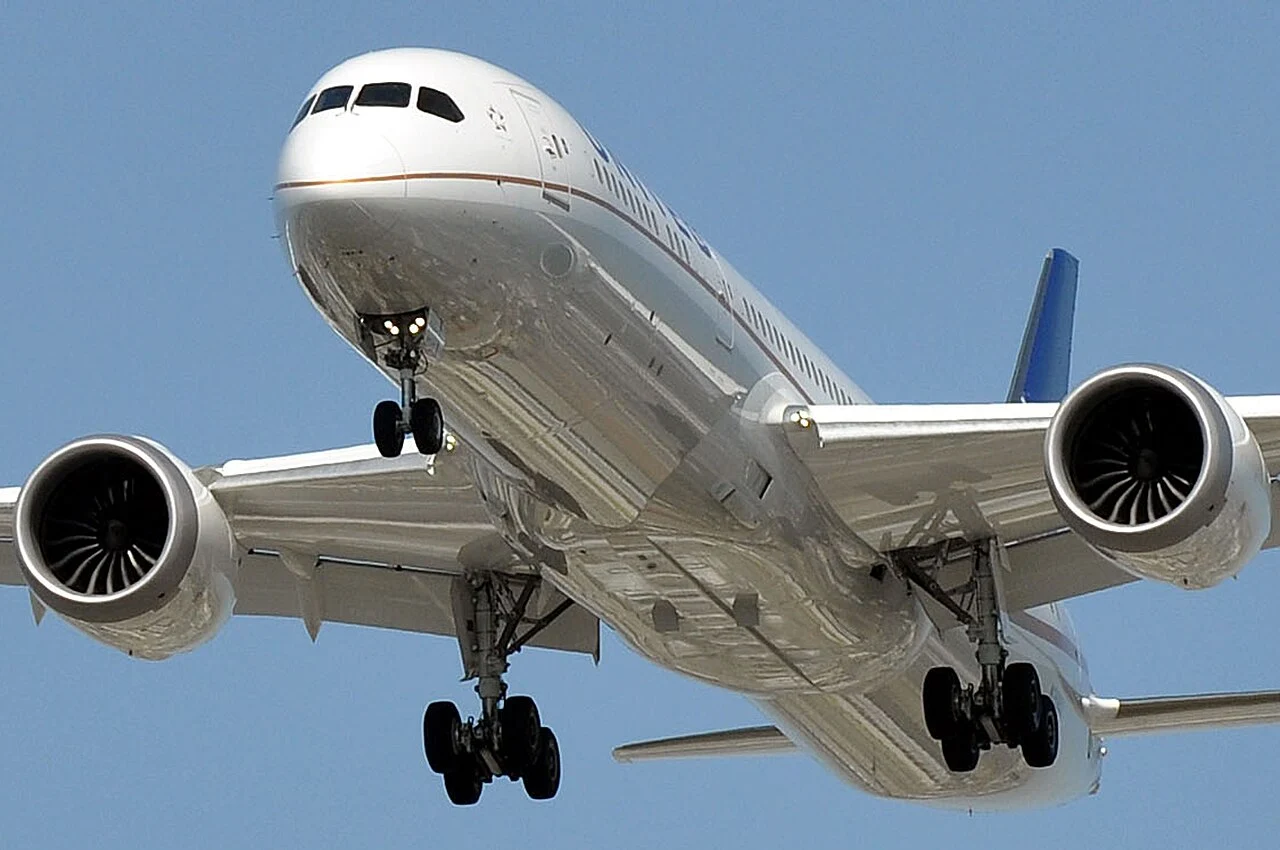
Photo: Eril Salard | Wikimedia Commons

Delays Led to A Chain of Near-Misses

The marathon began in Newark at 6:00 a.m. on Saturday, with an early morning flight to Washington Dulles. The frequent flyers then hoped to have an hour transit in Dulles to connect onto a flight to Chicago O’Hare, but this is where their plan quickly started to unfold.

The flight from Dulles to Chicago O’Hare was delayed by more than two hours and did not arrive at the gate until 11:17 a.m. — nearly an hour after their connecting flight to their next hub, Houston, was meant to have departed. According to reports from the event’s dedicated tracking website, ua7hub.run, the delay originated from a brakes-related maintenance issue on the aircraft operating the IAD–ORD segment.

United did not want these passengers to miss their connections, so United ended up holding the flight from Chicago to Houston for well over two hours, so that passengers could make their connection. The collective delay across all six flights ultimately totalled approximately eight hours, though the hub runners themselves arrived at SFO only around 16 minutes behind the original schedule, given that time was incrementally recovered on several legs.

The first flight from Newark to Washington departed and arrived early, so things were off to a great start. In the end, the last flight, from Los Angeles to San Francisco, ended up being delayed by around 30 minutes. The group cleared SFO’s gate at 11:18 p.m. — 42 minutes before midnight — completing the challenge with the narrowest of margins.

The event’s organizers maintained a live tracking website documenting each flight’s status in granular detail, providing real-time transparency to participants and aviation observers alike.
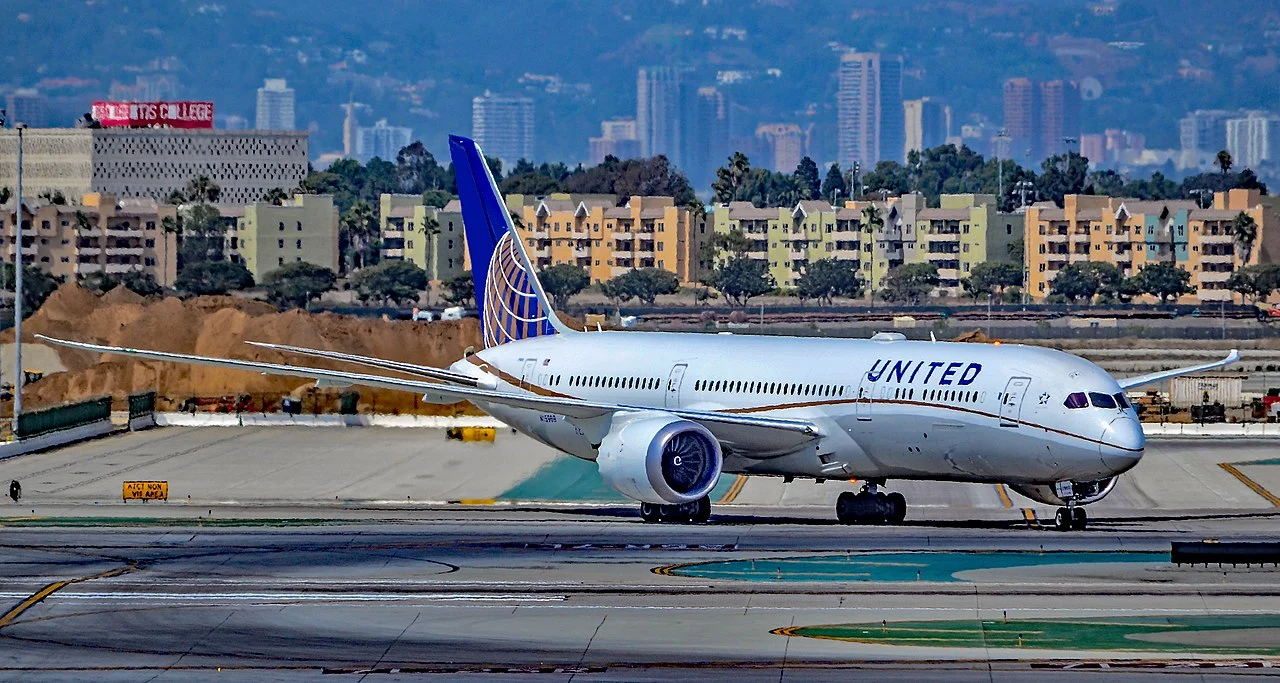
Photo: Tomas Del Coro | Wikimedia Commons

Who Are the Hub Runners? An Elite Cohort of MileagePlus Loyalists

The UA 7 Hub Run is an annual event that challenges participants to fly through every United hub within one calendar day. While not officially organized by United Airlines, the carrier has embraced the event, which has quickly become a favorite among aviation enthusiasts and elite MileagePlus members.

The event was organized by Carl Brothers, a United Million Miler, who organized the inaugural run as a “farewell lap” around the United States in anticipation of his four-million-mile flight. Brothers passed the four-million-mile mark on a flight from San Francisco (SFO) to Sydney on June 23, 2025, earning lifetime Global Services status for himself and a companion. The 2026 iteration of the run is therefore the second in what appears to be an annual tradition.

The participants were largely high-value customers, with a disproportionate number of passengers being Global Services and Premier 1K members. Furthermore, they were traveling as a group of 70, so they probably made up close to half of the passenger numbers on some of these flights.

To contextualize the tier these passengers occupied: Premier 1K is the highest status that most people can earn with United Airlines. In 2026, Premier 1K can be achieved with 60 Premier Qualifying Flights and 22,000 Premier Qualifying Points, or with 28,000 Premier Qualifying Points. Global Services, however, sits above even this.
United Global Services is an invitation-only elite status given to some of United’s most elite and profitable customers. The invite criteria are not public, but these members are typically high spenders with United, with estimates suggesting Global Services members spend upwards of $50,000 on airfare with United each year.

The motivations for participating varied across the cohort. Some participants sought to accumulate Premier Qualifying Points before the year-end threshold. Others joined for the community experience itself. The Hub Run Facebook group is where you get:

  • flight updates
  • hotel and dinner coordination
  • planning for future runs
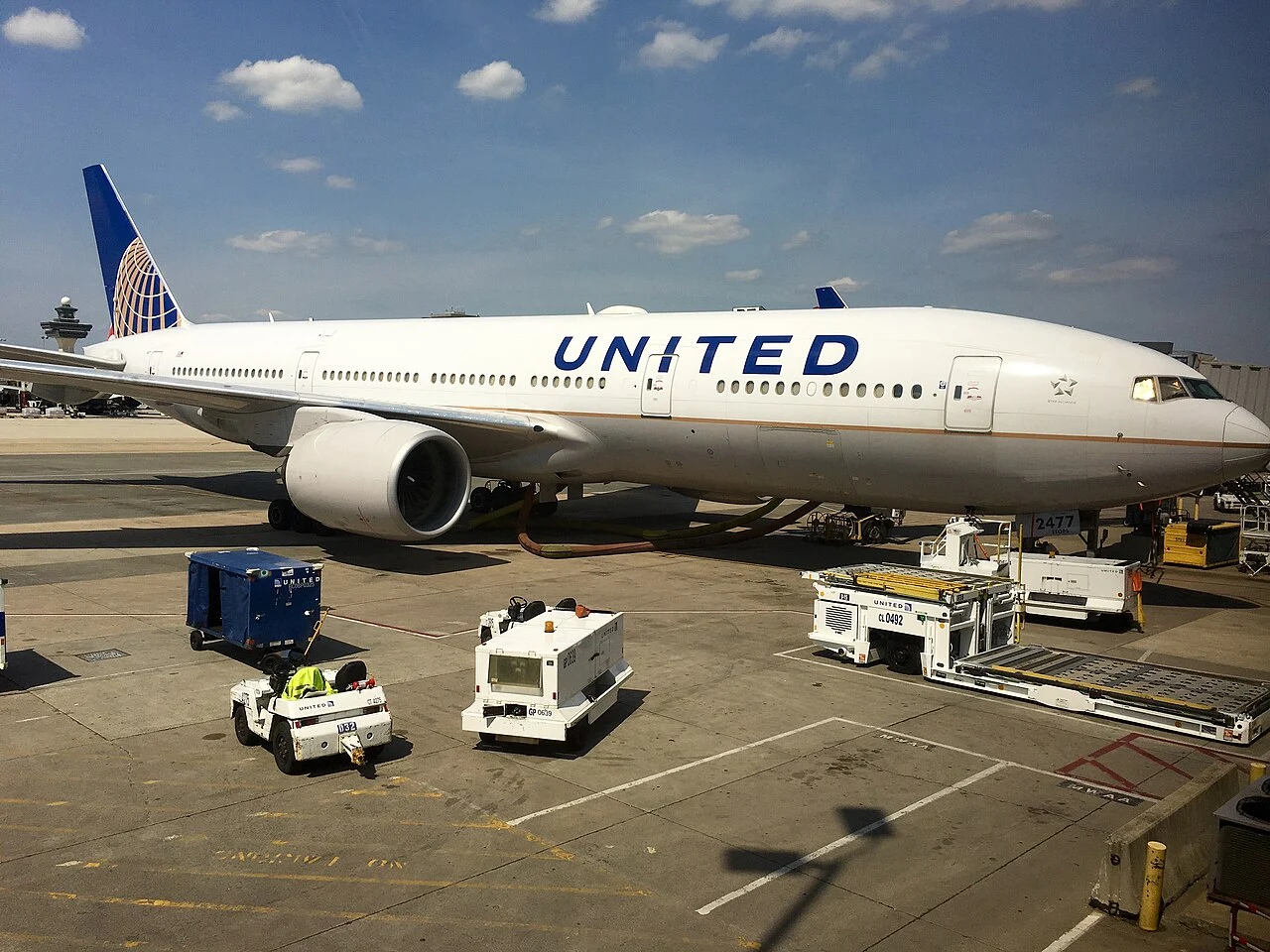
Photo: Thomas Woodtli | Wikimedia Commons

What Is a Mileage Run

The “mileage run” is a concept nearly as old as airline loyalty programs themselves. A mileage run involves taking a flight or set of flights, mainly for the purpose of accumulating miles or points or for the credit towards elite status. The concept of doing this grew alongside the development and expansion of loyalty programs over the past few decades.

MileagePlus is the frequent-flyer program of United Airlines that offers rewards to passengers traveling on certain types of tickets. Following the 2010 merger agreement between United and Continental Airlines, United MileagePlus was chosen to be the frequent-flyer program for the combined airline. The program was subsequently unified under the MileagePlus brand and today operates within the broader Star Alliance framework.

The economics of mileage running have grown more constrained in recent years. United has been rewarding its most loyal customers by redefining what loyalty actually means. For United, a traveler who spends $10,000 on a co-branded card annually is more valuable than a traveler who flies ten times a year but pays with a generic travel card. An April 2026 overhaul of MileagePlus earning structures shifted the programme further toward revenue-based and credit-card-spending metrics.

Despite these structural changes, elite status with airlines is determined by your spending rather than just your mileage, which makes it harder to qualify through less expensive short flights. The UA 7 Hub Run therefore occupies a unique niche: it is simultaneously a status-building exercise, a community event, and an act of exuberant enthusiasm for United’s network.

Photo: United Airlines

United’s ConnectionSaver was the AI That May Have Saved The Run

The central operational question raised by the 2026 Hub Run is whether United Airlines deliberately held flights to protect the group’s challenge or whether the airline’s automated systems simply executed their standard function on an uncommonly large scale.

United calls the technology “ConnectionSaver.” It works by analyzing thousands of pieces of data in real time to answer questions like which planes to hold, where to send cabin crew, and whether planes need to switch gates. The goal is to minimize the impact of delays to passengers, crew, and airlines, for current and future travel. It was introduced in 2019, but it has been continually refined.

ConnectionSaver automatically identifies departing flights that can be held for connecting customers — without delaying the on-time arrival of the customers who have already boarded. Crucially, the system does not operate on a single-passenger calculus. The system identifies every single person who is going to misconnect, where they are coming from, which gates they are coming from, and roughly how much time they would need.

With approximately 70 passengers sharing the same misconnection risk across multiple consecutive legs, the operational mathematics would have strongly favoured holding departing aircraft. Leaving that many customers behind would have created major rebooking challenges across the network. As OMAAT’s Ben Schlappig noted in his June 7 coverage, “a delay of hours to wait for connecting passengers probably doesn’t happen very often.”

ConnectionSaver has saved more than 3.3 million customer connections since launching in 2019. During a beta test period, more than 350,000 customers used new app features tied to ConnectionSaver, achieving a 98% success rate in making their connection.
The question of whether human intervention supplemented the algorithm remains unresolved. United has never officially stated that it held flights specifically for the hub runners, but the airline was clearly aware of the event. Participants reported gate celebrations, commemorative swag, and enthusiastic support from employees throughout the day.

Photo: United Airlines

United’s Embrace Gate Parties and Carrier Swag

While the UA 7 Hub Run is decidedly not an official United Airlines product, the airline’s operational and customer-facing teams have enthusiastically co-opted it. United was advised about the event and came through. Operations made sure that connecting gates were adjacent, there were plenty of free snack boxes loaded, there was swag at each post, and there were crew members with no risk of timing out. Many of the flight crew were very enthusiastic about the event.

This unofficial partnership reflects a broader strategic posture by United toward its most elite customers. Completing seven hubs in a single day requires determination, patience, and a little help from the airline. The carrier’s willingness to supply that help suggests a deliberate effort to cultivate loyalty among a cohort that spends generously and travels prolifically.

The event also generated significant earned media. Coverage appeared across One Mile at a Time, The Bulkhead Seat, Paddle Your Own Kanoo, and the event’s own tracking site, amplifying United’s brand presence among the frequent-flyer community without any direct marketing expenditure by the airline.

Photo: 4300streetcar | Wikimedia Commons

Did The Hub Runners’ Delays Harm Other Passengers?

The 2026 Hub Run was not without its critics. A meaningful share of commentary in the days following the event centred on whether United’s decision to hold connecting flights — in some cases for over two hours — imposed unjustifiable costs on passengers traveling for conventional purposes.

Writing for One Mile at a Time, Ben Schlappig framed the tension directly: “Sorry you’re going to misconnect on the way to that funeral, there are frequent flyers who are trying to fly to all hubs today” doesn’t have great optics. Readers on platforms including OMAAT and Paddle Your Own Kanoo were divided on the ethics of the operation, with some arguing that United exercised reasonable commercial judgment given the size of the group, and others contending that revenue-maximising delays imposed unacceptable externalities on unrelated travelers.

One commenter on OMAAT, identified as “Sandy,” offered a defence of the airline’s handling:

“You are still missing the point though. You are not looking at all the travelers that got to their destination because United got involved.”

Sandy’s point referenced United’s broader operational efforts on the day, which reportedly included ground transfers in Los Angeles and coordination to hold non-United flights for passengers with downstream international connections.

The debate is unlikely to produce a definitive resolution. United’s ConnectionSaver, as a rule-bound automated system, does not factor in the recreational nature of a connecting passenger’s journey. From the system’s perspective, 70 misconnecting passengers are 70 misconnecting passengers, regardless of why they are traveling.

Photo: United Airlines

The Broader Culture of Aviation Fandom

The UA 7 Hub Run occupies a venerable tradition within the aviation enthusiast community. Long before social media provided a ready stage, dedicated “avgeeks” were organizing extreme flying challenges — often documented obsessively on specialist forums such as FlyerTalk — as tests of stamina, operational knowledge, and sheer affection for the experience of flight.

The Hub Run’s closest conceptual ancestor is the mileage run, but it differs in one important respect: its explicit emphasis on community. The event attracts Premier 1K members, Global Services flyers, Million Milers, and aviation enthusiasts who love a challenging routing on United narrowbodies. It is social in character as much as it is logistical.

The event has precedent at other carriers as well. The Bulkhead Seat’s Anthony noted that he had previously visited all of Delta’s hubs in just over a day, and reader commentary on various aviation platforms suggested that similar challenges at American Airlines and Alaska Airlines may follow in coming years.

For Carl Brothers, the event’s founder, the run carries personal resonance far beyond airline allegiance. Brothers embarked in earnest on his quest for four million miles starting in 2021, flying roughly 1,000,000 miles per year, mostly to Singapore and Australia — there and back, every week, for years. His creation of the UA 7 Hub Run represents the social extension of a singular individual obsession into a shared communal rite.

Leave a Comment

Your email address will not be published. Required fields are marked *

Scroll to Top