Why Emirates, Qatar, Singapore, and Asiana Stopped Operating the Airbus A380 to Australia?

Four carriers, Etihad, China Southern, Korean Air, and Malaysia Airlines have accumulated a combined total of nearly 5,000 A380 departures to Sydney Kingsford Smith Airport (SYD) and Melbourne Airport (MEL). However, they have exited the Australian market entirely. The timing of each exit differed and so did their causes, though some of the causes of the A380s exit from the Australia converged, too.

Let’s have a look at why these airlines stopped operating their superjumbo that is the A380 (which is also among the five biggest aircraft ever made) in and out of Australia.
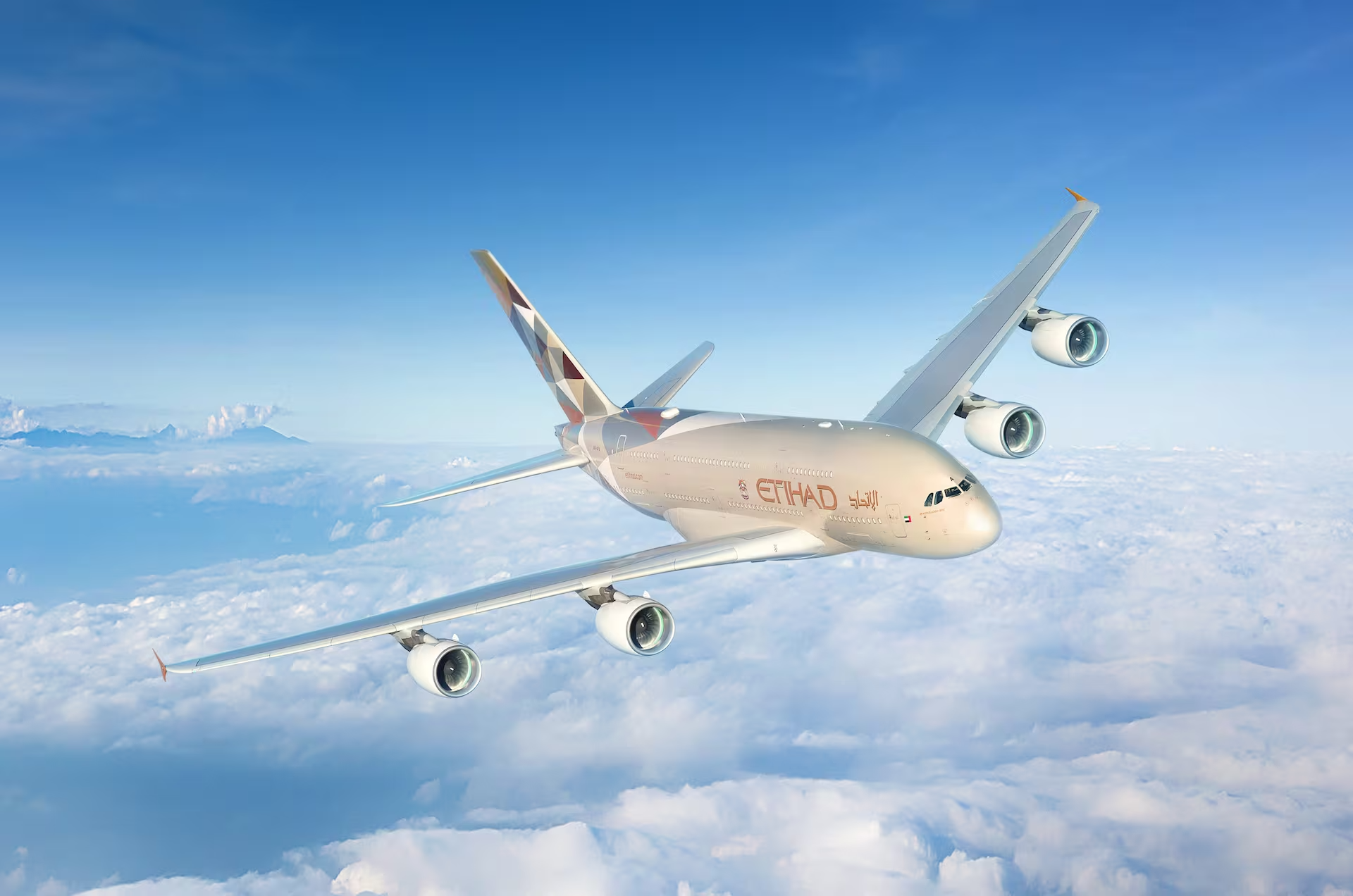
Photo: Etihad

Etihad Airways Couldn’t Sustain the Scale

Of the four carriers that have ended A380 operations to Australia, Etihad Airways (EY) maintained the largest footprint. Between 2015 and 2020, the Abu Dhabi-based airline operated more than 2,700 A380 departures to Sydney and Melbourne from Abu Dhabi International Airport (AUH).

Sydney accounted for the majority of these operations, with aviation data showing the airline scheduled over 2,100 A380 departures on the Abu Dhabi–Sydney route, with annual frequencies peaking in 2018. The airline positioned the Airbus A380 as a premium product for long-haul travellers, offering onboard features such as:

  • The Residence suite
  • First-class apartments
  • Expanded business-class cabins

Etihad currently has nine Airbus A380 aircraft, with seven active in service. Regular A380 flights were previously deployed from Abu Dhabi to:

  • Melbourne (2016–2017)
  • Mumbai (2016–2017, 2024–2025)
  • New York JFK (2015–2020, 2024–2025)
  • Seoul Incheon (2019–2020)
  • Sydney (2015–2020).

The withdrawal from Sydney and Melbourne — which occurred when Etihad grounded all commercial operations in March 2020 at the onset of the COVID-19 pandemic — was never reversed. Etihad, which last flew its A380s commercially in March 2020, later reactivated the superjumbo for summer 2023, with service reinstated to London Heathrow and subsequently New York JFK. Australia was not among the restored routes.

The carrier eventually scaled back its A380 fleet amid financial pressures and changing network priorities, reflecting a wider industry trend favouring smaller and more fuel-efficient widebody aircraft.

Etihad originally operated ten Airbus A380s; seven aircraft are now active again, with A6-APC joining A6-APA in permanent retirement. A6-APA — Etihad’s first A380, delivered in December 2014 — was subsequently acquired by Aviationtag and repurposed into collectible key tags

The Abu Dhabi–Sydney sector, at roughly 12,000 kilometres, was always a demanding operation for the four-engined quadjet, and Etihad’s post-pandemic network pivot toward “right-sized” connectivity, centred on the Boeing 787-9 and Airbus A350-1000, explicitly deprioritised high-density hub feeding in favour of more targeted point-to-point frequency.
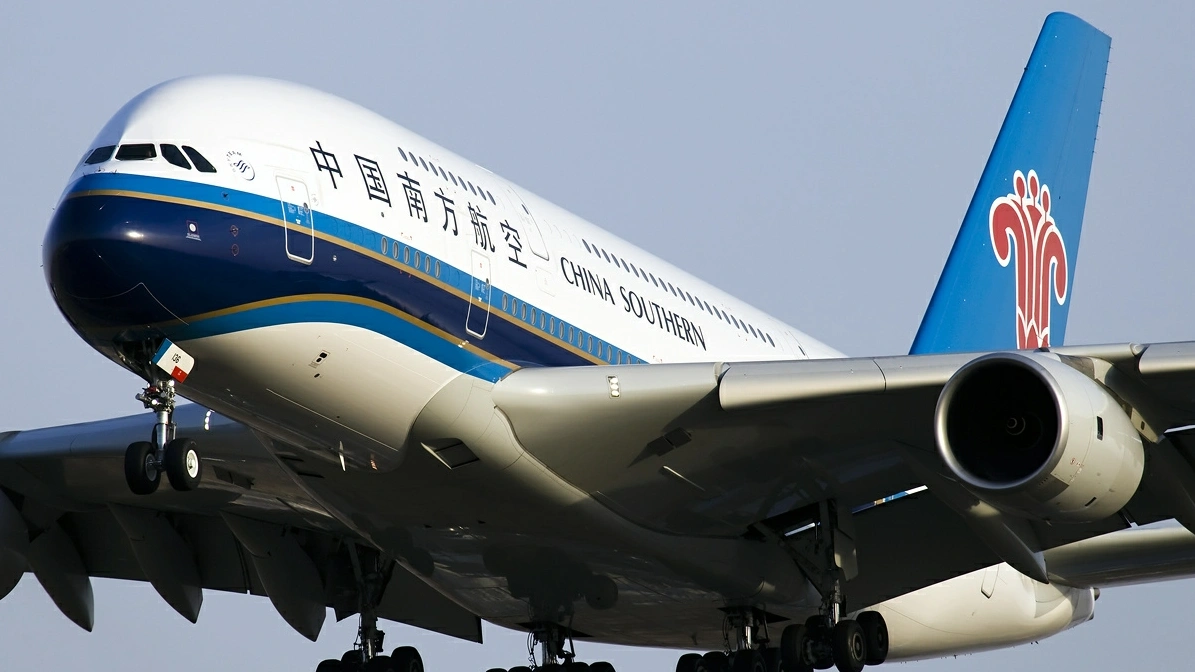
Australia, once the carrier’s showcase A380 market, is today served from Abu Dhabi by the 787-9 — a smaller, more fuel-efficient twin that Etihad can operate at higher frequency without the load-factor dependency the superjumbo demands.

Photo: Allen Zhao | Wikimedia Commons

China Southern Airlines A380 Ended Up at Mojave

China Southern Airlines (CZ), the Guangzhou-based carrier that was the only Chinese airline ever to operate the Airbus A380, presents one of the most instructive case studies in the commercial history of the type. China Southern received its first A380 in 2011, and the airline primarily flew its A380s on trans-Pacific routes, which could seat up to 506 passengers in a three-class layout.

According to aviation data, China Southern operated 767 A380 departures to Sydney alone between 2013 and 2022, with 2015 representing the peak in annual frequency at 127 A380 flights scheduled from Guangzhou Baiyun International Airport (CAN). Melbourne was served for a shorter period and at a lower frequency: 33 A380 flights in 2020, 45 in 2021, and only three in 2022.

The economic history of China Southern’s A380 was, even by the turbulent standards of the programme’s early years, an unusually troubled one. High operating costs and the inability to find consistently profitable routes led to the A380’s financial struggles for China Southern, despite initial success during pandemic travel restrictions.

The airline’s original plan to deploy the aircraft on premium international routes was undermined almost immediately by the realities of the Chinese aviation market: Chinese consumers in the early 2010s were not yet generating the volume of premium long-haul demand that the A380’s economics required, and the aircraft’s four-engine fuel burn made it structurally uncompetitive against twin-engined widebodies on routes where it could not consistently achieve load factors above 85%.

China Southern eventually used the A380 on domestic flights, on the busy route between Beijing and Guangzhou. That it was the only airline worldwide to operate the A380 on scheduled domestic services is a testament to how desperate the airline was to find commercially viable uses for aircraft it had bought at considerable cost.
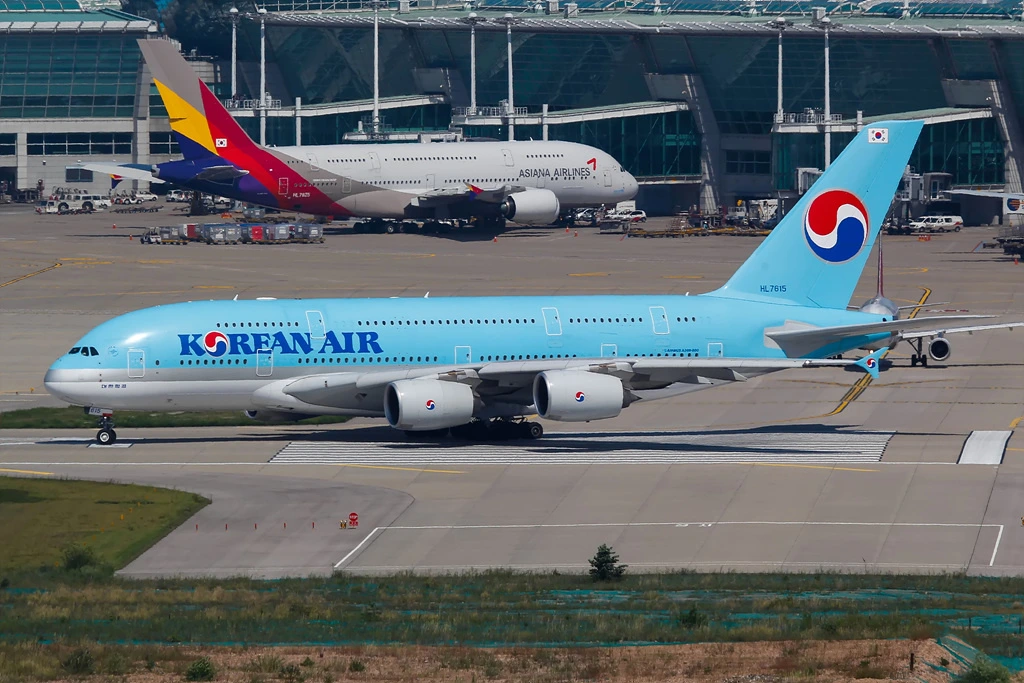
In February 2022, reports emerged that the airline was looking to dispose of its A380s after chalking up heavy losses in the years of operation. China Southern conducted its final A380 revenue flight in November 2022, and by the end of that year, three of its five A380s had arrived at Mojave Air and Space Port — one of the world’s best-known aircraft graveyards — in southern California.

The carrier’s last superjumbo revenue service took place in November 2022, although two A380s remained on its books. The airline’s half-year financial report confirmed that the final two A380s had left the carrier’s fleet by mid-2023.

One of China Southern’s former A380s, B-6140, was later purchased by Global Aviation Group, headquartered in London, though the purchase price was not disclosed. Airbus, in a statement posted to its official Chinese social media account on the day of the final two departures from Guangzhou, wrote simply: “Today, China Southern Airlines’ A380 fleet officially concludes its illustrious mission.”

Photo: Hyeonwoo Noh | Wikimedia Commons

Korean Air Had a Deliberate Exit from Sydney

Korean Air‘s A380 operations to Australia were geographically narrower than those of Etihad or China Southern but no less analytically revealing. Korean Air differs from the other airlines in the sense that it only flew A380s to one destination in Australia, with Sydney getting the nod over Melbourne.

Between 2015 and 2020, the carrier scheduled a grand total of 708 Sydney-bound superjumbo departures from its main hub at Incheon International Airport (ICN) in Seoul, with frequency peaking in 2019 at 155 departures, Simple Flying reported. The aircraft was deployed on the route as Korean Air’s flagship wide-body product.

The end of the A380’s role on the Seoul–Sydney route was neither abrupt nor accidental. In 2021, Korean Air CEO Walter Cho stated, in an interview with FlightGlobal:

“The A380s will be leaving Korean Air’s fleet within five years, and the Boeing 747-8I fleet will also follow suit within ten years.”

That timeline — a 2026 retirement — has since been revised under the pressure of new aircraft delivery delays. Korean Air is not yet ready to fly its superjumbo fleet into the sunset. Cho reflected during a media briefing:

“The A380 has been in our fleet for about 12 years, and I had a plan to retire them. We are short by about 20 aircraft per manufacturer. That’s why the older A380s and 747-8s and the very old 777s are still flying — that’s why we have not retired them yet.”

Korean Air is now sending its A380s in for heavy maintenance and is considering flying these aircraft well into the 2030s. For context, Korean Air has a fleet of seven Airbus A380s; the airline initially had ten, but three have already been retired.

The Sydney route, however, has not been among the services to which the superjumbo has returned. Coverage from industry publications in early 2026 indicates the airline has now removed the A380 from regular service on a range of trunk routes from Seoul Incheon, including Sydney, shifting instead toward Boeing 787-10 operations. The carrier just today announced that it would be using services to Jakarta on a Dreamliner, too.

The transition reflects a fundamental characteristic of Korean Air’s network: Sydney is a premium route, but not a hub-to-hub route in the Emirates or Singapore Airlines sense. It is a point-to-point service between two cities without the onward connecting flow that allows a 500-seat aircraft to absorb yield dilution from unsold premium seats. The Boeing 787-10’s 336-seat configuration provides Korean Air with a more tractable load-factor target and considerably lower fuel burn per block hour — advantages that compound materially on a sector exceeding 8,300 kilometres.

Through its acquisition of Asiana Airlines, Korean Air will eventually inherit Asiana’s six A380s, potentially building a combined superjumbo fleet of 13 aircraft. Asiana plans to retain its A380s after 2030, with each of its six frames configured with 495 seats and featuring 12 fully flat business suites with privacy doors in a 1-2-1 configuration.

Whether the merged entity will redeploy the type to Sydney — under the combined “KOREAN” brand identity expected from January 1, 2027 — depends on demand recovery and fleet rationalisation decisions that have not yet been made public.

Photo: Mhashan | Wikimedia Commons

Malaysia Airlines Never Truly a Strategic Fit for Australia

Malaysia Airlines was considering getting rid of its A380s going as far back as 2015, and had not been flying these planes frequently even before the pandemic. The airline ordered six A380s in December 2003 — a decision made during the height of the pre-pandemic hub-and-spoke era, when both Airbus and the world’s major airports promoted the idea that a 500-seat aircraft flying to congested hubs like London Heathrow was the inevitable future of intercontinental travel.

By the time the aircraft were delivered, between May 2012 and March 2013, the assumptions underpinning that thesis had already begun to erode.

The A380 entered service on 1 July 2012, operating between Kuala Lumpur International Airport (KUL) and London Heathrow Airport (LHR). By November 2012, service to Sydney had also begun. However, the superjumbo jets were often underutilised, mainly operating on routes to London, Hong Kong, Sydney, and for seasonal Haj and Umrah charters.

The aircraft’s large size and fuel consumption — using up to 200 tonnes of fuel for a London flight — posed persistent economic difficulties. The vast majority of the 69 Sydney-bound Malaysia Airlines A380 flights operated in 2018, with 64 flights scheduled that year, flanked by two rotations in 2015 and three in 2019. That aggregate frequency across the aircraft’s entire operational lifespan with Malaysia Airlines is, by any measure, minimal.

The COVID-19 pandemic finally knocked the saga of Malaysia’s troubled A380 operations on the head, and all were retired in April 2020. Following yet another restructuring of the company in May 2021, the Malaysia Aviation Group launched a sale tender for the six A380s, but it did not attract any serious interest. The airline ultimately decided to retire and return all six of its grounded Airbus A380s to Airbus in 2023.
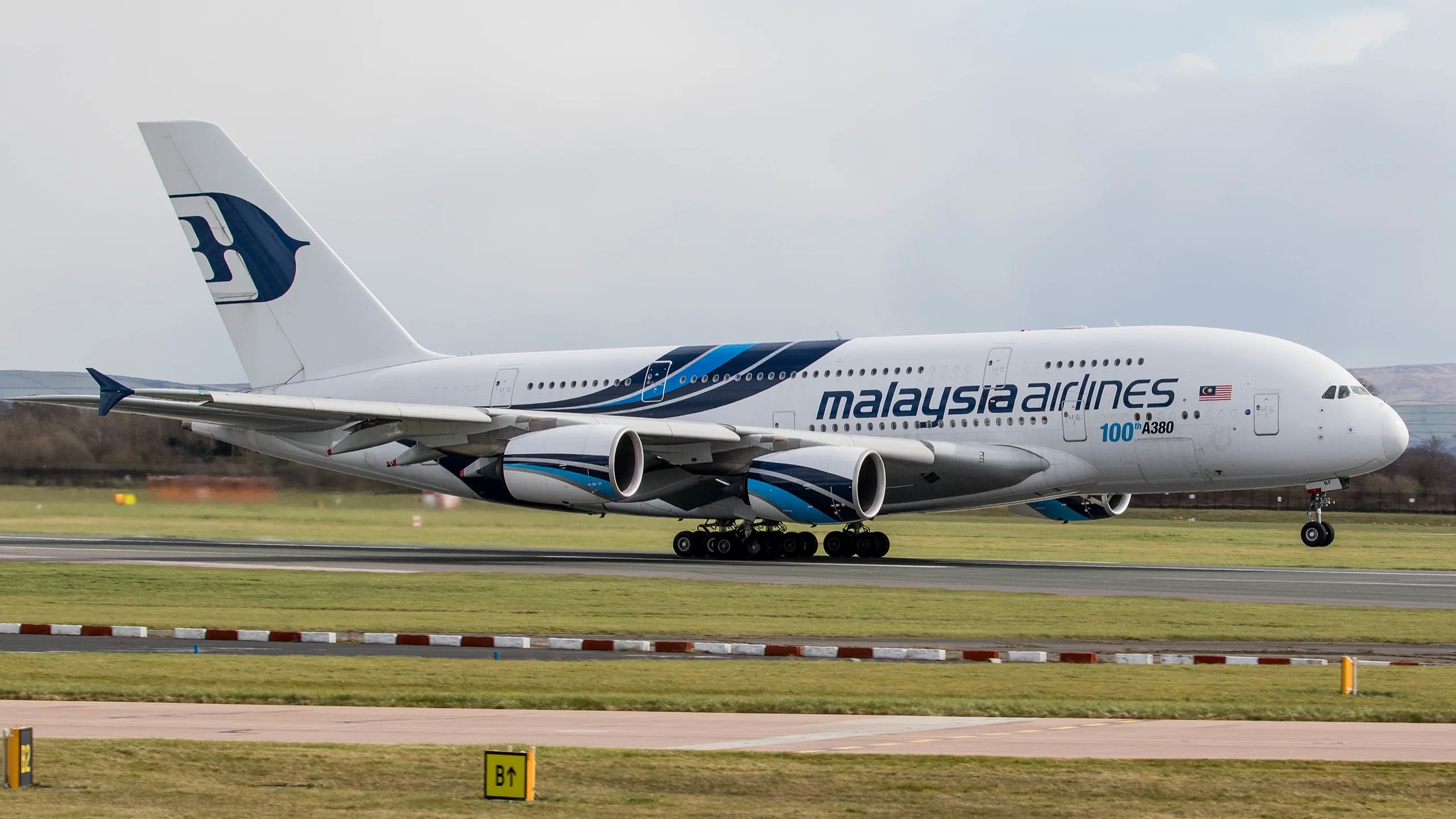
In a structural deal that encapsulated the entire arc of Malaysia Airlines’ tortured A380 chapter, the six aircraft were returned to Airbus as part of an order for 20 new Airbus A330-900neos. Since November 2024, Malaysia Airlines has received three of these new aircraft. One of the six retired frames — registered 2-JAYN — has subsequently been repurposed as an Airbus test aircraft, resuming flight in late September 2025 after three years in storage at a Tarmac Aerosave maintenance facility in France, its commercial chapter permanently closed.

Photo: Aero Pexels | Wikimedia Commons

Economics, Fleet Structure, Pandemic, and the A380’s Closed Production Line Converge

Examined across all four carriers, the reasons for abandoning Australian A380 routes resolve into four overlapping structural causes, each operating at different levels of the airlines’ commercial decision-making.

Airbus A380’s Fuel Costs

The first and most fundamental is the A380’s four-engine economics. The A380 burns significantly more fuel than smaller wide-body aircraft like the Boeing 787 or Airbus A350. Slot constraints at Sydney and, to a lesser extent, Melbourne once encouraged upgauging to the A380 in order to grow capacity without adding more movements.

In recent years, however, shifts in demand patterns, the rise of additional competitors and the ability to schedule more varied departure times have reduced the imperative to deploy the largest possible aircraft on every peak flight.

An independent analysis cited on Airliners.net put the operating cost differential starkly: a 14-hour A380 rotation carries an operating cost of approximately US$390,000, against US$179,000 for a Boeing 777-300ER on the same sector — a gap of over US$200,000 per flight that only disappears when the A380 is flying overwhelmingly full, day after day, on routes where passengers are specifically seeking the capacity and product differentiation the superjumbo provides.

The A380 Didn’t Fit into the carrier’s network

The second cause is subfleet size and network fit. All four carriers that exited Australia operated small A380 subfleets — Etihad’s ten aircraft, China Southern’s five, Korean Air’s ten (now seven), and Malaysia Airlines’ six — against a backdrop of competing long-haul priorities that left the A380 perpetually under-utilised relative to its cost structure.

Without new deliveries or a broad secondary market, carriers face higher unit costs for maintenance and cabin refurbishment on a small subfleet. Retiring or redeploying the aircraft away from marginal routes, including some services to Australia, has therefore become a logical step in long-term planning. The carriers that sustained the A380 commercially — Emirates, Singapore Airlines, and Qantas — all built their networks around the type’s requirements rather than accommodating the type within networks designed for smaller aircraft.

Covid-19 Accelerated A380’s Demise

The third cause is the COVID-19 pandemic, which, for all four carriers, accelerated decisions that pre-pandemic commercial pressures had already made likely. The A380 is a giant passenger aircraft that was particularly hard hit, with its high operating and maintenance costs making it difficult to meet market demand during the pandemic.

Etihad, China Southern, Korean Air, and Malaysia Airlines all grounded their A380s in March or April 2020 — and unlike Emirates, Lufthansa, and British Airways, none of them chose to restore Australian superjumbo service when demand recovered.

A380’s Production Line was Closed

The fourth cause is the closure of the A380 production line, which Airbus confirmed in 2019 and completed with the final delivery in 2021. The A380 production line has closed, and the type’s operator base is shrinking. For a carrier weighing whether to invest in cabin refurbishment for an ageing A380 subfleet, the absence of new deliveries means the maintenance cost trajectory curves inexorably upward, with no fleet rejuvenation possible through new aircraft orders.

That calculus makes every year of continued operation of an ageing, partially utilised superjumbo subfleet harder to justify against the alternative of an Airbus A350-900 or Boeing 787-10 offering comparable capacity at materially lower cost.

Photo: Aleem Yousaf | Wikimedia Commons

Australia Still Sees the A380

The A380’s services to Australia might have a saving grace: from June 2026 to February 2027, four more airlines will fly their superjumbos to Australia: Asiana Airlines, Emirates, Qatar Airways, and Singapore Airlines — alongside flag carrier Qantas.

Qantas’ own commitment to the type is instructive as a counterpoint to the four exits. Over six years after the A380s were placed into storage, ten out of the 12 that Qantas ordered are now back in the skies. Qantas returned its final A380 to the skies in December 2025 and has also upgraded the cabins of its A380s.

The Australian flag carrier has not committed to retiring the type until the 2030s. Former CEO Alan Joyce remarked in 2014 that he wished he had “a time machine” so that he could go back to 2000 and order Boeing 777s instead of the A380s, yet even Joyce maintained the aircraft still had a place serving slot-restricted airports — and the carrier kept and returned every stored example rather than retiring them.
Leave a Comment

Your email address will not be published. Required fields are marked *

Scroll to Top