Virgin Atlantic (VS) has confirmed temporary frequency reductions on five long-haul routes from London Heathrow Airport (LHR), its main base in the United Kingdom. The affected cities are Boston, Miami, Las Vegas, San Francisco, and Bengaluru, India. The changes apply only to September and October 2026, and every route stays in the schedule at a lower frequency rather than being suspended, as first reported by Simple Flying.
The reduction lowers Virgin Atlantic’s Heathrow-to-US capacity by up to 14% and its Heathrow-to-India capacity by up to 17% during the two-month period. According to TheStreet, the airline has not issued a public statement explaining the specific driver behind this round of cuts, Cirium Diio schedule data shows Virgin Atlantic remains the second-largest long-haul operator from the UK by flight volume, averaging 34 daily departures from Heathrow, Manchester, and Edinburgh between August and December, with Heathrow alone accounting for roughly 89% of that total.

Five Routes Move to Reduced Frequency This September and October
The schedule revision touches four American gateways and one Indian gateway. None of the five routes disappear from the network; each simply operates less often than the airline had originally planned for the autumn period.
| Route | Previously Planned (Sep/Oct) | Revised Schedule |
|---|---|---|
| London Heathrow (LHR) to Bengaluru (BLR) | 13 weekly flights | Daily Boeing 787-9 |
| London Heathrow (LHR) to Boston (BOS) | Up to two daily, Airbus A330-900 and Boeing 787-9 | Daily Airbus A350-1000 |
| London Heathrow (LHR) to Las Vegas (LAS) | 10 weekly Boeing 787-9 flights | Daily Boeing 787-9 |
| London Heathrow (LHR) to Miami (MIA) | Two daily, Airbus A330-300, A330-900 and Boeing 787-9 | Daily Airbus A350-1000 |
| London Heathrow (LHR) to San Francisco (SFO) | 10 weekly, Airbus A350-1000 and Boeing 787-9 | Daily Airbus A350-1000 |
On three of the routes, Las Vegas, San Francisco, and Bengaluru, the cut is smaller in relative terms because those services move from ten weekly or thirteen weekly flights down to one per day, which is still close to a full daily schedule. The steeper cuts fall on Boston and Miami, which drop from as many as two daily departures to a single daily flight.
Boston Falls to One Daily Virgin Flight, But Delta Fills the Gap
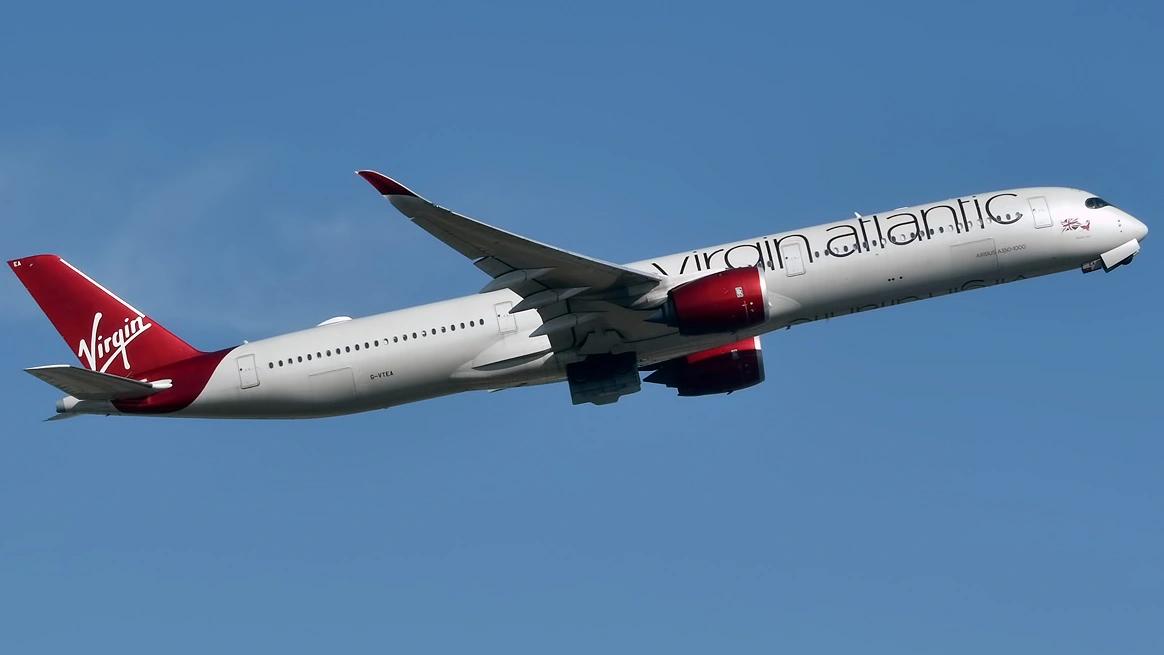
Boston Logan International Airport (BOS) keeps its Virgin Atlantic service throughout September and October, but the airline is reducing its own operation to a single daily Airbus A350-1000 flight. That plane replaces what had been planned as up to two daily departures split between an Airbus A330-900 and a Boeing 787-9.
Passengers on the corridor are not losing their second daily option entirely. Delta Air Lines (DL), Virgin Atlantic’s transatlantic joint-venture partner, will keep running its own daily Airbus A330-900 between Heathrow and Boston. The two carriers operate this corridor on a metal-neutral basis, meaning revenue is shared regardless of which airline’s aircraft a passenger actually boards, a structure Simple Flying confirmed remains intact through this schedule change. Even with Delta’s flight continuing as planned, Virgin Atlantic’s own Boston frequency for the September and October window will be its lowest since 2023.
Bengaluru Returns to Its 2024 And 2025 Service Level
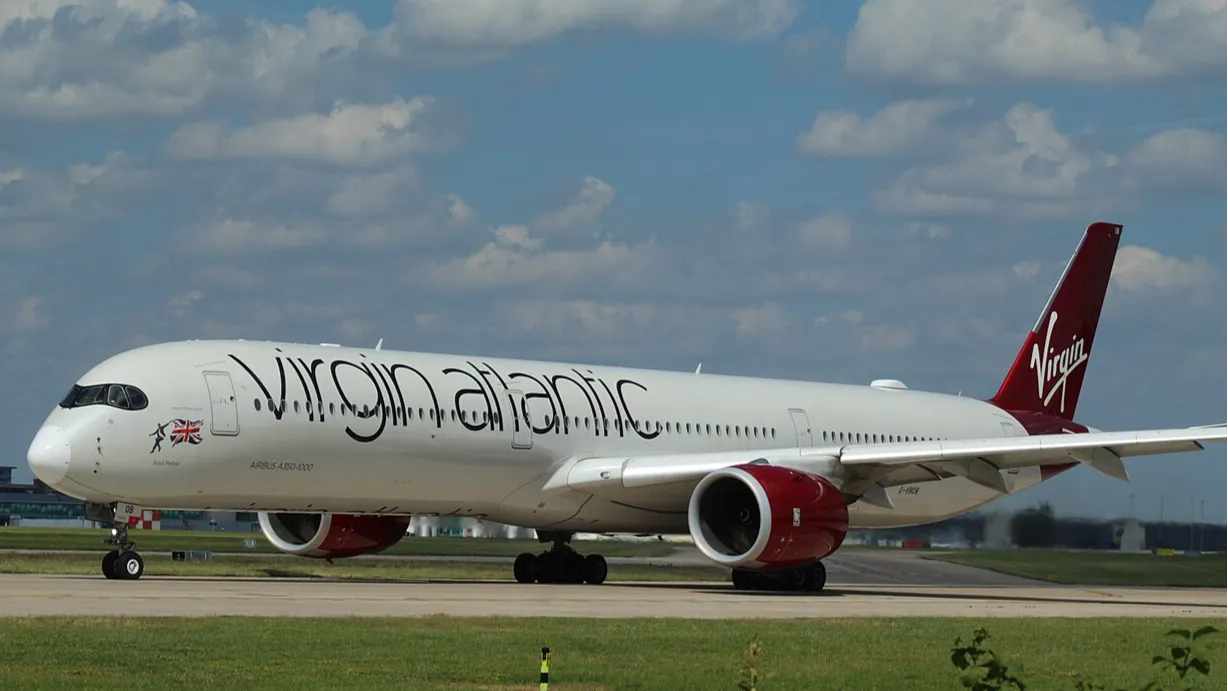
Kempegowda International Airport (BLR), serving Bengaluru, is the only non-US airport affected by the revision. Virgin Atlantic launched the route in 2024, and the airline had planned to grow it to 13 weekly flights this autumn. Instead, Bengaluru drops back to one daily Boeing 787-9 service, the same level Virgin Atlantic maintained throughout 2024 and 2025.
The route carries more than local origin-and-destination traffic. Bengaluru also feeds Virgin Atlantic’s North American network through Heathrow, including onward connections toward San Francisco, so a temporary cut here has ripple effects beyond the India market alone. India has become an increasingly contested market at Heathrow: British Airways (BA) launched twice-daily Heathrow-Bengaluru service of its own in June 2026, and combined with Air India’s presence, the three carriers had been on track to offer a 62% increase in weekly Bengaluru capacity compared with earlier levels.

Heathrow-To-US Capacity Drops by Up To 14%
Before the revision, Virgin Atlantic had primarily planned 22 daily departures from Heathrow to the United States for September and October, which would have made it responsible for roughly 18% of all Heathrow-US flights across every airline, still less than half the share operated by British Airways. After the cuts, Virgin Atlantic’s daily US departures fall to approximately 19, a decline of about 14%, though the exact figure shifts slightly week to week.
That drop temporarily reshuffles the competitive order on the transatlantic corridor. American Airlines (AA) becomes the second-largest Heathrow-US operator during the affected months, running around 21 daily departures, while Virgin Atlantic slips to joint-third alongside United Airlines (UA), each with about 19 daily outbound flights.
Despite the reduction, Virgin Atlantic continues serving 11 US destinations from Heathrow, including New York (JFK), Los Angeles (LAX), Orlando (MCO), Atlanta (ATL), Seattle (SEA), Tampa (TPA), and Washington Dulles (IAD), none of which appear in this particular round of cuts.

India Capacity Falls by Up To 17% Despite Growing Demand
India remains one of Virgin Atlantic’s most important international markets alongside the United States, which makes the scale of this reduction notable. The airline had primarily planned about six daily Heathrow-India departures for September and October: the Bengaluru service plus twice-daily flights to both Indira Gandhi International Airport (DEL), Delhi, and Chhatrapati Shivaji Maharaj International Airport (BOM), Mumbai.
Under the revised schedule, Virgin Atlantic will operate roughly five daily India departures instead of six: a daily Boeing 787-9 to Bengaluru, a twice-daily Boeing 787-9 to Delhi with the previously planned Airbus A350-1000 removed, and a twice-daily Boeing 787-9 to Mumbai.
A move from six to five daily departures works out to a decline of around 17%, though the airline’s comparatively small India network exaggerates that percentage relative to the true drop in seats. Virgin Atlantic’s overall share of the Heathrow-India market is expected to fall from about 25% to around 22% during the two affected months.
This is not the first Virgin Atlantic schedule reduction in 2026. In May, the carrier suspended its Heathrow-Seattle route entirely for winter 2026/27, closing bookings from October 25, 2026, through March 27, 2027. A spokesperson told AirlineGeeks the airline was responding to “evolving customer demand,” according to TheTravel, and pointed customers toward Delta’s daily Seattle-Heathrow flight instead, the same joint-venture safety net now covering Boston.


_@_MAN,_September_2020.jpg)
.jpg)


