The United Kingdom has committed £8.6 billion ($11.4 billion) over four years to the Global Combat Air Programme (GCAP), clearing the way for a new contract with the program’s industrial partner before the Farnborough Airshow this month. The funding was published on June 30, 2026, inside the UK’s long-delayed Defence Investment Plan (DIP). Defense News reported that the commitment arrived on the same day cash flow for the jet program was due to run out.
The new UK funding allows the three governments to hand a fresh contract to Edgewing, the industrial consortium developing the jet, ahead of the biennial airshow near London. Sources close to the program told Defense News that the funding removes an immediate threat to the program’s schedule, though several financial details remain unresolved.

UK Defence Investment Plan Delivers £8.6 Billion For GCAP
The Defence Investment Plan was originally expected in 2025 but was delayed for months amid disputes over UK defense spending. Outgoing Prime Minister Keir Starmer unveiled the plan on June 30, 2026, ending the uncertainty just as the previous funding arrangement was set to expire. Francis Tusa, editor of the UK site Defence Analysis, said the GCAP allocation exceeded expectations, noting that “the money for the GCAP in the DIP is slightly more than the £6bn we expected.”
Tusa added that securing the money was far from guaranteed. He said Italian and Japanese officials had grown irritated with the UK’s delays, and that Japan’s prime minister reportedly threatened to skip a planned UK visit ahead of the G7 summit in favor of a trip to France instead. During that visit, Starmer signed a commitment to find the necessary funds, according to Tusa’s account relayed by Defense News.
Why The Defence Investment Plan Was Delayed
The delay traces back to internal UK political disputes over defense funding. UK Defense Secretary John Healey resigned over the government’s spending plan in June 2026, a departure that added pressure on ministers to finalize the DIP quickly. With Starmer’s time as prime minister drawing to a close, Andy Burnham is seen as the likely next UK prime minister and is expected to maintain the UK’s GCAP commitments.
The scale of the shortfall illustrates why the delay mattered. The UK Ministry of Defence had sought £28 billion for the DIP but received £15 billion, according to Tusa’s assessment cited by Defense News. Of that amount, £4.7 billion still needs to be identified within this year’s budget, and the ministry separately needs to find £10.7 billion in savings elsewhere.

How This Compares to April’s Stopgap Contract
This is not the first time GCAP funding has come down to the wire. In April 2026, the three partner nations signed a £686 million ($906 million) stopgap contract with Edgewing specifically to keep design work running for three months while the UK searched for long-term funding, as Defense News reported at the time. That contract was described by a program source as a “bridge” meant to keep the schedule intact until June 30, 2026.
The Japan Times framed it as evidence of strain caused by the UK’s delayed budget process rather than any doubts about the program’s technical progress. Masami Oka, the GCAP Agency’s chief executive, called the April agreement an important moment because it shifted work from separate national contracts onto a single international footing. The July contract now expected before Farnborough would extend that shift into a longer-term agreement.
What Edgewing Does and Who Owns It
Edgewing is the joint venture responsible for designing and developing the GCAP fighter on behalf of the three partner governments. It is structured as follows:
- BAE Systems (United Kingdom)
- Leonardo (Italy)
- Japan Aircraft Industrial Enhancement Co. Ltd., known as JAIEC (Japan)
Each of the three firms holds an equal 33.3 percent stake in the venture. Edgewing is headquartered in Reading, England, alongside the GCAP Agency, the intergovernmental body that oversees the program on behalf of the UK, Italy, and Japan. Once Edgewing receives its new contract, it is expected to issue its own sub-contracts covering the aircraft’s electronics and propulsion systems.

The Cost Risk Still Facing GCAP
Even with the new funding secured, analysts have flagged that GCAP’s long-term costs remain uncertain. Calibre Defence cited Justin Bronk, a senior research fellow at the Royal United Services Institute, who has argued that GCAP is unlikely to cost less than the Eurofighter Typhoon program.
Bronk estimated Typhoon’s total development and procurement cost at roughly £100 billion across its partner nations, which would imply the UK and Japan might each need to contribute around £40 billion over the life of the GCAP program.
Tusa offered a similar note of caution to Defense News, saying the new UK funding would “get the Italians and the Japanese off its back for now,” while significant financial details remained unresolved. Both assessments point to the same underlying issue: securing a single year’s contract does not settle the multi-decade cost of fielding a new fighter jet by 2035.
All in All
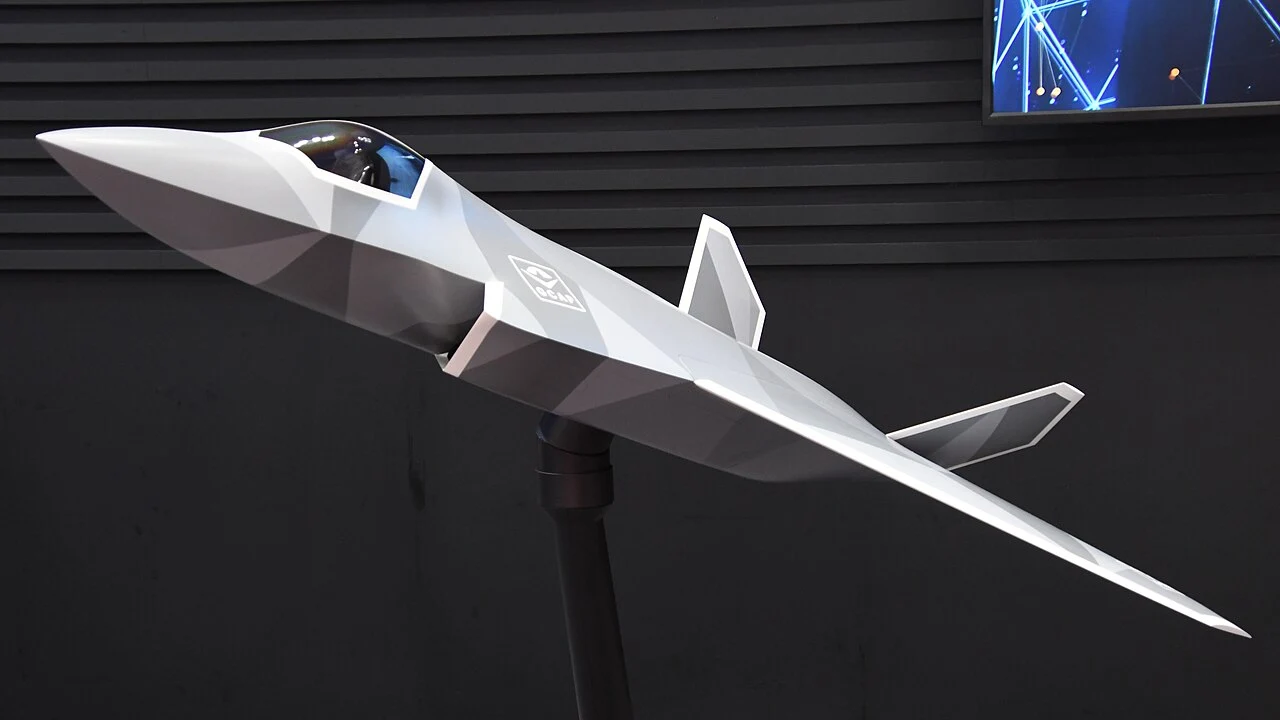
With the DIP published and funding secured, the next concrete milestone is the signing of Edgewing’s expanded contract, which program sources expect before the Farnborough Airshow opens. The event is expected to serve as a public showcase for the program’s progress, following a full-scale GCAP mockup displayed at the same airshow in 2024. Beyond the airshow, the more immediate test will be whether the UK can locate the remaining £4.7 billion needed within this year’s budget without disrupting the broader program timeline.

_right_rear_view_in_GCAP_booth_of_JA2024_at_Tokyo_Big_Sight_October_19,_2024.jpg)
_left_front_view_in_GCAP_booth_of_JA2024_at_Tokyo_Big_Sight_October_19,_2024_01.jpg)