Singapore Airlines (SQ), the carrier that only today garnered a customer for a lifetime following the carrier’s great services, has pushed back the restart of its suspended Singapore–Dubai service by a further two months to August 3, 2026, marking the fourth postponement of a route that has been grounded since late February 2026 following the escalation of the US-Iran conflict and the subsequent closure of Gulf airspace.
Flights SQ494 and SQ495 had already migrated through a series of restart dates — originally March 29, then April 30, then June 1 — before the latest slip to August, a pattern that reflects the persistent instability across the region rather than any isolated operational decision, Mainly Miles reported.
The airline has confirmed that a four-class Boeing 777-300ER (77W) will operate the route from August 3 through October 24, 2026, the close of the northern summer season, with passengers on cancelled services continuing to be re-accommodated on alternative flights or offered full refunds.
The more consequential revelation, however, lies not in the summer restart but in the winter 2026/27 schedule. Singapore Airlines has stopped selling First Class and Premium Economy entirely on every Dubai flight for the northern winter 2026/27 season, running from October 25, 2026, through March 27, 2027 — a booking signal that all but confirms the airline will not deploy the Airbus A380 on the route despite the superjumbo still appearing in the published schedule.
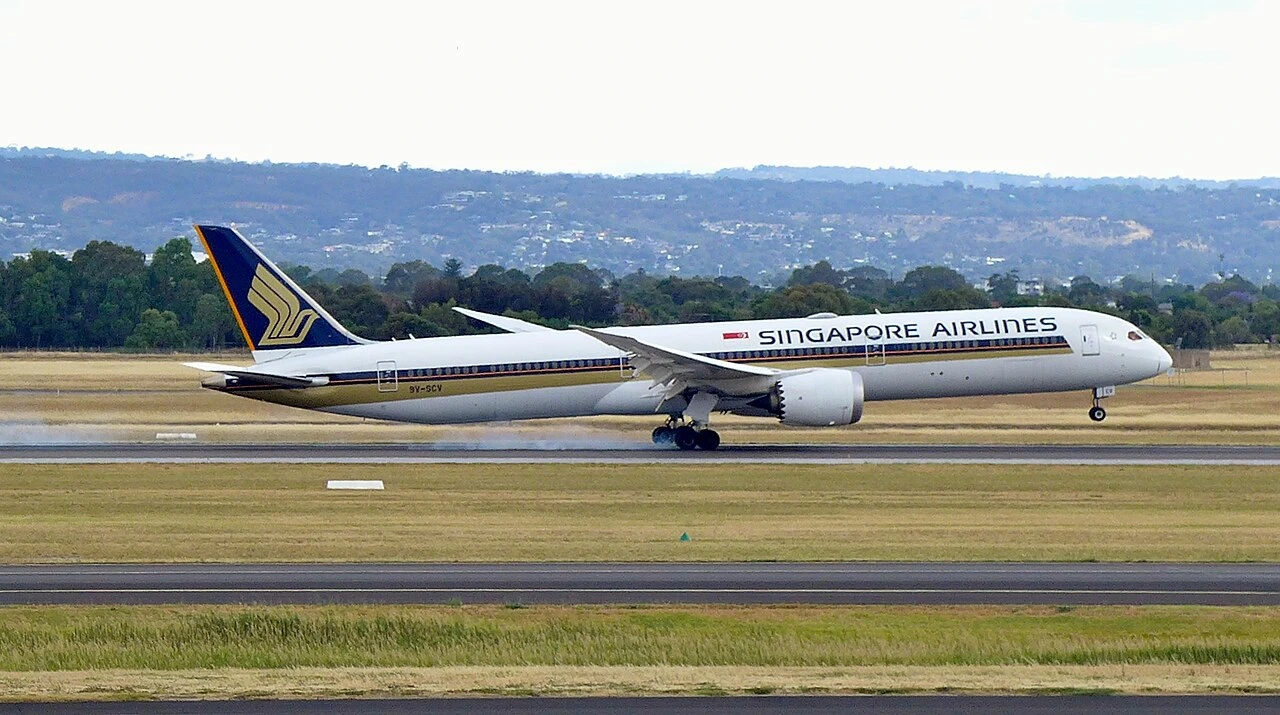
Singapore’s Dubai Route Timeline is A History of Postponements
Singapore Airlines first announced its intention to deploy the Airbus A380 on the Singapore–Dubai route in January 2026, a decision that carried strategic weight beyond mere aircraft type.
The A380 deployment was designed to deliver a 78% seat capacity boost on a route where SIA had been unable to secure a second daily slot at Dubai International Airport (DXB), effectively solving a long-standing capacity constraint with a single aircraft upgrade. The plan was ambitious — and short-lived.
The US-Iran war, which erupted in late February 2026 and triggered widespread airspace closures across the Gulf region, forced Singapore Airlines to suspend flights SQ494 and SQ495 entirely. A two-week ceasefire between the US and Iran took effect on April 8, 2026, and while some regional airspaces began reopening in phases, SIA declined to accelerate its Dubai restart timeline.
Each postponement has been accompanied by the similar statements from SIA, citing the ongoing geopolitical situation in the region, with affected customers offered rebooking or full refunds as each new date was announced and subsequently abandoned.
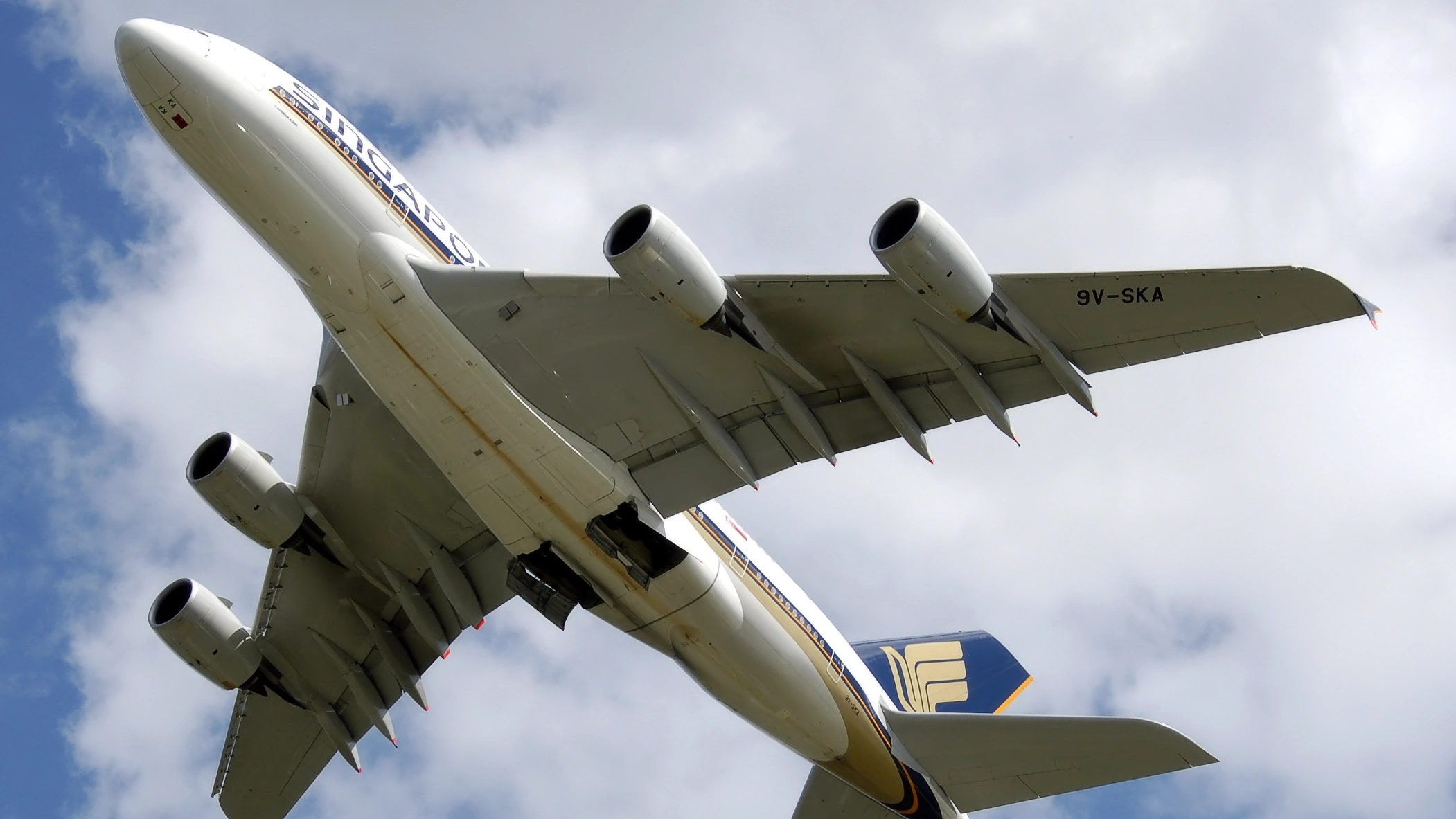
A380 Axed for Winter: What the Booking Data Reveals
The following table gives us cue of the routes where Singapore Airlines A380 routes have been discontinued:
| Route (From Singapore Changi Airport (SIN), Singapore) | Airport (Full Name + IATA) | Total A380 Departures | Years Operated |
|---|---|---|---|
| Tokyo Narita | Narita International Airport (NRT), Tokyo | 3,923 | 2008–2020, 2024–2025 |
| Zurich | Zurich Airport (ZRH), Zurich | 3,649 | 2010–2020 |
| Paris CDG | Charles de Gaulle Airport (CDG), Paris | 3,506 | 2009–2019; limited 2023 |
| New York JFK (via Frankfurt) | John F. Kennedy International Airport (JFK), New York | 3,314 | 2012–2023 |
| Beijing Capital | Beijing Capital International Airport (PEK), Beijing | 1,966 | 2008; 2014–2020 |
| Los Angeles (via Tokyo Narita) | Los Angeles International Airport (LAX), Los Angeles | 1,942 | 2011–2016 |
| Osaka Kansai | Kansai International Airport (KIX), Osaka | 301 | 2012–2020 |
| San Francisco (via Hong Kong) | San Francisco International Airport (SFO), San Francisco | 88 | 2012–2013 |
| Kuala Lumpur | Kuala Lumpur International Airport (KUL), Kuala Lumpur | 30 | 2021 only |
| Nagoya | Chubu Centrair International Airport (NGO), Nagoya | 6 | 2014, 2016, 2019 |
| Bangkok Suvarnabhumi | Suvarnabhumi Airport (BKK), Bangkok | 5 | 2015–2016 |
Data: Simple Flying
The clearest signal that SIA has internally made its decision about winter Dubai operations comes not from any formal announcement, but from its own booking inventory.
First Class sales were capped at just four seats per flight from late February onwards in the lead-up to the summer A380 removal — a signal that Mainly Miles flagged at the time, before the airline formally reverted to the 777-300ER weeks later.
Both First Class and Premium Economy have been pulled entirely across the full five-month winter season, a decisive step that goes beyond the cautious capping observed before the summer downgrade.
The two-class configuration that this implies effectively rules out both the Boeing 777-300ER, which carries First Class, and the Airbus A350 Long Haul, which includes Premium Economy. The most plausible aircraft for winter Dubai operations is therefore a return to the Airbus A350 Medium Haul — the two-class regional variant that served the route continuously from the post-COVID restart in January 2021 through to March 2025 — or, as a secondary possibility, the Boeing 787-10.
The downgrade carries real implications for premium travelers. The Singapore–Dubai sector runs approximately seven hours and forty minutes gate-to-gate in the winter season, a journey length at which the difference between the A380’s generously dimensioned Business Class seat and the A350 Medium Haul’s narrower 2018-vintage regional cabin becomes acutely apparent.
The A380 Business Class configuration, with its 1-2-1 layout offering direct aisle access from every seat, is a materially different product from what passengers on the winter schedule now appear likely to receive.
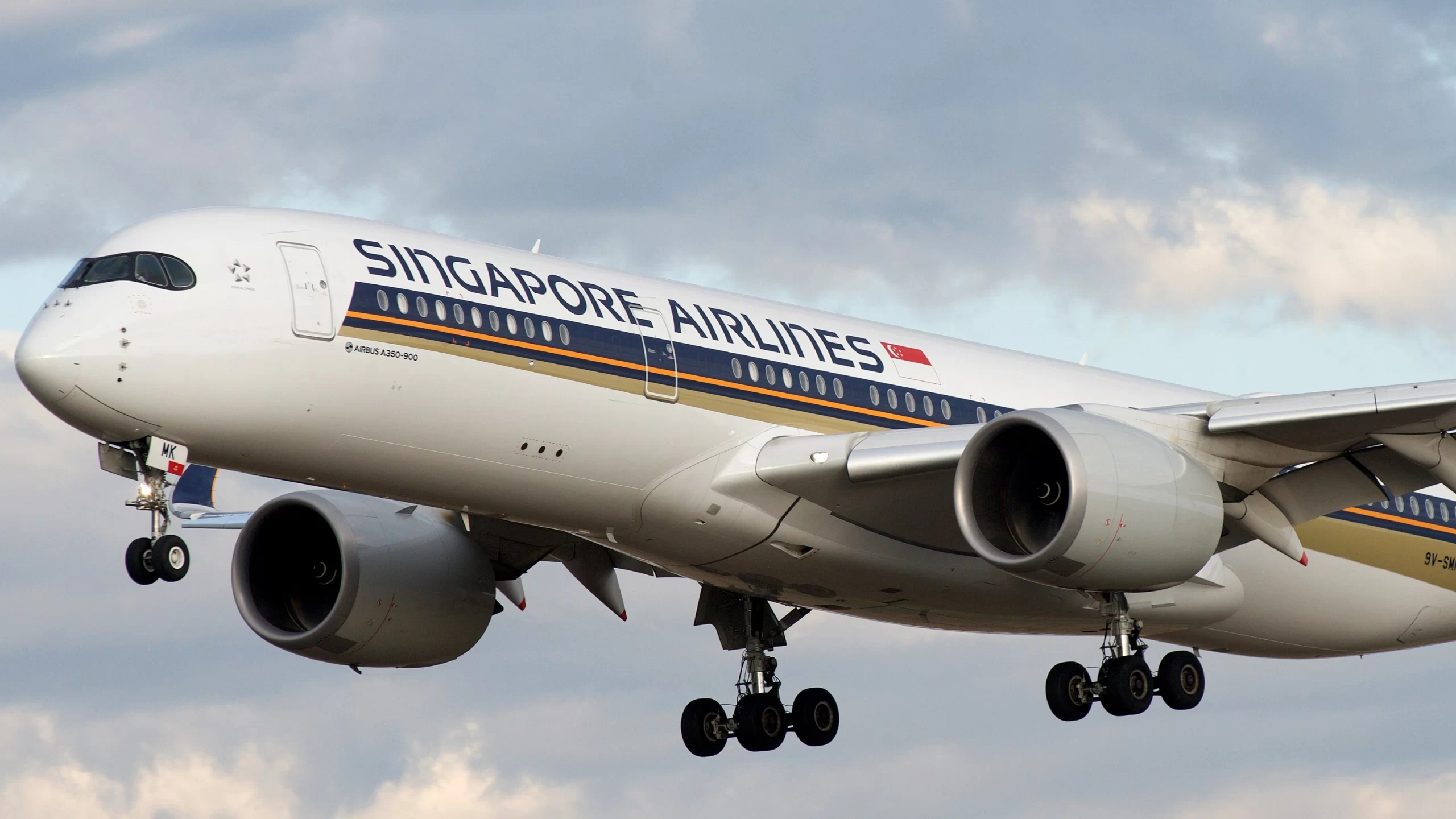
Where Will the Singapore’s Freed A380 Go?
With Dubai effectively removed from the winter A380 roster, Singapore Airlines finds itself with an additional superjumbo available for redeployment across the northern winter 2026/27 season. The current confirmed winter A380 routes, from which Dubai is now almost certain to drop, include:
- Auckland (SQ285/286) from mid-January 2027
- Delhi (SQ406/403), Frankfurt (SQ326/325) until January 16 only
- London Heathrow (SQ308/319 and SQ322/317)
- Mumbai (SQ424/423)
- Shanghai (SQ830/833)
- Sydney (SQ231/222 and SQ221/232).
Melbourne emerges as the most obvious candidate for the freed A380, having already benefited from the Dubai disruption this summer with the superjumbo restored to Melbourne Airport (MEL) — Tullamarine — from March 29, 2026, its first appearance on the Australian route in nearly three years.
Melbourne’s peak domestic summer travel season runs from December through February, aligning directly with the northern winter aviation calendar and providing a commercially credible rationale for retaining the type year-round on the route.
Auckland, which currently sees only part-season A380 operation in winter, and Hong Kong, which has a part-season stint locked in for summer 2026, are also plausible recipients, particularly during the peak Lunar New Year window in January and February 2027.
.jpg)
_taking_off_from_London_Heathrow_Airport_(2).jpg)
_landing_at_Melbourne_Airport.jpg)