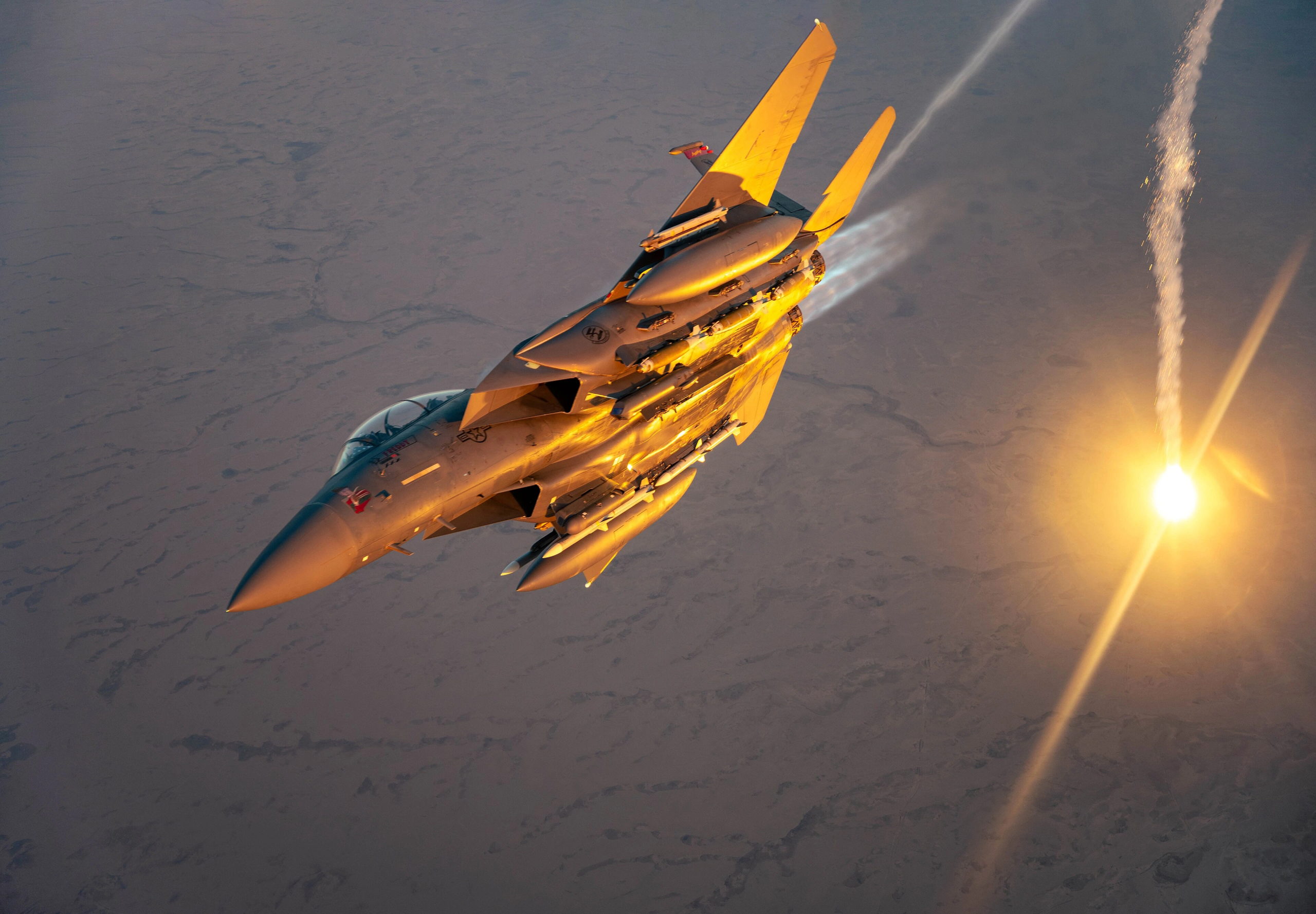
Israel’s Ministerial Committee on Procurement formally approved the acquisition of two new combat squadrons on Sunday, May 3, 2026 — a fourth squadron of Lockheed Martin’s F-35I “Adir” and a second squadron of Boeing’s F-15IA — in a deal valued at tens of billions of new Israeli shekels, CNBC reported. The decision arrives in the immediate aftermath of Operation Roaring Lion, Israel’s ongoing military campaign against Iran, which itself followed the joint U.S.-Israeli airstrikes that commenced on February 28, 2026 (something that has led to the destruction of many Iranian aircraft and the downing of USAF’s A-10 and F-15E) — and it positions Jerusalem among the world’s most consequential operators of both the fifth-generation F-35 and Boeing’s latest F-15 variant.
According to YTnet Global, the procurement constitutes the inaugural phase of “Magen Israel” — Hebrew for “Shield of Israel” — a force-building programme approved by Prime Minister Benjamin Netanyahu and Defence Minister Israel Katz under a dedicated budget of 350 billion shekels (approximately $119 billion). Each squadron amounts to roughly 25 new warframes, meaning the deal would ultimately deliver 50 new combat aircraft to the Israeli Air Force (IAF), pushing Israel’s F-35I fleet toward 100 aircraft and its F-15IA roster toward 50 — numbers that would rank Israel among the largest operators of both platforms outside the United States.
Israel’s Landmark Defence Approves Two New Combat Squadrons
The deal was brought before the committee by Defence Minister Katz and Defence Ministry Director General Major General (Res.) Amir Baram as part of a broader strategy to bolster IAF readiness ahead of what officials describe as a “demanding decade” for Israeli security. The ministry’s statement quoted in The Jerusalem Post confirmed that the procurement includes:
- full fleet integration into the IAF
- comprehensive sustainment packages
- spare parts
- logistics support — not merely the aircraft themselves.
Baram instructed the ministry’s mission to the United States to move forward immediately with finalising contracts with American government and military counterparts.
As quoted by Reuters, Baram said:
“Alongside immediate wartime procurement needs, we have a responsibility to act now to secure the IDF’s military edge ten years from now and beyond.”
He further noted that Operation Roaring Lion “reinforced just how critical the U.S.-Israel strategic relationship is, and how essential advanced air power remains.” The complementary strike and stealth profiles of the two aircraft types, he argued, would provide the IAF with the operational flexibility to prosecute a broad spectrum of combat scenarios simultaneously.
Netanyahu And Katz’s Justification of the Purchase
Prime Minister Netanyahu, in a statement quoted by Breaking Defense, was unambiguous in framing the acquisition as a direct outgrowth of the Iran campaign. “We are acquiring two squadrons of advanced aircraft — the F-35 and the F-15IA,” he said:
“These aircraft bolster Israel’s overwhelming air superiority, a superiority that was proven in Operation Rising Lion and now in Operation Roaring Lion.”
The prime minister added that Israeli pilots can reach “any point in the skies of Iran” and stand prepared to do so if required.
Defence Minister Katz was equally pointed in his assessment of the strategic rationale. “Operation Roaring Lion once again demonstrated the Israeli Air Force’s power and its decisive role in protecting Israel,” he stated, adding that the lessons of that campaign “require us to keep pressing forward on force buildup, to ensure air superiority for decades to come.”
Katz also signalled that the new airframes would catalyse a technological leap in autonomous flight capabilities, next-generation defence integration, and the establishment of Israeli military dominance in space — domains the ministry views as the next frontier of aerial warfare.
The F-35I “Adir”‘s Fourth Squadron In 2026
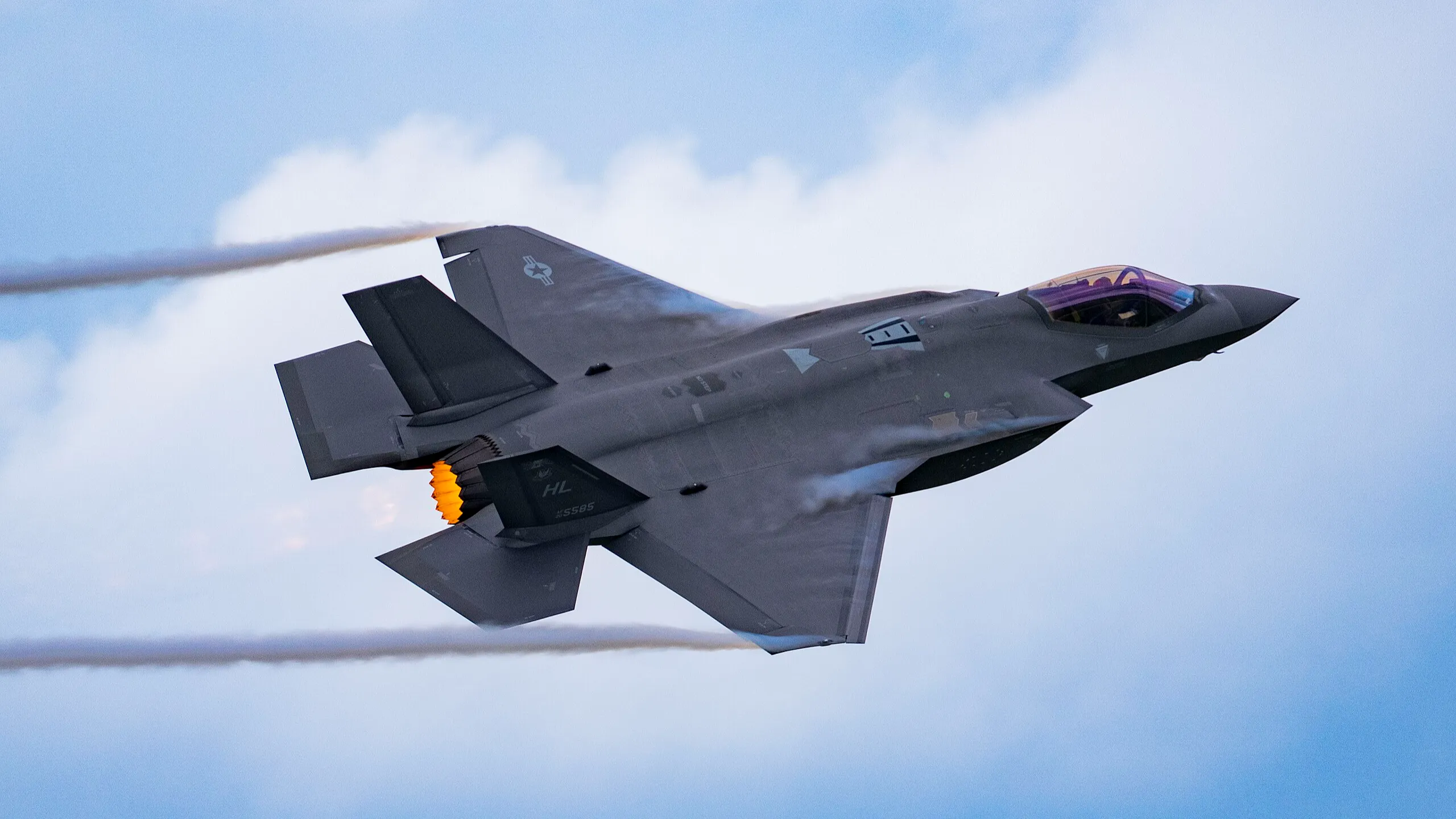
Israel signed onto the F-35 programme in 2010 as the first international customer to do so through the U.S. Foreign Military Sales process, and received its first two aircraft in December 2016. The IAF christened the jet the “Adir” — Hebrew for “Mighty One” — and in May 2018, Air Force commander Major General Amikam Norkin announced that Israel had become the first country in the world to use the F-35 operationally in combat.
By early 2025, the platform had accumulated over 15,000 flight hours across multiple theatres, from Iran and Yemen to Syria, Lebanon, and Gaza.
A second F-35 squadron opened in 2020 as deliveries accelerated, and in June 2024, Israel signed a $3 billion Letter of Offer and Acceptance with the U.S. government for a third squadron of 25 aircraft, funded by U.S. Foreign Military Financing — raising the committed fleet to 75 F-35Is, with deliveries of the third tranche slated to begin in 2028.
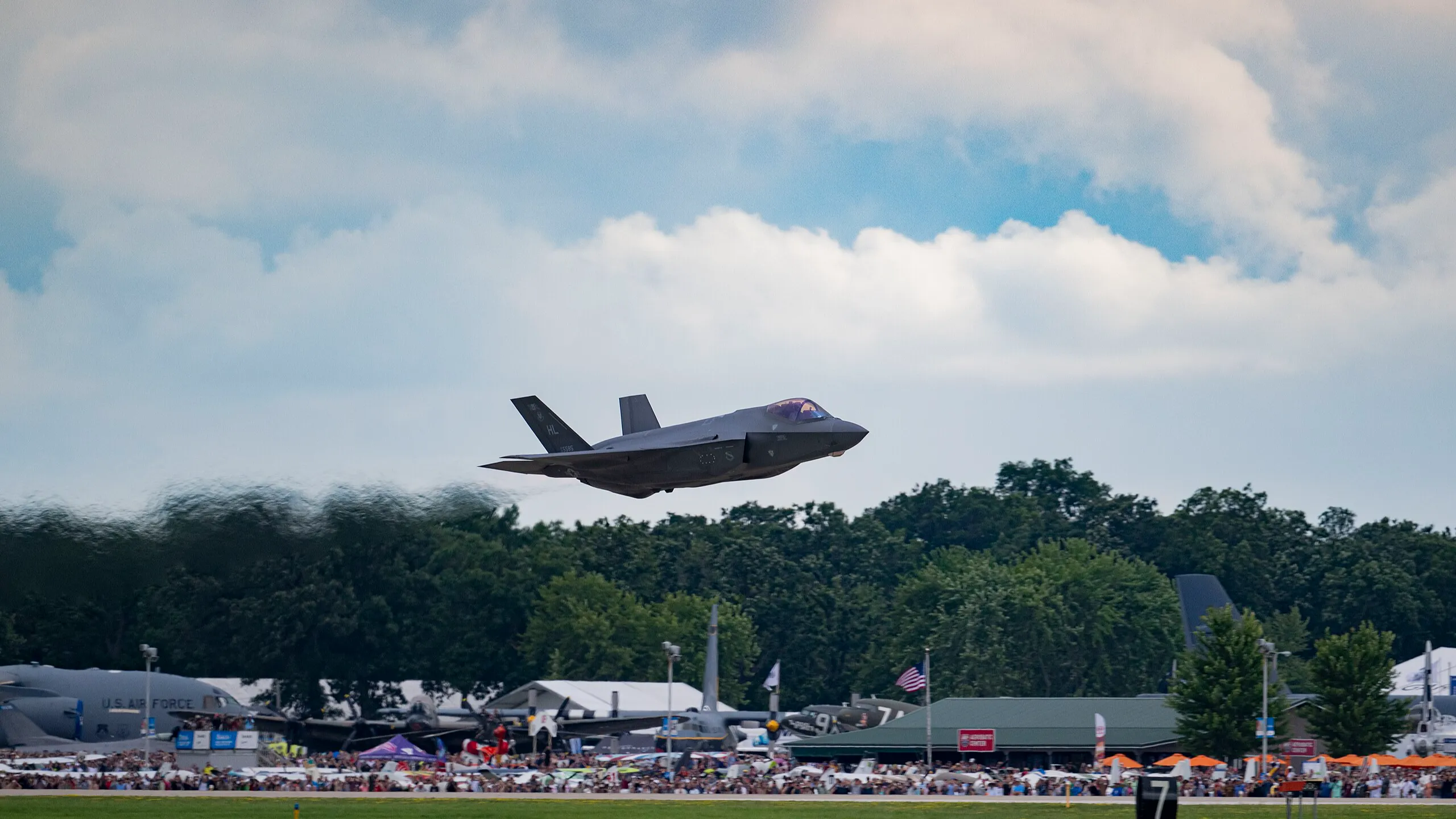
Here’s a table about the evolution of the G-35I in ISrael’s fleet:
| Year / Date | Milestone |
|---|---|
| 2009 | Israel sends Letter of Request to the U.S. for F-35 procurement |
| October 2010 | Letter of Agreement signed; Israel becomes first FMS customer for F-35 |
| December 2016 | First F-35I enters service at Nevatim Air Force Base |
| December 2017 | Israel declares F-35 squadron operationally capable |
| 2016–2020 | First squadron (20 aircraft) delivered |
| 2020 | Second F-35I squadron becomes operational |
| 2023 | Deal signed for 25 additional F-35Is (third squadron) |
| Early 2026 | ~48 of 50 aircraft from first two batches delivered |
| Late 2026 (expected) | Final 2 aircraft from initial orders to be delivered |
As of early 2026, 48 of those 75 aircraft are active. Sunday’s approval for the fourth squadron would bring the total on order to 100 F-35Is, placing Israel — alongside Australia — among the few non-U.S. nations to have committed to a triple-digit F-35 fleet. According to a January 2026 Lockheed Martin fact sheet, Lockheed Martin fulfilled its commitments for industrial cooperation and offset procurement with Israeli firms in late 2004 under the Peace Marble V program. Although the initiative was initially scheduled to span 12 years, work valued at $1.45 billion was completed in under five years:
A decade later, as part of the F-35 program Lockheed Martin signed Industrial Participation agreements with additional Israeli defense companies, worth Billions of dollars. In early November 2014, a new production line for F-35 wing boxes was inaugurated at Israel Aircraft Industries (IAI). As part of the contract Lockheed Martin, IAI will manufacture over 800 pairs of wing skins over the course of 15 years, at a total financial volume of approximately $2.5 billion. In addition, several agreements of industrial participation are already being conducted with additional Israeli companies, including Elbit Systems, Cyclone, Tadiran and others. The collaboration between Lockheed Martin and Israeli industries is expected to exceed $6 billion.
The F-35’s multi-domain architecture has made it indispensable to Israeli air campaign planning. The jet proved to be Israel’s key first-entry component in eliminating Iran’s most capable radars and air defence batteries across four rounds of strikes.

The F-15IA “Thunder” Has A Lineage Stretching To 1997
The F-15I Ra’am — “Thunder” in Hebrew — entered IAF service in January 1998, when the first two aircraft landed at Hatzerim Airbase before an audience of 3,000. Israel had selected the F-15I in January 1994 after evaluating the F-16, F/A-18, and the F-15E Strike Eagle; the two-seat dual-role platform, combining long-range interdiction with robust air superiority, was deemed the most capable for the IAF’s threat calculus. An initial order of 21 aircraft was subsequently expanded to 25 following an amendment approved by Prime Minister Yitzhak Rabin in 1995.
The original F-15I was equipped with:
- Hughes APG-70 synthetic aperture radar
- Kaiser holographic head-up display system
- Elbit display and sight helmet (DASH)
The aircraft’s Pratt & Whitney F100-PW-229 engines propel it to speeds exceeding Mach 2.0, and its combat radius approaching 800 miles. The platform can carry up to 23,000 lb of ordnance across multiple hardpoints.
The successor — designated F-15IA (Israel Advanced) — is Boeing’s adaptation of the F-15EX Eagle II for Israeli requirements. The F-15IA introduces a fly-by-wire flight control system, an Active Electronically Scanned Array (AESA), and a 25 per cent reduction in operating costs per flight hour compared to the legacy F-15 variants.
On December 29, 2025, the Pentagon awarded Boeing an $8.577 billion contract under the Foreign Military Sales framework for the design, integration, testing, production, and delivery of 25 new F-15IAs, with an option for 25 additional aircraft — work to be completed at Boeing’s St. Louis facility by December 31, 2035. Sunday’s approval for a second squadron, if the option is exercised, would bring Israel’s total F-15IA fleet to 50 aircraft, operating alongside the 66 earlier F-15 variants already in service.

How The F-35I And F-15IA Divide Roles In The IAF
A recurring misconception in defense commentary frames the F-35 and the F-15 as competing platforms vying for the same mission profile. Within the IAF’s operational doctrine, the two types are deliberately complementary.
The F-35I, with its low observable profile and sensor fusion capability, functions as the penetrating first-entry aircraft — suppressing enemy integrated air defense systems and opening corridors through which less stealthy platforms can then operate. The F-15IA, with its cavernous payload capacity and extended combat radius, then delivers the bulk of precision munitions against the target set that the F-35 has exposed. Let’s compare the specifications of the two aircraft:
| Category | F-35I Adir | F-15IA |
|---|---|---|
| Role | Stealth multirole fighter | Heavy strike / air superiority |
| Crew | 1 | 2 |
| Length | ~15.7 m | ~19.4 m |
| Wingspan | ~10.7 m | ~13.05 m |
| Max Takeoff Weight | ~31,800 kg | ~36,700 kg |
| Max Speed | Mach 1.6 | Mach 2.5 |
| Combat Radius | ~1,090 km | ~1,200–1,300+ km |
| Range | ~2,200 km | ~3,900 km (with tanks) |
| Service Ceiling | ~50,000+ ft | ~60,000 ft |
| Engines | 1 × F135 | 2 × F100/F110 |
| Payload Capacity | ~8,100 kg | ~13,000 kg |
| Radar | AN/APG-81 AESA | Advanced AESA (APG-82 class) |
| Key Strength | Stealth, sensor fusion, networking | Payload, range, speed |
| Survivability | Very high (low observability) | High (speed + EW systems) |
| Mission Profile | Penetration, ISR, precision strike | Deep strike, heavy weapons load |
This division of labour was clearly evident during the various phases of the Iran campaign. Because the F-35 stores its weapons internally to preserve its radar signature, the quantity of ordnance it can deliver per sortie is inherently constrained.
The F-15IA carries external loads that dwarf anything the F-35 can accommodate — including hypersonic-class weapons up to 22 feet in length and weighing up to 7,000 lb — which is why the IAF’s F-15s and F-16s carried the volumetric weight of the strike packages once the F-35 had suppressed Iranian defences. Outgoing Air Force Chief Major General Tomer Bar praised the acquisition as a move that would help Israel grow its “power and independence” in prosecuting future wars.

How Sunday’s Deal Compares With Israel’s Recent Parallel Procurement Trajectory
Sunday’s approval does not exist in isolation; it is the most recent and largest step in a procurement acceleration that has been building since October 2023. In November 2024, Israel’s Defence Ministry signed a preliminary $5.2 billion agreement for an initial 25 F-15IAs — the first squadron. That deal was converted into a firm Pentagon contract worth $8.577 billion in December 2025, covering production through 2035.
The June 2024 third-squadron F-35I agreement for $3 billion was itself an accelerated procurement, having been initiated before the full-scale conflict with Iran and fast-tracked during it. What distinguishes Sunday’s approval is its explicit anchoring within the “Shield of Israel” / “Hoshen” multi-year plan — a structured 350 billion shekel framework unveiled in January 2026 that runs through 2030 and does not even include U.S. military aid.
In parallel, Israel’s Defence Ministry awarded Elbit Systems contracts worth approximately $200 million for aerial munitions procurement in the weeks preceding Sunday’s fighter jet announcement. Netanyahu also signalled an ambition to indigenise weapons production, stating that much of the expanded defence budget would fund domestic munitions manufacturing to reduce dependence on foreign supply chains. Israel’s last attempt to build its own fighter jet — the Lavi programme — was cancelled in the 1980s after a decade of substantial financial losses.

Is The CeaseFire with Iran Fragile?
A ceasefire has been in place since April 8, with the U.S. Navy maintaining a blockade of Iranian ports. The possibility of renewed hostilities — particularly given the unresolved questions around Iran’s nuclear programme and the Strait of Hormuz — remains undiminished, providing the strategic justification for an expedited force-building timeline.
Around the middle of last month, the U.S. Senate rejected two resolutions aimed at halting military equipment sales to Israel, including bulldozers and heavy bombs. Around 40 of 47 Senate Democrats supported blocking a $295 million bulldozer sale, while 36 backed efforts to stop a $152 million bomb deal.
Boeing maintains relationships with more than 45 Israeli suppliers and has committed billions of dollars through reciprocal procurement agreements, while Lockheed Martin’s agreement with Israel incorporates Israeli-made components and electronic warfare systems into the F-35I — unique permissions not extended to most other partner nations.