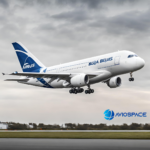
International operations from Navi Mumbai International Airport (NMI) have been delayed due to geopolitical tensions in West Asia, even as domestic traffic continues to strengthen, a senior executive confirmed to The Hindu Business Line. The delay, attributed to rising aviation turbine fuel costs (which have already doubled airfares in the neighboring country Nepal) linked to the Iran-US conflict, has pushed back previously anticipated international launch timelines.
The development comes as IndiGo (6E), which had planned to commence international services from NMIA in late March (and has seen increase in surcharges by more than $100 on some routes), has deferred its rollout. Despite the setback, airport authorities maintain that infrastructure expansion and long-term growth plans remain firmly on schedule.

Navi Mumbai Airport International Flight Delay
A senior executive, speaking on the sidelines of the Airports 360 Expo, stated that the initial timeline for international operations—expected by the end of March—has been deferred indefinitely.
“I can’t put an exact date for the start of international flights,” the executive said, highlighting the uncertainty created by escalating fuel costs. The Iran-US conflict has directly impacted jet fuel pricing, making international route viability more challenging in the near term. This comes amidst news that a carrier in the US increased its checked bag fees by $10, budget carriers in Korea slashed some routes, and many airlines have stopped using certain airspaces due to the conflict in Iran.
IndiGo had been preparing to launch overseas routes from NMIA starting March 29. However, the airline has now aligned with broader market conditions and postponed its plans, reflecting a cautious approach amid fluctuating operational costs.

NMIA’s Domestic Traffic Growth
While international ambitions face delays, domestic operations at NMIA have shown steady growth since their launch during the Christmas period. The airport currently handles around 156 daily domestic flights, signaling strong airline uptake and passenger demand.
The Hindus Business Line also reported that passenger throughput has reached approximately 20,000 daily passengers, with load factors improving notably. Average passengers per flight have increased from around 155 to 170, indicating better seat occupancy and route stabilization.
Airport authorities project that daily passenger traffic could rise to 50,000 by December, driven by network expansion and increased airline participation. This growth trajectory positions NMIA as a significant secondary hub in the Mumbai metropolitan region.
Navi Mumbai is set to become one of India’s largest airports, with the following capacity

Navi Mumbai Airport Expansion Plans
Despite operational challenges, the airport’s expansion blueprint remains unaffected. Planning and design work for a second terminal is currently underway, with construction expected to commence after the monsoon season.
The second terminal will increase annual passenger handling capacity from 20 million to 50 million. Officials emphasized a focus on efficiency-driven design, stating that simplified layouts and standardized equipment will be prioritized to streamline construction and operations.
“We are looking at simplified designs and standardised equipment. Wherever possible, we will use precast material,” the executive noted. This approach aims to accelerate project timelines while maintaining cost discipline.
Navi Mumbai is set to become one of India’s largest airports, with the following capacity
| Parameter | Details |
|---|---|
| Total Area | 1,160 hectares |
| Rank in India | Second-largest airport |
| Construction Cost | Approximately $1.9 billion |
| Future Capacity (from 2032) | 95 million passengers annually |
However, as we touched upon in our previous piece, there have been some environmental concerns that have been raised. The project required the resettlement of over 2,700 families, many of whom were fishermen, farmers, and daily wage workers. The site also included around 1,000 acres of mudflats, with the Kalundiya and Ulwe rivers flowing through the area. Its closeness to the Thane Creek and Panj wetlands further sparked concerns, particularly regarding potential disruption to bird habitats.

Investment and Policy Support
The broader master plan for NMIA envisions development across five phases, ultimately scaling capacity to 90 million passengers annually. The Adani Group is expected to invest approximately ₹80,000 crore in the project, covering both aeronautical infrastructure and surrounding land development.
Airport authorities have also urged the Maharashtra government to reduce value-added tax on aviation turbine fuel from 18 percent to 1 percent. Such a reduction, they argue, would significantly improve operational economics and support faster route expansion.
“Greenfield airport like ours have their own challenges and hand-holding from the government is required to support growth,” the executive said. The request reflects broader industry concerns about cost competitiveness in emerging airport ecosystems.

There are Other Problems Navi Mumbai Airport Will have to Navigate