MH370 Search Extended Until June 2027 as Ocean Infinity Continues Hunt Across Remaining 7,428 Sq Km

Malaysia Airlines (MH) Flight MH370 has now been missing for twelve years, and the most recent deep-sea search to find it has ended without success. Twelve years after Malaysia Airlines Flight MH370 vanished with 239 people aboard, a renewed deep-sea search in the southern Indian Ocean has so far failed to locate the missing aircraft, Malaysian authorities said Sunday. The search was conducted by Ocean Infinity, a marine robotics company, under a “no-find, no-fee” contract worth $70 million — payable only if the wreckage was found. It was not.
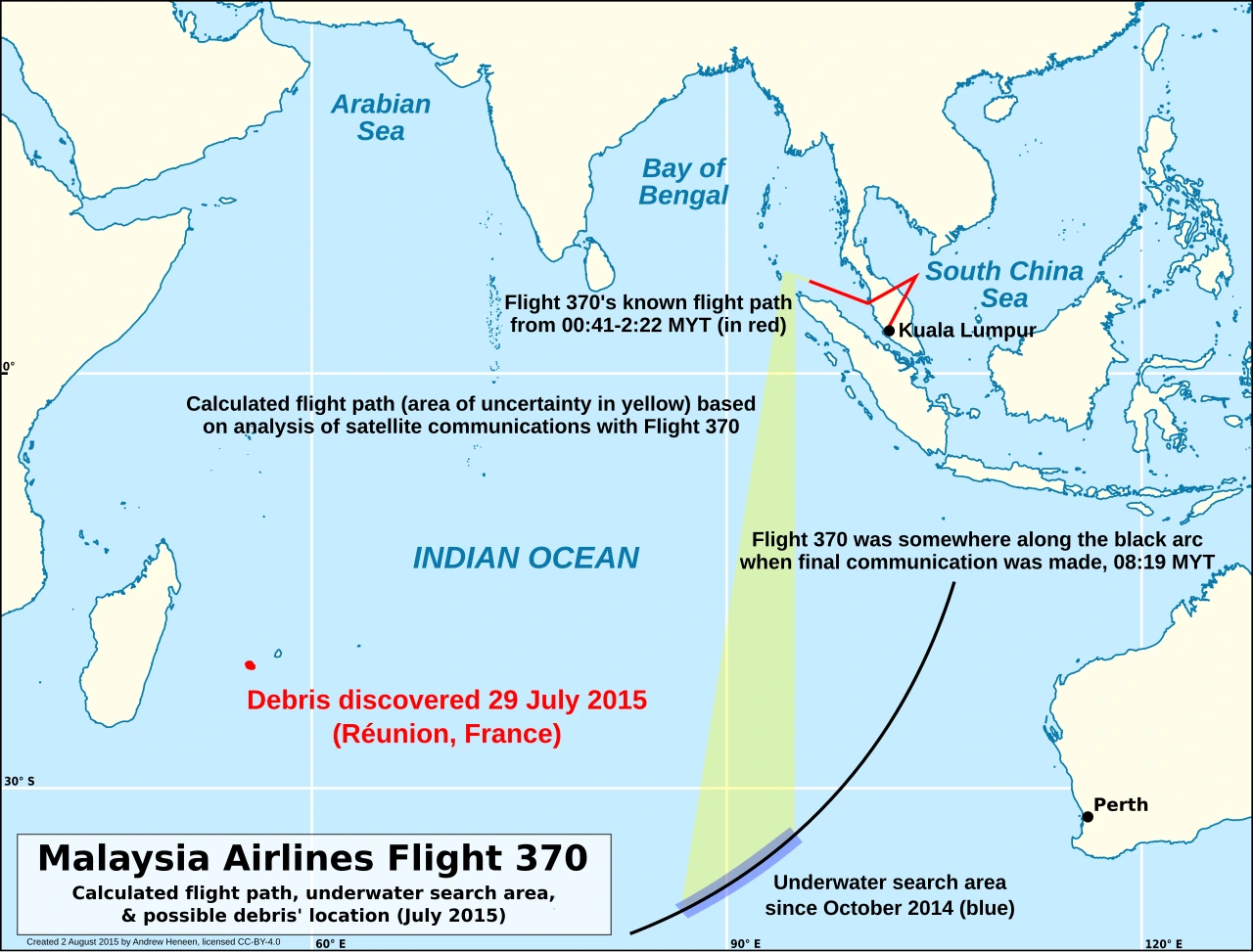
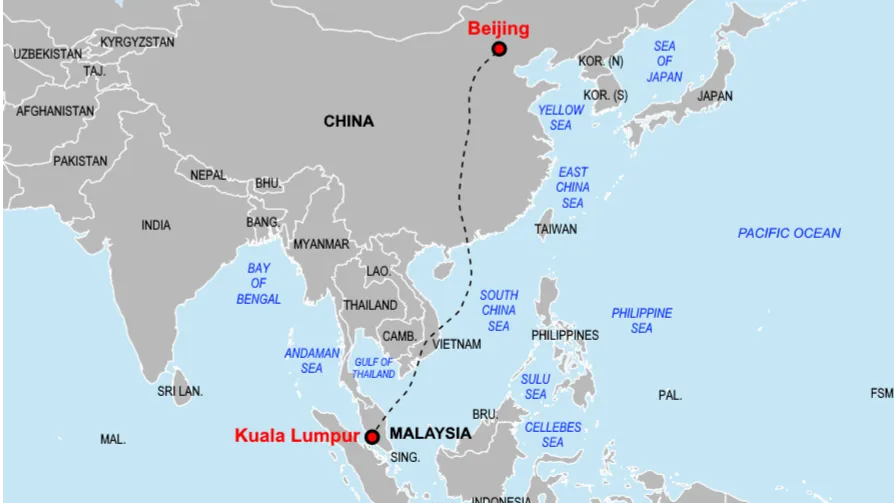
Malaysia Airlines flight MH370 disappeared on March 8, 2014, less than an hour after takeoff from Kuala Lumpur International Airport (KUL) in Kuala Lumpur. The aircraft was flying toward Beijing Capital International Airport (PEK) in Beijing when it lost contact with air traffic control. Investigators later determined that the plane deviated from its planned route and likely continued flying for several hours before crashing somewhere in the southern Indian Ocean. Twelve years after the disappearance of the Boeing 777 carrying 239 passengers and crew, investigators still have no confirmed location for the wreckage.

Photo: Andrew Heneen | Wikimedia Commons

The Aircraft, The Flight, and the Moment Contact Was Lost

The aircraft at the centre of this mystery was not a new or obscure plane. Flight 370 was operated with a Boeing 777-2H6ER, serial number 28420, registered as 9M-MRO. The aircraft was delivered new to Malaysia Airlines on 31 May 2002. It was powered by two Rolls-Royce Trent 892 engines and had accumulated 53,471.6 hours and 7,526 cycles in service. It had not previously been involved in any major incidents.

The aircraft was carrying 12 Malaysian crew members and 227 passengers from 14 different nations. Of the 227 passengers, 153 were Chinese citizens, including a group of 19 artists returning from a calligraphy exhibition in Kuala Lumpur. Thirty-eight passengers were Malaysian. The remaining passengers were from 12 different countries.

As the plane was nearing Vietnamese airspace, the pilot in command of MH370, Zaharie Ahmad Shah, was instructed by a Kuala Lumpur air traffic controller to make contact with Ho Chi Minh’s air traffic control, as per usual. Zaharie replied, “Good night. Malaysian 370.”

It was the last transmission anyone heard from MH370. Shortly afterward, the plane’s transponder was switched off, making it invisible to civilian air traffic control systems. Military radar continued to detect it, and a later investigation showed that MH370 changed course from its planned route to Beijing, turning back across northern Malaysia and Penang Island before heading northwest into the Andaman Sea.

Key facts about the aircraft and the flight:

  • Aircraft type: Boeing 777-200ER (registration 9M-MRO)
  • Route: Kuala Lumpur International Airport (KUL) to Beijing Capital International Airport (PEK)
  • Departure: 12:41 AM local time, 8 March 2014
  • Last ATC contact: Approximately 38 minutes after takeoff, over the South China Sea
  • Persons on board: 239 (227 passengers, 12 crew)
  • Pilot in command: Captain Zaharie Ahmad Shah, age 52 at the time
  • First officer: Fariq Abdul Hamid, age 27
Photo: Weaveravel | Wikimedia Commons

The 2025–2026 Ocean Infinity Search

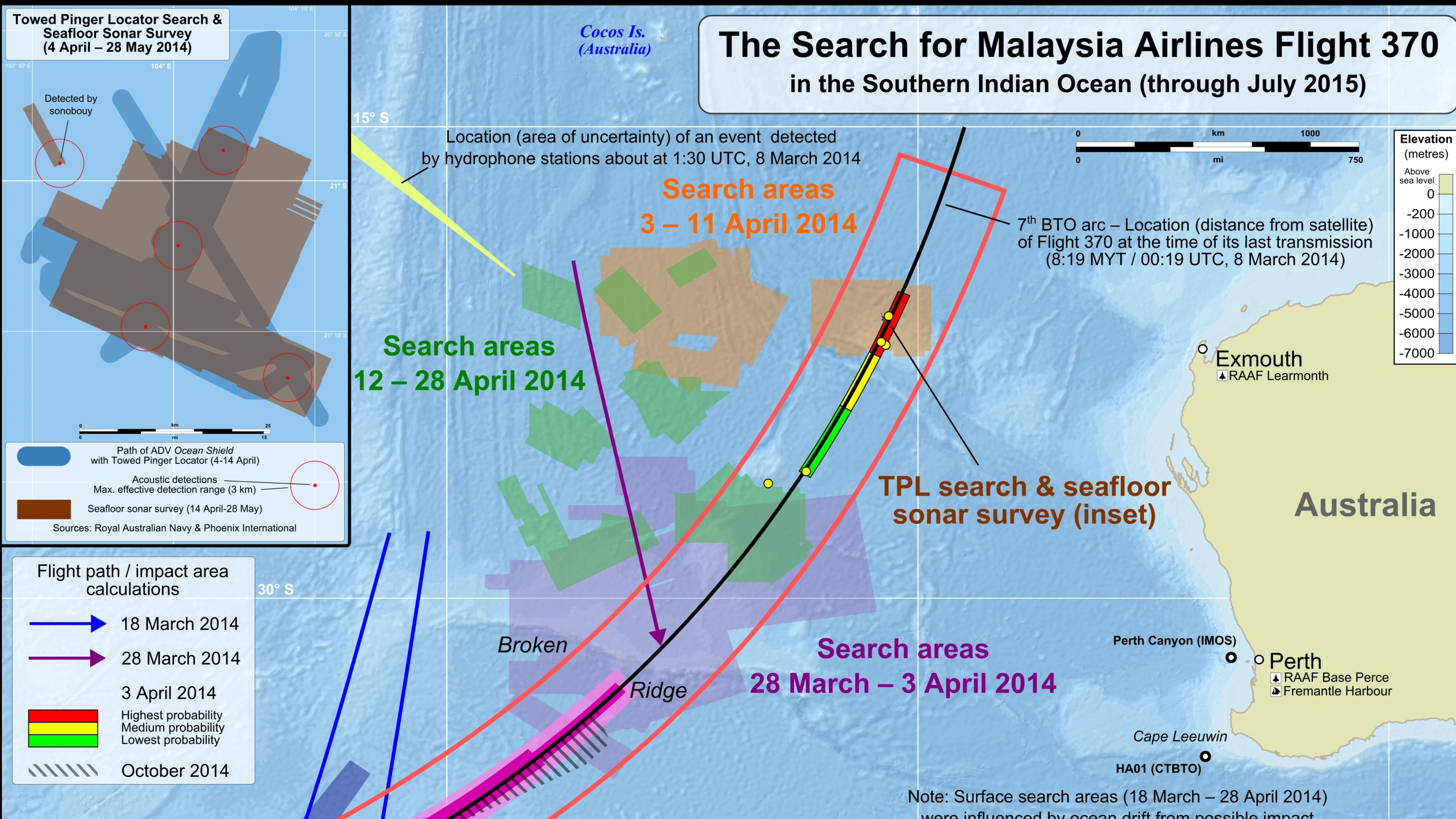
On 25 February 2025, Malaysia announced the start of a new search for MH370, to be conducted by Ocean Infinity. The mission was planned to cover an area of 15,000 km² in the southern Indian Ocean, to be searched over 18 months. The search was conducted under a “no find, no fee” agreement with the Malaysian government, which pledged a $70 million reward for the discovery of the wreckage.

According to the AAIB official statement, the latest search was carried out for 28 days in two phases between 25–28 March 2025 and 31 December 2025 to 23 January 2026. The search area covered approximately 7,571 square kilometres of seabed. Poor weather had periodically hampered search operations.

On 23 January 2026, Ocean Infinity departed the search area in the Indian Ocean. Since first embarking on this mission in 2018, the company has spent 151 days at sea and mapped more than 140,000 square kilometres of seafloor.

Ocean Infinity CEO Oliver Plunkett addressed the outcome directly. As published on the company’s official website, he said:

“It was important for us to take advantage of every piece of information and data available and go back, but despite all that effort, we haven’t been able to find it. The scale of the challenge both geographically and technologically is almost impossible to comprehend. We’re proud to have brought our expertise and the most advanced technology we’ve ever deployed.”

He added:

“If nothing else, we can say with confidence that it isn’t where we looked. That matters — it brings clarity, and it will help those continuing to study the evidence refine their thinking and shape future search strategies.”

Photo: Andrew Heneen | Wikimedia Commons

Malaysia’s Air Accident Investigation Bureau Issues Formal Statement

Malaysia’s Air Accident Investigation Bureau (AAIB) said that the latest seabed search conducted by specialist marine robotics company Ocean Infinity between March 2025 and January 2026 had scanned thousands of square kilometres of the ocean floor but had failed to identify any signs of wreckage from the lost Boeing 777-200ER.

The AAIB statement read:

” The search activities undertaken have not yielded any findings that confirm the location of the aircraft wreckage. The government remains committed to keeping the families informed and will continue to provide updates as appropriate.”

No further details were provided by the AAIB as to when the search might resume, or indeed, any confirmation that it would. Although Ocean Infinity’s contract runs until June 2026, the company has since said that its dedicated search vessel has now been deployed on other seaborne missions. It is not currently scheduled to return to the Indian Ocean.

Families Of Victims: Voice370 Urges Contract Extension

The announcement fell on the 12th anniversary of the disappearance, and the grief of families remains unresolved. Li Eryou, whose son disappeared on the flight, was quoted by the BBC as saying:

“For years, I have been asking, ‘What do you mean by lost contact? It seems to me that if you lose contact with someone, you should be able to reconnect with them.'”

Voice370, a campaign group representing families of passengers and crew onboard MH370, acknowledged that it was unlikely that any new search would resume before the contract ends due to sea conditions in the search area. However, it urged the Malaysian government to grant any request for Ocean Infinity to extend its agreement, as well as expand the same terms to other interested deep-sea exploration firms.

Voice370 stated:

“The government pays nothing unless the aircraft is found. Any request by Ocean Infinity to extend the search contract should therefore be granted without hesitation. If the present search is unsuccessful, we would also urge Malaysia to kindly consider extending similar no find, no fee opportunities to other capable deep-sea exploration companies.”

In an emotional statement, Voice370 insisted they would “never give up” on finding their loved ones: “We will continue the search for MH370, and we will continue the fight for answers.” Relatives also paid tribute to the 239 passengers and crew, whose “absence continues to be felt every single day.”
The Barnacle Evidence and New Theories Behind MH370

While robot submarines have failed to find the wreck, science is quietly approaching the mystery from a different direction — through barnacles. In July 2015, a flaperon from MH370’s right wing washed ashore on Réunion Island in the western Indian Ocean. Attached to it were small crustaceans called Lepas anatifera — gooseneck barnacles.

Gregory Herbert, a geoscientist at the University of South Florida, said:

“The flaperon was covered in barnacles and as soon as I saw that, I immediately began sending emails to the search investigators because I knew the geochemistry of their shells could provide clues to the crash location.”

According to a 2023 paper published in AGU Advances, researchers demonstrated that barnacle shells function as chemical archives of the water they grow in. As each shell layer forms, its chemistry shifts according to the surrounding ocean temperature, which in the Indian Ocean fluctuates with location and season. Scientists believe that larger, older barnacles found on additional MH370 debris could extend this chemical drift record further back in time — potentially pointing toward where the aircraft first entered the water.

A separate scientific challenge came in December 2024. Retired University of Tasmania scientist Vincent Lyne published a paper in The Journal of Navigation challenging one of the investigation’s foundational assumptions. Lyne argued that MH370’s final two satellite signals are more consistent with a controlled, eastward descent than with the widely accepted theory that the aircraft ran out of fuel and entered a rapid, uncontrolled dive into the southern Indian Ocean. He described that prevailing interpretation as “fundamentally flawed.” That hypothesis, if validated, would mean the aircraft may not even lie where search teams have been looking.

The Pilot Theories: What Is Known And What Remains Unproven

The unexplained diversion of MH370 has sustained intense scrutiny of the flight crew for twelve years. The consensus among experts is that the plane’s disappearance was probably the result of pilot suicide: either by the pilot, Captain Zaharie Ahmad Shah, or First Officer Fariq Abdul Hamid. The flight path, with its sharp turns, in no way resembles an autopilot flight plan; it is consistent with manual control. The turning off of all communications is more likely to have been a deliberate act than a total system failure.

In 2016 it was reported that Captain Zaharie Ahmad Shah, on his home flight simulator, had flown over the southern Indian Ocean less than a month before the plane vanished. The simulated flight closely matched the missing aircraft’s final path.

However, Zaharie’s family firmly rejected those claims. As reported by Newsweek, his sister said:

“Until and unless we have evidence, tangible evidence, I maintain his innocence. Simply put, the suicide story is but another story. My brother loved life, he loved his lifestyle, period.” She added: “I want the world to know here is a loving man who will stop at nothing to render help when it is needed.”

A 495-page official report into the disappearance in 2018 said the Boeing 777’s controls were likely deliberately manipulated to go off course, but investigators could not determine who was responsible and stopped short of offering a conclusion on what happened, saying that depended on finding the wreckage. Investigators said there was nothing suspicious in the background, financial affairs, training and mental health of both the captain and co-pilot.

The Aviation Safety Reforms MH370 Triggered

The disappearance of MH370 directly shaped international aviation regulation. In 2014, ADS-B radio signals could be picked up only by ground stations when the plane was in range. Today, the Virginia-based Aireon service tracks aircraft globally by collecting ADS-B transmissions with Iridium satellites. An airliner flying an unplanned route over the Indian Ocean today could be tracked via ADS-B, provided its transponder was still transmitting.

Five years after MH370 disappeared, Honeywell and Curtiss-Wright Corp. announced their intention to develop an ejectable cockpit voice and flight data recorder that would store 25 hours of cockpit audio. The Honeywell Connected Recorder-25 was approved for installation aboard Boeing 737, 767 and 777 aircraft. Airbus went further, choosing to install ejectable black boxes on its new aircraft designs.

The BBC Science Focus magazine noted in May 2026 that from 2025, the International Civil Aviation Organization mandated that planes carry a device broadcasting their position every minute if they encounter trouble. That regulation was a direct result of the MH370 case. Finding MH370’s main wreckage, BBC Science Focus noted, “could lead to even more robust measures” — and even twelve years on, the deep, cold ocean floor is likely preserving evidence that would reveal exactly what happened.

How This Search Compares with the Broader MH370 Search History

The 2025–2026 Ocean Infinity mission is the fourth major search phase since 2014. Across all phases, the total scale of the effort is staggering:

  • 2014: Multinational initial search across the Gulf of Thailand, South China Sea, Strait of Malacca, and Andaman Sea — 50 aircraft, nearly 60 ships from 26 nations
  • 2014–2017: Seabed survey of 120,000 km² led by Australia, involving China and Malaysia — found nothing
  • 2018: First Ocean Infinity mission — covered a high-probability area with autonomous underwater drones, ended June 2018 without success
  • 2025–2026: Second Ocean Infinity mission — surveyed 7,571 km² in two phases, ended January 2026 without success

The southern Indian Ocean features some of the world’s most hostile deep-sea environments. Decades of seabed shifting, underwater currents, and the sheer vastness of the zone complicate wreckage detection. Previous broad searches covering over 120,000 km² yielded only debris washed ashore — not the main fuselage or aircraft recorders.

The June 2026 Contract Deadline for Ocean Infinity

Ocean Infinity’s contract with the Malaysian government runs until June 2026. Voice370 urged the Malaysian government to extend the contract period, which ends in June 2026, to allow a continued search after the winter months in the southern hemisphere and deteriorating sea conditions.
Voice370 said:

“A simple addendum extending the contract period without altering the core terms of the agreement would allow the search to continue without delay.”

Ocean Infinity stated:

“Although this phase of the search has concluded, our commitment has not. We’re continuing to work with the Malaysian Government in the hope of being able to return when circumstances allow.”

What remains certain is that until the black boxes — the cockpit voice recorder and flight data recorder — are physically recovered, the cause of the disappearance cannot be confirmed. Experts hypothesise that MH370 was deliberately and rapidly depressurised, rendering passengers dead within minutes. But without physical evidence, that remains a hypothesis. The main fuselage of Malaysia Airlines Flight MH370, along with the answers it carries, remains somewhere on the floor of the southern Indian Ocean.

Leave a Comment

Your email address will not be published. Required fields are marked *

Scroll to Top