
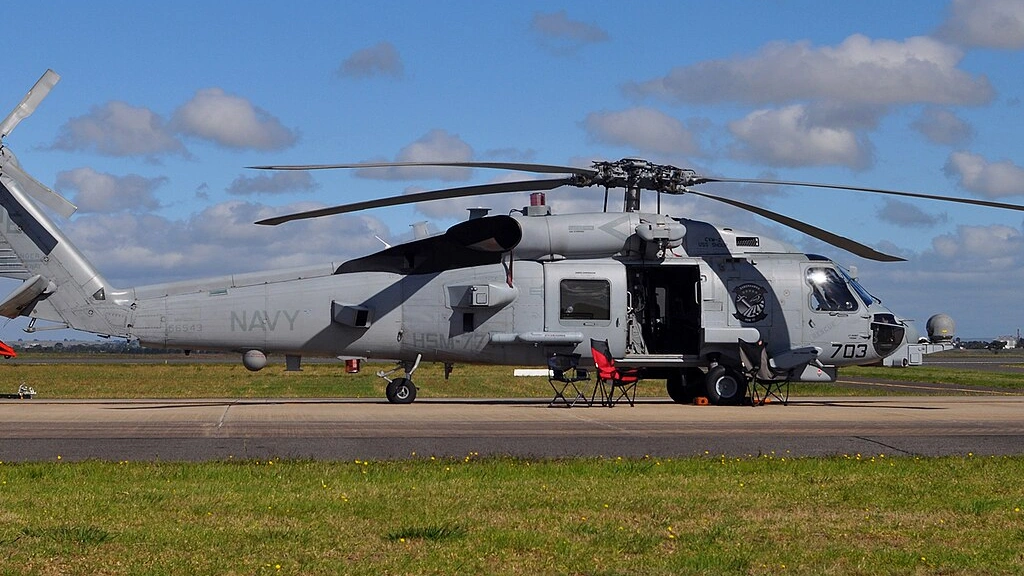
On 28th November, 2025, the Government of India revealed that it had signed a five‑year sustainment contract worth approximately ₹7,995 crore (about US$894 million) with the United States to provide maintenance, spare parts and support services for the Indian Navy’s fleet of MH-60R Seahawk helicopters.
.jpg)
Under a Letters of Offer and Acceptance (LOAs) agreement under the US Foreign Military Sales (FMS) programme, the pact covers follow‑on support and supply support, including provisioning of spares, support equipment amongst other things.
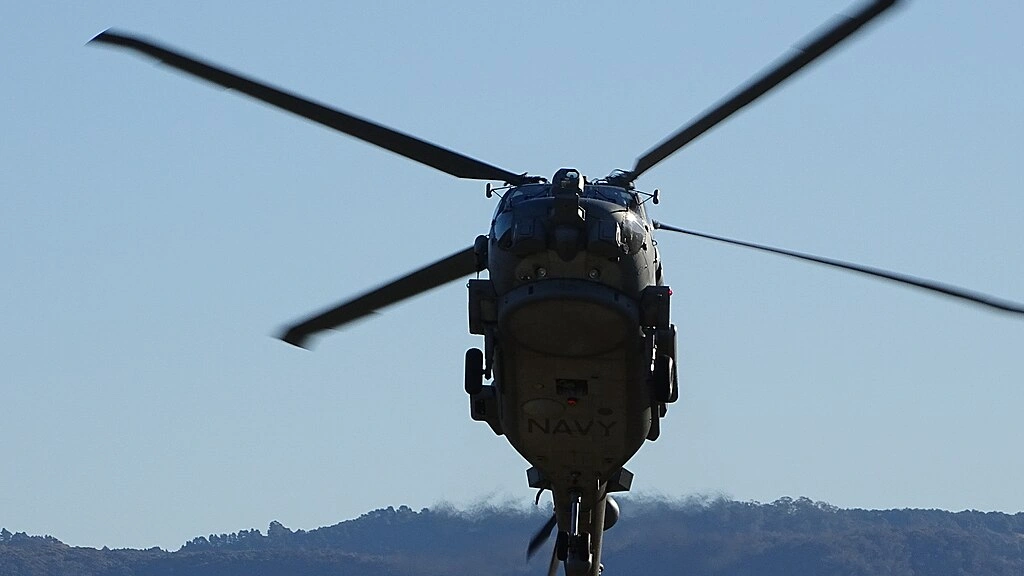
MH-60R Seahawk Helicopters: Dimensions & Engine Specifications
| Parameter | Value |
|---|---|
| Cabin width | 5 ft 11 in/ 1.80 m |
| Cabin height | 4 ft 3 in/ 1.30 m |
| Cabin length | 10 ft 6 in/ 3.20 m |
| Exterior length | 64 ft 10 in/ 19.76 m |
| Tail height | 16 ft 9 in/5.10 m |
| Fuselage diameter | 6 ft 11 in/ 2.10 m |
| Wing span / rotor | 53 ft 8 in/16.36 m |
| Engine | 2× General Electric T700-GE-401C turboshaft |
| Engine type | Turboshaft |
| Power | 2 × 3,425 shp · 2,554 kW |
| Wing tips | No winglets |
.jpg)
Why India Struck the Deal for Sustainment Support of the Indian Navy’s MH-60R?
- 19 Westland Sea King Mk42A/B helicopters
- 14 Kamov Ka-28 Soviet-era coaxial rotorcraft
- 12 P-8 fixed-wing jets
- six Sikorsky SH-3 Sea Kings
The deal aims to ensure the operational availability and maintainability of the MH‑60R fleet, enabling them to operate from ships and dispersed bases under all‑weather conditions. According to the Ministry of India, the “sustainment support is a comprehensive package” that includes the following:
- product support
- provisioning of spares
- repair & replenishment of components
- support equipment
- training and technical support
- setting up of ‘Intermediate’ level component repairs & Periodic Maintenance Inspection facilities in India
India is already on the path to self-sufficiency in aviation (the production of the HAL Tejas under the “Aatmanirbhar Bhaarat“, though Tejas suffered a devastating crash in the Dubai Air Show recently). Developing the facilities to serve the nation’s MH-60Rs within the India would strengthen its capabilities in the long run, whilst making greater strides in the path of self-reliance in aviation:
“This would further lead to indigenous product and services development through MSMEs and other Indian firms….The support would enable the operation of these helicopters from dispersed locations as well as ships, ensuring optimal performance during all their primary and secondary missions/roles,”
Helicopter that can fly to the top of Everest to be manufactured in India
India’s MH-60 Fleet Status
As mentioned previously, the Indian Navy had originally placed an order for 24 MH‑60R Seahawks from the US under an FMS agreement in February 2020. However, in contrast with the numbers reported by Flight Global, Hindustan Times reported that fifteen of these have been delivered, and the sources quoted by the latter of these sources revealed that the remainder are scheduled to arrive by next year.
The MH‑60R is a twin‑engine, all‑weather, multi‑role naval helicopter capable of anti‑submarine warfare (ASW), anti‑surface warfare (ASuW), and other maritime roles. According to Lockheed Martin, some of the other capabilities of the MH-60R include: