Delta Airbus A350 Emergency Landing Tokyo: Hydraulic Issues Forces Flight DL 388 to Make an Emergency Landing

On 28 November 2025, a Delta Air Lines (DL) long-haul flight from Shanghai Pudong International Airport (PVG) to Detroit Metropolitan Wayne County Airport (DTW) was forced to divert to Tokyo International Airport (Haneda, HND) after the crew detected a hydraulic-system malfunction aboard its Airbus A350-900, reported Aviation Herald.
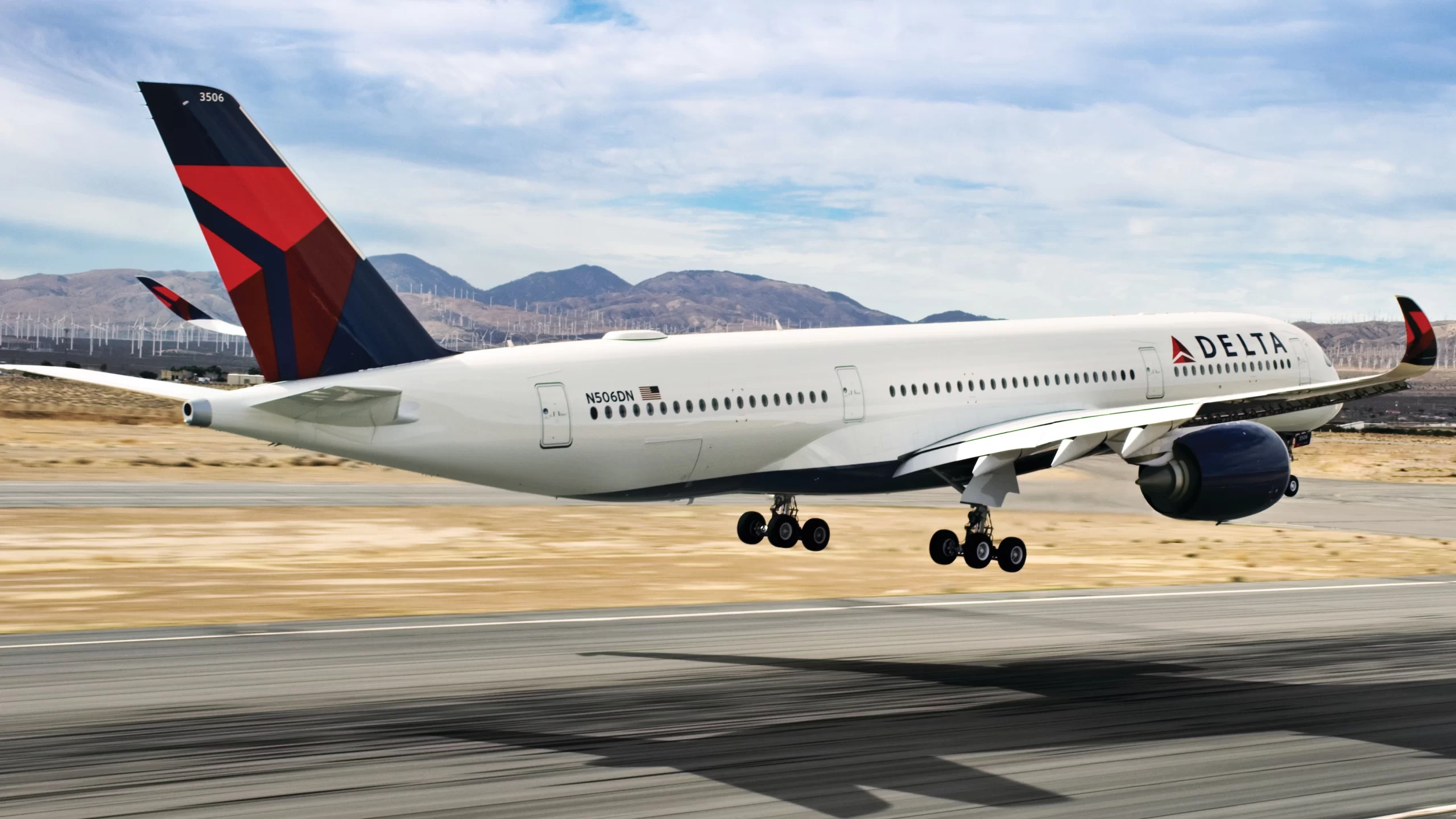
Photo: Delta Air Lines

The aircraft—registration N512DN, operating as flight DL388—landed safely on Runway 34R around 20:50 local time, with emergency services on standby. The runway remained closed for some time following touchdown.
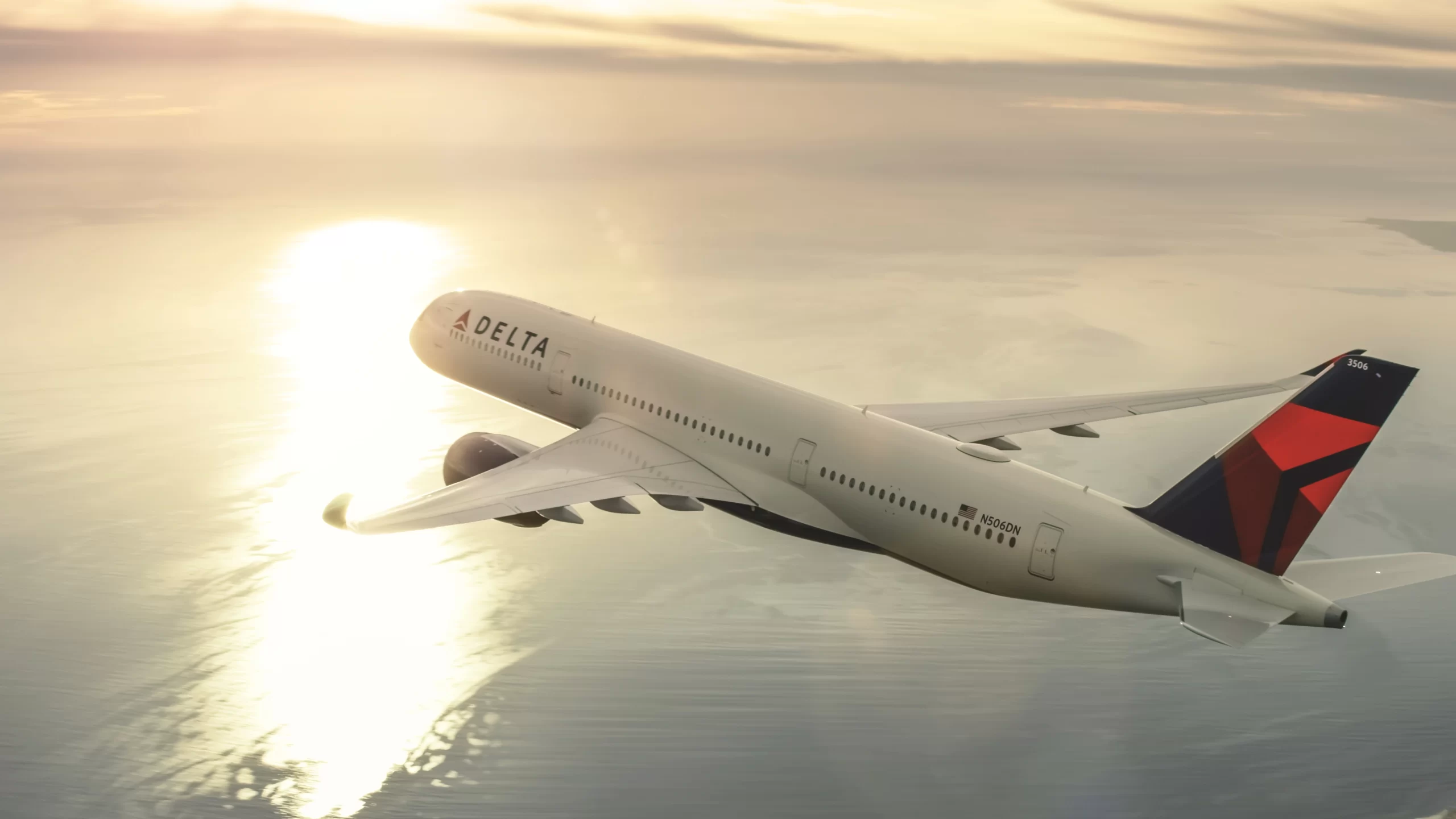
Delta Air Lines overview

Category Information
ICAO Code DAL
Headquarters Atlanta, Georgia, United States
Primary Hub Hartsfield–Jackson Atlanta International Airport (ATL)
Other Major Hubs Detroit (DTW), Minneapolis–Saint Paul (MSP), Salt Lake City (SLC), New York–JFK (JFK), Los Angeles (LAX), Seattle–Tacoma (SEA)
Founded 1924
Commenced Operations 1929
Fleet Size (All Types) ~950 aircraft
Widebody Types Operated Airbus A350-900, A330-200/300/900, Boeing 767-300ER / 767-400ER
Narrowbody Types Operated Airbus A321ceo/neo, A320, A319, Boeing 737-900ER/800, 757-200/300
Global Alliance SkyTeam
Key Long-Haul Markets Transpacific, Transatlantic, Latin America
Number of A350-900s in Service 38 (with 6 more on order)
Photo: Delta Air Lines

Delta Flight DL388 Diverted: What Happened

Flight DL388 was scheduled to depart Shanghai Pudong, which is one the busiest airports in the world, at 17:30 (local time) bound for Detroit. According to Aviation Publication Simple Flying, “the aircraft had pushed back from the gate at 17:46“.

But when the aircraft was 140 nautical miles (259 km) north of Tokyo i.e., just passed over Japan, the flight crew detected a hydraulic anomaly, and the captain opted for a precautionary diversion to the nearest major airport- Japan’s Tokyo Haneda Airport.

The crew declared an in-flight emergency — a decision taken “out of an abundance of caution” according to Simple Flying, which also reported the following response from a spokesperson from Delta:

“On Nov. 28, the crew of Delta flight 388 followed procedures to divert to Tokyo-Haneda after reporting a mechanical issue while en route from Shanghai to Detroit. The aircraft landed safely, and we apologize to our customers for the delay in their travel plans. Nothing is more important than the safety of our customers and crew.”

Emergency services were deployed on the ground at Haneda. The Delta’s Airbus A350 touched down safely on Runway 34R, vacated the runway, and the runway was closed for some time.

The aircraft was subsequently towed to a gate. The remainder of the journey to Detroit was cancelled.

Photo: Delta Air Lines

Details: Delta’a A350 that was diverted to Haneda

According to data from planespotters.net, Delta operates a total of 988 aircraft- 39 of which are the Airbus A350 type. [Note that the Airbus A350 is an aircraft type that is operated on the longest route the world.] The same aircraft is also deployed in the longest one-stop flights as well.

In Pictures: The World’s 10 Longest One-Stop Flights in 2025

Let’s have a look at the Airbus A350-900 involved in the incident.

Attribute Detail
Registration N512DN
Serial number (MSN) 267
First flight (test) December 2018 under French test registration F-WZGE
Delivered to Delta January 2019
Entered service 14 Feb 2019
Photo: Delta Air Lines

Here’s how Delta configures its A350-900s that was involved in the incident:

Category Delta One Delta Premium Select Delta Comfort+ Economy
Seat Type & Layout 32 Thompson Vantage XL, 1-2-1 staggered 48 Collins MiQ, 2-4-2 36 Recaro CL3710, 3-3-3 190 Recaro CL3710, 3-3-3
Seat Width 20.5″ 18.5″ 18″ 18″
Pitch / Bed Length 76″ fully-flat bed 38″ pitch 34″ pitch 31″ typical pitch
Screen Size 18″ touchscreen 13.3″ touchscreen 11″ touchscreen 11″ touchscreen
Power Ports 110V AC + 2× USB-A 110V AC + 2× USB-A Shared 110V AC + 1× USB-A Shared 110V AC + 1× USB-A
Additional Notes Row 1 has wider footwells Leg/foot rest + 4-way headrest Front of Economy section Standard long-haul configuration
Data: Aerolopa
Photo: Delta Air Lines

Previous Incidents Involving Delta A350 / Similar Events

Date Flight / Aircraft / Location Issue / Event Outcome / Notes
29 May 2024 DL 200 — A350-900, registration N519DN, Atlanta (ATL) departure Loss of automation — autopilot and autothrust failure shortly after takeoff
  • Crew declared emergency
  • aircraft returned and landed overweight but safe.
29 Aug 2023 DL 175 — A350-900, registration N576DZ, approach to Atlanta (ATL) Severe turbulence encounter during descent
  • 2 crew + 2 passengers seriously injured
  • 5 passengers + 8 crew minor injuries
  • aircraft landed safely
10 Sep 2024 Taxiing A350-900 (registration N503DN) + CRJ-900 at Atlanta (ATL) Ground collision: A350 wingtip struck CRJ tail during taxi
  • No injuries; CRJ tail damaged
  • A350 wingtip damage
  • both aircraft sent for maintenance
Photo: Delta Air Lines

What do you mean by Hydraulic Issues in aircraft?

In smaller aircraft, such as light or general aviation aircraft, hydraulic systems perform simpler functions, such as operating the wheel brakes, while in larger and more sophisticated aircraft, such as the one used in DL388, (the Airbus A350-900), rely on hydraulics to power:

  • Wheel Brakes
  • Landing Gear
  • primary and secondary flight controls
  • Nosewheel steering
  • Thrust reversers
  • Cargo doors

An aircraft generally comprises of two or more hydraulic systems. As aircraft increasingly depend on hydraulic power, the reliability of these systems becomes crucial for flight safety. To address this, the aircraft’s hydraulic systems “are incorporated to ensure reliability, redundancy and the ability to maintain control of the aircraft in the event of one or more failuresreported Skybrary:

“Each system is provided with different sources of fluid pressurization and power generation. This power is transmitted by the hydraulic fluid through system specific hydraulic lines and used to drive the motors and actuators associated with that system. While hydraulic systems may be designed to exchange power under controlled conditions via a Power Transfer Unit (PTU), there are very rarely provisions for any exchange of fluids incorporated into system designs.”

Some of the effects of the failure of the hydraulic systems include:

  • Loss of control or degraded flight control, including autopilot failure.
  • Impaired landing gear operation, flaps, and slats functionality.
  • Reduced braking performance and loss of anti-skid systems.
  • Inoperative nosewheel steering and thrust reversers.
  • Damage to other systems due to hydraulic leaks or ruptures.
  • Possible loss of ETOPS or RVSM operational capability.

Leave a Comment

Your email address will not be published. Required fields are marked *

Scroll to Top