Can we ever, as astronomer Rebecca Elson, said
stop the universe
From rushing on and on
Into its own beyond
Till it exhausts itself and lies down cold,
Its last star going out
? The answer is an emphatic “NO”. All stars, no matter how brilliantly they shine, or how extraordinarily they explode as supernovae, or form “the nitrogen in our DNA, the calcium in our teeth, the iron in our blood, the carbon in our apple pies” (to borrow Carl Sagan’s words), must eventually be snuffed out. Some act as fodder into the giant abyss of black holes, while others disintegrate at various pace depending upon their volumes. And it might not be much of a consolation for anyone to know that despite our search for
…swarms of them,
Enough for immortality,
Always a star where we can warm ourselves.
the eventual fate of the universe will be that of galaxies that have been pancake detonated inside the unimaginable singularities of black holes, which themselves would have merged into one another, getting bigger and bigger, until having burped themselves out as Hawking radiation. Who knows what creatures we’ll have transmorgified into when we’ve stumbled into the last stars to warm ourselves. After all, to quote Rebecca again,
We are survivors of immeasurable events,
Flung upon some reach of land,
Small, wet miracles without instructions,
Only the imperative of change.
Stars are wet miracles too (if we can envisage plasma as being wet). Their powers are flung into the reach of land that is the Earth. We’re still into the early stage of technological evolution, as we’ve barely been able harness the power of the closest star to us – the Sun – for our everyday use. But we might be able to use a black hole to warm oursleves, even when the power of all Sun-like blobs have been stomped out by the laws of the universe.

Nikolai Kardashev: The Quantificator of an evolving civilization’s increasing energy needs
For now, planet-based fuel sources like fossil fuels, solar panels, and nuclear power plants have been just about enough to get through our energy needs. But it has often been said that a lot of human-ly things are subject to the pareto principle: 80% of the world’s wealth is concentrated in the pockets of the richest 20%, 80% of the world’s problems stem from 20% of the causes, 80% of the world hasn’t experienced flying on an aircraft, and so forth. If we are to take the energy needs of the 80% who are not as fortunate as the top 20% into consideration, and provide them as much, it is quite clear that planet-based fuel resources as we’re using right now might not be enough. After all, we’re dabbling at the lower ends of what Nikolai Kardasev called a Type I Civilization, whose upper echelons if we are to get to, necessitates that we harness the energy of volcanoes and earthquakes.
Then there’s the Type I and Type II civilizations too:
| Type of civilization | Characteristics |
| Type II |
|
| Type III |
|
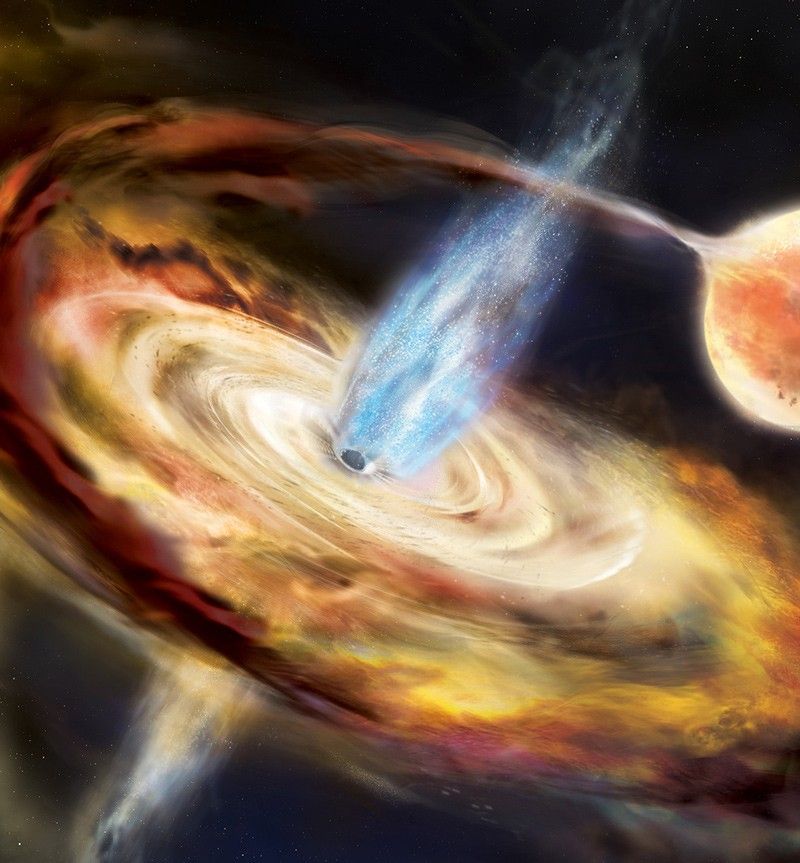
A Type-III civilization would require about 100 billion times more energy than the full 385 yotta joules our sun releases every second. This would allow the civilization to fare through galaxies. However, we only know of one source that could supply energy at such a massive scale: a supermassive black hole. However, it is often counterintuitive to think of Black holes as energy sources- after all, they’re known to be the most voracious eaters out there, topping the couple in Haruki Murakami’s “The Second Bakery Atack” whoa re so hungry that they attack a McDonalds:
The meat patties were lined up on the griddle like brown polka dots, sizzling. The sweat smell of grilling meat burrowed into every pore of my body like a swarm of microscopic bugs, dissolving into my blood and circulating to the farthest corners, then massing together inside my hermetically sealed hunger cavern, clinging to its pink walls.
For one of the two famished characters had also established a connection between acrophobia and hunger,
“While she hunted for more fragments of food, I leaned over the edge of my boat and looked down at the peak of the underwater volcano. The clarity of the ocean water all around the boat gave me an unsettled feeling, as if a hollow had opened somewhere behind my solar plexus–a hermetically sealed cavern that had neither entrance nor exit. Something about this weird sense of absence–this sense of the existential reality of non-existence–resembled the paralyzing fear you might feel when you climb to the very top of a high steeple. “
it would be too far-fetched for an object like a Black Hole to be acrophobic. We don’t quite have the measures of getting to a black hole as of now, despite some of the promises of a space elevator to reduce our costs of space travel (and add to acrophobia):
Space Elevators Explained: Cost, Construction, and Launch Potential
Despite the notoriety of Black Holes to gobble everything down, they are associated with something known as an accretion disk – a flat, circular, flat structure formed by matter lugubriously spiralling into a black hole. Italian astrophysicist Fabio Pacucci revealed that the intense gravitational field of the black hole caused the particles that were a part of the accretion disc convert their potential energy to kinetic energy as they inch closer to the event horizon. He further exposited that particle interactions allowed for this kinetic energy to be radiated out into space at different rates of matter-to-energy efficiency:
- 6% for non-rotating black holes
- 32% for rotating ones
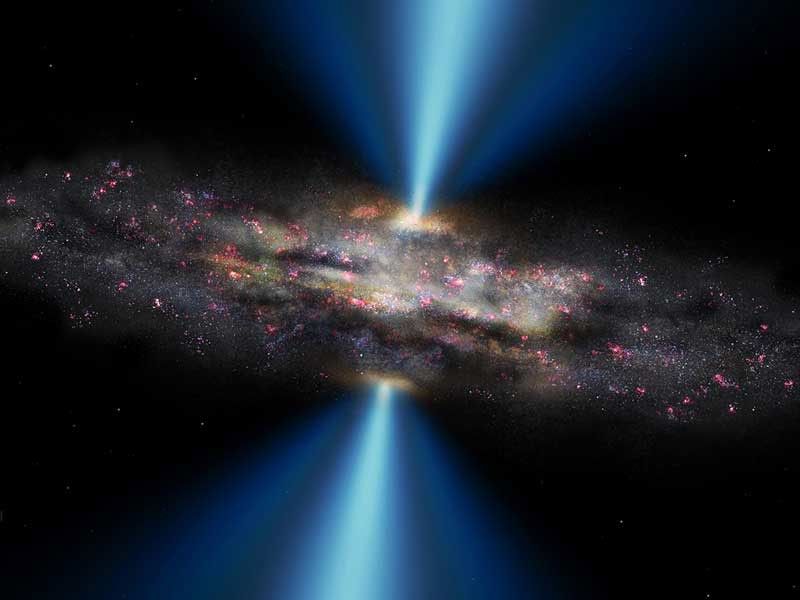
Compare this to nuclear fission, which converts just 0.08% of a Uranium atom into energy. However, before we think of the technological sophistication it would require for us to be a Type III civilization, let us wonder how we could harness the energy of a star, like a Type II civilization would do.
Freeman Dyson: the person who envisaged a star-enveloping dome
The key to becoming a specimen of the Type II civilization would largely rest on our ability to construct what has been eponymously named after physicist Freeman Dyson – the Dyson sphere. In the 1960s, Dyson proposed that an advanced planetary civilization could engineer an artificial sphere around their main star, capturing all of its radiated energy to satisfy their needs. To quote Fabio Pacucci:
“A similar, though vastly more complicated design could theoretically be applied to black holes. In order to produce energy, black holes need to be continuously fed—so we wouldn’t want to fully cover it with a sphere. Even if we did, the plasma jets that shoot from the poles of many supermassive black holes would blow any structure in their way to smithereens.”
We could, only imaginatively for now, devise a Dyson ring, which would be made up of massive, remotely controlled collectors that could act as mirror-like panels to transmit the energy emanting from the accretion discs of Black Holes. Building these at just the right radius is key as:
- If we build them too close, they’d melt from the radiated energy.
- If we put them out foo far, the output of the available energy would be too low. Further, a Dyson-sphere like ring too far from the accretion disc could be disrupted by stars orbiting the black hole.
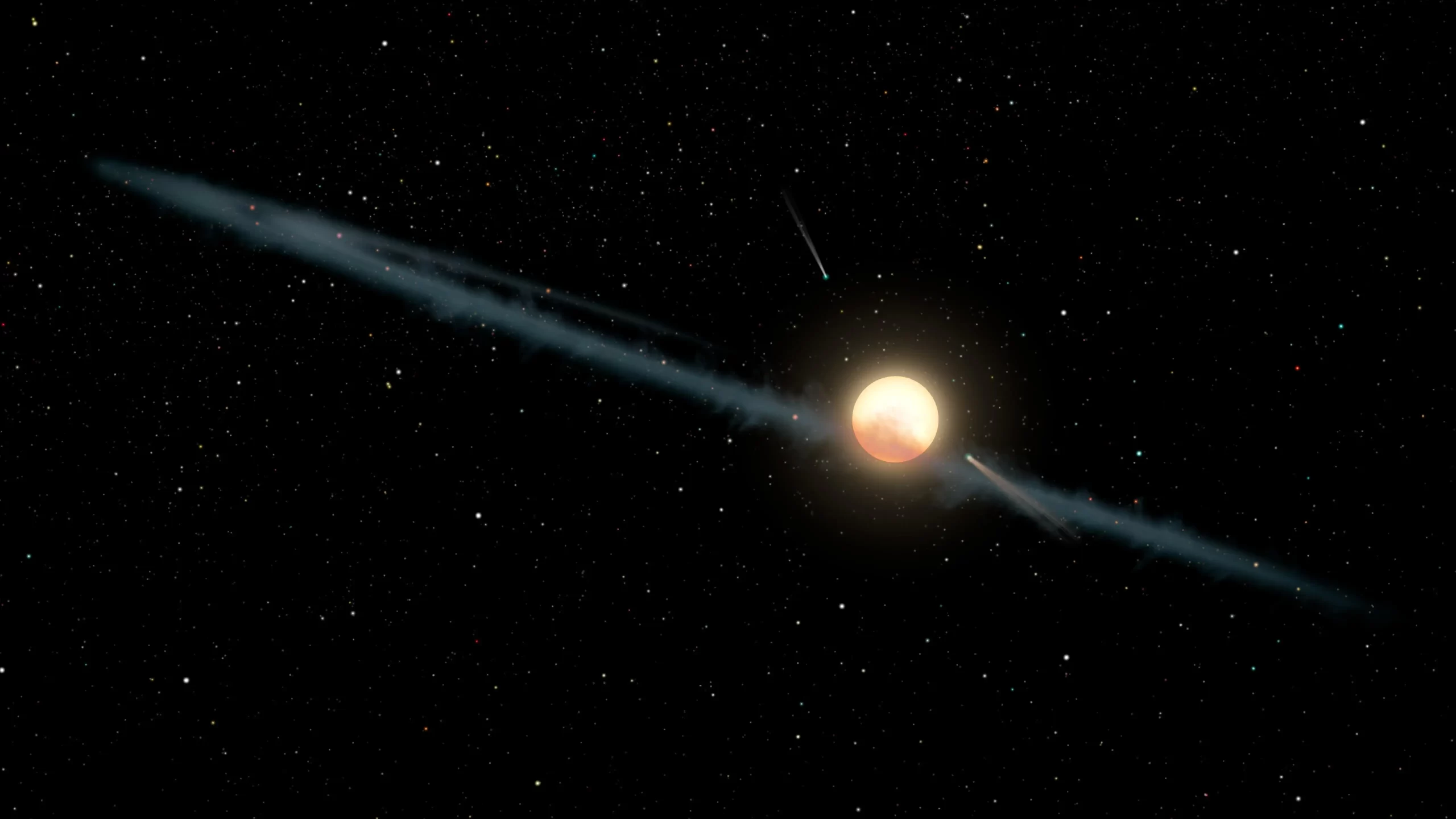
It has been estimated that the weight of such collectors of Black Hole would be equivalent to a few Earths masses. We’d also need to orchestrate a legion of construction robots. Some have even dubbed such Type III civilizations to be Balck Hole civilizations, and you can explore the prospects of those in the guide below:
All in all
For now, when we’re talking about “stealing the power of a black hole”, we’re treading on the spaces of wild speculation. There are thoughtful critics like Carl Sagan who feel that other planets such as Mars might harbor microscopic life, and if that is the case, we shouldn’t tinker around the evolutionary process in that speck. After all, had Earth been tinkered around at the time life was in its microscopic minisculity, we wouldn’t have evolved into the primate species that we are.
Given the immensity of space and the almost inifnitude of time, there might already be a civilization has conquered these astronomical giants. If we were to observe light from black holes periodically dim as pieces of the Dyson ring pass between us and them, we might have a glimmer of a proof of that.
As Rebecca ponders in another of her many imperishablepoems:
There could be legislators
Who ordain trajectories for falling bodies,
Where all things must be dreamed with indifference,
And purpose is a momentary silhouette
Backlit by a blue anthropic flash,
A storm on the horizon.
Such such are the hierarchies of civilizations, and the power of thoughts.