The poem “Black Hole” (written by Virginia Konchan’s) is narrated by a speaker whose husband used ask her to imagine her face “as a black hole and cosmic mystery onto which insults can be projected but cannot truly be absorbed because of the vastness and unknowability of the universe, of which the speaker is a part“:
When my ex-husband called me
a black hole, he was, in a sense,
correct: my face a gravity field
so strong even light cannot beam.
Supernova explosion, neutron star,
lead me to a beyond, deep within:
eros of the unthought, undreamed
Black Holes have inched their way across to the realm of culture, and when one hears parallels like the ones above, shrugging the idea that these mysterious objects that were once rather clumsily called “gravitationally collapsing stars” are a bundle of some of the most violent energy in the universe isn’t too far-fetched. Death by either “sphagettification” or “pancake detonation” is what awaits anything that falls into a black hole. We could say that the energy of anything that’s hurled into a black hole is lost forever. But research suggests that a black hole gets a universe, which begets a black hole, which begets a universe ad infinitum.
Infinite Black Hole Universes: The Black Hole Bigger Than The Universe
Apart from the possibility of having created the universe, black holes might also have the key to powering civilisations until the very death of everything. Black Holes might also help construct the largest bomb in the Universe. Such a bomb, if ever constructed, has a the potential to exact as much power from the Black Hole as possible. This is not simply a contrail of our imagination either. Physicists at the University of Southampton have demonstrated how one can build a ‘black hole bomb’ in the laboratory. The key to creating one is rather simple: Black holes are spinning.

Spin of a Black Hole: The Fuel for a Black Hole Bomb
Image of a black hole like the one in the photograph, though not false, doesn’t really capture the essence of a black hole’s spin. When extraordinarily large stars die, their cores collapse under their own gravity into black holes. We ought to remember that all objects in the universe, including stars, spin. When a star is collapsing, its angular momentum speeds up, much in the same way the angular momentum of a skater increases after (s)he pulls in.This is why after a star has transfigured into a black hole, it keeps on spinning, almost inconceivably fast, at the order of a million times a second.
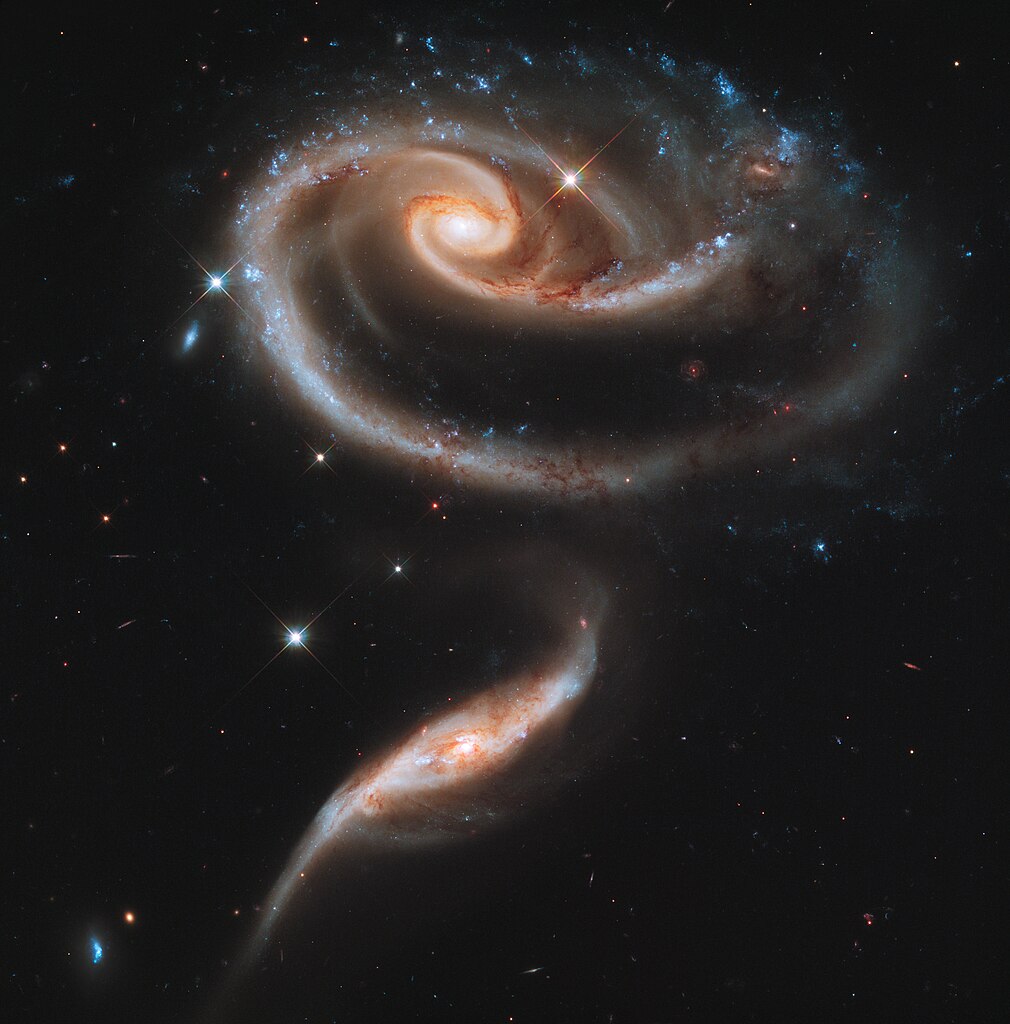
Image:NASA, ESA, and the Hubble Heritage Team (STScI/AURA)|Wikimedia Commons
At the core of a black hole is its singularity at their core where all of their mass is concentrated. The singularity is usually described as a single infinitely small point with no surface area. Much like Black Holes themselves, “Singularities” have also found their way in literature, where they’ve been described as almost a wordless beginning where everything and everyone, such as :
my children & your children
& their children & the children
of the black bears & gladiolus & pink florida grapefruit
here not allied but the same perpetual breath
held fast to each other as each other’s own skin
cold-dormant & rotting & birthing & being born
in the olympus of the smallest
possible once before once
If we are to set aside the poetic ruminations aside, the scientific community is divided about whether a singularity is “a physical structure or a purely mathematical one” . Regardless of this quibble, we have to know that points (the singularity which is a point) can’t rotate. So when we’re envisioning a black hole, it would be better to imagine a ringualrity – a ring with a thickness of zero and no surface, spinning extremely fast, containing all the mass of the black hole – instead.
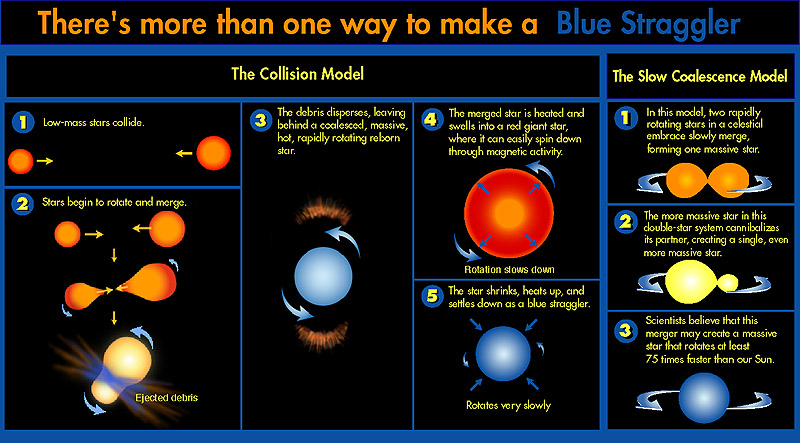
Image:NASA & ESA | Wikimedia Commons
The prodigious spin of a black hole morphs space and time itself, almost to the point where we can say that the black hole literally drags space with it. [Therefore, this phonemenon is known as “frame dragging” ]. This creates a region of spacetime around the Black Hole known as the ergosphere, which has the following properties:
- It is a flattened region
- Within the ergosphere, everything is forced to move in the same direction at light speed
- A higher black hole spin correlates with a larger ergosphere
Any particle in an ergosphere can possess negative energy. Scientific American describes the process in the following way:
“A particle, for example, could split into two equal-but-opposite parts: one with negative energy and another with positive energy. The former would then crash into the black hole (thus reducing the black hole’s energy), allowing the latter to escape the cosmic behemoth’s mighty grip. An external observer would see a particle with a certain energy falling toward the black hole, only to apparently rebound outward with higher energy. The black hole loses part of its rotational energy in the process. “
This process would allow the black hole to transfer its energy outside. Let’s take a look at in a slightly greater detail.
Extracting energy from the ergosphere
We know that the conventional laws of relativity are broken inside the event horizon, so much so that we say even space and time break down. But this is not the case with the ergosphere. Unlike the Event Horizon, which is the point of no return for anyone headed to a black hole, it is possible to enter an ergosphere and then exit it. If any object were to enter the ergosphere, the black hole would transfer its kinetic energy to the object, slowing down the black hole in return. Thus, an object coming out of the ergosphere would have a greater energy than with which it entered.
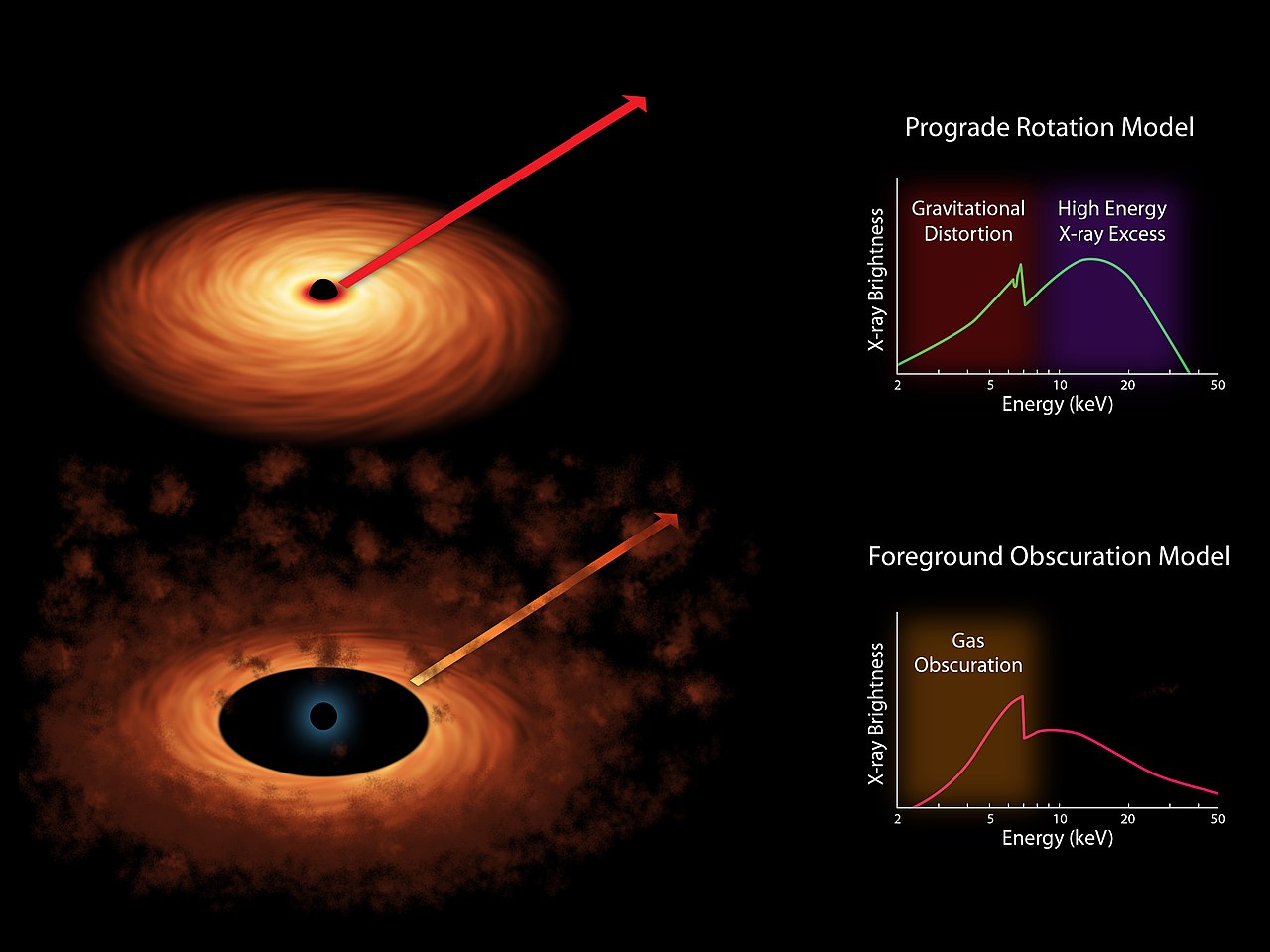
Image: NASA/JPL-Caltech | Wikimedia Commons
Take light hurled at a Black Hole, for instance. If light were to enter the ergosphere, it could follow a path around the black hole before coming back out. In addition, there are other forces we need to take into consideration, reports The Wire:
“The ergosphere also exerts tidal effects on the light: that is, light that enters the ergosphere must co-rotate with the black hole, so it is effectively dragged on. This is called the Lense-Thirring effect. It has two particularly interesting consequences. One, light that enters the ergosphere in the direction opposite to that of the black hole’s rotation will be forced to turn around and start moving along the rotation. Two, nothing can remain stationary in the ergosphere, because here the black hole’s gravity is actively twisting spacetime itself around it.”
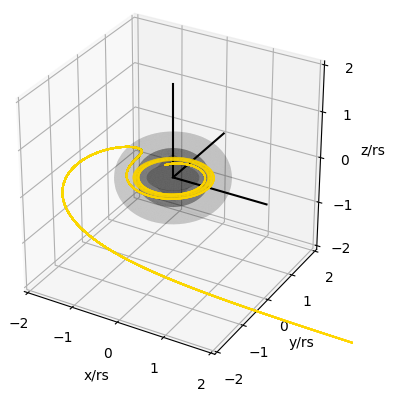
Image: Cornelius Fyla | Wikimedia Commons
The greater the spin of a black hole, the higher the energy that can be extracted from the ergosphere. This was first formalized by Sir Roger Penrose in 1969. But, in order to build a black hole bomb, we need something more- something like a Dyson sphere.
How Dyson sphere-like structure could be used to harvest the energy of a star?
To build a black hole bomb, we would need a big mirror that completely envelops a black hole. This would be akin to a Dyson Sphere – something that the CNN described as “shell made up of mirrors or solar panels that completely surrounds a star” – a megastructure that harvests the energy of an entire star.
Once we had a mirror around a black hole, we would need to shoot electromagnetic waves (such as light) at the black hole. These waves would hit the black hole at lightspeed. While a small proportion of the waves would make it to the event horizon and be lost forever, a larger amount of the wave would wobble through the ergosphere and be amplified.
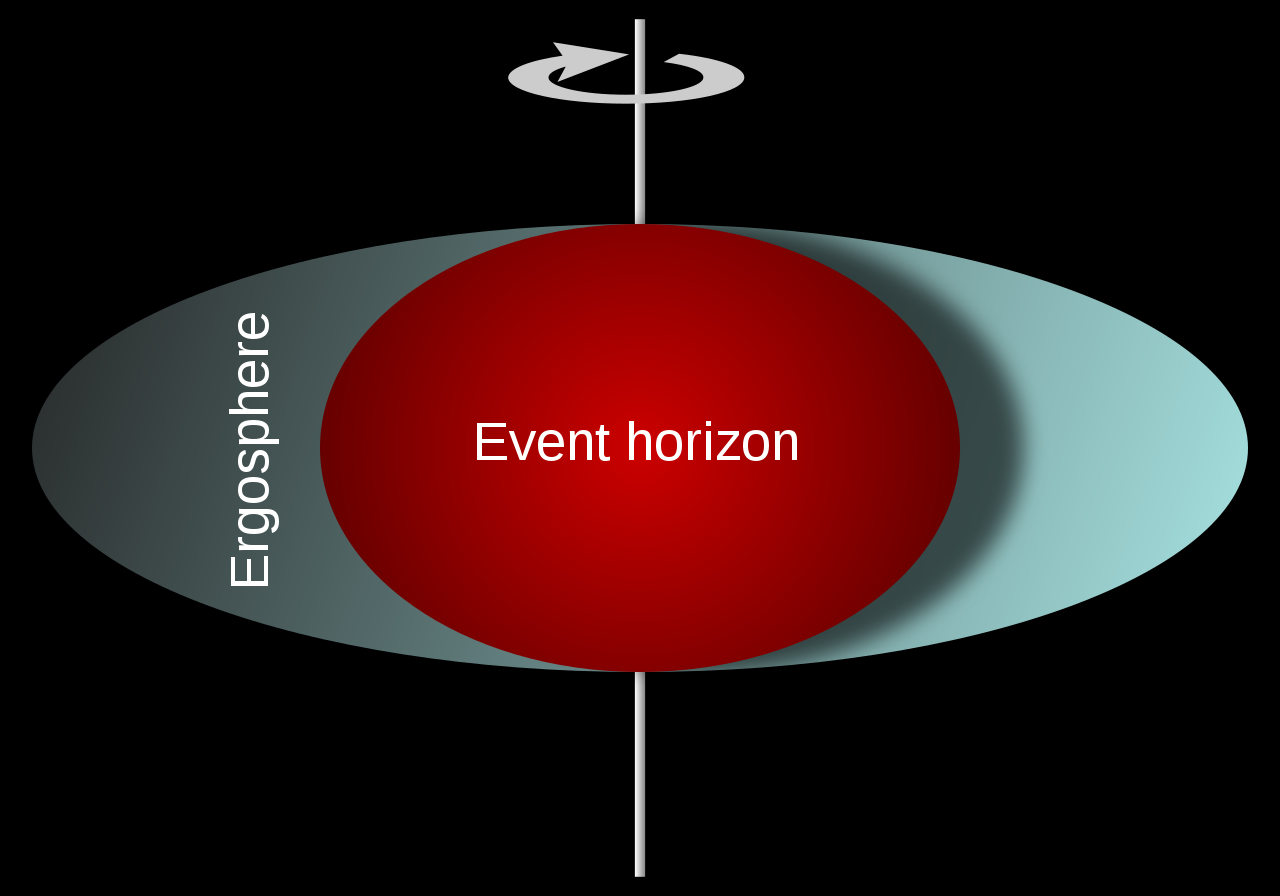
Image:MesserWoland | Wikimedia ommons
This amplified wave would bounce around between the mirror and ergosphere and become more potent each time it comes out of the ergosphere. Every time they go around, they are getting exponentially stronger. By opening some windows in the mirror, we can extract the energy from the waves as fast as they grow. Theoretically, the wave would become more potent if we were not to open the window, but extracting more and more energy from the black hole without releasing the energy will only shatter the mirror.
A supermassive black hole has the capacity of releasing as much energy as a supernova. Thus, a black hole bomb made this way has the capacity to create the largest explosion any living being could ever create. Note that a supernova explosion is capable of wiping out the entirety of planets surrounding a star.
Image:Vallastro | Wikimedia Commons
If the black hole bomb is so potent, how did physicists manage to build one in a laboratory?
The Laboratory-made black hole bomb
The idea of extracting energy from the ergosphere of a black hole was proposed by Sir Roger Penrose. W. H. Press and S. A. Teukolsky explored this concept further in 1972. Later, physicist Yakov Zel’Dovich discovered that one didn’t need a black hole to see the amplification of energy (in the way ergosphere helps) in action. Zel’Dovich proposed that an axially symmetrical body rotating in a resonance chamber can produce the same effect of amplification and energy transfer.
To test this theory, scientists at the University of Southampton built a rotating system using an aluminum cylinder, which was rotated by an electric motor. The cylinder was surrounded by three layers of metal coils, which created and reflected a magnetic field back to the cylinder, acting as a mirror. It was found that there was a direct correlation between the cylinder’s rotation (the “black hole”, to draw a parallel) and the amplification of the amplify electromagnetic waves (a wave hurled at the ergosphere, to draw a parallel). In their paper, they write:
” The system exhibits an exponential runaway amplification of spontaneously generated electromagnetic modes thus demonstrating the electromagnetic analogue of Press and Teukolskys black hole bomb. The exponential amplification from noise supports theoretical investigations into black hole instabilities and is promising for the development of future experiments to observe quantum friction in the form of the Zeldovich effect seeded by the quantum vacuum.”
Determining any practical application and scaling up the setup for extracting energy that would be useful for everyday life would be quite a challenge.
All in all
Freeman Dyson, the person who came up with the idea of a “Dyson Sphere” believed that we could track a civilization developed outside the planet Earth by discovering a real “Dyson Sphere” somewhere in the universe. If we were to discover a sphere of such kind, we could infer that the ones who built the Dyson sphere were far more technologically advanced than us. And what would he make of a civilization that had already scaled up science behind laboratory, experimental nuances of Black Hole Bombs and applied it to a Black Hole already?
Perhaps, they would already have known:
the string of symbols
devised by Einstein to describe a theory
of General Relativity: the left-hand side
pictorializes the geometry of spacetime,
the right-hand side, all mass and energy.