From 2017 onwards, the aviation industry saw a lot of words added to its lexicon. One was “flygskam” referring to “flight-shaming” i.e. an anti-flying movement started to reduce the environmental impact of aviation. We then had “Tågskryt”– another Swedish word that literally means “train brag” encouraging people to “brag” for taking trains as their mode of transport as opposed to flights.
Photo: Stephen Hass | Wikimedia Commons
There was the “We Stay on the Ground” movement directed at not flying and choosing to stay wherever people were at- again directed at cutting down the Carbon footprint from aviation. In a list of the hard-earned words related to aviation shaming, perhaps “fuel tankering” i.e. carrying extra fuel just because the aircraft can wield its way around not refueling at a destination- might be a much more pressing issue than the aforementioned ones.
What is Fuel Tankering?
In aggregate, aircraft tend to emit 901,000 tonnes of superfluous CO2 just by carrying extra fuel. This extra fuel is carried so that the aircraft doesn’t have to refuel at a different destination, where the price of fuel is greater. In order to reduce or avoid refueling at the destination airport, where fuel price might be greater, aircraft tend to carry trip fuel as well as reserve fuel, adding strain to the environment.
A report published by Euocontrol shows the scale of the problem related to fuel tankering:
“The results obtained from simulations showed that per year, in the ECAC area, 16.5% of flights are able to perform full tankering and 4.5% partial tankering. Consequently, in ECAC airspace, fuel tankering would result in the burning of 286,000 tonnes of additional fuel per year, and the production of 901,000 tonnes of unnecessary additional CO2 emissions per year. This represents around 2,800 Paris New York round-trips or the annual emissions of a European city of 100,000 inhabitants. But, at the same time it represents a net saving of 265M€ per year for the airlines.”
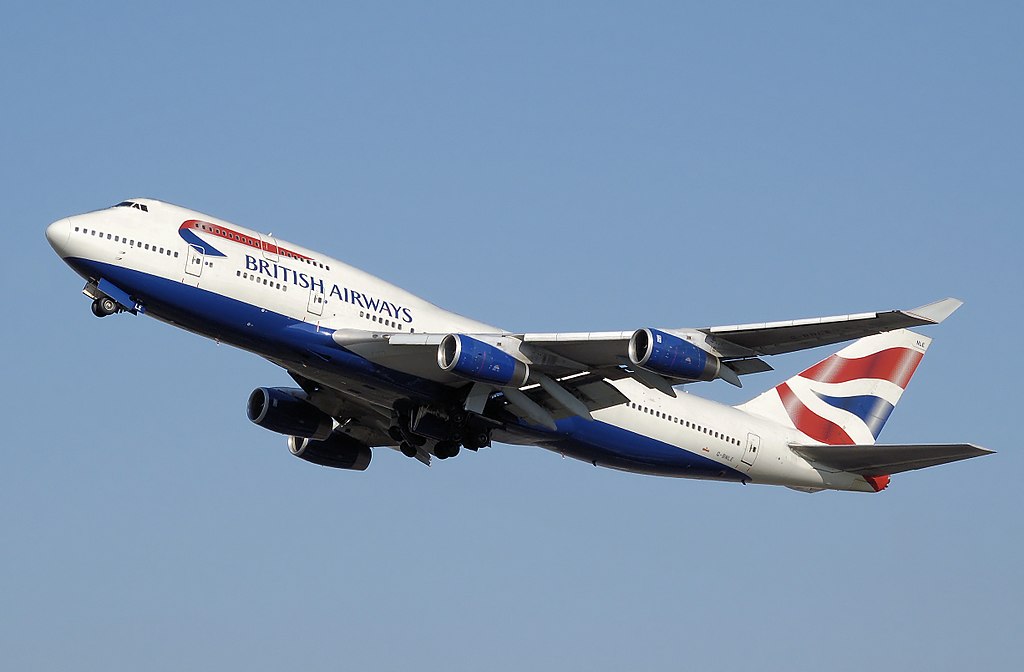
Image: Adrian Pingstone | Wikimedia Commons
Britain is the nation where most of the heated discussions on fuel tankering take place. This might have to do with the fact that British tend to fl more than any other nationality around the world. Britain’s third largest party, Liberal Democrats has called Fuel Tankering an awful practise, and even expressed their desire to “push for an EU wide ban on fuel tankering“. The executive director of Greenpeace UK, John Sauven, was quoted in the BBC to have said that fuel tankering was a “classic example of a company putting profit before planet“.
Why does fuel tankering take place?
The difference in prices of fuel for aircraft at different locations is what pushes airlines to be involved in fuel tankering. When fuel is tankered, 286,000 tonnes of additional fuel is burned up but it does save airlines 265 million Euros per year. Given that fuel expenses amount to almost 17-25% of an airline’s costs, one could see why airlines would be involved in fuel tankering.
Here are a few glaring pieces of statistics related to tankering, as reported in the European Civil Aviation Conference (ECAC) area:
- 1.6 million flights (16.5% of flights) are involved in full tankering, which is defined as “when all the fuel needed for the
return flight is uplifted at the departure airport to avoid refuelling at the destination airport“. - 0.45 million flights (4.5%) are involved in partial tankering, which is defined as “when only part of the fuel needed for the return flight is uplifted at the departure airport, followed by partial refuelling at the destination airport” .
BBC Panorama’s investigation found BA’s internal documents showed up to six tonnes of extra fuel loaded on some flights, with savings from tankering ranging from as little as £10 to several hundred pounds. In one specific example — a BA flight to Italy — the airline carried nearly three tonnes of extra fuel to save £40, while emitting an additional 600kg of CO2. EasyJet, a budget airline, was another carrier found to be involved in fuel tankering. EasyJet, a budget airlines, was another carrier that was found to be involved in fuel tankering.
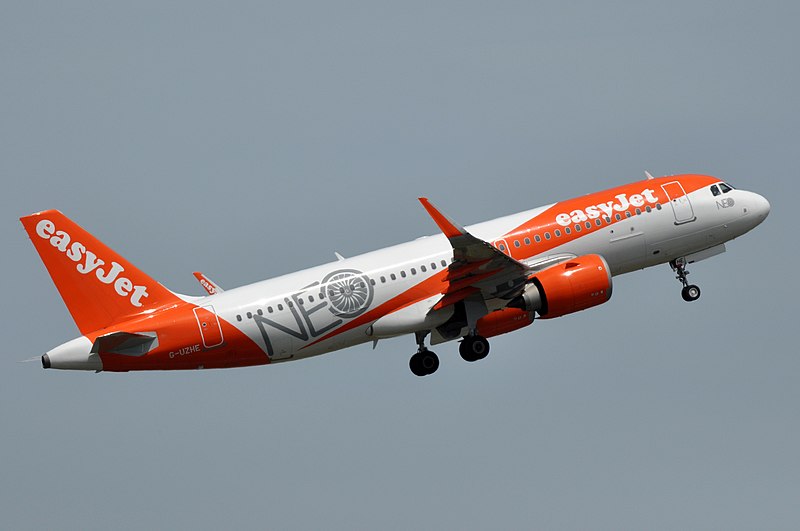
Photo: ERIC SALARD | Wikimedia Commons
International Airlines Group (IAG) chief Willie Walsh was quoted in Flight Global to have said that the other reason the airliners were involved in fuel tankering was to meet timelines for turnaround.
All in all, tankering takes place because of two reasons:
| Terminology | Reason |
| Operational tankering | When refueling at the destination airport is not operational possible or desirable due to factors like:
|
| Economic tankering | “To save money when the cost of fuel and associated services at the departure airport is significantly lower than at the destination airport”. |
Nine-tenths of tankering performed is Economic tankering, while operational tankering accounts for merely 10% of the cases.
Tankering has a few benefits for airlines?
We’ve touched upon the fact that fuel tankering can have economic incentives for airlines, and can have deleterious impact on the environment. However, operational and environmental targets are often contradictory. Flight Global’s report even quoted Walsh to have said that while IAG is committed to reducing achieving net-zero carbon emissions by 2050, tankering isn’t as straighforward as is often thought:
Walsh says IAG is having to consider such issues in its operational strategy, and looking at whether the company “should be pricing in environmental impact”, admitting that some routes which make “commercial sense” do not necessarily make “environmental sense”. He underlines IAG’s efforts to integrate environmental considerations into its business strategy. The company, he adds, is assessing the value of incentivising management, to make sure it is “not incentivising the wrong behaviour”.

Photo: The Carlisle Kid | Wikimedia Commons
How many aircraft/airlines are involved in Fuel Tankering?
According to research published in the International Council of Clean Transport, “flights originating from the United Kingdom could be responsible for half of tankered flights (52%) and excess
fuel (49%) consumed“. The same research hinted at the fact that tankering took place on “30% of ECAC flights, with lower fuel costs being the motivator in 90% of cases“.
While the report anticipated positive results for 2025, it seemed as if things would go worse in the days to come:
“.. tankering is expected to be rare in 2025—on 11% of international flights and 5% of all flights—due the small cost increase under a 2% mandate. Significant tankering is expected by 2030, when almost two-thirds of international flights, or a quarter of all flights within and into the European Union, are expected to carry excess fuel. This share rises to almost 80% of international flights and a third of all flights to and from EU airports as the SAF mandate escalates in 2035.”

Photo: Raimond Spekking | Wikimedia Commons
It was also expected that airlines could save as much as €2.3 billion in 2035 in tankering (after taking excess fuel burn and EU ETS costs into consideration):
| Country | Tankered Flights |
| United Kingdom | 557,000 |
| Switzerland | 143,000 |
| Turkey | 91,300 |
| Russian Federation | 58,200 |
| Morocco | 44,000 |
| Ukraine | 38,600 |
| Algeria | 28,500 |
| Tunisia | 24,000 |
| Serbia | 19,900 |
| Israel | 13,000 |
Some of the major carriers around the world which are involved in fuel tankering include:
- Delta Airlines and United Airlines – two of the three big airlines have empahsized that they engage in fuel tankering “when it is cost-effective and does not compromise safety or operational efficiency“.
- Emirates Air has implemented a fuel tankering policy that takes into stride factors such as aircraft weight, fuel prices, and environmental considerations.
What policies are adopted around the world to curb fuel tankering?
Nations around the world have differing contributions to fuel tankering. As a result, the policies are also different. For instance, in the five countries that have no airports, it would be difficult to assume that there’s any discussions of fuel tankering, let alone formalized laws.
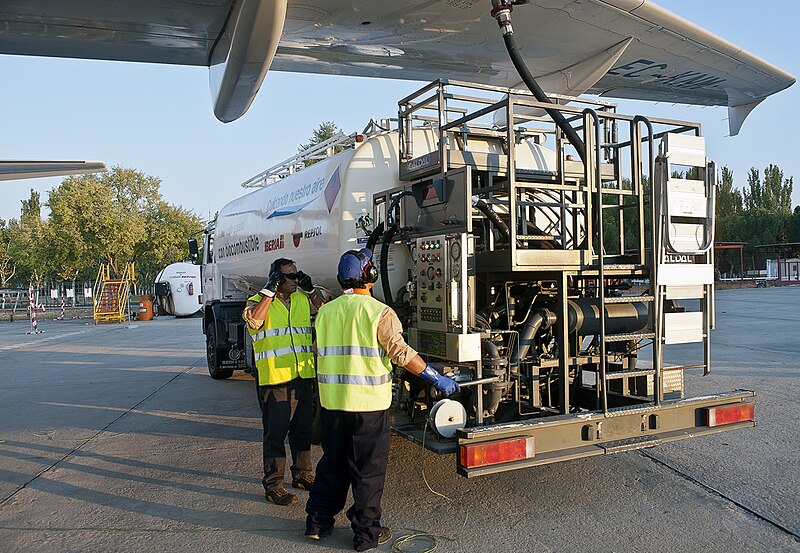
Photo: Curimedia | Wikimedia Commons
Let’s take a look at the civil aviation laws related to fuel tankering in other parts of the world:
- European Union: Airlines are mandated to pay a fee for any excess CO2 emissions resulting from fuel tankering. The fee is “based on the price of carbon allowances in the EU emissions trading system”.
- Civil Aviation Safety Authority (CASA), Australia: Unless specific circumstances necessitate carrying additional fuel, airlines are only allowed to carry enough fuel for a particular flight. This law is similar to the one issued by Transport Canada.
- Federal Aviation Administration (FAA), USA: Airlines need to take in factors such as aircraft performance, weather, and fuel prices, while deciding if additional fuel needs to be carried.
- UK Civil Aviation Authority (CAA): Its guidance to airlines states that “only carry additional fuel if it is cost effective and does not result in excessive greenhouse gas emissions.”
What are the advantages of fuel tankering?
Despite the fact that there are a few environmental disadvantages to fuel tankering, there are two obvious benefits:
- The turnaround times of aircraft are a lot faster as aircraft can start boarding passenger immediately after they land, and don’t have to wait in the airport for refueling.
- In case the departing airport is closed due to inclement weather, having extra fuel allows the pilots to feel more relaxed as the aircraft can go to other, alternate airports.
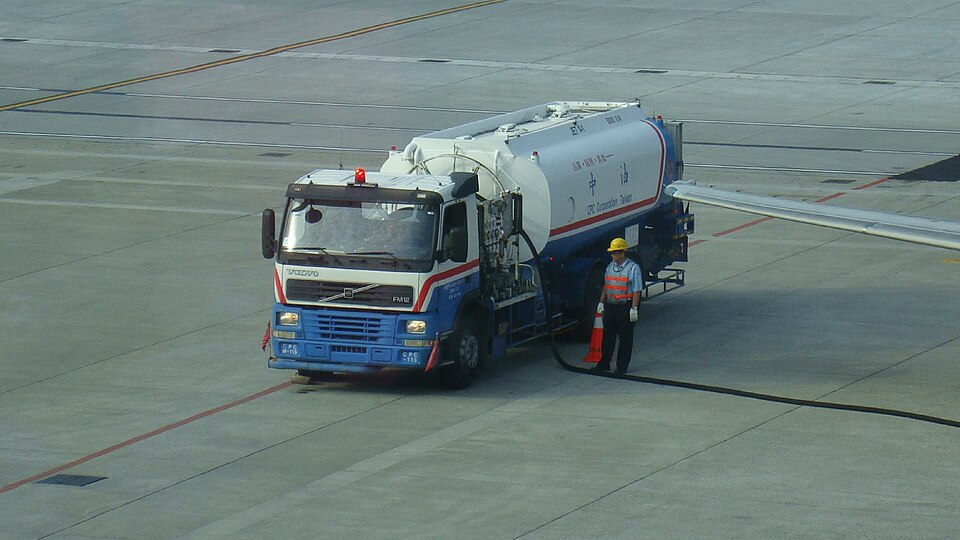
Photo: CCY18999 | Wikimedia Commons
What steps can be taken to curb fuel tankering?
Data shows that almost one-fifth of the flights in ECAC were involved in tankering. Fuel tankering amounts to:
“…136kg of additional fuel burnt per flight concerned (costing 75€) in ECAC. generating 428kg of additional CO2 (i.e. 9€ in purchased CO2 allowances). Nevertheless, despite the additional cost, fuel tankering would still result in a net saving of 126€ per flight on average.”
One of the easiest methods to curb fuel tankering is the worldwide adoption of sustainable aviation fuel. However, SAFs tend to be have a higher price than jet fuel. And since many airports and airlines have committed to reducing its carbon emissions by half by 2035 and fully by 2050, adopting SAFs is a long-term game. In the meanwhile, some immediate steps that can be taken to reduce tankering, as suggested by Eurocontrol include:
- Airlines being fully fuel hedged at a unique price at all airports at which they operate
- Increase the cost of CO2 allowances to a dissuasive level
- Potentially equalise the tax rates on fuel.

.jpg)


.jpg)
