
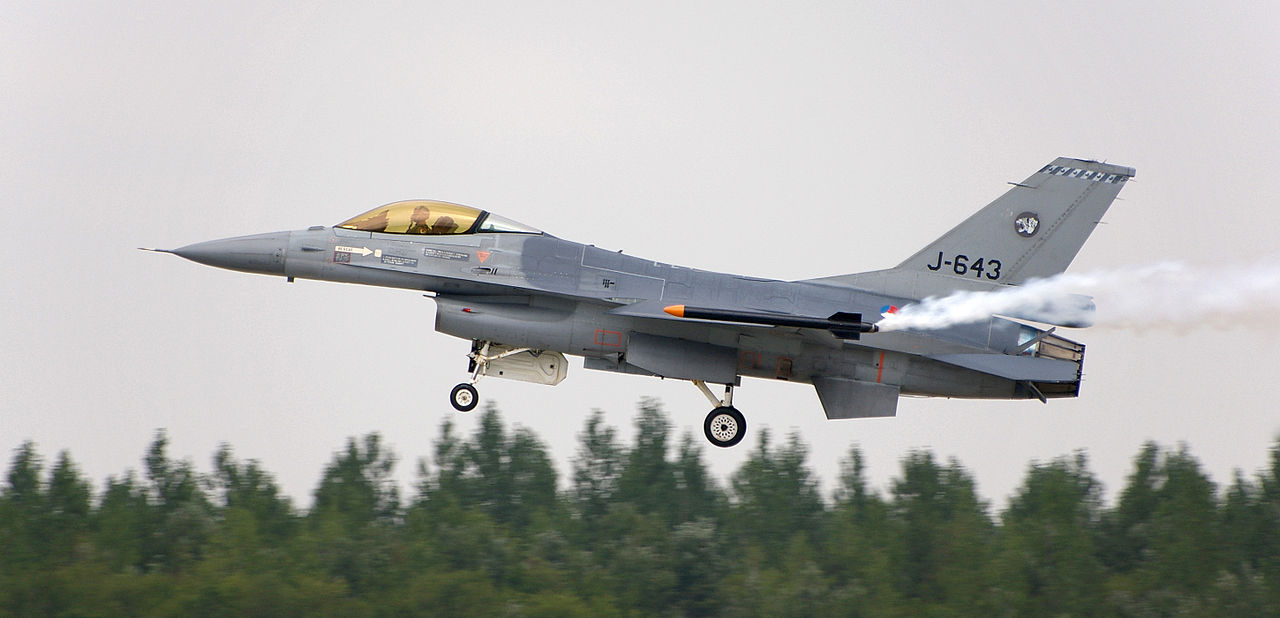
The Royal Danish Air Force (RDAF) is set to formally retire its iconic Lockheed Martin F-16 Fighting Falcon fleet at a ceremonial event on 18 January 2026 at Fighter Wing Skrydstrup air base, Jutland, Denmark, marking the end of more than four decades of service, reported FlightGlobal. This historic milestone culminates the F-16’s operational tenure in Danish service — from its first delivery in 1980 to its last flight nearly 46 years later — as Denmark transitions to a modernised air combat force anchored by the fifth-generation F-35A Lightning II.
The retirements occur within a broader geopolitical and defence context: Denmark is phasing out its F-16s two years ahead of older plans to accelerate delivery of many airframes to allied nations and to support Ukraine, while selling a significant portion to Argentina’s Fuerza Aérea Argentina (FAA) under an international arms sale approved by the United States.
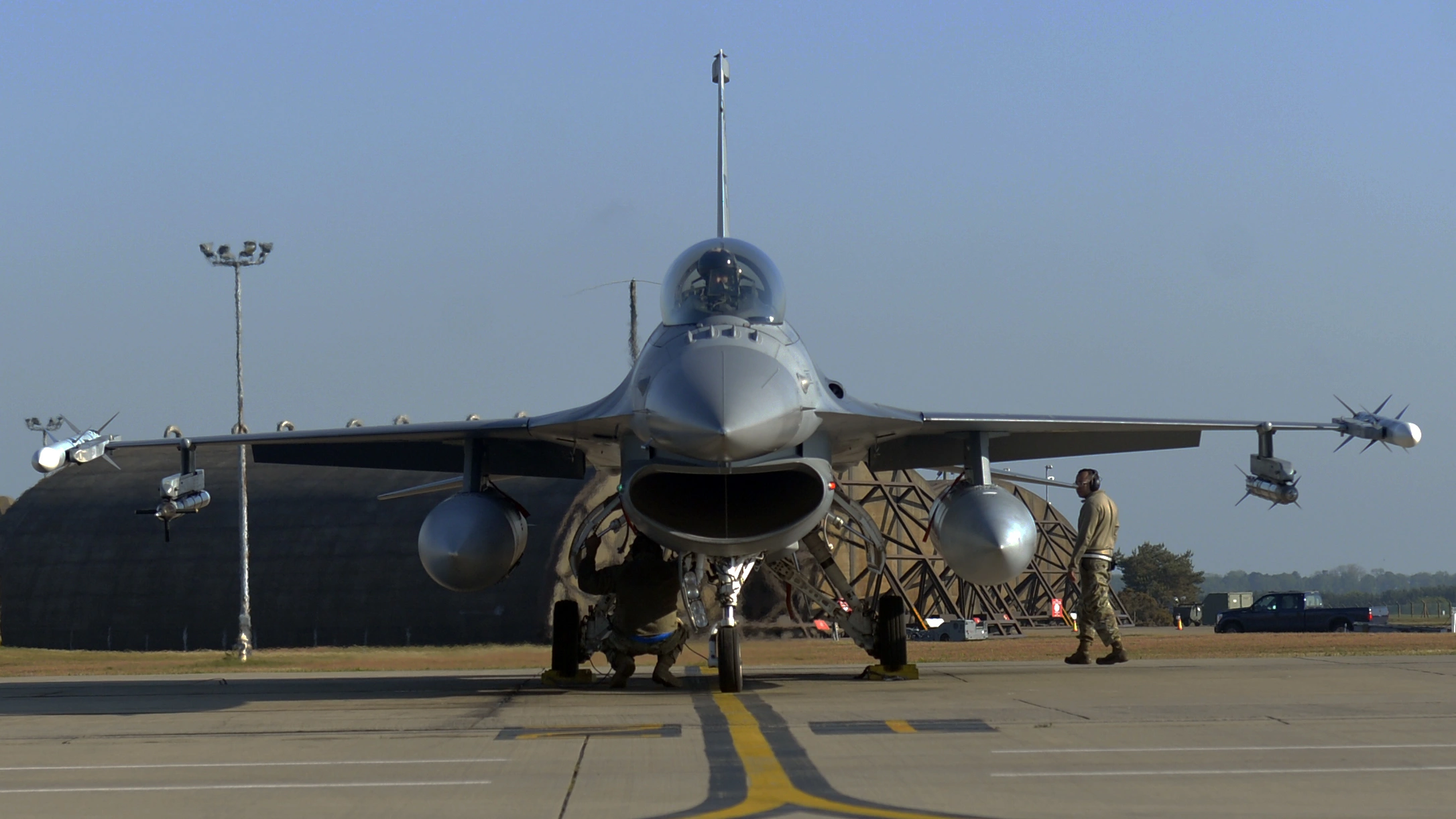
Royal Danish Air Force: F-16 fleet Overview and Operational History
-
Aircraft available at 50% readiness rate: 62 units
-
Aircraft available at 70% readiness rate: 87 units
-
Aircraft available at 75% readiness rate: 93 units
-
Aircraft available at 80% readiness rate: 99 units
-
Combat / Attack aircraft: 39 units
-
General support aircraft: 42 units
-
Pilot / crew training aircraft: 43 units
-
Future procurement aircraft: 13 units

| Role | Aircraft Type | Model | Origin Country | Model Year | Active |
|---|---|---|---|---|---|
| Combat | Fighter | F-16A | 🇺🇸 USA | 1979 | 31 |
| Combat | Fighter | F-35A | 🇺🇸 USA | 2013 | 21 |
| Combat | Fighter | F-16B | 🇺🇸 USA | 1979 | 10 |
| Helicopter | Helicopter | AW101 | 🇬🇧 🇮🇹 UK / Italy | 1999 | 14 |
| Helicopter | Helicopter | H125M / AS550 | 🇫🇷 France | 1990 | 11 |
| Helicopter | Helicopter | S-70 / MH-60R | 🇺🇸 USA | 1979 | 9 |
| Transport | Transport | C-130J | 🇺🇸 USA | 1956 | 4 |
| Transport | Transport | Challenger 604 | 🇨🇦 Canada | 1980 | 3 |
| Training | Training | MFI-17 | 🇸🇪 Sweden | 1972 | 25 |
Data: GlobalMilitary
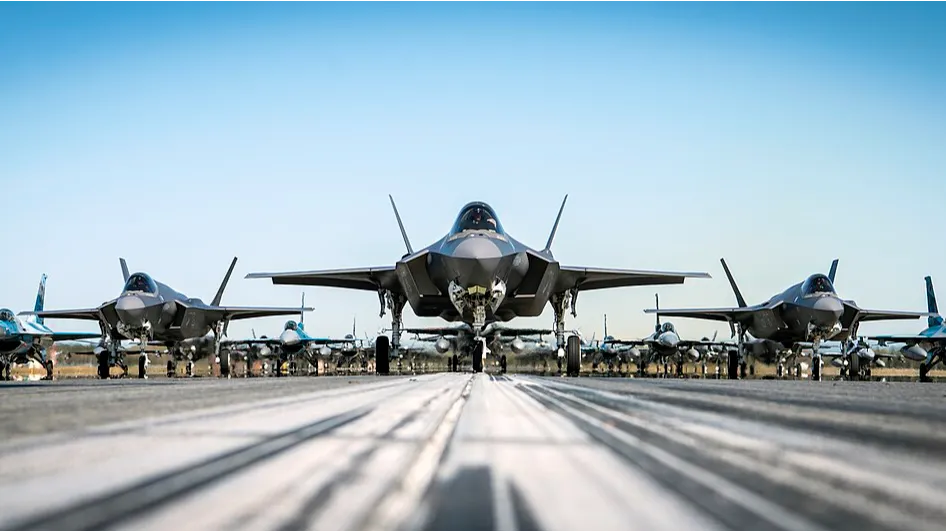
Danish Air Force’s F-16s Operational History
In the 1980s, Denmark introduced the Lockheed Martin F-16 into Royal Danish Air Force service. It was in this decade that Copenhagen procured an initial fleet of 58 F-16A/B aircraft, later supplementing the inventory with additional airframes as the type becomes the backbone of Danish tactical airpower.
Here are a few snippets of the history of the Danish Air Force’s F-16s, as highlighted by Aeronautics Magazine:
-
1990s–2010s: Danish F-16s deploy operationally across multiple theaters, seeing combat service in Serbia, Afghanistan, Iraq, Libya, and Syria.
-
2000s–2020s: The fleet conducts NATO Baltic Air Policing missions, safeguarding the airspace of Estonia and Lithuania.
-
2023–2024: Rather than retiring the fleet outright, Denmark begins donating F-16 aircraft, spare parts, and training to Ukraine, supporting Kyiv’s defense amid Russia’s ongoing invasion.
-
December 2025: Argentina receives its first batch of six ex-Danish F-16s, part of a broader agreement that will ultimately see 24 aircraft transferred to Buenos Aires.
The Danish Defence Ministry has publicly highlighted the fleet’s exceptional material condition, noting that meticulous maintenance has preserved the aircraft well beyond typical expectations for jets of their age. The F-16 is set to be succeeded by the F-35A Lightning II, with Denmark operating 20 aircraft and expanding its planned fleet from 27 to 43 jets.


Fighter wing skrydstrup and operational base details
Fighter Wing Skrydstrup, the host of the retirement event of Danish Air Force’s F-16, has been the central hub of RDAF fighters — including F-16s — since the early 1980s. The base’s strategic location in southern Jutland supports NATO air policing missions, but it is not as big as some other European bases that can house as many as 14000 fighters.
| Year / Period | Event / Development | Notes / Impact |
|---|---|---|
| 1943 | Skrydstrup Air Station built by the Germans as Fliegerhorst Hadersleben | About ¼ of Skrydstrup Parish expropriated; ~120 of 180 families displaced |
| 1945–1948 | Refugee camp established at the airfield and nearby barracks | Around 4,000 German refugees housed post-liberation |
| May 1953 | Inauguration of Skrydstrup Air Base | Became one of South Jutland’s largest workplaces with 1,000+ employees; population growth in Skrydstrup and Vojens parishes |
| Early 1960s | Parish merger | Skrydstrup Parish and Vojens Parish merged into Vojens Municipality |
| 1965 | Air base opened for civilian traffic | Vojens Airport shares runways and facilities; own terminal at northeastern end of base |
| 2007 | Municipal structural reform | Vojens Municipality incorporated into Haderslev Municipality |
| Post-2000s | Civilian flights reduced | Scheduled flights ceased after Great Belt Link inauguration; currently only taxi, private planes, and helicopters |
ball

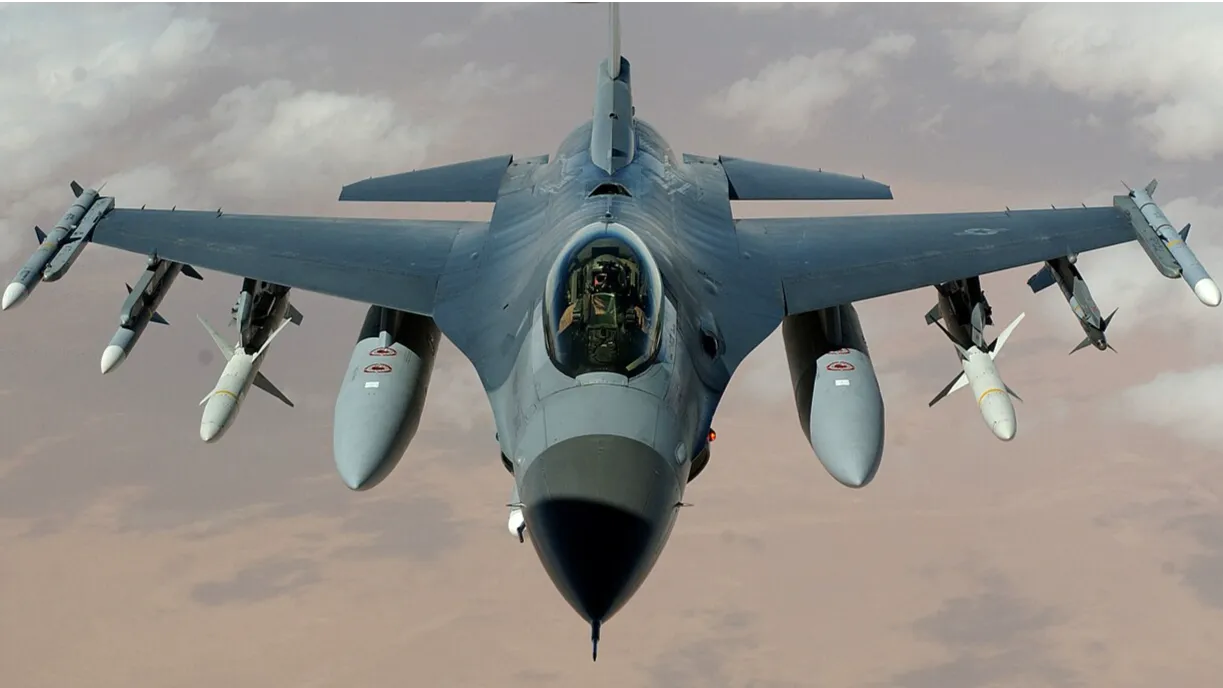
Danish Air Force’s F-16 retirement: Rationale and Strategic Transitions
Denmark’s decision to retire the F-16 fleet reflects the following broader strategic imperatives:
-
Modernisation: Replacing fourth-generation jets with fifth-generation F-35A Lightning II aircraft to ensure future air superiority and integration with allied forces.
-
Allied support: Accelerating transfers of supersonic fighters to Ukraine as part of a NATO-wide support initiative, in light of Russia’s invasion that began in 2022.
-
Defence cooperation: Selling jets to Argentina to bolster its air defence capabilities while fostering bilateral defence ties.
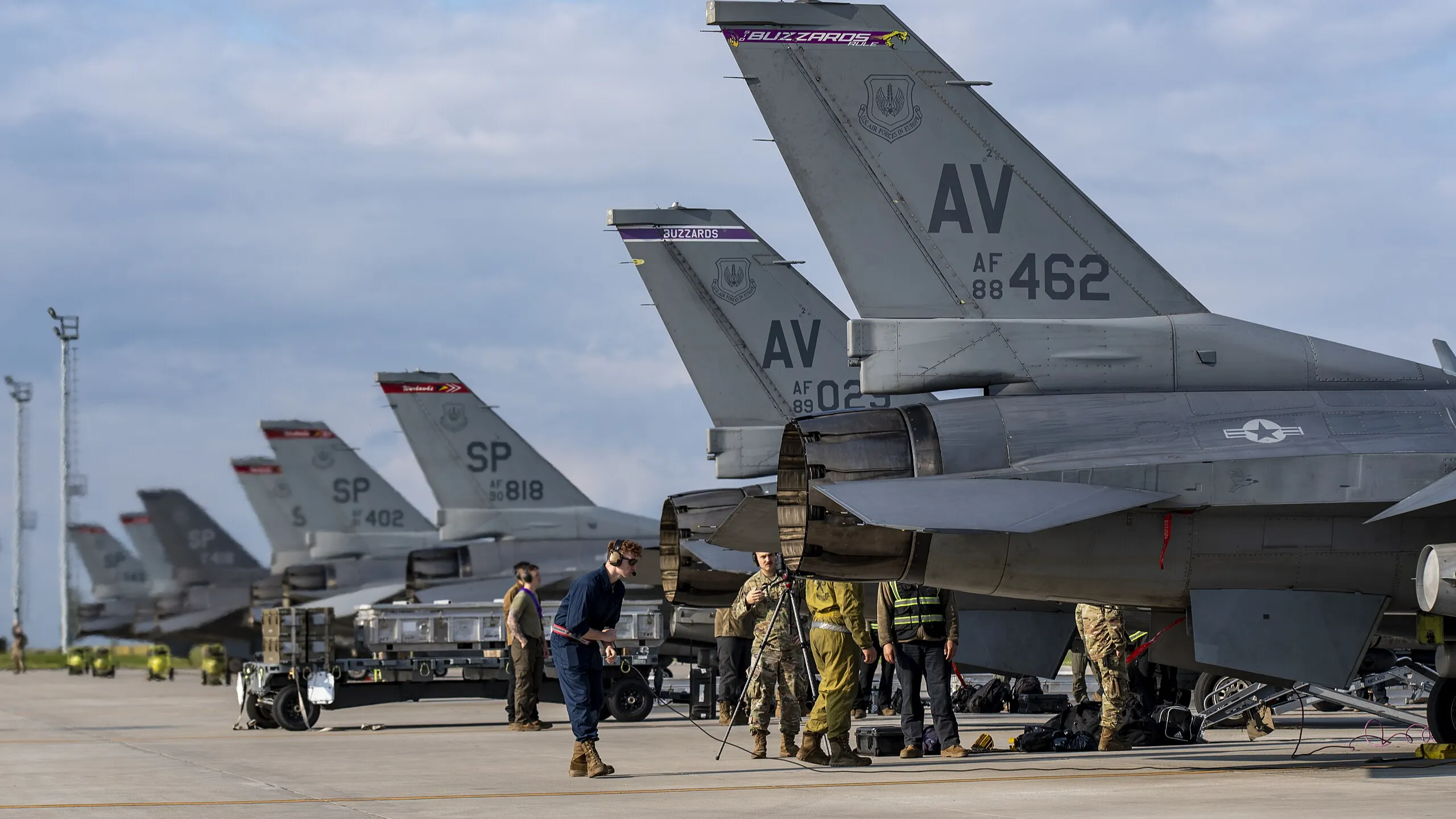
The F-35A Lightning II provides advanced stealth, sensor integration, and multi-domain interoperability that the F-16’s architecture cannot match. Denmark has ordered a planned fleet of 43 F-35As, with 20 already delivered and active in service, and the remainder due by end of 2026.
Here are how the two aircraft compare:
| Specification | F-35A Lightning II | F-16 Fighting Falcon (Block 70/72) |
|---|---|---|
| Role | 5th-generation stealth multi-role fighter | 4th-generation multi-role fighter |
| Manufacturer | Lockheed Martin | Lockheed Martin (originally General Dynamics) |
| Engine | 1 × Pratt & Whitney F135-PW-100 | 1 × GE or Pratt & Whitney F100 / F110 |
| Thrust | ~43,000 lbf (190 kN) | ~29,000 lbf (130 kN) |
| Length | ~51.2 ft (15.6 m) | ~49.5 ft (15.1 m) |
| Wingspan | ~35 ft (10.7 m) | ~32.8 ft (9.96 m) |
| Height | ~14.4 ft (4.38 m) | ~16.8 ft (5.1 m) |
| Max Take-off Weight | ~70,000 lb (31,800 kg) | ~42,300 lb (19,200 kg) |
| Internal Fuel Capacity | ~18,500 lb (~8,400 kg) | ~7,000 lb (~3,175 kg) |
| Top Speed | ~Mach 1.6 | ~Mach 2.0 |
| Combat Radius | ~670 nmi (1,240 km)* | ~500 mi (800 km)* |
| Service Ceiling | ~50,000 ft (~15 240 m) | ~50,000 ft (~15 240 m) |
| Radar | AN/APG-81 AESA with DAS/EOTS | APG-83 AESA (Block 70) |
| Stealth | Full low observable design | No dedicated stealth design |
| Weapons | Internal bays + external stores | External hardpoints only |
| Avionics & Sensor Fusion | Full 360° sensor fusion | Advanced radar but no integrated fusion |
Data: The Defense Watch