There’s a size of an aerodrome that just works. Big enough to connect you to almost anywhere on earth, small enough that you’re not sprinting between terminals or getting lost in a sea of humanity. That’s the 60-to-70-million-passenger tier — the range occupied by some of the most consistently praised airports on the planet.
Skytrax’s World Airport Awards 2026 singled out five names in this category, and the list reads like a greatest-hits collection of global aviation: two Asian titans, two European heavyweights, and a Southeast Asian gateway riding a wave of tourism recovery. What ties them together isn’t just scale — it’s the ability to feel calm, clean, and well-run even while processing a small country’s worth of travelers every year.
Here’s the list, ranked, with a closer look at what earns each airport its spot.
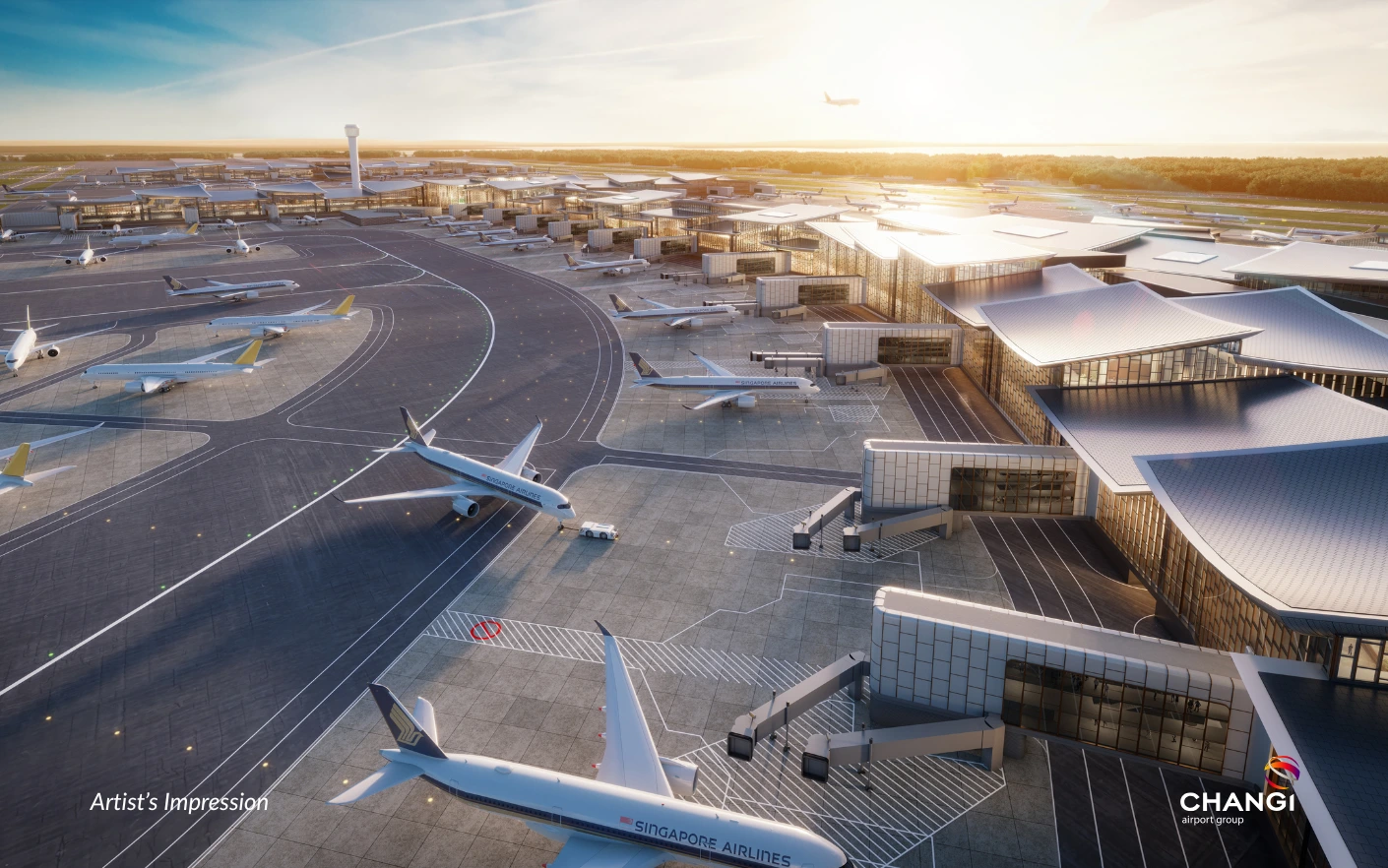
1. Singapore Changi Airport, Singapore
Singapore Changi Airport (SIN) doesn’t just win awards — it collects them like frequent-flyer miles. The airport has now topped the Skytrax global rankings for 13 consecutive years, a streak that borders on the absurd in an industry this competitive.
The numbers back up the reputation. Changi Airport Group reported an all-time annual high of nearly 70 million passenger movements in 2025, a 3.4% jump from the year before, with December alone handling over 6 million travelers and a single Saturday before Christmas seeing more than 223,000 people pass through. Kuala Lumpur, Bangkok, Jakarta, Bali, and Hong Kong were the busiest routes, and China retained its spot as the airport’s largest passenger market for a second straight year.
What makes Changi special isn’t throughput, though — it’s what happens between flights. The Jewel complex, with its indoor waterfall, forest valley, and canopy park, has turned a connecting flight into something people photograph. Between Jewel and the terminals, the airport connects over 100 airlines to more than 400 cities worldwide, all while maintaining the kind of hospitality and cleanliness that keeps it winning “World’s Best Airport” year after year.
Looking ahead, a fifth terminal is planned to add another 50 million passengers of capacity when it opens in the mid-2030s — a sign Changi has no intention of resting on its laurels.
2. Hong Kong International Airport, Hong Kong
If Changi is aviation’s reigning champion, Hong Kong International Airport (HKG) is the hub on the fastest upward trajectory in the region. The airport commissioned its long-awaited Three-Runway System in November 2024, a HK$141.5 billion (roughly US$18 billion) project that lifted peak hourly capacity from 69 to 102 aircraft movements — a jump of nearly 50%.
The growth since has been dramatic. On a rolling 12-month basis, passenger volume climbed over 15% year-on-year to nearly 60 million, while October 2025 alone saw more than 5.3 million travelers and transfer passengers surging over 50% compared to the previous year. The long-term ambition is even bigger: the airport authority is targeting 120 million annual passengers and 10 million tonnes of cargo within roughly a decade, up from a previous ceiling of 80 million.
That expansion hasn’t come at the cost of service quality. Hong Kong picked up the “Asia Large Airport of the Year” title at CAPA’s 2025 Aviation Awards for Excellence and has now held the “Best Airport” title at the TTG Travel Awards continuously since 2013. Add reliable transport links, strong multilingual staff, and Cathay Pacific anchoring nearly half of all departure seats, and it’s easy to see why the airport keeps punching above its weight on passenger satisfaction surveys.
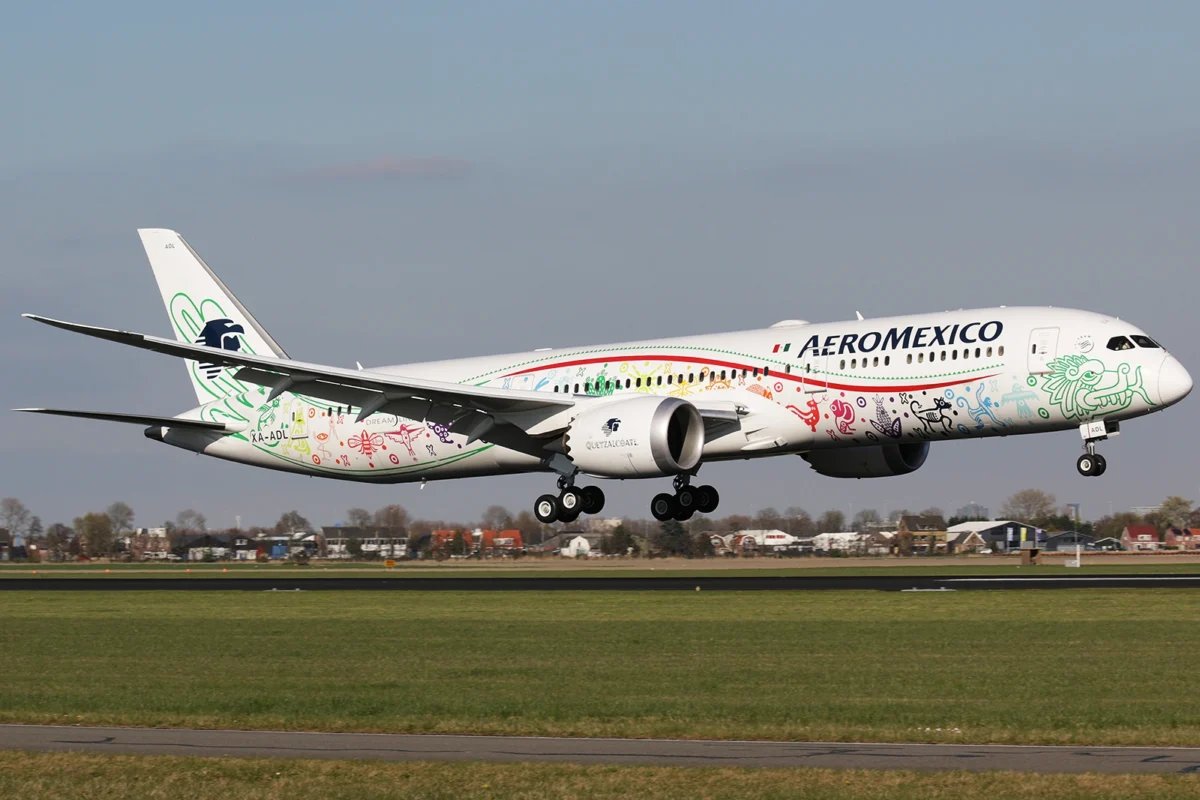
3. Amsterdam Schiphol Airport, Netherlands
Amsterdam Schiphol Airport (AMS)’s story in 2026 is one of growing smarter rather than simply growing bigger. The Dutch government tightened the airport’s flight cap for the 2025–26 winter season, cutting the ceiling from 500,000 to 478,000 annual flights as part of a broader push to curb noise and emissions. Rather than shrinking, Schiphol adapted — deploying larger, more efficient aircraft like the Airbus A321neo and A350 to keep passenger numbers climbing even as flight numbers were reined in.
The results speak for themselves: Royal Schiphol Group closed 2025 with 68.8 million passengers, a 3% rise on the year before, even while staying just under the newly imposed flight limit. The airport expects to handle between 68 and 72 million passengers in 2026.
What travelers actually notice, though, is the layout. Unlike hub airports scattered across disconnected terminal islands, Schiphol operates as a single integrated terminal, which makes transfers dramatically less stressful — a design choice that consistently earns it praise from connecting passengers.
The airport is also mid-way through a roughly €6 billion sustainability and infrastructure push aimed at zero-emission operations by 2030, alongside a new fee structure that rewards airlines flying quieter, cleaner aircraft. A new Pier A is due by 2027, part of a broader master plan carrying Schiphol’s ambitions out to 2050. The airport has a delightful bird strike prevention sytem.
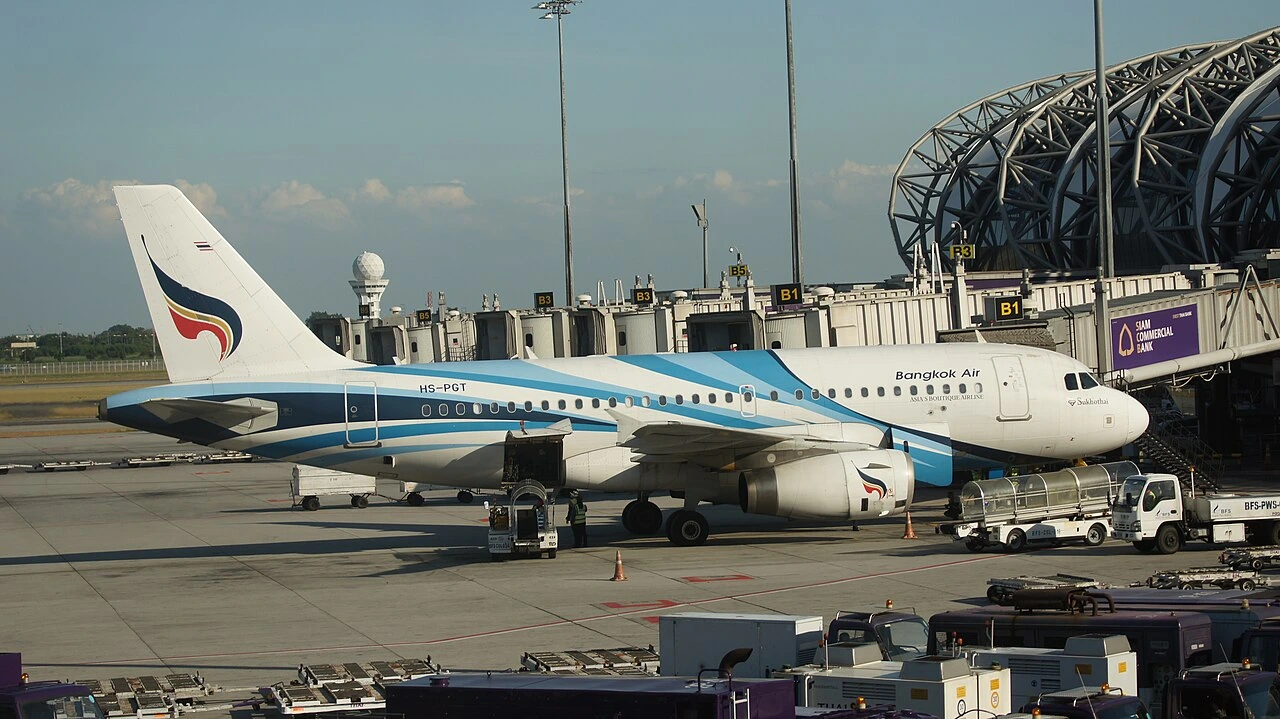
4. Bangkok Suvarnabhumi Airport, Thailand
Bangkok Suvarnabhumi Airport (BKK) is the airport in this list most visibly straining at the seams — and most aggressively building its way out of it. Airports of Thailand (AoT) reported 58.1 million passengers for fiscal year 2025, up nearly 5% year-on-year, with monthly peaks topping 5.4 million during high season. The airport is already routinely operating at or above what planners consider its comfortable capacity.
The fix is a sweeping master plan running through 2035. A new South Terminal, designed to handle 55 million passengers a year on its own, is being built alongside a fourth runway, with the combined project expected to lift total capacity toward 120 million passengers over the coming decade — comparable to major Chinese hubs like Chongqing. A nearer-term phase, the East Expansion, is slated to raise capacity to somewhere between 70 and 80 million passengers by 2030.
None of that construction has dented the passenger experience so far. Suvarnabhumi continues to draw praise for its striking architecture, broad retail and dining lineup, and the warmth of its staff — qualities AoT leadership has explicitly built into a “World Class Hospitality Airport” strategy that pairs big infrastructure with genuine service quality. With 126 scheduled airlines now operating there and European routes expanding as Thai Airways resumes long-haul service, Suvarnabhumi’s role as Southeast Asia’s connective tissue keeps deepening.
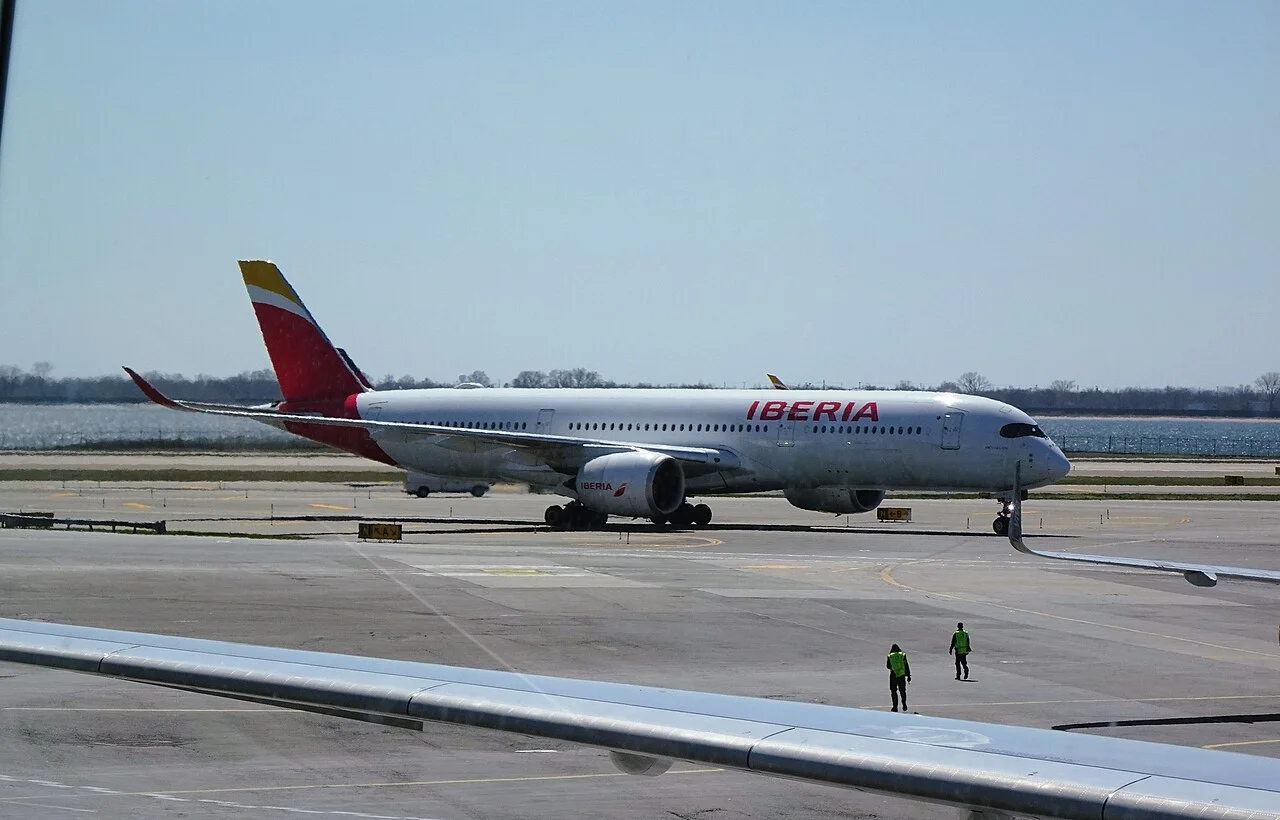
5. Adolfo Suárez Madrid-Barajas Airport, Spain
Adolfo Suarez Madrid-Bajaras Airport (MAD) closed out 2025 on a record high: 68.2 million passengers, a 3% increase year-on-year, comfortably surpassing its pre-pandemic 2019 total by more than 10%. International traffic did the heavy lifting, climbing past 51 million passengers, while domestic numbers actually dipped slightly — a trend that underlines Barajas’s evolution from a national airport into a full-blown intercontinental hub.
That intercontinental identity is really the airport’s calling card. Madrid is Europe’s single largest gateway to Latin America, holding roughly a third of the region’s market share for that route network, powered largely by Iberia’s transatlantic connections to destinations like Bogotá, Mexico City, and São Paulo. The airport’s single-hub structure across Terminals 1 through 4 (plus the satellite T4S) keeps transfers relatively painless despite the size, and Terminal 4 — designed by Richard Rogers and Estudio Lamela — remains one of the more architecturally admired terminals in Europe.
Spain isn’t done investing either. Madrid is set to receive roughly €2.4 billion under the national government’s latest five-year airport investment plan, aimed at pushing capacity toward 90 million passengers a year. Combined with strong rail and road links into central Madrid, the airport is positioning itself to rival London Heathrow and Paris Charles de Gaulle as a genuine mega-hub — while, for now, still delivering the kind of manageable, well-organized experience that lands it in Skytrax’s top five.

What These Five Airports Have in Common
Strip away the geography and a clear pattern emerges across all five:
- Terminals built to move people, not trap them — smart layouts that minimize congestion even at near-record passenger volumes.
- Fast security and immigration — often boosted by biometric processing and automated gates.
- Obsessive cleanliness and upkeep, maintained even during peak travel periods.
- Retail and dining that people actually want to spend time in, rather than tolerate.
- Comfortable lounges and rest areas for both premium and economy travelers.
- Staff who are genuinely helpful — multilingual, professional, and visibly invested in the passenger experience.
- Baggage systems that work, transfer after transfer.
- Strong connections to the surrounding city, whether by rail, road, or both.
- Clear, intuitive signage that doesn’t require a map app to decode.
- Continued capital investment in technology, sustainability, and capacity.
The Bigger Trends Shaping This Tier
A few themes cut across all five airports and hint at where the category is heading next:
Bigger planes, not just more flights. Both Schiphol and Suvarnabhumi are leaning on larger, more efficient aircraft to grow passenger numbers without proportionally increasing flight movements — a response to environmental limits and slot constraints alike.
Airports as destinations. Changi’s Jewel is the extreme example, but the instinct is spreading: leading airports increasingly want passengers to enjoy their layover, not just endure it.
Runway and terminal arms races. Hong Kong’s Three-Runway System and Suvarnabhumi’s South Terminal both represent nine-figure, multi-year bets that capacity constraints are the biggest threat to future rankings.
Sustainability as a competitive metric, not a side project. From Schiphol’s emissions-linked landing fees to Changi’s solar and water-recycling initiatives, environmental performance is becoming as scrutinized as passenger satisfaction scores.
Latin America and Southeast Asia as growth engines. Madrid’s dominance over transatlantic routes to Latin America and Suvarnabhumi’s positioning as an ASEAN gateway show how regional connectivity, not just raw size, is shaping airport strategy.
Final Word
What’s striking about this category isn’t just who made the list — it’s how differently each airport got there. Changi wins on relentless polish and experience design. Hong Kong is scaling at a pace few hubs can match. Schiphol is proving that smart planning can beat brute-force growth. Suvarnabhumi is building its way out of capacity strain without losing its hospitality. And Madrid has quietly become Europe’s bridge to an entire continent.
Together, they make the case that somewhere between “big” and “overwhelming” is exactly where the world’s best airports want to be.
Quick FAQ
Which airport ranks best in the 60–70 million passenger category for 2026? Singapore Changi Airport takes the top spot, continuing a 13-year streak atop Skytrax’s global rankings.
What factors go into the rankings? Passenger feedback on cleanliness, staff professionalism, terminal design, shopping and dining, security and immigration speed, and overall comfort all feed into the final scores.
Why does Changi keep winning? A rare combination of operational efficiency, immaculate upkeep, and destination-style attractions like Jewel — all sustained even as annual passenger numbers approach 70 million.


,_as_IB_6251_Madrid_(MAD)_-_New_York_(JFK),_Flight_time_7_43_(52898622809).jpg)
