
Ajit Pawar Plane Crash: What Happened, Where It Happened, and What We Know So Far

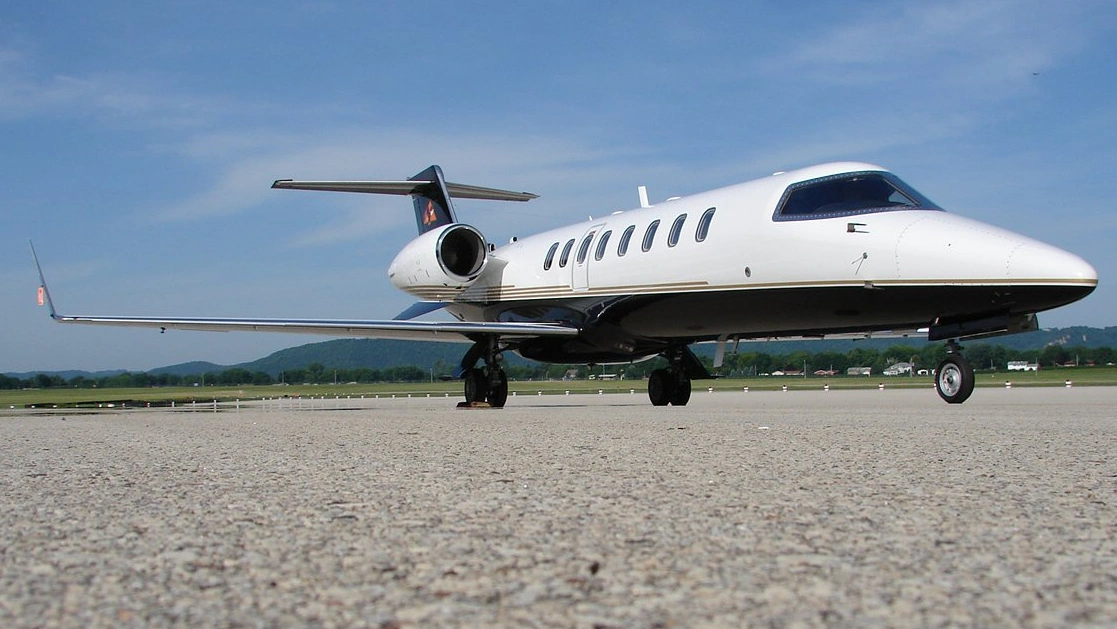
At a time when India is reeling with the investigation of AI 171, and only a day after there was excitement about a $5.4 billion Vadhavan airport being built, Ajit Pawar, the Deputy Chief Minister of Maharashtra, was killed when the Learjet 45XR business aircraft he was aboard crash-landed near Baramati Airport, Pune district. The accident took place on the morning of January 28, 2026 when the aircraft, on a chartered flight from Chhatrapati Shivaji Maharaj International Airport (BOM), Mumbai, was attempting to land when it veered off runway 11 and erupted into flames seconds before impact.
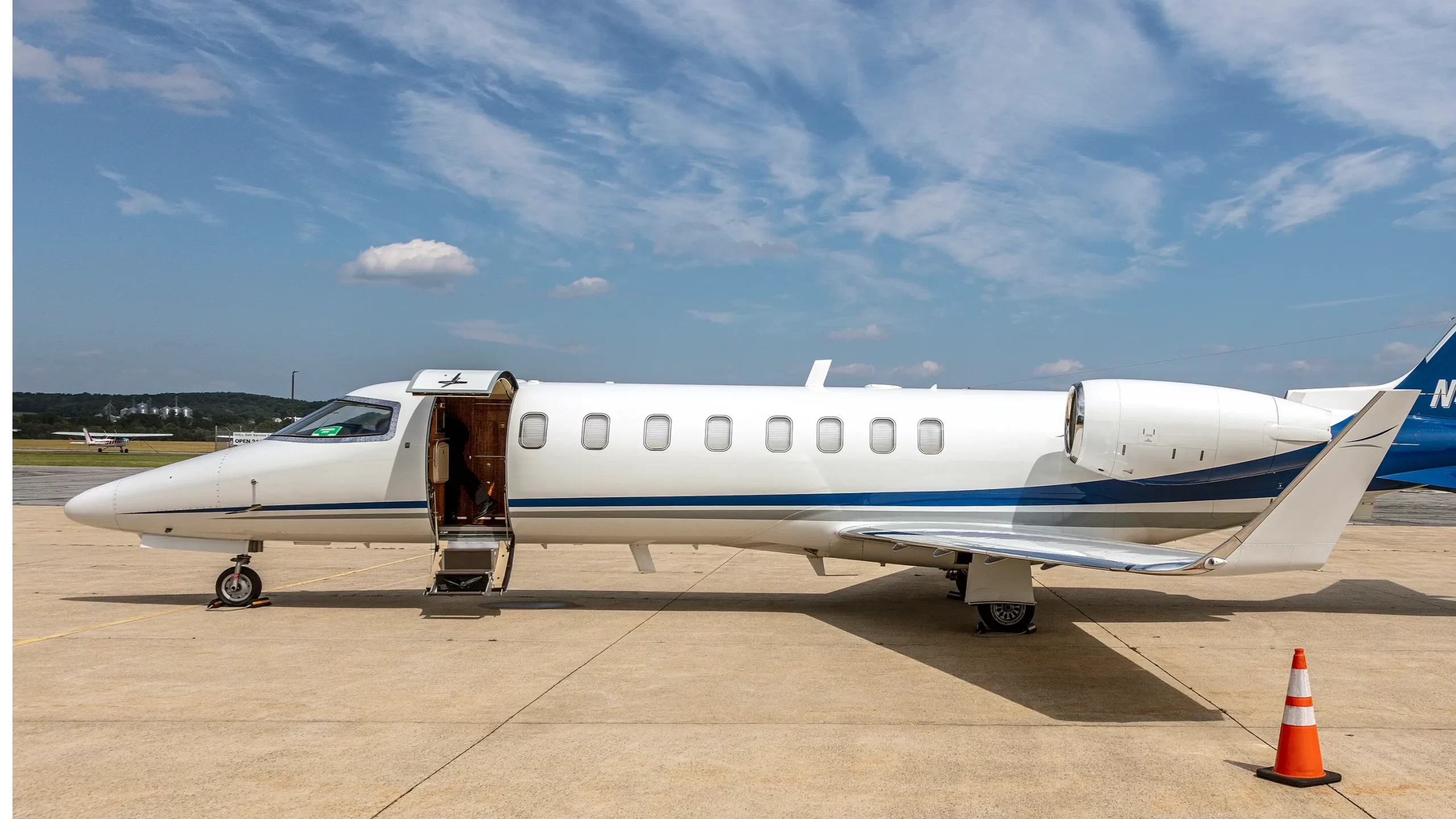
Photo: Acroterion | Wikimedia Commons

The accident occurred at approximately 08:45 local time, with the aircraft approaching the runway in poor visibility conditions during a second landing attempt after reporting the runway was initially not in sight. The Deputy Chief Minister, two security personnel, and two crew members were on board; no survivors were found at the scene.

Baramati Airport – Technical and Operational Profile of the Airport where Ajit Pawar was Killed

Category Parameter Details
Airport profile Airport type & usage Public general aviation airfield used for charter operations, pilot training, and government movements
Ownership & operator Government of India; operated by Airports Authority of India (AAI)
Location Geographic location Baramati, Pune district, Maharashtra, India; semi-urban setting surrounded by agricultural land
Coordinates & elevation Position & height Approx. 18°33′N, 74°36′E; elevation ~1,900 ft above mean sea level
Runway system Runway configuration Single runway (11/29), asphalt surface, approx. 1,200–1,400 m length and ~30 m width
Runway equipment Limited runway lighting; no precision or non-precision instrument approach aids
Air traffic services ATC & airspace Uncontrolled aerodrome; no full-time ATC tower; operations conducted via advisory traffic information
Surveillance No radar or ADS-B-based terminal surveillance
Navigation & approach Approach type Visual approaches only; no ILS, PAPI, VOR, or RNAV procedures published
Operational envelope Permitted operations Daytime VFR operations; restricted night and adverse-weather operations
Weather sensitivity Susceptible to morning fog and seasonal visibility degradation
Aircraft compatibility Suitable aircraft Light aircraft, turboprops, and light-to-mid-size business jets
Operational limits Unsuitable for narrowbody or widebody commercial aircraft
Safety & emergency Rescue and firefighting Basic emergency response capability; not ICAO-certified RFFS category
External support Relies on municipal fire services and district emergency agencies
Infrastructure constraints Physical limitations Limited runway safety areas, minimal overrun protection, constrained apron space
Regulatory oversight Aviation authority Directorate General of Civil Aviation (DGCA), India
Standards applicability Partial compliance with ICAO Annex 14 for non-controlled aerodromes
Strategic relevance Regional role Serves Baramati region; periodically used for high-profile political and official travel
Safety focus Recent scrutiny Infrastructure and operational limitations under review following fatal business jet accident
What happened: Sequence of events that Led to Pawar’s Death

The Learjet 45XR, registered VT-SSK, departed BOM in the early morning for a short charter to Baramati. Contact was made with Baramati advisory services at 08:18, and the aircraft descended under visual meteorological conditions. The flight was scheduled to be short, roughly 35–40 minutes, roughly the time it takes for the flight to the most dangerous airport in the world. – Lukla airport (also known as Hillary Airport).

Lukla Airport Crashes: An In-Depth Analysis of the World’s Most Dangerous Runway

During the initial approach, the crew reported the runway was not visible and initiated a go-around. On the second landing attempt, the aircraft was cleared for runway 11 but failed to issue read-back communications minutes before the fiery crash.The aircraft veered off course, crashed near the runway threshold, and burst into flames on impact, killing all onboard.

Chhagan Bhujbal, Senior NCP leader and Maharashtra Minister, was quoted in The Economic Times to have said that it was too early to tell why the plane crashed:

“The people who were here to welcome him, they say that the plane had hovered around here, but despite that, how that plane reached there, or made to descend, we never know, the air strip is big here, how it happened, we are still wondering, whether pilot made mistake, I cannot tell. It is a big loss.”

Photo: the forty five | Wikimedia Commons

Timeline of the Ajit Pawar plane crash at Baramati

  • 08:10 AM IST – Departed Mumbai

  • 08:18 AM IST – First contact with Baramati advisory/ground
     At this point it was still en-route, and advisory services (not a formal ATC tower, since Baramati is an uncontrolled aerodrome) began providing traffic information.

  • ~08:20–08:25 AM IST – Advised descent under VMC
    After being cleared by Pune area approach controllers at about 30 nautical miles inbound, the crew was advised to descend under Visual Meteorological Conditions (VMC), because Baramati lacks instrument landing systems. Winds were reported calm with visibility around 3,000 m.

  • ~08:30 AM IST – First landing attempt; runway not in sight
    On the final approach to Runway 11, the pilots reported they could not see the runway due to limited visual cues and aborted the landing, initiating a go-around to reposition for another try.

  • ~08:40–08:42 AM IST – Second approach begins
    The aircraft re-established on final approach again, indicating runway in sight and continuing descent toward runway threshold after the missed first attempt. Flight tracking data shows the aircraft looping back in a pattern consistent with another landing attempt.

  • 08:43 AM IST – Cleared to land on Runway 11
    Baramati ground advisory/flight information service cleared the Learjet to land on Runway 11, and advised the crew accordingly. However, no formal readback of the landing clearance was received from the pilots — an essential safety procedure in radio communication.

  • 08:44 AM IST – Loss of communication and radar track
    Shortly after clearance, the flight track disappeared from radar. This suggests the aircraft was very close to touchdown when communication and transponder signals ceased.

  • 08:45 AM IST – Crash and fire observed
    Within about a minute of the missed readback, personnel on the ground spotted flames near the runway threshold. CCTV and witness reports captured the Learjet impacting the ground, bursting into fire, followed by multiple explosions, and being destroyed on impact.

Photo: Bob Adams | Wikimedia Commons

Operational history of VT-SSK: The Aircraft Involved in Ajit Pawar’s Accident and VSR Aviation

The aircraft involved, a 16-year-old Learjet 45XR (VT-SSK). According to Aviation Safety Network, the aircraft, manufactured in 2010, had accumulated approximately 4,915 total airframe hours across 5,867 flight cycles and was powered by Honeywell TFE731-20BR turbofan engines.

The aircraft was operated by VSR Aviation, had previously been involved in a non-fatal crash in September 2023 at Mumbai during heavy rain while landing. While there have been questions about whether the aircraft was old and whether the pilot was at error, VK Singh, the director of VSR Ventures, told broadcaster India Today:

“The aircraft is 100% safe……The crew was fairly experienced.”
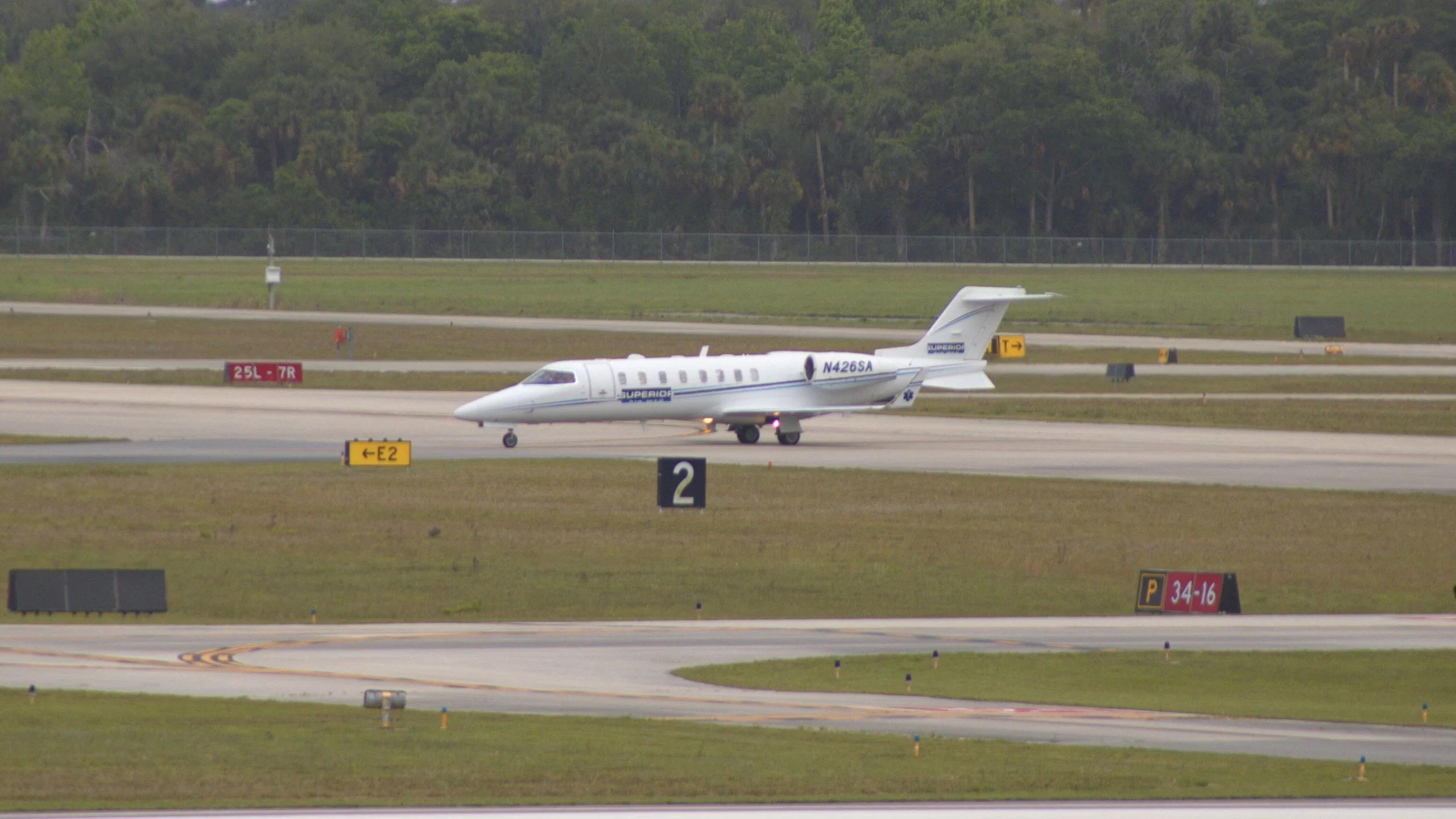
The aircraft involved in the accident was a Bombardier Learjet 45XR, whose specifications are as follows:
Specification Details
Type Learjet 45XR (business jet)
Manufacturer Bombardier Aerospace
First Flight of Model 2003 (45XR variant)
Production End 2012
Total Built ~208 units
Current Operational Fleet ~202 worldwide
Seating Capacity Up to 8 passengers + 2 crew
Typical Range ~1,937 nautical miles
Cruise Speed ~460–465 knots
Service Ceiling ~51,000 feet
Engines 2× Honeywell TFE731-20BR turbofans

This mid-size business jet that was involved in the crash of Ajit Pawar is widely used in corporate and charter operations and is prized for performance and efficiency. The 45XR variant, specifically, introduced higher takeoff weights and enhanced cruise performance over its predecessor.

Photo: ZLEA | Wikimedia Commons

VSR Aviation’s Learjet 45 was Previously Involved in an Accident, And That too In Mumbai

On 14 September 2023, a Learjet 45XR (VT-DBL) operated by VSR Ventures suffered a runway excursion during landing at Mumbai’s Chhatrapati Shivaji Maharaj International Airport. The aircraft was arriving from Visakhapatnam amid intense monsoon rainfall and reduced visibility when it lost directional control after touchdown.

The jet veered off the runway, sustained catastrophic structural damage with fuselage separation, and came to rest adjacent to the runway environment. Emergency services responded immediately, and all occupants were evacuated. While the aircraft was destroyed, there were no fatalities.

Photo: Acroterion | Wikimedia Commons

Additional technical and operational points

  • The flight was conducted as a non-scheduled charter operation, not a scheduled airline service.

  • Runway surface contamination due to standing water was identified as a significant environmental factor during the landing phase.

  • A temporary runway closure was imposed, resulting in cascading delays and diversions at Mumbai airport.

At the time of the landing attempt, Mumbai Airport was under heavy rainfall with degraded visibility. Wind information passed to the flight crew with the landing clearance indicated winds from 140 degrees at 7 knots for Runway 27. With the runway environment visually acquired, the crew elected to continue the approach.

According to a report of the accident published in Aviation Safety Network:

“The aircraft continuously drifted right of the runway 27 centreline and moved towards Apron C. About 40 seconds after the autopilot was disconnected, a stick shaker alert sounded in the cockpit accompanied by a stall warning. Thereafter, EGPWS warnings were generated and the aircraft crash landed at the shoulder of the intersection of Taxiway W and Taxiway N. As a result, the aircraft’s fuselage broke into two pieces and skidded, finally coming to a stop near the intersection of Taxiway U and Taxiway N on an unpaved area (near stand C80).”

A post-impact fire ensued, prompting an immediate response from airport fire services, which successfully extinguished the blaze. All occupants were evacuated, sustaining impact-related injuries, and were transported to a nearby hospital for medical treatment. The AAIB classified the event as an accident, triggering a formal investigation rather than a serious incident review.

The aircraft was later written off, representing a complete hull loss, and the preliminary report said that the aircraft was destroyed on impact after crash-landing on an unpaved area at the intersection of Taxiway W and Taxiway N, and further reported:

  • The fuselage fractured into two sections and skidded before coming to rest near an unpaved area close to the intersection of Taxiway U and Taxiway N, adjacent to Stand C80.

  • Debris was dispersed along Taxiway N, tracing the aircraft’s path from initial impact to its final resting position.

  • On-site inspection confirmed severe damage to the nose section, with the forward fuselage separating from the central fuselage.

  • The wing detached, and both the nose landing gear (NLG) and main landing gear (MLG) failed.

  • The empennage and both engines remained attached to the fuselage structure.

  • Scorch marks were observed beneath the right-hand engine, indicating post-impact thermal effects.

Photo: Eugene Butler | Wikimedia Commons

Political and Public Reaction to Pawar’s Crash

The crash triggered widespread grief across India, with Prime Minister Narendra Modi expressing deep sorrow and acknowledging Pawar’s administrative contributions. Leaders across parties have called for unity during the mourning period, and state authorities announced a three-day official mourning.

Political leader & Position Quote
Narendra Modi, Prime Minister of India “Shri Ajit Pawar Ji was a leader of the people, having a strong grassroots level connect… His untimely demise is very shocking and saddening.”
Rajnath Singh, Union Defence Minister “Throughout his long public life, he remained committed to the development and prosperity of Maharashtra… I extend my heartfelt condolences to his family.”
Sharad Pawar, NCP veteran leader “There is no conspiracy involved; it was purely an accident… Please don’t bring politics into this.”
Mamata Banerjee, Chief Minister, West Bengal “Deeply shocked and stunned by the sudden demise of Ajit Pawar… The incident needs proper investigation.”
Rahul Gandhi, Leader of Opposition, Lok Sabha “The news of the demise of Maharashtra’s Deputy Chief Minister Shri Ajit Pawar ji… is extremely heartbreaking.”
N. Chandrababu Naidu, Chief Minister, Andhra Pradesh “Shocked and deeply saddened by the sudden passing of Maharashtra Deputy Chief Minister Shri Ajit Pawar ji in a plane crash.”
Nitish Kumar, Chief Minister, Bihar “This incident is extremely painful and heartbreaking… His death is an irreparable loss.”
Eknath Shinde, Deputy Chief Minister, Maharashtra “It is a very painful incident… This loss is not just of the Pawar family but of the entire state.”
Supriya Sule, MP, NCP (SP) “Devastated.”
Priyanka Chaturvedi, MP, Shiv Sena (UBT) “This is very shocking, painful and heart-rending… He was a really committed man.”

A state funeral is planned in Baramati, where Pawar was a long-standing political figure deeply involved in regional development.

Photo: Md Shaifuzzaman Ayon | Wikimedia Commons

What’s Next Following Pawar’s Crash?

The DGCA will convene an expert committee, including flight data recorder (FDR) and cockpit voice recorder (CVR) analysis, meteorological assessments, and procedural compliance checks. Investigators will focus on approach clearance procedures, runway condition at Baramati, and crew decision-making under visual meteorological conditions.
Leave a Comment

Your email address will not be published. Required fields are marked *

Scroll to Top