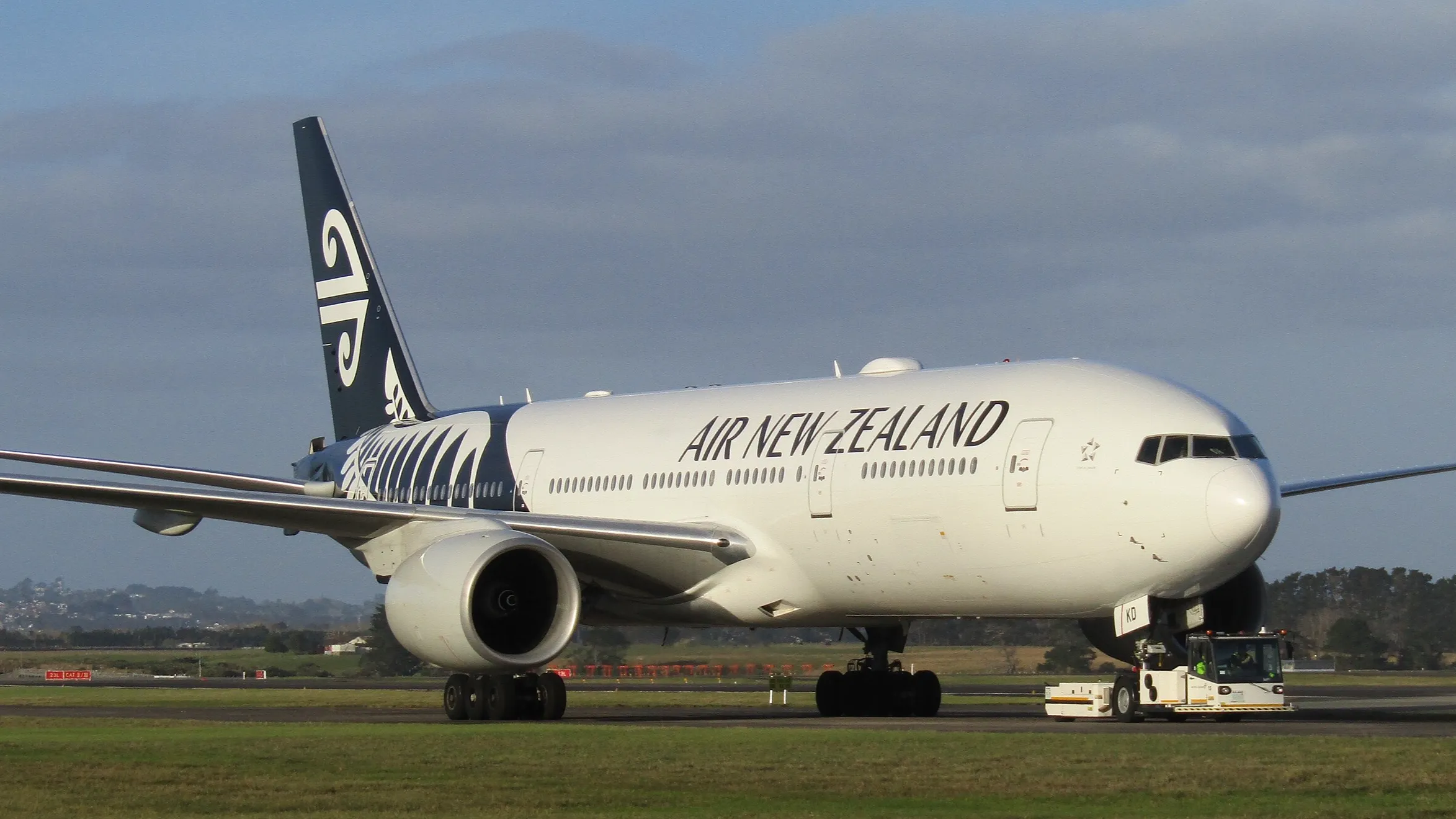
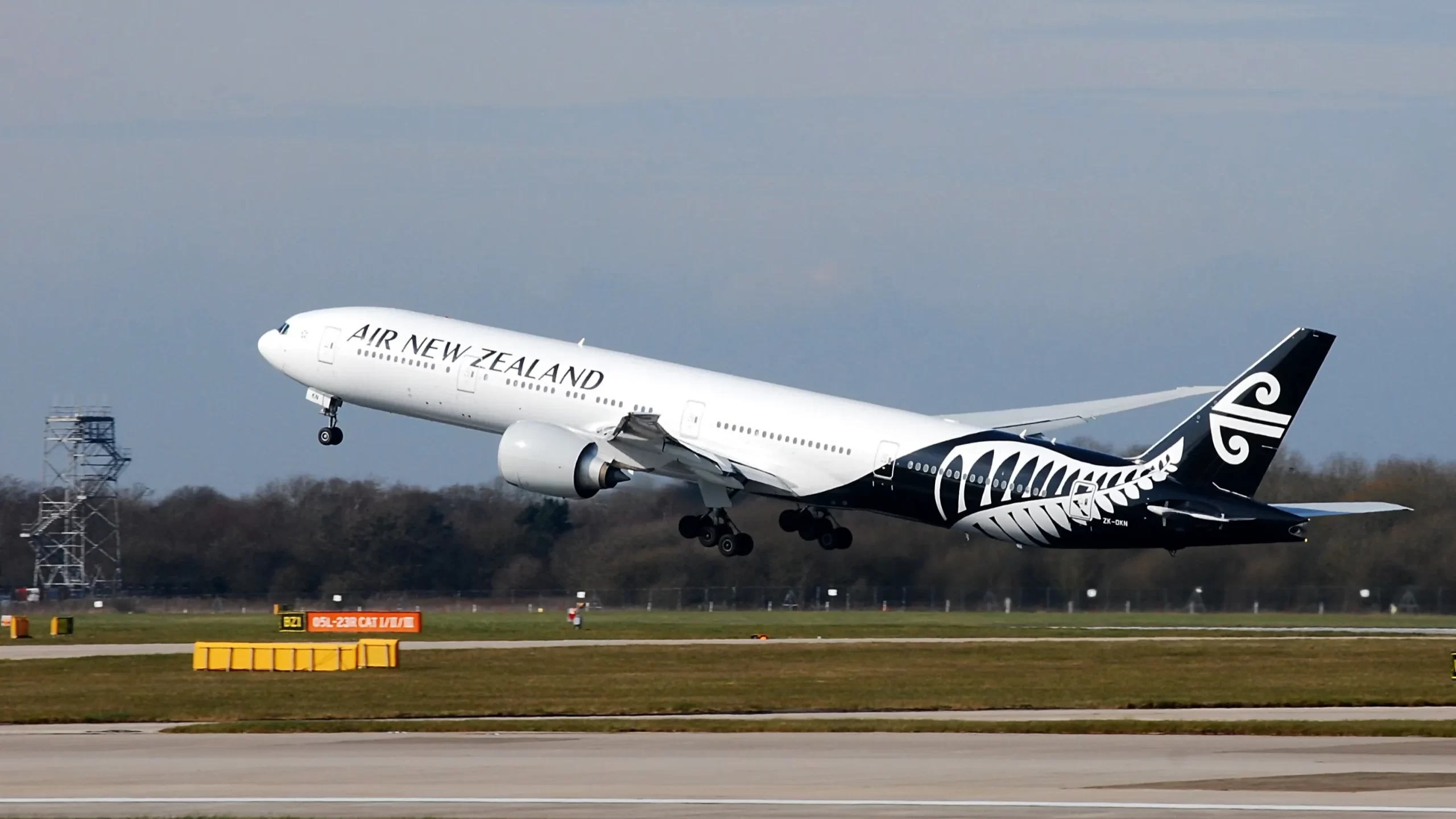
Air New Zealand (NZ) revealed new Business Premier and Economy cabin designs for its Boeing 777-300ER fleet on July 14, 2026. The redesign covers the airline’s seven 777-300ER jets, which fly long-haul routes from Auckland Airport (AKL), Auckland to the United States, Asia, and Australia. Air New Zealand published renders of both cabins on its official newsroom site.
The airline says the upgrade will keep its oldest widebody jets flying for longer while cutting maintenance costs tied to the current, aging cabin. The first retrofitted 777 enters the workshop in March 2027 and returns to service by May 2027. Premium Economy stays as it is, since that cabin already went through a refresh over the past year.
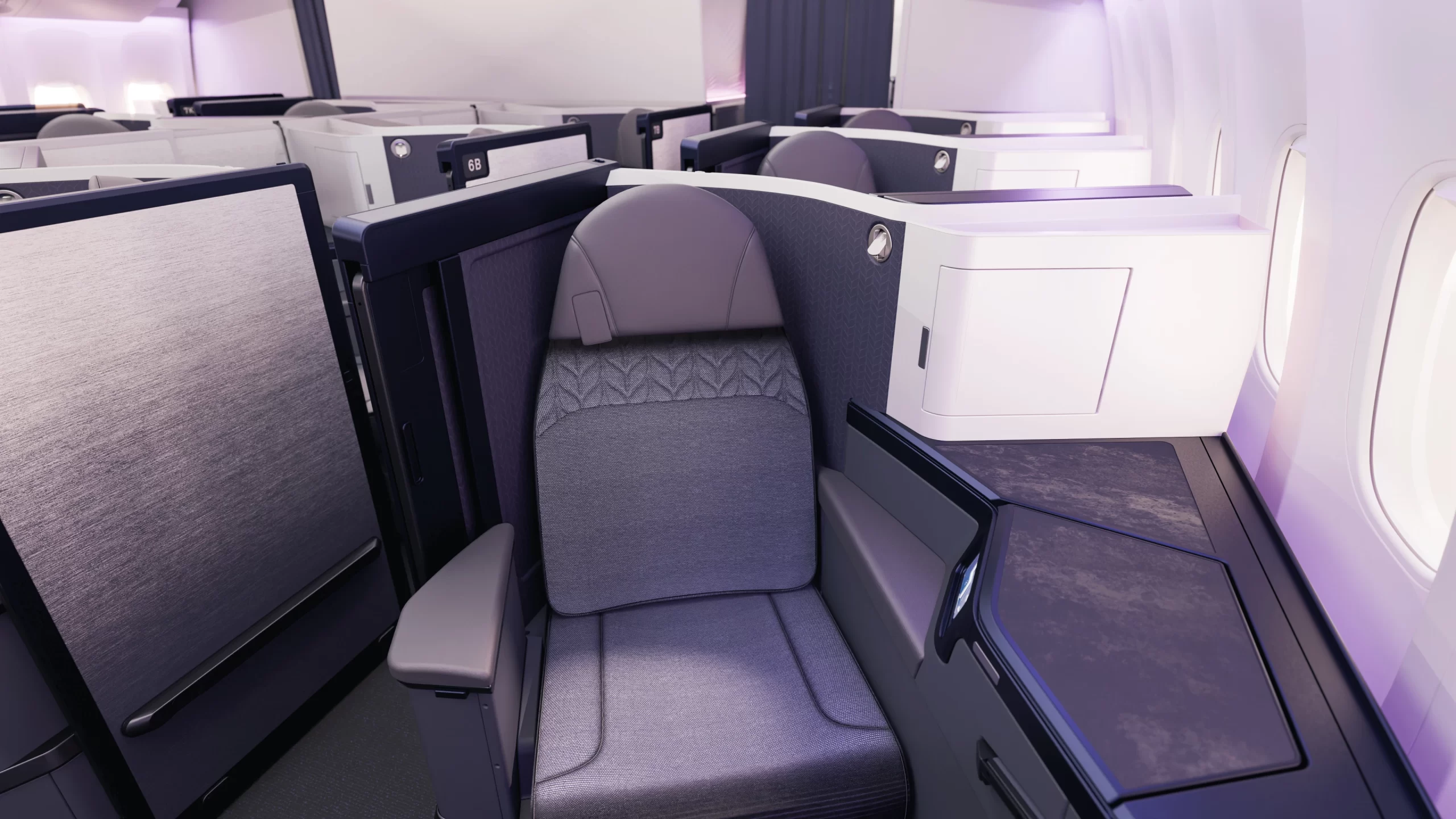
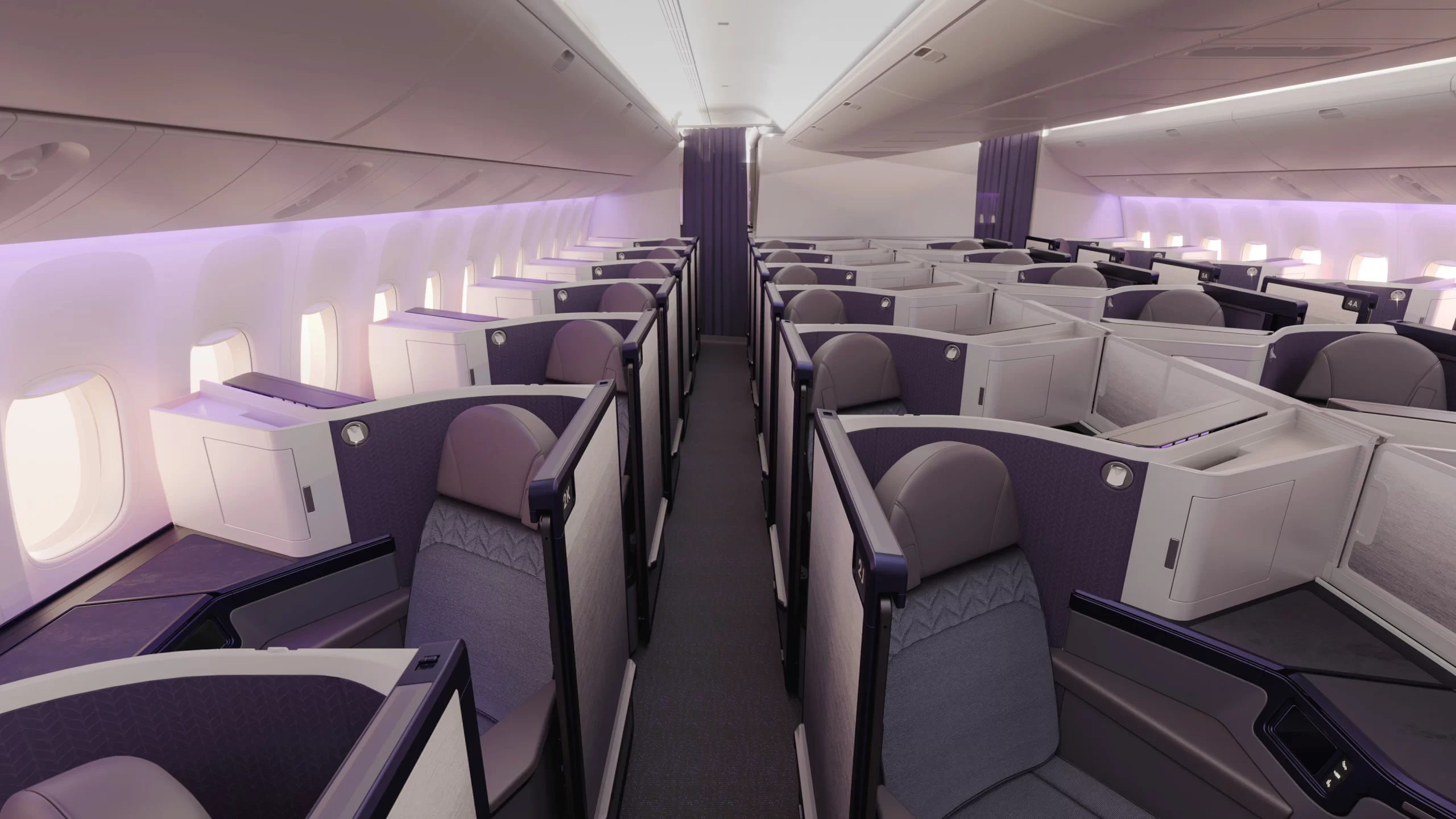
Business Premier Gets 44 Reverse-Herringbone Seats with Doors
The refreshed Business Premier cabin swaps the current herringbone layout for a forward-facing, reverse-herringbone design built on the Collins Aerospace Elevation platform. The seat count stays the same at 44 seats, and each one converts to a lie-flat bed. Air New Zealand says the new design gives customers more personal space and privacy than before.
Chief Customer & Digital Officer Jeremy O’Brien said the update brings the 777 fleet in line with other recent changes across the airline. “The updated Business Premier cabin will deliver a modern experience for our customers and brings similar functionality to the new seats being rolled out across our 787-9 fleet,” he said. He added that the layout will change to a reverse-herringbone format.
Key Business Premier features include:
- 43-inch seat pitch across all 44 seats
- A door on every seat for direct-aisle privacy
- Sliding privacy dividers between center-row seats
- 18-inch entertainment screens with Bluetooth audio
- USB-A and USB-C charging ports at every seat
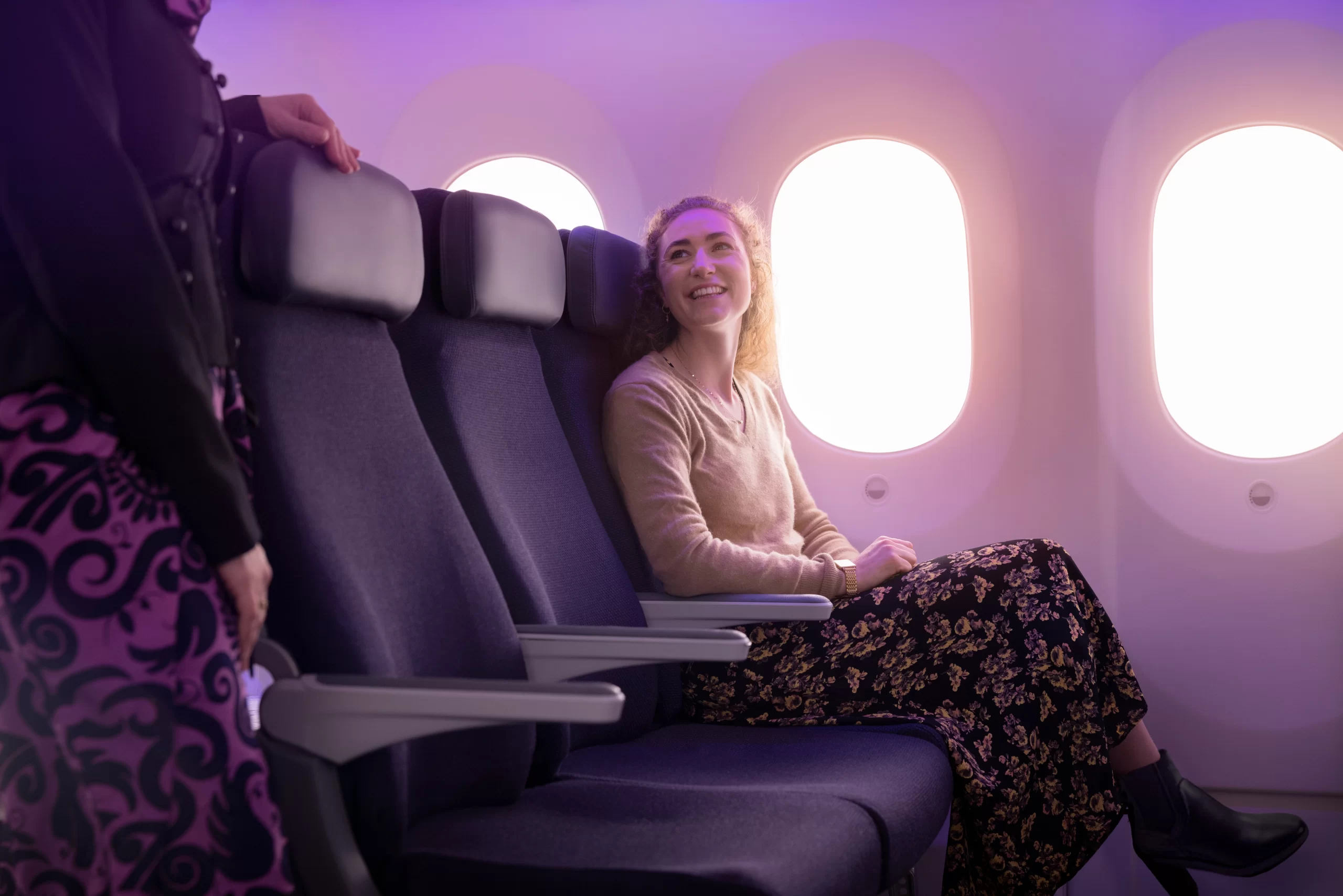
Economy Cabin Adds Two Seats and New Zim-Designed Seating
Economy passengers will sit in new, ergonomically designed seats supplied by Zim. The cabin grows from 244 to 246 seats, including 16 Skycouch rows, even though the total aircraft layout holds steady at 342 seats. Air New Zealand achieved this by removing two Premium Economy seats to make room for the wider Business Premier footprint.
Standard Economy seats keep a pitch of roughly 31 to 32 inches, while Economy Stretch seats offer 35 inches of room. Entertainment screens grow to 13 inches, and every seat gets a USB-C outlet. Screens will also carry Bluetooth audio connectivity, matching the new Business Premier setup.
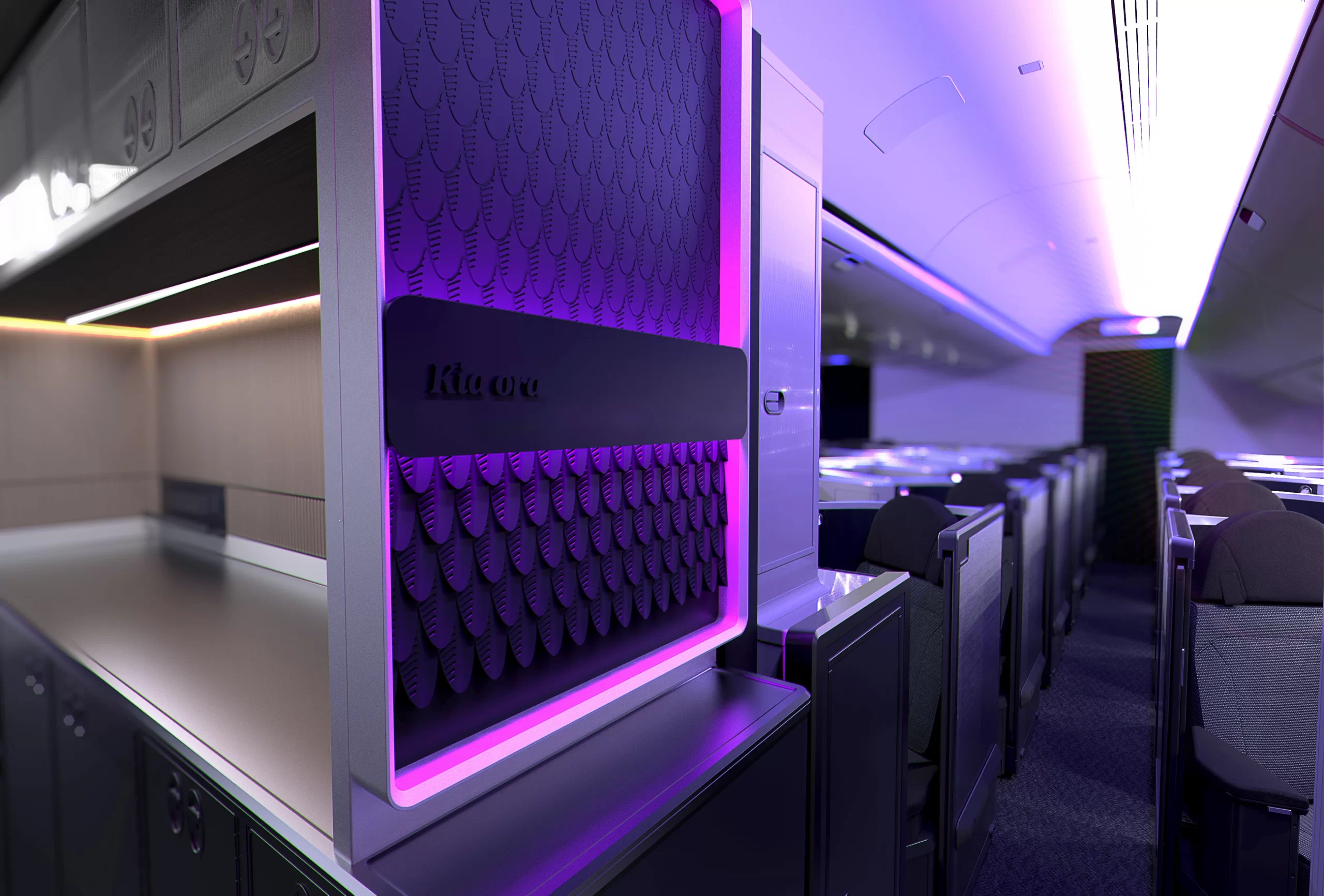
Why Air New Zealand Is Investing in Its Boeing 777-300ER Fleet Now
The airline welcomed its first 777-300ER in late 2010, and O’Brien said the cabin has served the airline well since then. “However the time is right to raise the bar once again,” he said in the press release. He added that the 777-300ER fleet continues to play a key role in the airline’s international network.
O’Brien also linked the upgrade directly to maintenance economics. “Upgrading the interiors means we can keep these aircraft flying for longer, while reducing the maintenance demands that come with an older cabin product,” he said. The airline factored ongoing maintenance and production costs into the retrofit decision from the start.
How This Compares to Air New Zealand’s Other Recent Fleet Upgrades
This 777 retrofit follows closely on the airline’s separate overhaul of its Boeing 787-9 Dreamliner cabins, a program that cost roughly NZD 35 million and wrapped up with the return of the airline’s final 787-9 from long-term storage, according to Travel Weekly Australia. Together, the two programs are meant to give Air New Zealand’s international fleet a more consistent look and feel.
The two retrofits do not share the same seat, though, and that has drawn attention from industry observers. Ben Schlappig at One Mile at a Time noted that Air New Zealand is installing two different business class products on two different widebody types, even though the 777 cabin is wider than the 787 cabin. He wrote that this is unusual because cabin width is often the reason airlines choose different seats for different aircraft, and that reason does not apply here.
The cabin overhauls also sit alongside a broader push to modernize the customer experience. Air New Zealand replaced its long-running Airpoints loyalty programme with Koru in April 2026, moving more than five million members onto a new tiered rewards system. Seen together, the loyalty relaunch and the two cabin retrofits point to a wider effort to refresh the airline’s product ahead of its 787-9 and 777-300ER aircraft aging further.
Industry Reaction Calls the Upgrade Overdue but Raises Fleet Questions
Aviation commentators have largely welcomed the new Business Premier product. One Mile at a Time called the update “long overdue,” and said customers should be pleased with it, even though the seat itself does not break new technical ground. The outlet noted that the off-the-shelf Collins Elevation seat may actually outperform the airline’s custom 787-9 product, since the 787 seat does not have doors.
Some readers on aviation forums have also asked why Air New Zealand chose an off-the-shelf product for the 777 rather than a custom design like the one used on its 787-9s. One theory raised in the comments beneath the One Mile at a Time report suggests the airline may have wanted to avoid the added certification risk that a fully custom seat would carry on a second aircraft type. Air New Zealand has not commented publicly on that question.
What Happens Next for Air New Zealand’s Long-Haul Fleet
Air New Zealand has not yet confirmed a full retrofit schedule beyond the first aircraft, which begins conversion in March 2027. Aviation outlets, including One Mile at a Time, caution that interior retrofit programs commonly slip, so the May 2027 in-service date for the first jet should be treated as a target rather than a guarantee.
The retrofit affects all seven of the airline’s owned 777-300ER aircraft and excludes the ex-Cathay Pacific frames in its fleet. Once complete, Air New Zealand’s long-haul cabins across both the 787-9 and 777-300ER fleets will offer broadly similar Business Premier features, even though the underlying seat hardware differs between the two aircraft types.

.jpg)