Air India US flights: Where does the Indian flag carrier fly in the US?

Air India (AI), India’s Tata Group-owned flag carrier, currently operates nonstop transatlantic services to four cities in the United States: John F. Kennedy International Airport (JFK), New York; Newark Liberty International Airport (EWR), New Jersey; O’Hare International Airport (ORD), Chicago; and San Francisco International Airport (SFO), California.

These flights depart from three Indian gateways, two of which make some of the busiest domestic routes in the world: Indira Gandhi International Airport (DEL), New Delhi; Chhatrapati Shivaji Maharaj International Airport (BOM), Mumbai; and Kempegowda International Airport (BLR), Bengaluru.

A fifth US destination, Washington Dulles International Airport (IAD), served by DEL, has been suspended since 1 September 2025, following the airline’s own press release citing a planned fleet shortfall driven by a Boeing 787-8 retrofit programme and the ongoing closure of Pakistani airspace to Indian carriers. The suspension is the most consequential reduction in Air India’s US network since the pandemic, and it remains in effect with no confirmed reinstatement date beyond the 2026 summer schedule.

 The United States hosts one of the world’s largest Indian diaspora communities — estimated at over 4.4 million people — and the India–US corridor consistently ranks among the highest-yielding longhaul city pairs globally. Air India’s post-Vistara network now reaches nearly 90 destinations across 33 countries, with Star Alliance membership extending its reach further to approximately 1,200 destinations worldwide through partners including Lufthansa, Singapore Airlines, and United Airlines.
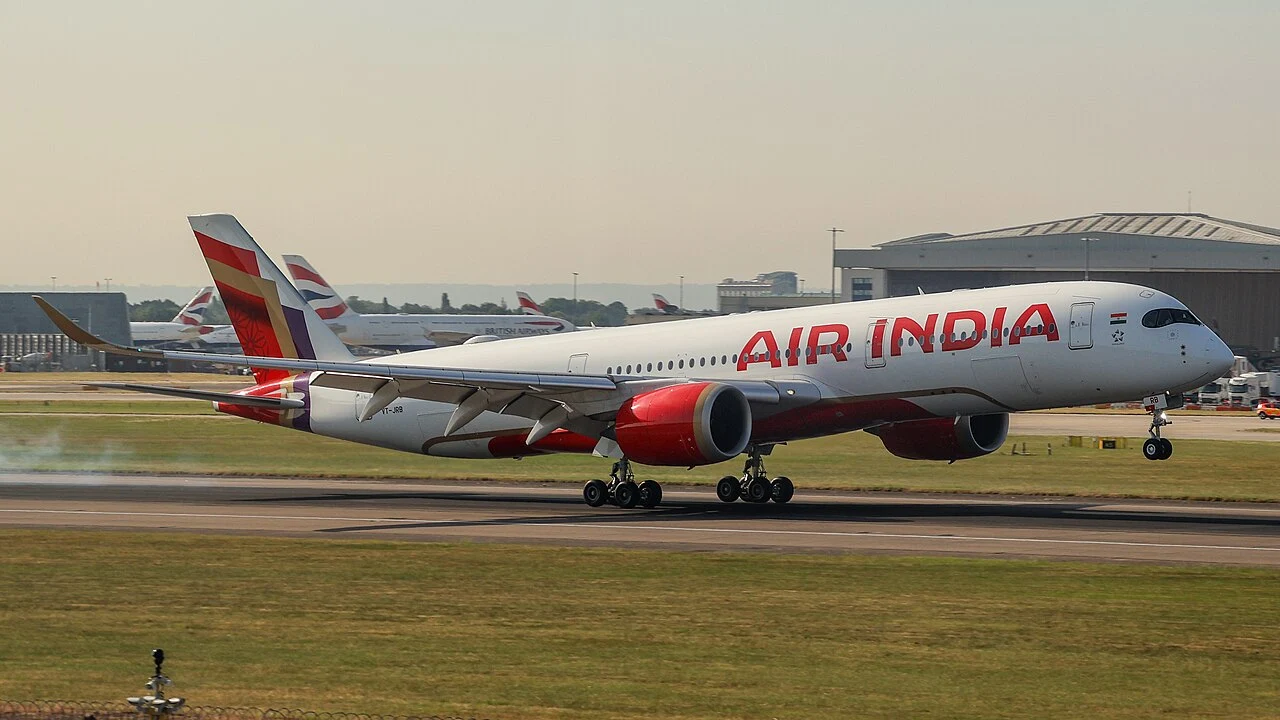
Photo: S5A-0043 | Wikimedia Commons

Air India’s Active Nonstop US Routes In 2026

Air India operates some of the longest Airbus A350 routes in the world, and these include the ones we are going to discuss. The US routes depart from DEL on all four corridors, from BOM to JFK, EWR, and SFO, and from BLR to SFO only.

Delhi–New York JFK: Air India has served DEL–JFK since 1993, making it one of the airline’s oldest transatlantic routes. American Airlines (AA) is the only other carrier offering nonstop service on the Delhi–New York route, having entered the market in 2021. According to OAG booking data, approximately 48% of American’s JFK–Delhi passengers connected onward from cities including Dallas-Fort Worth, San Francisco, Los Angeles, Charlotte, and Chicago Air India operates a Boeing 777-300ER on this sector, which has a block time of approximately 14 hours 45 minutes westbound.

Delhi–Newark: United Airlines (UA) competes directly with Air India on the DEL–EWR corridor, and the route has long been one of the most commercially competitive in the India–US market. Newark functions as Air India’s primary East Coast gateway for passengers connecting northward into New England or south towards the mid-Atlantic states. A codeshare agreement between Air India and United Airlines allows passengers to book seamlessly across both carriers’ networks.

Delhi–Chicago O’Hare: Air India first established the DEL–ORD air bridge on 31 October 2011 and has maintained the service since, primarily catering to the Indian diaspora concentrated in the greater Chicago metropolitan area. The route uses a Boeing 777-300ER. Chicago’s Indian community is one of the ten largest in the United States, and the VFR (Visiting Friends and Relatives) segment drives significant demand throughout the year, peaking during Diwali and the northern hemisphere summer months.

Delhi–San Francisco, Mumbai–San Francisco, and Bengaluru–San Francisco: SFO is Air India’s West Coast anchor and its most multi-origin destination. DEL–SFO is served with a Boeing 777-200LR (Long Range), while BOM–SFO and BLR–SFO are operated with the same aircraft type on a frequency that has historically been three times weekly from Mumbai. The Bengaluru–San Francisco service is Air India’s longest nonstop flight, spanning approximately 8,600 nautical miles and lasting roughly 16–17 hours.

Mumbai–JFK and Mumbai–Newark: Both services position Mumbai as Air India’s secondary US gateway, serving the commercial capital’s large business-travel and diaspora communities. BOM–EWR operates on a Boeing 777-300ER — a 342-seat, three-class aircraft configured with four First, 35 Business, and 303 Economy seats — while BOM–JFK uses the Boeing 777-200LR.
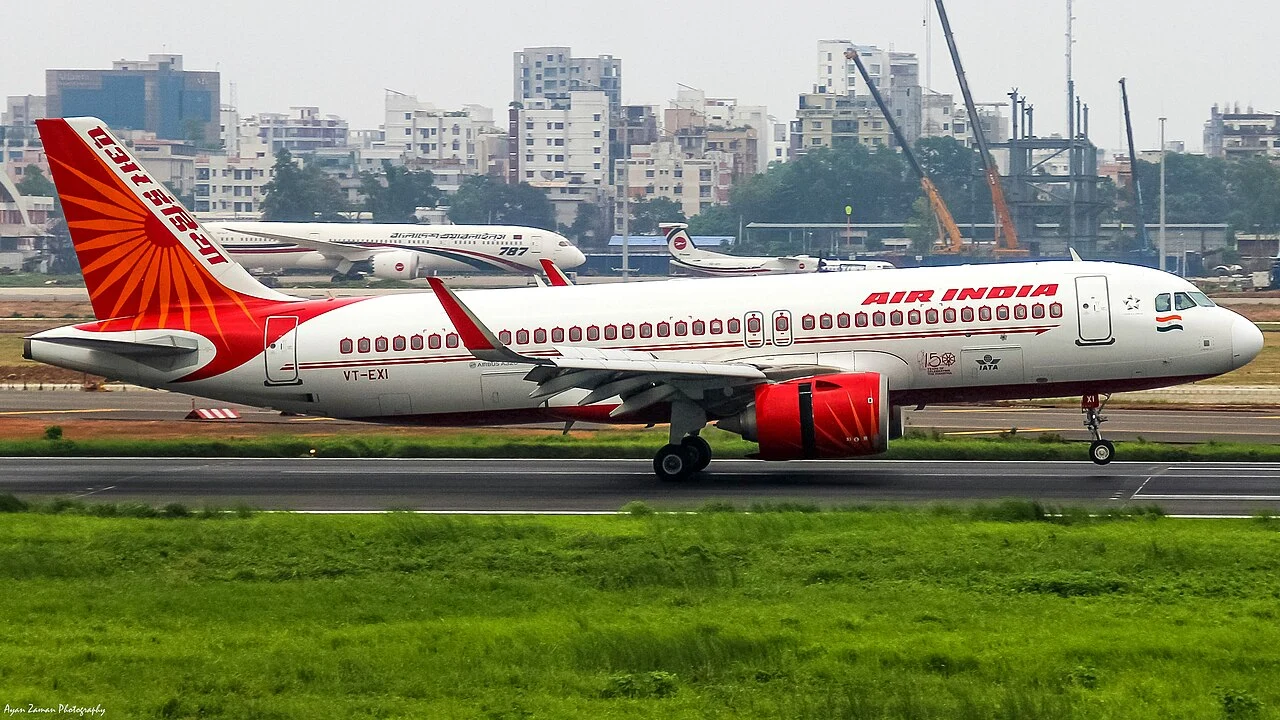
Photo: Md Shaifuzzaman Ayon | Wikimedia Commons

Why Washington Dulles Is Suspended and What Passengers Should Know

The suspension of the DEL–IAD route from 1 September 2025 is the most disruptive single change to Air India’s US network in recent years. In its official press release, Air India stated the suspension is primarily driven by the planned shortfall in Air India’s fleet, as the airline commenced retrofitting 26 of its Boeing 787-8 aircraft” and that this necessitates “a prolonged unavailability of multiple aircraft at any given time until at least end of 2026“.

The airline added that the simultaneous closure of Pakistani airspace to Indian carriers — in effect since late April 2025 — compounds the problem by stretching flight times on US-bound routes by as much as three hours, requiring additional fuel stops and increasing crew duty obligations.

Ahead of the suspension, the route had already been restructured from a nonstop service to a routing via Vienna International Airport (VIE), reflecting how severely the Pakistani airspace ban had degraded the DEL–IAD corridor’s commercial and operational viability. Travel Weekly reported that Air India reduced the Washington frequency from five to three weekly operations following the Ahmedabad crash in June 2025 — a sequence of compounding factors that ultimately made the route unsustainable through the retrofit period.

For passengers who relied on the direct DEL–IAD service, no other carrier currently offers a nonstop alternative. Air India has directed passengers to connect via JFK, EWR, ORD, or SFO with onward services on partner carriers including Alaska Airlines, Delta Air Lines, and United Airlines. Washington-area passengers should monitor Air India’s schedule filings on AeroRoutes and the airline’s own booking system; the airline did not file schedules for IAD beyond 28 March 2026 in initial winter filings, suggesting reinstatement is contingent on the pace of the 787-retrofit programme.

Photo: Steve Knight | Wikimedia Commons

The Pakistan Airspace Crisis and Its Cascading Impact On US Flights

The closure of Pakistani airspace to Indian carriers is the single most operationally damaging structural constraint currently facing Air India’s longhaul network, and its effects on US routes are direct and severe.

Pakistan first issued a Notice to Airmen (NOTAM) barring all Indian-owned or Indian-operated aircraft from its airspace on 24 April 2025, following the Pahalgam terror attack in Indian-administered Kashmir and the subsequent India–Pakistan military escalation in early May 2025. As of May 2026, Pakistan has extended that closure repeatedly; the latest NOTAM, issued by the Pakistan Airports Authority, keeps the restriction in place until 4:59am on 24 June 2026.

The routing consequence is significant. Approximately 70–80 two-way Air India flights per day previously transited Pakistani airspace — including the majority of North America, UK, and Europe-bound services from Mumbai, Delhi, and Ahmedabad. With Pakistan’s corridor closed, Air India has been forced to reroute US-bound flights northward over Central Asia or through European technical stops, adding between 90 minutes and three hours to flight times.

A document submitted by Air India to Indian officials in late October 2025 and reviewed by Reuters found that fuel costs for the airline rose by up to 29% and journey times on some longhaul routes increased by as much as three hours due to the enforced rerouting. The extended detours have cost Indian carriers collectively billions of rupees in additional fuel consumption since April 2025.

Air India noted in its Washington suspension press release that this closure “impacts the airline’s long-haul operations, leading to longer flight routings and increased operational complexity” — an understatement of the strategic severity of a ban that has been rolling since April 2025 with no resolution in sight.

Air India’s $2.4 billion FY2026 losses can be correlated to the Pakistan closure (during the Operation Sindoor) as one of three simultaneous structural shocks — alongside the Ahmedabad crash of AI 171 and the 787 retrofit programme — that converged to produce the airline’s weakest financial performance since the Tata Group’s acquisition.

Photo: Anna Zvereva | Wikimedia Commons

How the Crash of Air India Flight 171 Reshaped The US Network

No assessment of Air India’s current US network would be complete without acknowledgement of the Ahmedabad crash that preceded and accelerated many of the 2025 operational decisions. On 12 June 2025, Air India Flight AI171 — a Boeing 787-8 Dreamliner bound for London Gatwick Airport (LGW) — crashed 32 seconds after takeoff from Sardar Vallabhbhai Patel International Airport (AMD), Ahmedabad, when both engines lost power simultaneously during the initial climb. Of the 242 people on board — 230 passengers and 12 crew — only one survived. The aircraft struck the hostel block of B.J. Medical College, 1.7 kilometres from the runway, killing 19 people on the ground and injuring 67 others, for a combined death toll of 260.

The accident was the first fatal crash involving a Boeing 787 Dreamliner and the deadliest aviation incident in more than a decade globally. India’s Aircraft Accident Investigation Bureau (AAIB) confirmed in a preliminary report that both engine fuel-control switches had transitioned to the “cutoff” position within one second of each other, though the report did not assign blame.

The investigation continues, with Boeing and experts from the US and UK participating alongside Indian investigators. Air India accelerated its 787-8 retrofit programme in the crash’s immediate aftermath, withdrawing 26 aircraft from service for inspection and cabin overhaul — the same programme that later drove the Washington Dulles suspension.

Our coverage of the leadership fallout following the crash documented that CEO Campbell Wilson came under intense regulatory scrutiny, with show-cause notices issued by India’s Directorate General of Civil Aviation (DGCA) to senior officials over alleged compliance violations — including one incident in which Air India operated an aircraft with an expired license.

Wilson’s position as CEO subsequently became untenable and laterTata Group Chairman N Chandrasekaran engaged global aviation executives to explore succession options, reflecting the severity of both the operational and reputational damage inflicted on the airline.

Photo: Premkudva | Wikimedia Commons

The Role of the 787-9 Fleet Expansion on US Route Recovery

Amid the 787-8 groundings, Air India has been inducting brand-new Boeing 787-9 Dreamliners — and these newer aircraft represent the most credible pathway to restoring full US connectivity, including the suspended Washington Dulles service. Air India’s first Boeing 787-9 — registered VT-AWA — arrived in New Delhi from Seattle on 11 January 2026 and entered long-haul passenger service in February.

It is the first of 20 Boeing 787-9s ordered by the airline as part of the Tata Group’s landmark 2023 purchase of over 200 Boeing aircraft. Sourav Agarwal, Senior Editor at IndianEagle.com, said at the time:

“The brand-new B787-9 is not just the first line-fit Dreamliner, it is a new hope for Air India to reclaim its dominance in the nonstop flights service corridor, like from USA to India. Inarguably, aircraft shortage is the principal reason for continued suspension of Air India flights to Washington Dulles IAD since 01 September 2025.”

Tata Group confirmed at a media briefing in early 2026 that the airline expects a total of six new widebody deliveries during 2026, comprising additional 787-9s and the first two Airbus A350-1000 jets. The 787-8 retrofit programme is running in parallel.

AirInsight reported in late 2025 that the first two retrofitted 787-8 aircraft were in Victorville, California, receiving complete interior overhauls, and that approximately two aircraft per month would rejoin the fleet from February 2026 onward.

More than 50% of Air India’s widebody fleet was expected to feature modern interiors by the end of 2026, with 81% of the airline’s weekly international flights projected to operate with upgraded aircraft by that same milestone.

Photo: airliners.net | Wikimedia Commons

Air India’s Planned Expansion at Dallas, Los Angeles, And the Cities That Could Come Next

Air India has publicly signalled its intention to expand its US network — but the pace of that expansion is contingent on the arrival of new widebody aircraft. Staff were transferred from SFO to Los Angeles International Airport (LAX) in preparation for a new Los Angeles service, and that Air India began recruiting staff in Dallas Fort Worth International Airport (DFW) ahead of a planned Texas launch.

Neither route has been formally announced as of May 2026, but industry analysts see DFW and LAX as highly probable next additions given their large Indian diaspora catchment areas and strong business travel demand.

Indian Eagle’s analysis of US–India route developments for 2026 noted that Air India “is likely to introduce Chicago to Mumbai and Dallas to Delhi/Mumbai in its international network after the airline receives new aircraft and existing aircraft cabins are refurbished“, suggesting a Chicago–Mumbai corridor — not served by any carrier nonstop — as another potential addition.

Seattle, Houston, Atlanta, and Boston have each been evaluated internally by the airline over the past two years; all carry significant Indian diaspora populations that currently lack direct Air India connectivity. The timeline for any of these launches, however, remains dependent on the delivery pace of the 787-9 fleet and the completion of the 787-8 retrofit programme.
Photo: Air India

Maharaja Club Offetrs Loyalty Benefits For US-Bound Passengers

For passengers regularly flying Air India’s US routes, the Maharaja Club loyalty programme underwent a significant overhaul effective 1 April 2026 — and the changes materially benefit longhaul travellers. As we previously reported, Air India slashed Maharaja Points requirements for award flights by up to 64% on select routes, with DEL–SFO dropping from 77,000 to 40,000 points in Economy Class.

Business Class redemption rates have also undergone substantial rationalization on North America routes, with Platinum members now able to cancel or reschedule award tickets at no penalty up to two hours before departure.

The revised programme also lowered flight-count thresholds for elite tier qualification: Platinum status now requires 60 flights (down from 90), Gold 45 (down from 60), and Silver 20 (down from 30). Maharaja Points earned on Air India and Star Alliance partner flights are now credited within two hours of journey completion.


Leave a Comment

Your email address will not be published. Required fields are marked *

Scroll to Top