Chaicago, Colorado and Others: Why Will Southwest Airlines Will No Longer Fly on These 11 International Routes?

Southwest Airlines (WN) has officially eliminated 11 international routes from its network, effective from June 2026, Simple Flying reported as it quoted data from Cirium. All 11 axed services connect U.S. departure cities to leisure sun destinations across Mexico, the Caribbean, and Central America — markets where the airline has struggled to generate consistent, high-load-factor operations. The cuts affect cities including Chicago, Baltimore, Fort Lauderdale, Indianapolis, Kansas City, Milwaukee, Nashville, Colorado Springs, and St. Louis.

Since its inaugural international flight in July 2014, Southwest has transported nearly 40 million international passengers — yet that traffic has never exceeded 2% of the airline’s total ridership. In 2025 alone, international passenger volumes fell 12% compared to the 2018 record, against an 18% reduction in international flights.
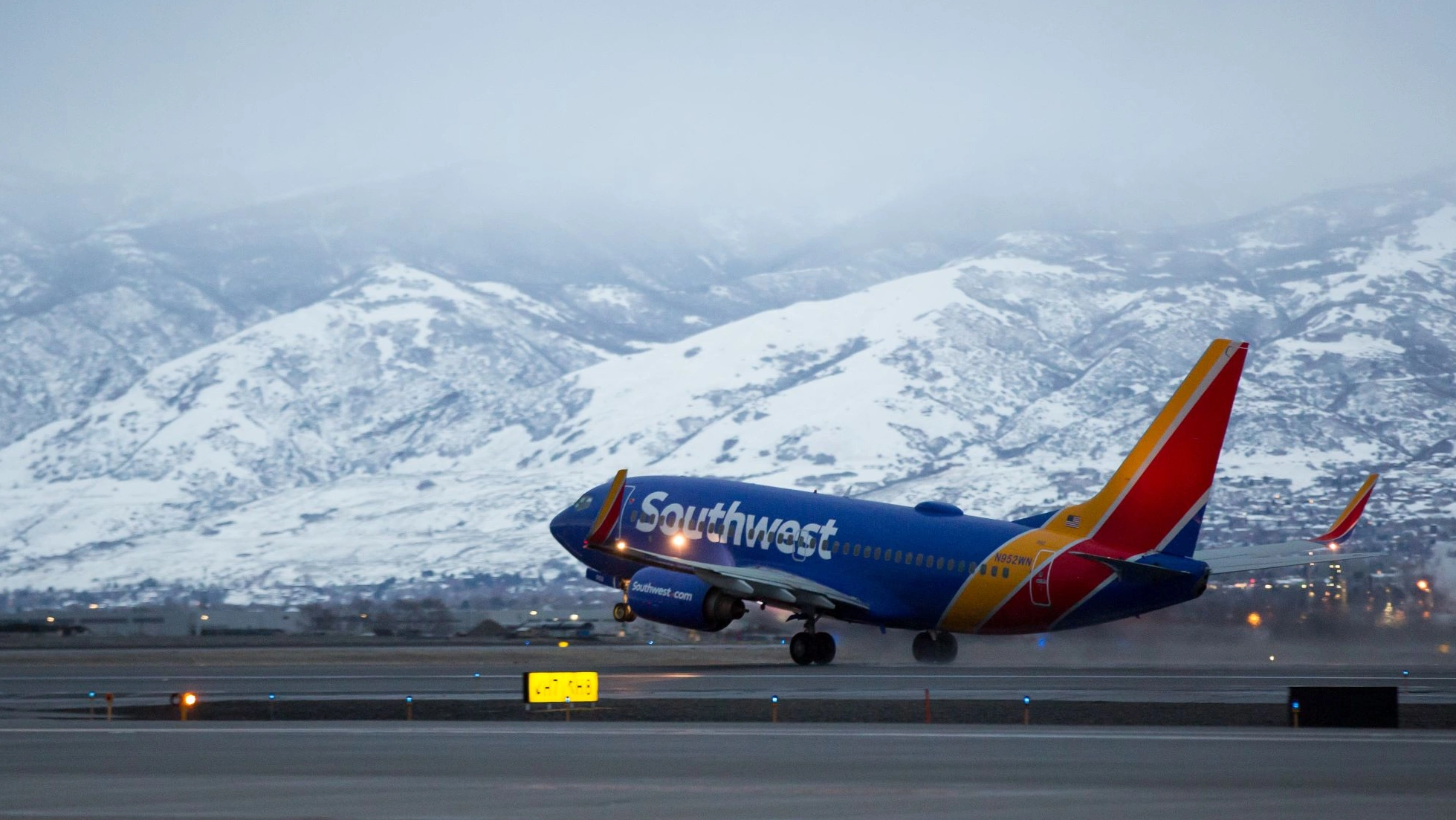
Photo: Southwest Airlines

Southwest Airlines’ Declining International Footprint

Southwest’s international ambitions have always occupied a peripheral role in its commercial strategy. The airline first entered international service in July 2014, launching flights to Aruba, Montego Bay, and Nassau — three quintessential leisure markets that suited its point-to-point operating model. Over the following decade, international traffic grew modestly but never commanded the same unit economics as the carrier’s dense domestic network.

U.S. Department of Transportation (DOT) data confirms that international travel accounted for just 2% of Southwest’s total traffic in the 12 years since that inaugural service. This is a strikingly low figure for a carrier that operates over 4,000 daily flights and serves more than 100 destinations.

The data reflects a pattern of steady withdrawal rather than sudden collapse. Traffic declined 12% from the 2018 peak, compounded by an 18% drop in international flight volume.
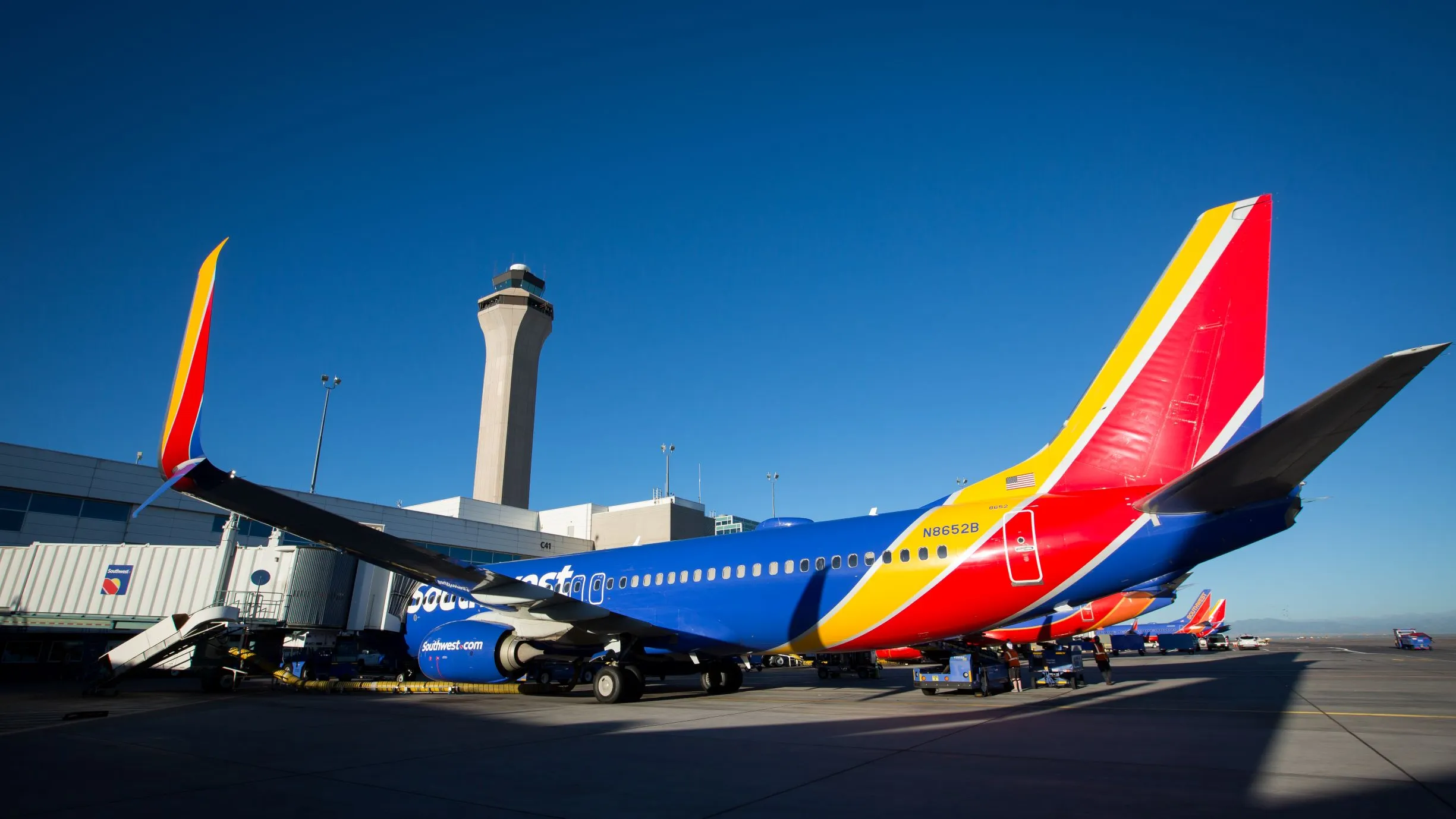
Photo: Southwest Airlines

The First Four Cuts Are Baltimore, Chicago, And Colorado Springs

The first group of four eliminations from the axed 11 international routes involves departures from:

  • Baltimore/Washington International Thurgood Marshall Airport (BWI)
  • Chicago Midway International Airport (MDW)
  • Chicago O’Hare International Airport (ORD)
  • Colorado Springs Airport (COS).

Southwest operated Baltimore–Los Cabos from June 2015 until April 2026, and Chicago Midway–Los Cabos from November 2018 until April 2026. The ORD–Cancún International Airport (CUN) route operated from November 2021 until April 2026. Southwest is withdrawing from ORD entirely in June 2026, consolidating its Chicago operations at MDW, which ranks as the airline’s fourth most-served airport by departures.

Colorado Springs–Cancún was perhaps the most telling of this group. The route launched in June 2025 and survived less than a year, earning the distinction of carrying the fourth-lowest load factor across Southwest’s entire network.

It was Colorado Springs’ first — and apparently only — international market. DOT data quoted by Simple Flying further shows that the ORD–CUN load factor fell to 83.4% in 2025, its lowest level in four years — a modest figure that nonetheless failed to justify the operational cost of maintaining service.
Photo: Southwest Airlines

Seven More Routes Withdrawn: Fort Lauderdale, Indianapolis, Kansas City, Milwaukee, Nashville, And St. Louis

Seven additional international markets round out the 11 eliminated routes, and several carry distinguishing characteristics that merit closer examination. Fort Lauderdale–Hollywood International Airport (FLL) to Sangster International Airport (MBJ) in Montego Bay, Jamaica, operated from June 2017 through November 2025, making it one of the longer-tenured casualties in this round of cuts. The termination of Jamaica service across multiple U.S. gateways plausibly reflects the downstream impact of hurricane disruptions on inbound tourist demand.

Indianapolis International Airport (IND)–Los Cabos and Nashville International Airport (BNA)–Montego Bay both operated as weekly Saturday flights in March and April 2026 only — hyperlocal seasonal services with minimal operational footprint. Their elimination is unsurprising; such thin-frequency routes rarely generate sufficient revenue contribution to justify year-round infrastructure maintenance. Kansas City International Airport (MCI)–Montego Bay operated from October 2023 through April 2026, a two-and-a-half-year tenure that failed to establish meaningful demand.

Milwaukee Mitchell International Airport (MKE)–Cancún operated from August 2014 through April 2026, representing one of the longest-standing routes in this group — over a decade of service that ultimately could not survive the carrier’s profitability mandate. Nashville–San José (Costa Rica) and St. Louis Lambert International Airport (STL)–Puerto Vallarta operated with extreme rarity, the latter recording only two departures in March 2026. Simple Flying notes that Saturday-only services of this nature could theoretically return in 2027 in a seasonal capacity, though nothing has been confirmed.
Photo: Southwest Airlines

Southwest’s Broader Network Cuts

In August 2025, Southwest announced the elimination of as many as 30 domestic routes from its March 2026 schedule, with Denver International Airport (DEN) and St. Louis Lambert International Airport each losing seven routes — the heaviest individual losses in that round.

That domestic restructuring was also accompanied by a strategic shift in operating philosophy. Southwest’s Chief Operating Officer Andrew Watterson stated that the carrier would pivot toward adding connection-oriented flights, moving gradually toward a hub-and-spoke model akin to legacy carriers, while still maintaining what he described as “the largest point-to-point network in the industry.”

The international cuts follow the same logic: concentrate assets where they produce the highest return, and eliminate the periphery. Southwest’s Q1 2026 earnings press release, published on April 22, 2026, confirmed that the airline now expects full-year capacity growth of approximately 2%:

Metric / Achievement Numerical Data Change / Additional Detail
Operating Revenue $7.2 billion Up 12.8% year-over-year; first-quarter record
Net Income $227 million $0.45 diluted earnings per share
Operating Margin 4.6% Improved by 8.1 points year-over-year
Adjusted Operating Margin Improvement 6.6 points Year-over-year increase
Operating Cash Flow $1.4 billion Increased 65% from Q1 2025
Operating Expense Growth 4.0% Year-over-year increase
Unit Cost (CASM-X) Growth 2.3% On 1.5% capacity growth
Capacity Growth 1.5% Year-over-year increase
Shareholder Returns Over $1.3 billion Through dividends and share repurchases
Customer Buy-Up Rate (2026) Approximately 60% Up from approximately 20% in 2025
Rapid Rewards Enrollments Up 37% Year-over-year increase
Tier-Status Earners Up 62% Year-over-year increase
Managed Business Revenue (March) Up 25% Strongest March performance in company history
Managed Business Revenue (Quarterly) Up 16% Strongest quarterly performance in company history
Assigned & Extra Legroom Seating Launch January 27, 2026 Achieved top on-time performance on launch day
Aircraft Upgrades Completion Approximately two thirds of fleet Expected by late 2026

It is also instructive to examine Southwest’s simultaneous exit from Chicago O’Hare and Washington Dulles. Southwest announced the suspension of operations at ORD and Washington Dulles International Airport (IAD) effective June 2026, reallocating that capacity to higher-performing markets.

These are not isolated service suspensions but part of a coherent strategy to consolidate the airline’s presence at airports where it already holds dominant positions — particularly Baltimore/Washington and Chicago Midway — rather than competing at congested hubs where its cost model is less competitive. Here’s a look at the carrier’s fleet:

Capacity, Fleet, and Capital Spending

Item Details
Capacity Growth First quarter 2026 capacity increased 1.5% year-over-year
Aircraft Deliveries Received 10 Boeing 737-8 aircraft in Q1 2026
Aircraft Retirements Retired 13 aircraft, including eight Boeing 737-700s, plus sale of three Boeing 737-700s and two Boeing 737-800s
Fleet Size Ended Q1 2026 with 800 aircraft
Gross Capital Expenditures Q1 2026 gross capital spending totaled $630 million
Capital Investment Areas Spending focused on aircraft, technology, facilities, and operational improvements
2026 Aircraft Deliveries Expects 66 Boeing 737-8 deliveries in 2026
Planned Aircraft Retirements Plans to retire approximately 60 aircraft in 2026
Network Optimization Announced suspension of Chicago O’Hare and Washington Dulles operations from June 2026
Capacity Guidance Expects approximately 2% full-year growth in 2026
Net Capital Spending Forecast Projects 2026 net capital spending between $3.0 billion and $3.5 billion
Photo: Southwest Airlines

How Activist Pressure Reshaped Southwest’s Route Strategy

No discussion of Southwest’s current network strategy can ignore the seismic influence of Elliott Investment Management, the activist hedge fund that forced the airline’s hand beginning in mid-2024. Elliott began accumulating its Southwest stake in mid-2024, pushing for management changes and blaming the airline’s leadership for a stagnant stock price.

The two sides reached a settlement in October 2024, reshaping Southwest’s board and installing a governance structure that included five Elliott-nominated directors, while CEO Bob Jordan retained his position.

Under pressure from Elliott, Southwest moved away from several cornerstones of its historic low-cost identity: it began charging for checked bags, ended its universal open-seating policy in January 2026, and introduced assigned seating alongside extra-legroom premium options. The airline also conducted its first-ever mass layoffs.

These changes drew significant customer criticism, with many passengers and aviation observers arguing that the policies that made Southwest distinct — and loyal — were being dismantled in pursuit of short-term margin expansion.

In a filing with the U.S. Securities and Exchange Commission, Elliott stated it had reduced its Southwest stake from a peak of 16% to 13.1% and described the transactions as made “for portfolio management purposes,” while expressing confidence that the airline’s execution of its strategic initiatives would translate to greater profitability and shareholder value creation.

Photo: Southwest Airlines

Southwest’s 65 Routes Remain, But Volume Varies Wildly

Despite the 11 eliminations, Southwest retains a meaningful international presence heading into Q3 2026. Cirium data shows that Southwest has scheduled 65 international routes for Q3 2026, operated from 21 U.S. airports. The network will average approximately 40 daily international departures during the quarter, though operations vary significantly by day of the week.

Tuesdays and Wednesdays will see as few as 22 outbound international flights, while Saturdays could record up to 87 departures — a figure heavily inflated by Saturday-only routes, which remain a structural feature of Southwest’s leisure-oriented international network.

The five most active airports for international service in Q3 are Orlando International Airport (MCO) with up to 829 weekly departures, William P. Hobby Airport (HOU) in Houston with up to 792, Baltimore/Washington International with up to 582, Phoenix Sky Harbor International Airport (PHX) with up to 256, and Denver International Airport with up to 183.

Atlanta Hartsfield–Jackson International Airport (ATL) sits at the other end of the spectrum, with only four international departures planned — all to Cancún, spread across July 11, 18, 25, and August 1.

The contrast between Orlando’s density and Atlanta’s near-absence illustrates the degree to which Southwest’s international network has consolidated around its strongest leisure corridors rather than attempting broad geographic coverage.
Southwest Pursues Global Interline Partnerships Even as It Cuts Routes

There is an apparent paradox at the heart of Southwest’s current international strategy: the carrier is cutting routes to Mexico and the Caribbean while simultaneously pursuing the most ambitious international partnership agenda in its history. Southwest has now announced six interline partnerships with overseas carriers — Icelandair, China Airlines, EVA Air, Philippine Airlines, Condor, and Turkish Airlines — connecting its domestic network to destinations across Europe, Asia, the Middle East, and Africa.

The rationale is strategic rather than contradictory. Unlike traditional code-share agreements, these partnerships are designed to allow customers to book single-ticket itineraries that include Southwest-operated domestic segments alongside flights operated by partner airlines — without Southwest having to operate any long-haul international flights itself.

The model allows the carrier to benefit from connecting international passengers onto its high-frequency domestic network while avoiding the enormous capital and operational costs of intercontinental flying.

Southwest COO Andrew Watterson, speaking on the Turkish Airlines partnership, said:

“Both Southwest and Turkish Airlines are known for the warmth of our employees, the authenticity of our hospitality, and the reliability of our airline operations. We’re grateful for this relationship that will usher thousands of international travellers each week through experiences that showcase the best of both carriers.”

Turkish Airlines alone flies to more than 350 destinations in 132 countries from its hub at Istanbul Airport (IST) and serves 10 U.S. airports that overlap with Southwest’s network, creating a broad matrix of connection possibilities.

Record Revenue, Higher Fuel Costs, And the Financial Case for Cutting Routes

Southwest’s route cuts arrive alongside unexpectedly strong financial performance. The airline reported record first-quarter 2026 operating revenue of $7.2 billion — a 12.8% year-over-year increase — and net income of $227 million. Unit revenue, measured by revenue per available seat mile (RASM), rose 11.2% year-over-year, exceeding the airline’s own guidance. The transformation, at least in financial terms, appears to be working.

Approximately 60% of Southwest customers upgraded from the base product in Q1 2026, up from just 20% in 2025, reflecting strong adoption of assigned seating and premium offerings. Rapid Rewards loyalty programme enrollments rose 37%, and tier-status earners increased 62% year-over-year. These are not marginal improvements — they signal a structural shift in how Southwest generates revenue.

The financial tailwind, however, is offset by surging fuel costs. Southwest’s Q1 2026 fuel cost reached $2.73 per gallon, significantly above prior guidance of approximately $2.40, representing an additional $164 million in fuel expense and an approximate $0.22 headwind to earnings per share. For Q2 2026, the airline assumes fuel will cost between $4.10 and $4.15 per gallon.

What Passengers and Analysts Should Expect Next

Southwest’s international network will continue to evolve through the remainder of 2026, and the trajectory points toward greater concentration rather than expansion. The elimination of Saturday-only and thin-frequency routes suggests that the carrier is moving away from experimental, opportunistic flying and toward a network architecture with more consistent, year-round demand underpinning each market. Routes that survive this rationalization are likely to be structurally stronger than those that preceded them.

Southwest’s full-year 2026 adjusted EPS guidance stands at a minimum of $4.00 — more than 300% above the $0.93 adjusted EPS delivered in 2025, a target that demands relentless focus on unit economics.

Here’s a look at the carrier’s liquidity and capital deployment:

Item Details
Cash Position Ended Q1 2026 with $3.3 billion in cash and cash equivalents
Credit Facility Maintains a revolving credit line of $1.5 billion
Leverage Ratio Ended quarter with leverage of 2.2x
Asset Value Holds unencumbered aircraft and related assets valued at approximately $16.5 billion
Share Repurchases Repurchased $1.25 billion in shares during Q1 2026
Dividend Payments Distributed $93 million in dividends during Q1 2026
Remaining Buyback Authorization $450 million remains under the company’s $2.0 billion share repurchase program
Aircraft-Secured Loan Entered into a $500 million aircraft-secured term loan agreement
Loan Purpose Funds used to pay down the remaining Payroll Support Program loan balance

The airline’s leadership has made clear that network optimisation — including the removal of underperforming routes — is central to meeting that guidance. Passengers travelling to the affected destinations will need to identify alternative carriers, several of which maintain robust service to Mexico and the Caribbean from the same departure cities.

For the broader aviation industry, Southwest’s recalibration carries a cautionary note. A carrier that once defined itself by accessibility, open seating, free baggage, and a relentless point-to-point philosophy has, within 18 months, adopted bag fees, assigned seating, interline partnerships, and a hub-consolidation strategy that would have been unrecognisable to the airline Herb Kelleher built. Whether the transformation ultimately strengthens Southwest or dilutes the brand loyalty that once set it apart from every other U.S. carrier remains the defining question of this era.

Leave a Comment

Your email address will not be published. Required fields are marked *

Scroll to Top