The United States Air Force (USAF) has confirmed that the Boeing 747-8i gifted by Qatar to the Pentagon in May 2025 has now been painted in a new red, white, and dark blue livery. Aviation photographer Travis Ghormley captured the first public photographs of the repainted aircraft on June 7, 2026, at Waco, Texas, and shared them on social media, Air and Space Forces reported. The aircraft, designated the VC-25B Bridge Aircraft, is set to serve as an interim Air Force One until Boeing delivers two purpose-built VC-25B jets, now expected no earlier than mid-2028.
The Air Force confirmed on June 8, 2026, that the jet has been painted and is undergoing its final modifications at government facilities. An Air Force spokesperson stated that the program remains on schedule for a “summer 2026” delivery to the Presidential Airlift Group.
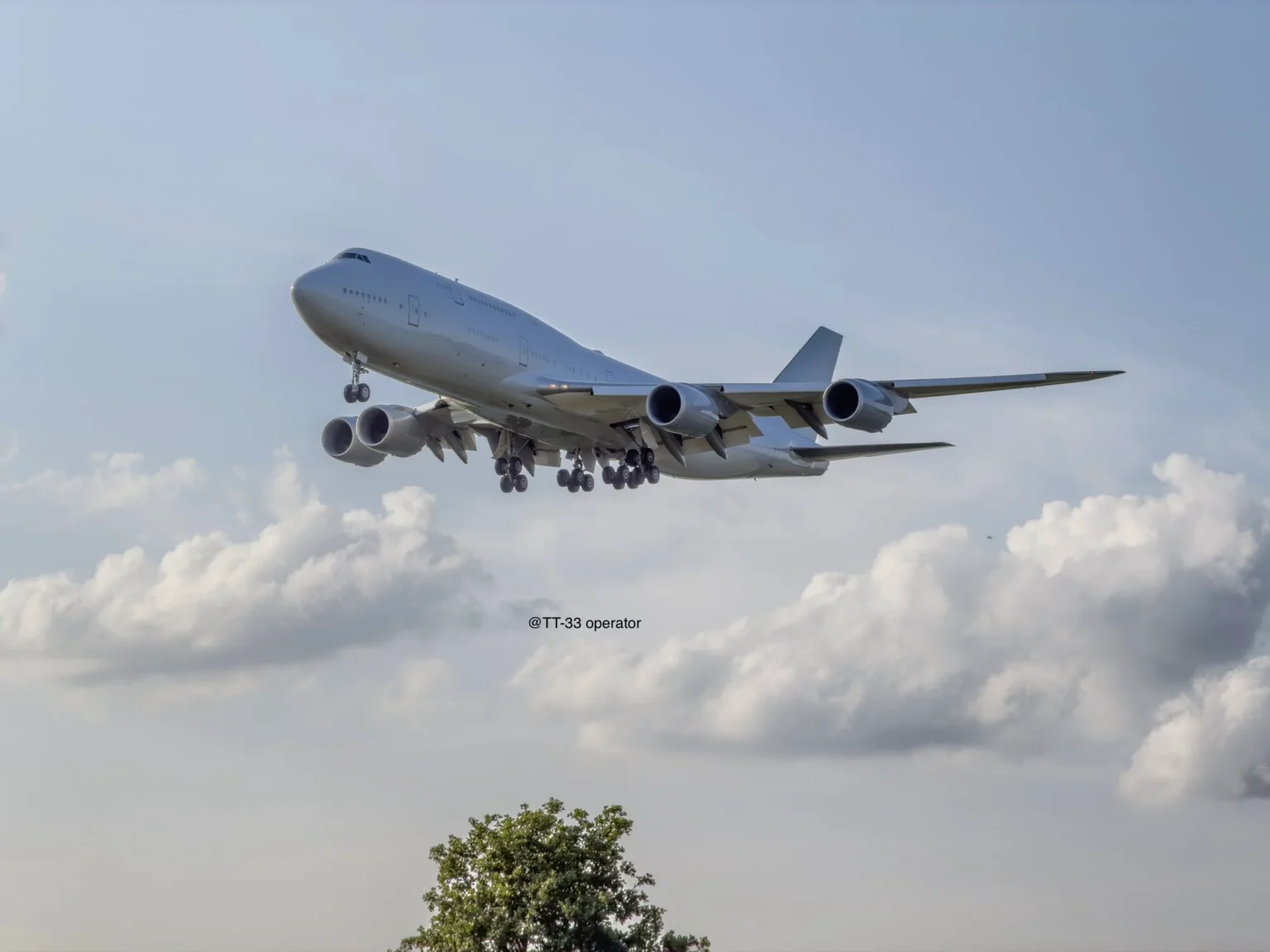
Qatar’s Boeing 747-8i Started It All
The aircraft at the center of this story began life as a Boeing Business Jet (BBJ) configured for Qatar’s ruling family. It was widely described among aviation enthusiasts as one of the world’s most luxurious VIP aircraft. The jet was known by the registration P4-HBJ before it entered US government service.
President Trump first toured the aircraft at Palm Beach International Airport (PBI) (an airport that could be named Donald Trump Airport) in February 2025. The Pentagon formally accepted the gift from the Qatari government in May 2025. Defense Secretary Pete Hegseth received the jet despite questions from Congressional Democrats about the ethics and legality of accepting such a large gift from a foreign nation.
The aircraft was subsequently flown to L3Harris Technologies’ facility at Majors Field (KGVT) — Majors Airport — in Greenville, Texas, where workers stripped the airframe down to bare metal before beginning the extensive modification process. L3Harris was selected because of its experience supporting executive communications systems and classified airborne networking equipment already used on the existing VC-25A fleet.

What The Livery Looks Like
The new paint scheme features a dark blue lower fuselage, a white upper section, a red accent stripe, and a gold cheatline. It closely matches the patriotic design President Trump proposed during his first term in office. The design also includes an American flag on the vertical stabilizer and a Stars and Bars military roundel toward the rear of the aircraft.
This livery replaces the iconic “robin’s egg” light blue and white design that has defined Air Force One for more than six decades. That scheme was originally created by industrial designer Raymond Loewy for President John F. Kennedy in 1962. The new look applies not just to this aircraft but to the entire executive airlift fleet.
A Fox News report confirmed that the Air Force is implementing the new red, white, gold, and dark blue paint scheme across the VC-25B fleet, as well as for the four C-32 aircraft used for secondary executive transport. “We’re painting it red, white and blue like the American flag, which is incredible,” President Trump told Fox News’ Sean Hannity in a 2025 interview.
The darker navy blue color scheme required significant engineering work to address thermal concerns. L3Harris used heat-reflective paint and a lighter shade around the belly, and made tweaks to the aircraft’s environmental systems to overcome earlier concerns that the darker color could cause thermal heating problems.
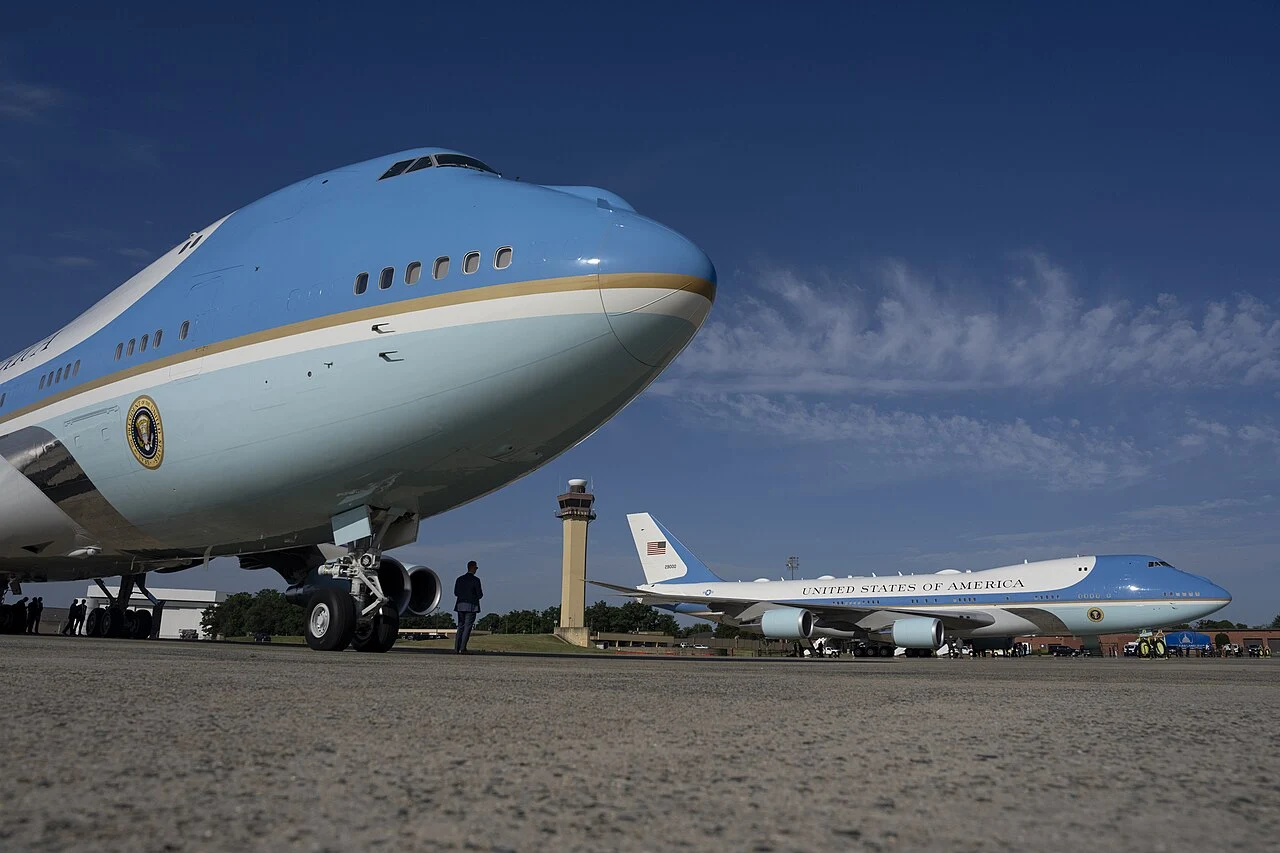
Comparing The Bridge Aircraft with the Permanent VC-25B
The VC-25B Bridge Aircraft and the permanent VC-25B program share the same 747-8i airframe family but differ significantly in scope, cost, and capability. This comparison matters because the Bridge Aircraft is designed as a temporary workaround, not a full presidential command center.
The bridge aircraft’s modification cost is approximately $400 million, compared to the permanent VC-25B contract which began at $3.9 billion and has grown to over $4.4 billion through contract modifications alone. The Bridge Aircraft was converted in roughly 12 months; the permanent program has been underway for nearly a decade.
The Bridge Aircraft is explicitly excluded from missions that require the full defensive systems suite, such as electromagnetic pulse hardening, which is integral to aircraft designed as airborne command centers and cannot be easily retrofitted onto a 13-year-old airframe. The existing VC-25As, by contrast, are fitted with missile approach warning sensors, laser countermeasures, and legacy Matador infrared countermeasure systems.
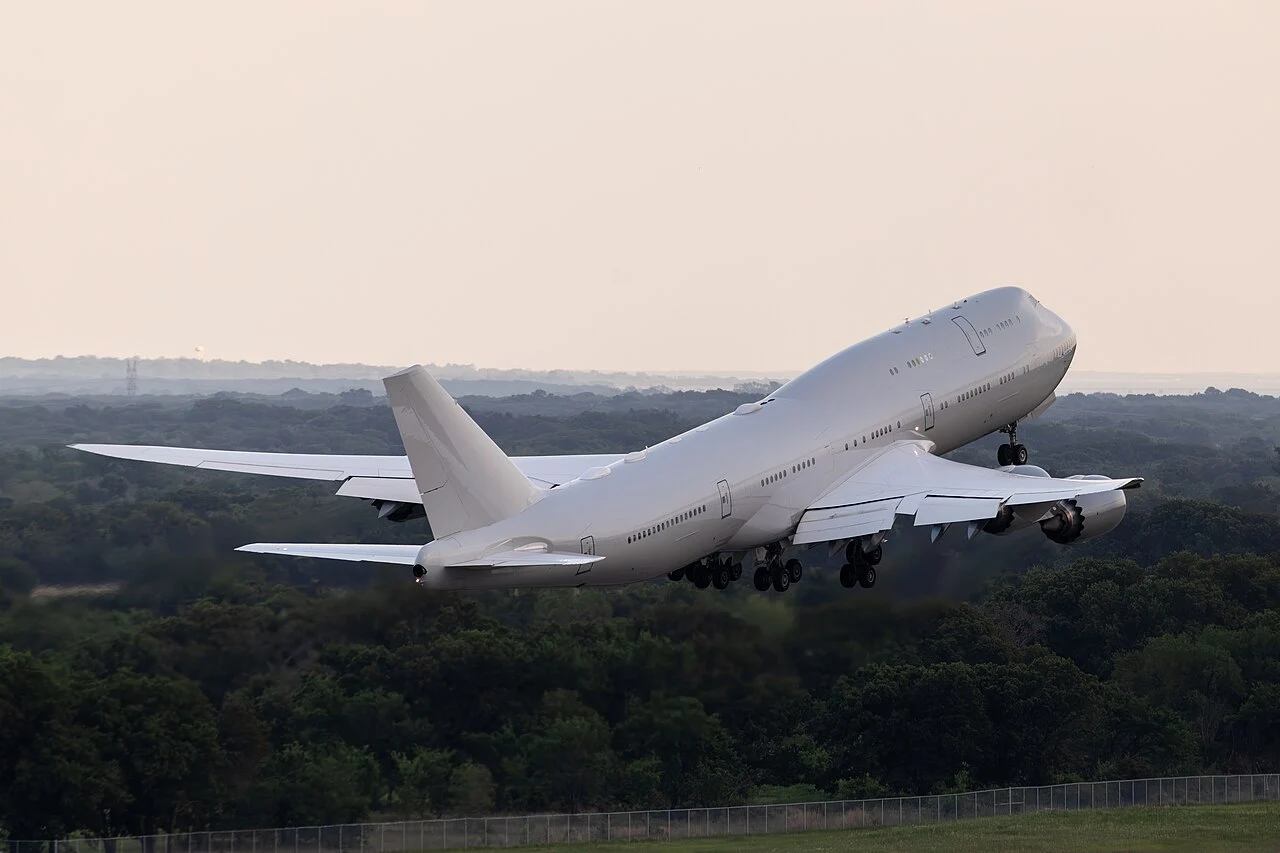
The Bridge Aircraft will also not perform the Golden Eagle mission. This was excluded because larger rear cargo doors and deeper structural changes would have been required, slowing the program and complicating certification. The permanent VC-25Bs will carry the full mission capability suite when they eventually enter service.
According to NPR, Air Force officials confirmed that the Bridge Aircraft will serve until Boeing is ready to deliver the permanent replacements, now expected in 2028. President Trump has said the Bridge Aircraft will not accompany him out of office. Instead, it will be donated to a future presidential library, following the precedent set by the Boeing 707 used by President Ronald Reagan.

A Summer Entry into Service?
According to Reuters, citing a US official and a person familiar with the matter, the aircraft is expected to be delivered in time for Independence Day on July 4, 2026. Some sources have suggested the aircraft could enter service even earlier, potentially in time for President Trump’s birthday on June 14, 2026. The Air Force said it remains committed to expediting delivery of the VC-25 bridge aircraft to support the presidential airlift mission, with delivery anticipated no later than summer 2026.
If delivered before July 4, the aircraft would become the first interim presidential aircraft in modern US history. It would also be in service for America’s 250th anniversary celebrations.
The new livery is already visible across the broader executive airlift fleet. A C-32A aircraft (tail number 99-0003) was spotted in the updated paint scheme after departing L3Harris’ Greenville facility, and four C-32As, a Gulfstream G700, and a Boeing 737 operated by the Department of Homeland Security have all been observed in the new colors.
_(cropped).jpg)