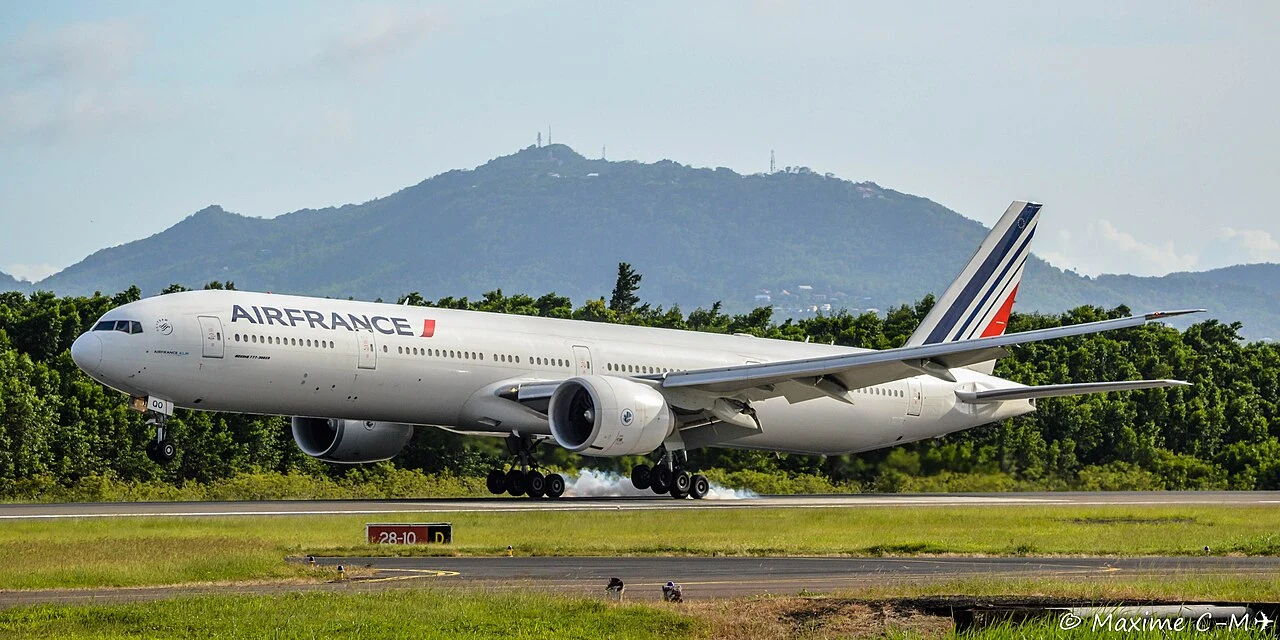
Air France (AF) Flight 378 — a scheduled service operating a Boeing 777-200 from Paris-Charles de Gaulle International Airport (CDG) to Detroit Metropolitan Wayne County Airport (DTW) — was prohibited from entering United States airspace on May 20, 2026, after U.S. Customs and Border Protection (CBP) determined that a Congolese national on board had been allowed to board in direct violation of emergency entry restrictions linked to the Ebola outbreak then spreading across the Democratic Republic of Congo (DRC) and Uganda, CBS News reported.
CBP directed the aircraft to divert to Montréal-Trudeau International Airport (YUL), where it landed at approximately 5:15 p.m. Eastern Time, according to FlightAware tracking data. The incident took place on the same day the Department of Homeland Security formally announced that, effective from May 21, all U.S.-bound flights carrying foreign travelers who had been in the DRC, Uganda, or South Sudan within the previous 21 days would be required to land exclusively at Washington Dulles International Airport (IAD) in Virginia.
The diversion is the most operationally visible consequence thus far of the United States government’s emergency public-health response to an Ebola outbreak that the World Health Organization formally declared a Public Health Emergency of International Concern (PHEIC) on May 17, 2026 — only the seventh such declaration in WHO history. The outbreak, centred in Ituri Province in northeastern DRC and caused by the Bundibugyo virus strain of Ebola, has recorded at least 600 suspected cases and 139 suspected deaths, according to WHO Director-General Tedros Adhanom Ghebreyesus as of May 20, 2026. Critically, the Bundibugyo strain carries no approved vaccine or specific therapeutic, with previous outbreaks of this variant recording fatality rates between 30% and 50%, according to the WHO.

What Exactly Happened Aboard Air France Flight AF378
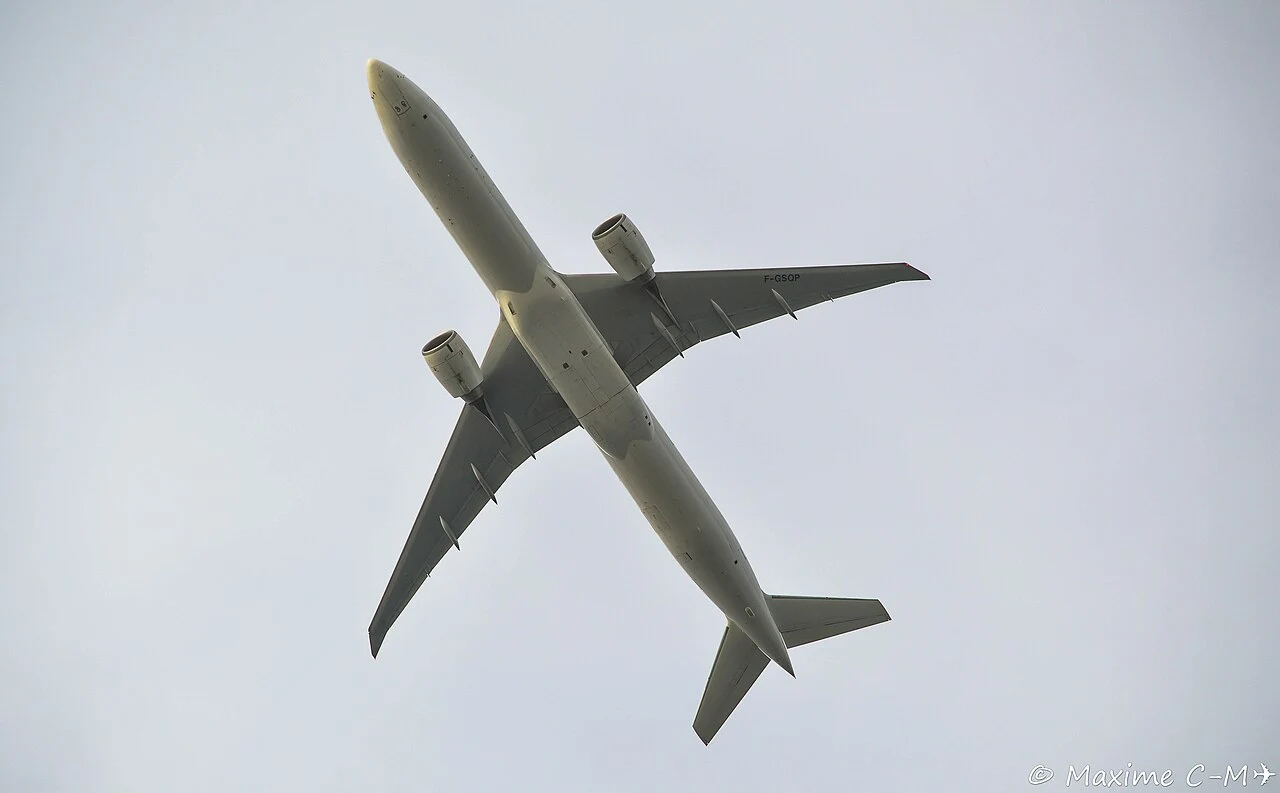
Air France Flight AF378 departed Paris-Charles de Gaulle at approximately 4:00 p.m. local time on May 20, 2026. The flight operates in a codeshare arrangement with Delta Air Lines (DL) — listed as Delta codeshare DL8719 — and the Boeing 777-200 was carrying up to 312 passengers when U.S. authorities transmitted the prohibition on landing in Detroit. The captain announced the diversion to passengers approximately four hours before the originally scheduled Detroit arrival time, according to business class passenger Deborah Mistor, who spoke to CBS News in a post-flight interview.
Mistor described a cabin in which the crew provided minimal information at first — the captain confirmed only that U.S. authorities were not permitting the aircraft to land in the United States, without initially disclosing the reason. A second announcement followed approximately 30 minutes later, in which the captain explicitly confirmed there were no mechanical issues with the aircraft.
After the diversion announcement, Air France cabin crew donned face masks and suspended onboard services, including the pre-arrival business class meal service. “They’re telling you it’s OK, it’s not a mechanical issue, but everybody has a mask on. Having a crew mask up when they were not informing us of what was going on is very concerning,” Mistor told CBS News:
“It lets your mind wander as to what the situation you’re being placed in might be.”
The aircraft landed in Montreal at 5:15 p.m. ET, and passengers without the entry restriction were subsequently ferried from Montreal to Detroit on the same aircraft, arriving at DTW at approximately 8:18 p.m.

CBP’s Mid-Air Intervention
CBP confirmed in a formal statement to CBS News that Air France had boarded the Congolese passenger “in error” — meaning the error in pre-departure screening originated with the airline, not with U.S. authorities. The CBP spokesperson stated:
“Due to entry restrictions put in place to reduce the risk of the Ebola virus, the passenger should not have boarded the plane. CBP took decisive action and prohibited the flight carrying that traveler from landing at Detroit Metropolitan Wayne County Airport, and instead, diverted to Montreal, Canada.”
CBP did not disclose whether the Congolese passenger was showing any symptoms of Ebola, or precisely when the individual had last been in the DRC. The passenger had not tested positive for the virus, and Air France confirmed in its own statement that there was no medical emergency on board at any point during the flight. The Federal Aviation Administration (FAA), when contacted by CBS News, redirected enquiries to CBP, indicating that the operational authority for the diversion rested entirely with the border protection agency rather than with the aviation regulator.
Air France’s formal statement that was quoted in New York Post acknowledged the error directly:
“Air France confirms that, at the request of U.S. authorities, Flight AF378 on May 20, 2026, operating the Paris-Charles de Gaulle–Detroit route, was diverted to Montreal Airport after a Congolese passenger on board was denied entry into the United States. In fact, under new regulations, passengers arriving from certain countries, including the Democratic Republic of the Congo, may only enter U.S. territory via Washington (IAD) Airport. There was no medical emergency on board, and like all airlines, Air France is required to comply with the entry requirements of the countries it serves.”

The Emergency CDC And DHS Orders That Triggered the Diversion
The diversion of AF378 was a direct consequence of two overlapping federal public health orders issued in the days immediately preceding the flight. On May 18, 2026, the CDC — acting under the authority of Sections 362 and 365 of the Public Health Service Act — implemented a Title 42 order restricting entry for non-U.S. citizens or nationals who had been in the DRC, Uganda, or South Sudan at any point in the preceding 21 days. U.S. citizens, lawful permanent residents, and U.S. service members retained the right to enter, but remained subject to enhanced public health screening upon arrival.
Separately, the DHS formally announced on May 20 — the day of the diversion itself — that effective from flights departing after 11:59 p.m. Eastern Time that same day, all U.S.-bound passenger flights carrying individuals who had recently been in the DRC, Uganda, or South Sudan would be required to land exclusively at Washington Dulles International Airport (IAD). The order was issued under the authority of Homeland Security Secretary Markwayne Mullin and explicitly exempted cargo-only flights and government-operated aircraft.
The DHS described Washington Dulles as the designated facility “where the U.S. government is focusing public health resources to implement enhanced public health measures,” though the order did not specify the precise nature of those measures.
Because the DHS order took effect for flights departing after 11:59 p.m. EDT on May 20 — and AF378 had departed earlier that afternoon — the immediate legal authority for the AF378 diversion rested primarily with the CDC’s May 18 Title 42 order. The DHS Dulles-only rule effectively codified and extended that authority for all subsequent flights from the day after.

Why the United States Acted with Such Speed
The urgency behind the American response is rooted in the particular characteristics of this outbreak’s causative pathogen. The Bundibugyo virus — a distinct Ebolavirus species first identified in Uganda in 2007 — has now triggered its third recorded outbreak, and for the second time it has crossed into Uganda from the DRC. Unlike the more common Zaire ebolavirus strain, for which approved vaccines and therapeutics exist, the Bundibugyo strain has no licensed vaccine or specific treatment. According to US News, two candidate vaccines are under consideration but are estimated to require three to nine months of development before deployment.
The outbreak began with the first known symptomatic case — a health worker in Mongbwalu Health Zone, Ituri Province — reporting onset on April 24, 2026. However, WHO officials confirmed on May 20 that they believe the outbreak likely started approximately two months prior to official confirmation, meaning the Bundibugyo virus had been circulating undetected through a densely populated region for weeks before any surveillance response could be activated.
The delay occurred partly because initial testing sought the more familiar Zaire ebolavirus and returned negative results, delaying the identification of the Bundibugyo strain. The London-based MRC Centre for Global Infectious Disease Analysis estimated that actual case numbers could already exceed 1,000 — substantially higher than the official 600 suspected cases, a function of the outbreak occurring in conflict-affected areas with limited surveillance infrastructure.
The situation had already produced the first American casualty in the outbreak: Dr. Peter Stafford, a physician with the Christian aid organisation Serge, who had been working at a hospital in Bunia, northeastern DRC, since 2023, tested positive for the Bundibugyo strain on May 17 and was subsequently evacuated to Germany for treatment.
His wife and four children — along with a second physician — were also evacuated for monitoring, though none were symptomatic. In a May 20 news conference, CDC incident manager Dr. Satish K. Pillai confirmed that multiple other Americans with high-risk exposure were also being transported from the DRC to Germany and the Czech Republic.

Air France’s Parallel Commitments Across Its Growing Africa Network
The diversion of AF378 presents an operational and reputational challenge for Air France at a moment when the carrier has been actively expanding its connectivity to Africa. Although Air France does not operate direct scheduled services to the DRC, it serves a broad network of African hub cities through which Congolese nationals travelling onwards to Europe or North America frequently transit.
The boarding error at Paris-Charles de Gaulle exposes the vulnerability of multi-leg itinerary screening: a passenger originating from an Ebola-restricted country can arrive at a European hub having cleared a transit screening that did not apply the U.S.-specific entry restrictions to their onward leg.
The AF378 incident invites comparison with Air France’s broader operational record under similar health-emergency conditions. During the 2014–2016 West Africa Ebola crisis, the U.S. government similarly required travelers from Liberia, Sierra Leone, and Guinea to funnel through five designated airports — including Dulles — and multiple airlines faced re-routing obligations, though no Air France flight on a transatlantic route was diverted mid-air under those protocols.
The 2026 incident is therefore procedurally distinct from any 2014-era precedent: the enforced diversion of a Boeing 777 in the mid-Atlantic reflects a more aggressive and technically capable enforcement posture from CBP, enabled by real-time passenger manifest analysis conducted while the aircraft was still over the Atlantic Ocean.
The flight also operated under a Delta Air Lines (DL) codeshare, meaning passengers who booked under Delta flight number DL8719 were subject to identical disruption. Delta has not made a separate statement on the incident, and Air France’s response did not address the specific obligations owed to codeshare passengers rebooking from Montreal.

What The WHO And Public Health Experts Say About Travel Restrictions and Ebola Risk?
The Johns Hopkins Bloomberg School of Public Health noted in a bulletin circulated on May 20 that the U.S. measures were implemented counter to WHO’s standing recommendation against travel restrictions outside outbreak regions, on the grounds that such restrictions tend to impede the flow of aid workers and medical responders into affected areas, drive travelers underground through unofficial routes, and undermine cooperation with outbreak-country governments. WHO itself has not imposed travel restrictions in conjunction with this PHEIC declaration.
Paul Spiegel, quoted by Newsweek on May 20, noted that health authorities in the DRC and Uganda “have decades of experience in Ebola outbreaks,” and that both the Africa CDC and U.S. CDC had personnel actively engaged in on-the-ground response operations. The immediate risk to the general U.S. population remains low, as Ebola is not airborne and the Bundibugyo strain spreads exclusively through direct contact with the bodily fluids of people who are already symptomatic.
The complicating factor — as the WHO’s Anaïs Legand acknowledged — is that the outbreak had been circulating for approximately two months before detection, in an area affected by active armed conflict, population displacement, and a high density of informal healthcare facilities.
The dismantling of USAID under the current U.S. administration and the U.S. withdrawal from the WHO have also drawn scrutiny. Health policy expert Matthew Kavanagh told TODAY: “The outbreak is happening in a province that is very hard to operate in,” and multiple observers noted that the reduction in U.S. foreign health aid had already had a documented impact on DRC’s health system capacity.
References
- https://www.cbsnews.com/news/ebola-air-france-flight-detroit-diverted-montreal-passenger-congo/
- https://www.cbsnews.com/news/dhs-ebola-related-flight-restrictions-foreign-travelers-coming-to-u-s/
- https://public-inspection.federalregister.gov/2026-10179.pdf
- https://www.cdc.gov/han/php/notices/han00530.html
- https://www.cdc.gov/ebola/situation-summary/title-42-order.html
- https://www.who.int/emergencies/disease-outbreak-news/item/2026-DON602
- https://www.who.int/news/item/17-05-2026-epidemic-of-ebola-disease-in-the-democratic-republic-of-the-congo-and-uganda-determined-a-public-health-emergency-of-international-concern
- https://www.aljazeera.com/news/2026/5/20/who-says-600-cases-139-suspected-deaths-in-growing-ebola-outbreak
- https://www.usnews.com/news/world/articles/2026-05-20/who-says-139-suspected-ebola-deaths-in-congo-outbreak-numbers-expected-to-rise
- https://www.pbs.org/newshour/world/rare-ebola-outbreak-poses-low-risk-globally-but-worries-mount-about-its-spread-in-congo
- https://time.com/article/2026/05/17/who-global-emergency-ebola-Bundibugyo/
- https://www.statnews.com/2026/05/18/cdc-ebola-travel-ban-announced-uganda-congo-south-sudan/
- https://aeroxplorer.com/articles/air-france-flight-turned-away-from-us-airspace-and-diverted-to-canada-over-suspected-ebolalinked-passenger
- https://www.paddleyourownkanoo.com/2026/05/20/air-france-flight-to-detroit-banned-from-entering-u-s-airspace-after-reports-of-a-virus-on-board-the-plane/
- https://www.clickondetroit.com/news/local/2026/05/21/air-france-flight-to-detroit-diverted-after-ebola-related-travel-restriction/
- https://www.wxyz.com/news/paris-to-detroit-flight-diverted-to-montreal-due-to-ebola-entry-restrictions
- : https://www.ibtimes.com.au/air-france-flight-diverted-montreal-ebola-restrictions-1869258
- https://www.travelandtourworld.com/news/article/lxzwbsnwiajb/
- https://www.travelandtourworld.com/news/article/2cwr2u1o8dgf/
- https://www.travelandtourworld.com/news/article/shrwgl7tiad2/
- https://www.today.com/health/news/ebola-outbreak-2026-symptoms-spread-bundibugyo-strain-hantavirus-rcna345662
- https://viewfromthewing.com/air-france-flight-diverts-to-canada-over-virus-concern-after-u-s-refuses-landing/
- FlightAware — AF378 Flight Tracking: https://www.flightaware.com/live/flight/AFR378