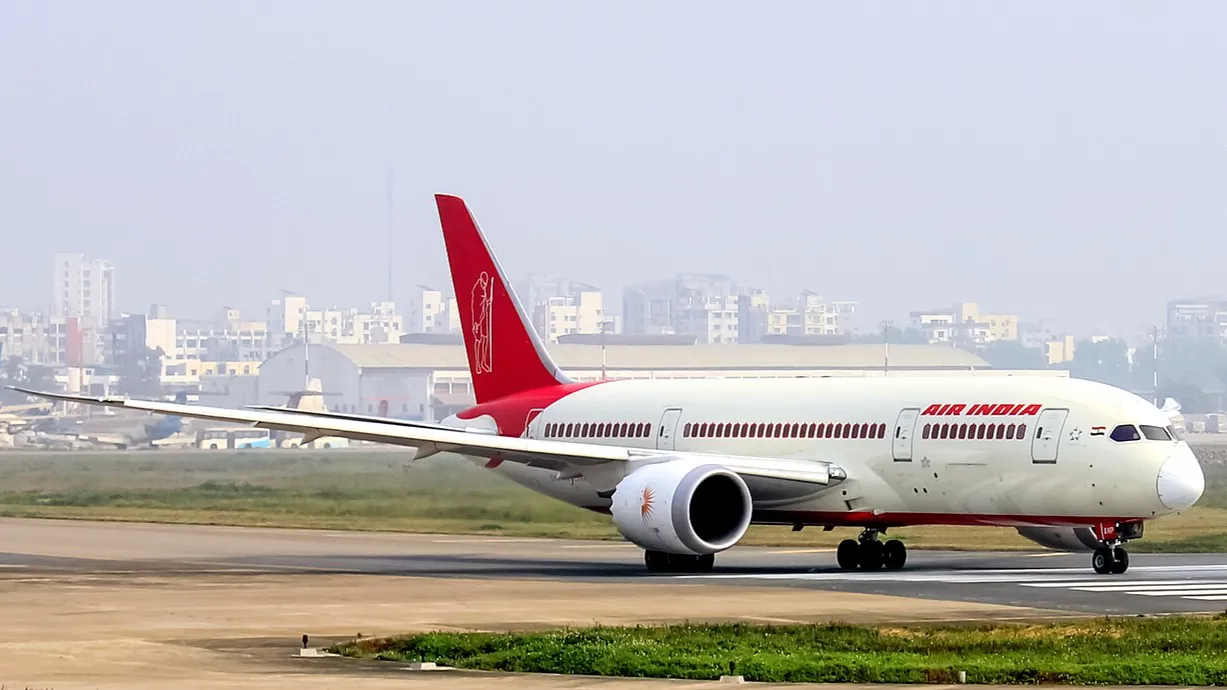
On October 4, 2025, an Air India Boeing 787-8 Dreamliner operating as flight AI117 from Amritsar to Birmingham experienced an uncommanded deployment of its Ram Air Turbine (RAT) at approximately 400 feet on final approach to Birmingham Airport (BHX), United Kingdom. The Flight AI117 might seem quite close to the Air India Flight 171, which was one of the deadliest aircraft incidents in Indian aviation history.
Unlike the Flight AI171, which was reduced to smitheerens, the aircraft involved in AI 117 landed safely and had no reported injuries (to the passengers) or damage, India’s Directorate General of Civil Aviation (DGCA) has launched a formal investigation.
Details of the incident: what happened on flight AI117
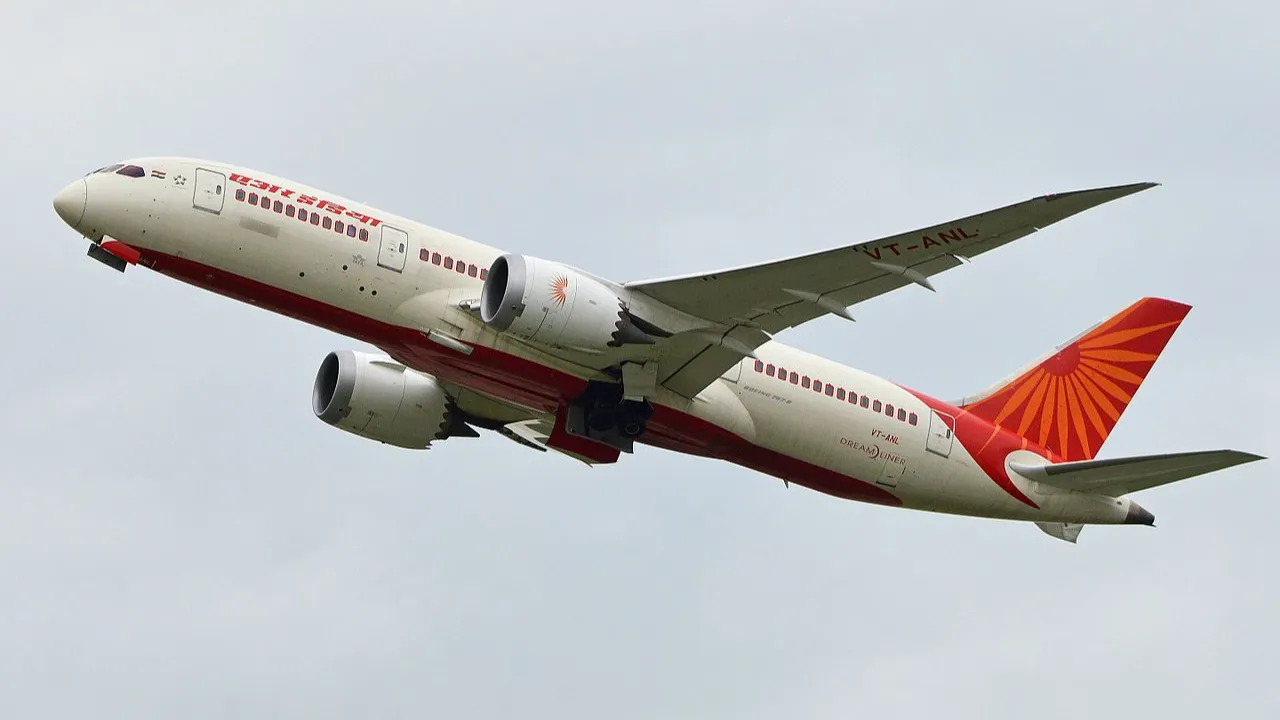
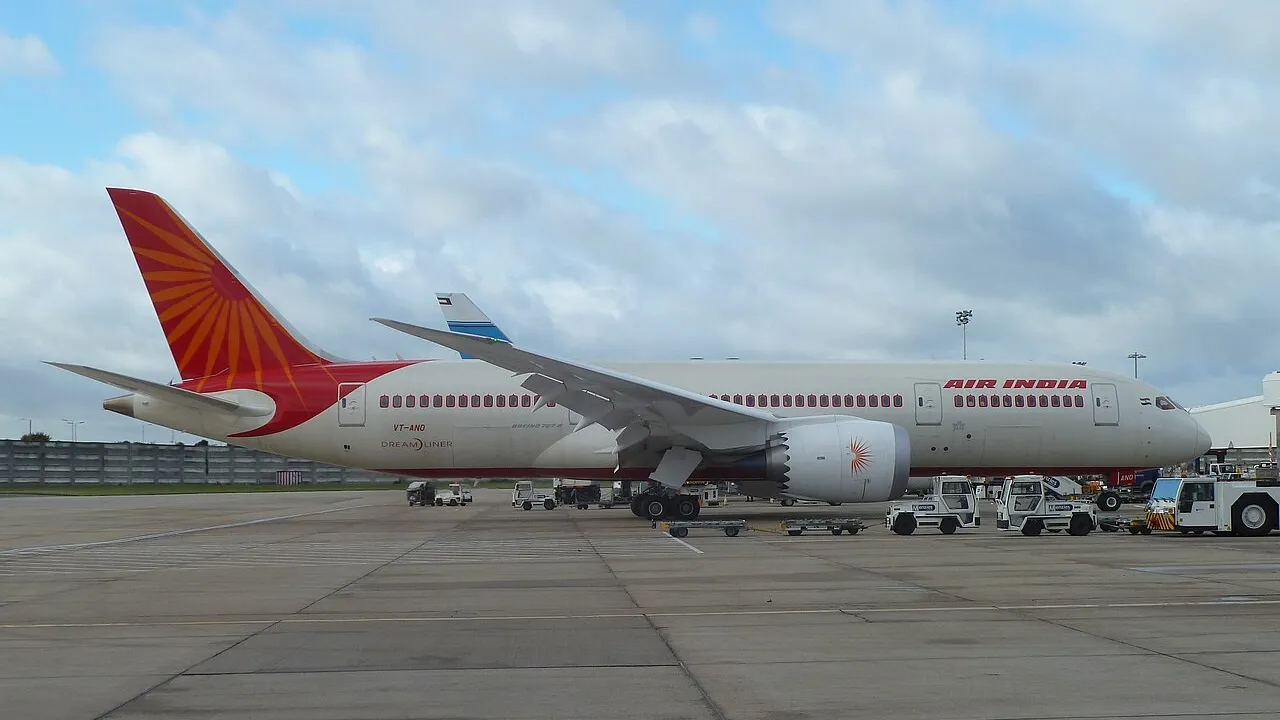
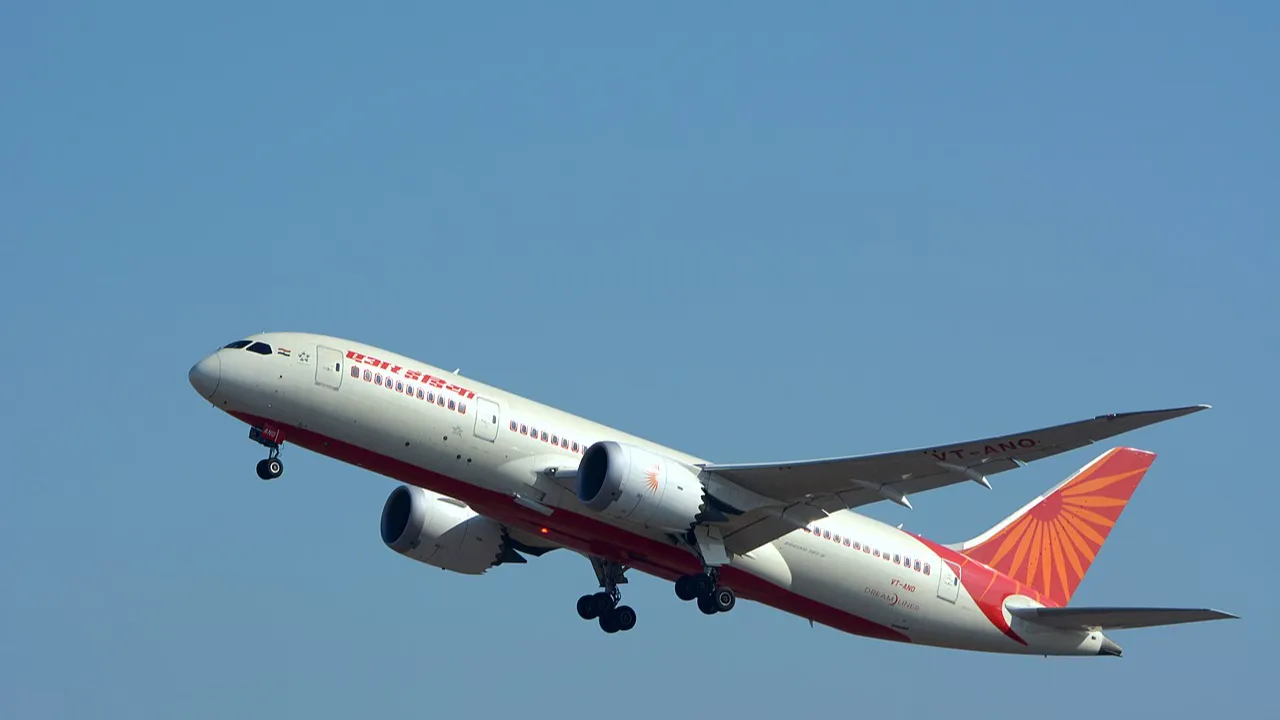
Flight AI117, operated by Air India with aircraft registration VT-ANO, departed Amritsar on schedule and proceeded uneventfully until the approach phase into Birmingham. At roughly 400 feet above ground level, the AT (an acronym for Ram Air Turbine) was deployed automatically despite all flight parameters remaining within operational limits.
The Times of India reported of an email written to the DGCA where
“the Aircraft Accident Investigation Bureau (AAIB), and the Ministry of Civil Aviation (MoCA), the FIP referred to the incident, stating that the aircraft’s RAT automatically deployed at around 500 feet. The Aircraft Health Monitoring (AHM) system detected a fault in the Bus Power Control Unit (BPCU), which may have triggered the deployment.”
The Federation of Indian Pilots reported that they did not observe any preceding abnormalities in engine performance or electrical indicators. All system readings remained stable. The only warning that appeared on the flight deck display of AIr India’s flight was the “RAT unlock” message.
Maintenance personnel in Birmingham evaluated VT-ANO after landing but found no apparent system faults or repeat occurrences. The Federation of Indian Pilots (FIP), on the other hand, have cited potential weaknesses in the Dreamliner’s electrical or hydraulic systems and claim that such glitches have been reported in India:
“We have strongly urged MoCA and AAIB to conduct a thorough examination of the electrical systems of all B-787 aircraft in the country…In the interest of air safety, DGCA must carry out a detailed investigation of the B-787 electrical systems.”
Details of the flight:
| Parameter | Details |
| Date | 04.10.2025 |
| Aircraft Type | Boeing 787-8 |
| Registration | VT-ANO |
| Flight Number | AI-117 |
| Route | Amritsar – Birmingham |
| Phase of Flight | Landing (at 400 ft) |
| Incident Description | RAT unlock message appeared and RAT deployed uncommanded |
| Pilot Report | No related abnormality reported |
| Outcome | Aircraft landed safely |
| Maintenance Action | Boeing-recommended maintenance actions for uncommanded RAT deployment carried out; no discrepancies found |
| Status | Aircraft released for service |
What a RAT is and how it was triggered in AI117
The Ram Air Turbine, or RAT, is a small turbine that is installed in a plane (and stowed in a compartment in the wing or the fuselage) that can provide emergency electrical and hydraulic power when the aircraft suffers total engine loss or complete electrical failure. According to Skybrary, the RAT “can be deployed manually when required or, in some installations, will deploy automatically following a complete loss of AC power”:
“In general, modern aircraft only utilize the RAT in emergency: either in the event of loss of hydraulic systems or following the loss of primary electrical generation. In these cases the RAT will power vital systems such as flight controls or flight-critical instrumentation, navigation and communication equipment. Some RATs produce only hydraulic power which in turn is used to power an electrical generator”.
After the deployment of RAT, pilots generally expect a higher drag and a shorter glide. Systems such as anti-ice, autopilot, including some displays may be unavailable, as it only powers the most-essential items. RAT could also be associated with a loss in cabin pressurization, often meaning that pilots need to descend to breathable altitudes.
However, there might be some problems associated with RAT, at times. Some of these include:
| Issue Area | Description of Problem | Possible Cause | Maintenance Action / Fix |
| RAT Fails to Deploy | RAT does not extend when commanded | Jammed mechanism, sticky hinge, corroded pin, or failed release latch | Lubricate moving parts, adjust spring tension, or replace faulty actuator |
| Degraded Efficiency (General) | RAT performance declines over time | Wear and tear of turbine blades reducing air capture efficiency | Overhaul or replace turbine assembly as part of scheduled maintenance |
| Hydraulic Pump Wear | Hydraulic system unable to build proper pressure | Internal wear in hydraulic pump | Overhaul or replace hydraulic pump during maintenance cycle |
| Electrical Generator Wear | Reduced electrical output from RAT generator | Worn bearings or brushes | Overhaul or replace generator components |
| Hydraulic Leaks | Fluid leakage around RAT pump or lines | Damaged seals or worn fittings | Inspect after deployment tests; replace seals or lines showing leakage |
| Sensor or Indication Faults | Cockpit fails to show “RAT deployed” indication even if RAT is out | Faulty lock-down detection switch or wiring issue | Inspect and test switches, sensors, and wiring; replace defective components |
Comparing some incidents where RAT was deployed
While we do not have some noteworthy RAT-related incidents involving Boeing 787 aircraft, as before the crash of Air India Flight 171, the Dreamliner has a perfect safety record, and no major aviation incidents. But let us have a look at how RAT was deployed in some flights operated by the aircraft manufacturer whose plane names start with the letter A and the number 3:
| Parameter | US Airways Flight 1549* | Air Transat Flight 236 |
| Year | 2009 | 2001 |
| Aircraft Type | Airbus A320 | Airbus A330 |
| Location | After takeoff from LaGuardia Airport, New York | Over the Atlantic Ocean, about 65 nautical miles from the nearest airport |
| Cause of Failure | Struck a flock of geese (a bird strike), resulting in loss of thrust in both engines | Massive fuel leak caused both engines to flame out |
| RAT Deployment | Automatic after dual engine failure | Automatic after dual engine failure |
| RAT Function | Provided hydraulic power for fly-by-wire controls and essential electrics | Pressurized flight controls and powered emergency generator for basic electrics |
| Duration of RAT Use | Short-term, during emergency descent and ditching | Sustained, enabling glide for about 15 minutes and 120 km distance |
| Crew Response | Captain performed a controlled ditching on the Hudson River | Pilots glided the aircraft to a remote island airfield |
| Occupants | All on board survived | Over 300 people on board survived |
| Significance | Demonstrated RAT’s ability to support short-term emergency control | Proved RAT’s capability for sustained flight control over long duration without thrust |
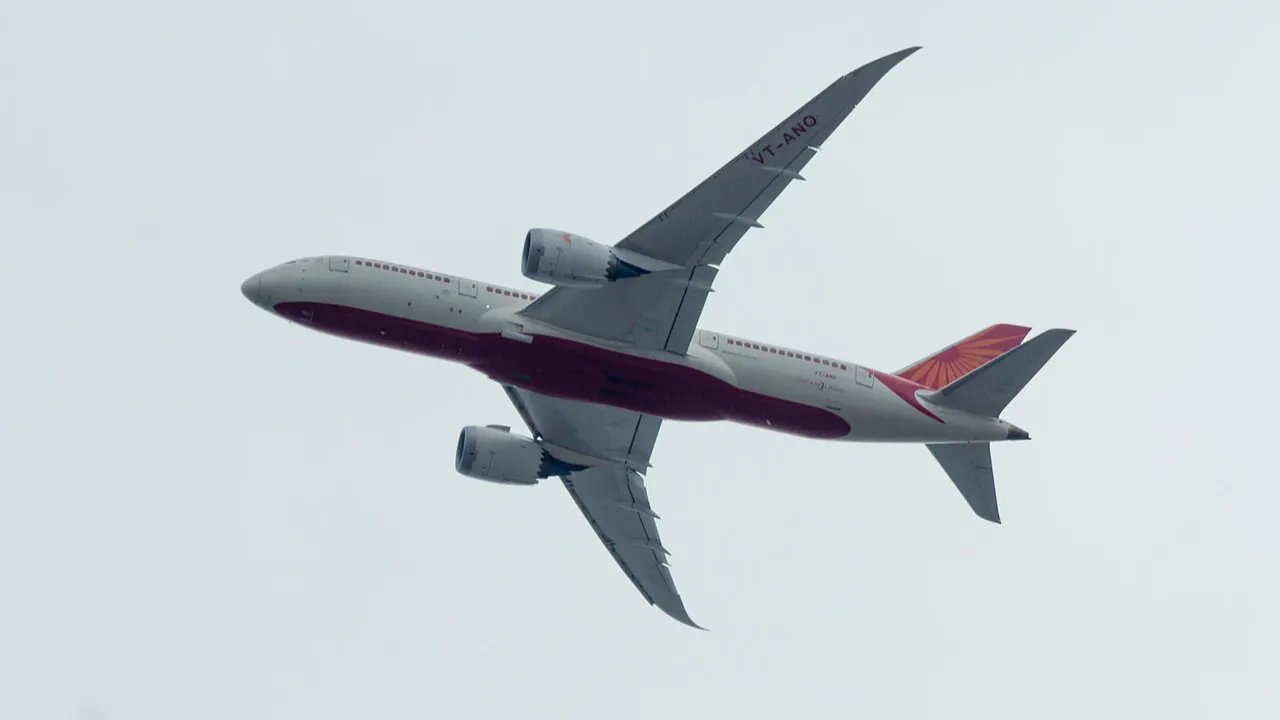
Details of the aircraft involved in the RAT deployment in AI117
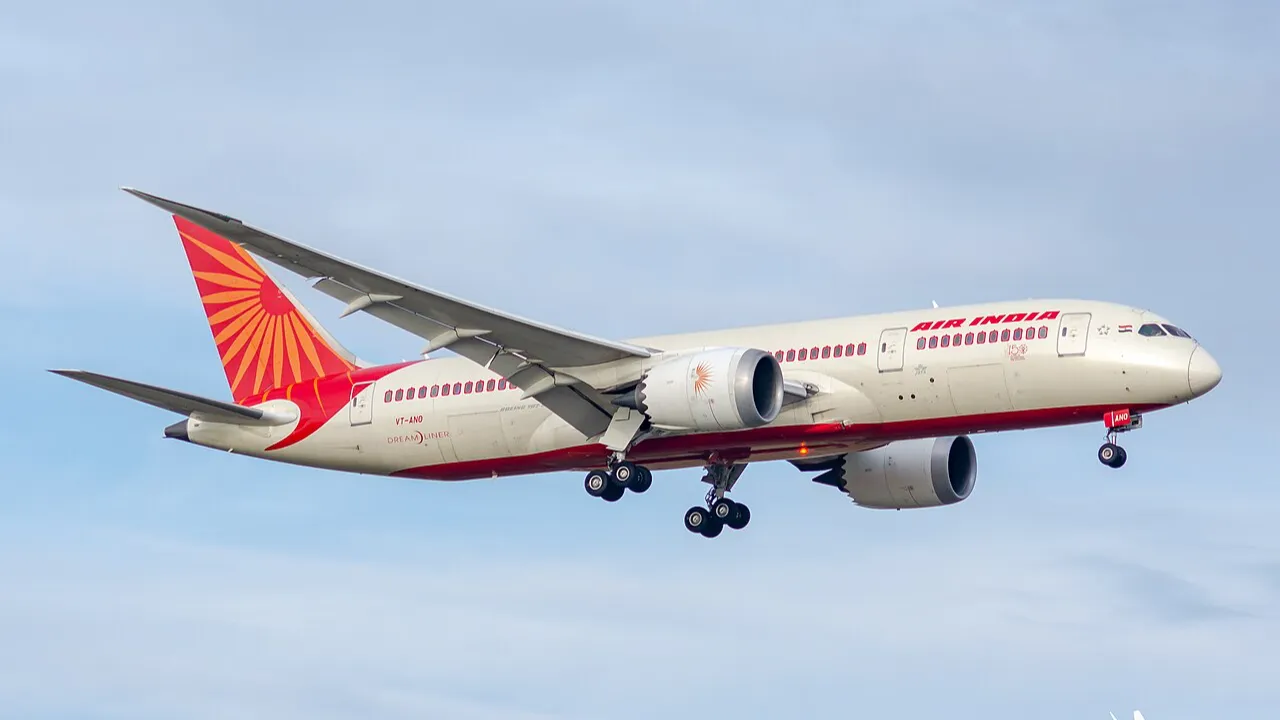
Air India is India’s second largest carrier following IndiGo. It operates out of India’s two busiest airports – Indira Gandhi International Airport (DEL), Delhi, and Chhatrapati Shivaji Maharaj International Airport (BOM), Mumbai. These are airports offering some of the busiest routes in the world. Air India operates a total of 187 aircraft, and one of the Dreamliners it operates is the youngest in its fleet.
Air India Boeing 787-8 and 787-9 fleet
| Metric | Value |
| Number of Boeing 787s in service | 32 |
| Average age | Approximately 10 years |
| Age of oldest aircraft | Around 14.2 years (registered VT-AND) |
| Age of youngest aircraft | Approximately 4.2 years (registered VT-TSO) |
The aircraft involved in this incident was delivered to the carrier in October 2013, and is of the 787-8 type. Here’s how the carrier operates:
| Feature | Business Class | Economy Class |
| Seat Type | 18 Zodiac Aura Lite seats | 238 Safran Z300 seats |
| Cabin Configuration | 2-2-2 | 3-3-3 across three cabins |
| Bed/Seat Function | Converts to 6’4″ lie-flat bed | Standard reclining seat |
| Privacy Features | Small privacy screen between neighbouring seats | None specified |
| Row Pitch | 76″ | 32″ |
| Seat Width | 20″ | 17.1″ |
| Recline | Full lie-flat | 6″ |
| In-Flight Entertainment | 15.4″ touch screen display | 10.6″ touch screen display |
| Power Supply | Universal AC and USB-A sockets | Shared Universal AC and USB-A sockets |
All in all
The AI117 incident adds to a year of intense scrutiny for Air India and the Boeing 787 programme. Following the fatal AI171 crash in June, both the airline and the regulator have been under pressure to demonstrate improved safety oversight and transparent reporting.
The uncommanded RAT deployment raises deeper questions about the reliability of advanced electrical systems and the need for predictive maintenance in modern wide-body aircraft, particularly for the 787s deployed by Air India


.jpg)
.jpg)
_(51811148072).jpg)
.jpg)
.jpg)