American Eagle Flight 3927, operated by regional carrier Envoy Air (MQ) on behalf of American Airlines (AA), declared a fuel emergency on Tuesday, August 12, 2026, after three failed landing attempts at two different airports during severe thunderstorms. The Embraer E175LR, registered N285NN, eventually diverted to Evansville Regional Airport (EVV) in Indiana and landed safely, with no injuries reported among passengers or crew.
American Airlines Shakes Up Leadership After $71M Profit Trails United and Delta
The flight had departed Dallas Fort Worth International Airport (DFW) at around 2:09 p.m. bound for Blue Grass Airport (LEX) in Lexington, Kentucky, on what should have been a routine two-hour service. Instead, the aircraft spent nearly three hours in the air after convective weather blocked its approach at Lexington and then followed it to its designated alternate, Paddle Your Own Kanoo reported.
Storms Force a Go-Around at Lexington and Two More at Louisville
The aircraft cruised uneventfully at 35,000 feet before beginning its descent into Lexington. As it approached Runway 22 at around 2,200 feet, intense convective weather sharply reduced visibility, and the crew discontinued the approach and climbed away rather than attempt a landing in the deteriorating conditions.
With Lexington closing in behind them, the pilots diverted roughly 60 miles west to Louisville Muhammad Ali International Airport (SDF), their designated alternate. The same squall line had already reached Louisville by the time the jet arrived. The crew attempted an approach to Runway 35R, descending to under 600 feet before pulling up, then tried Runway 35L with the same result. Two different airports and three separate approaches had now ended without a landing.
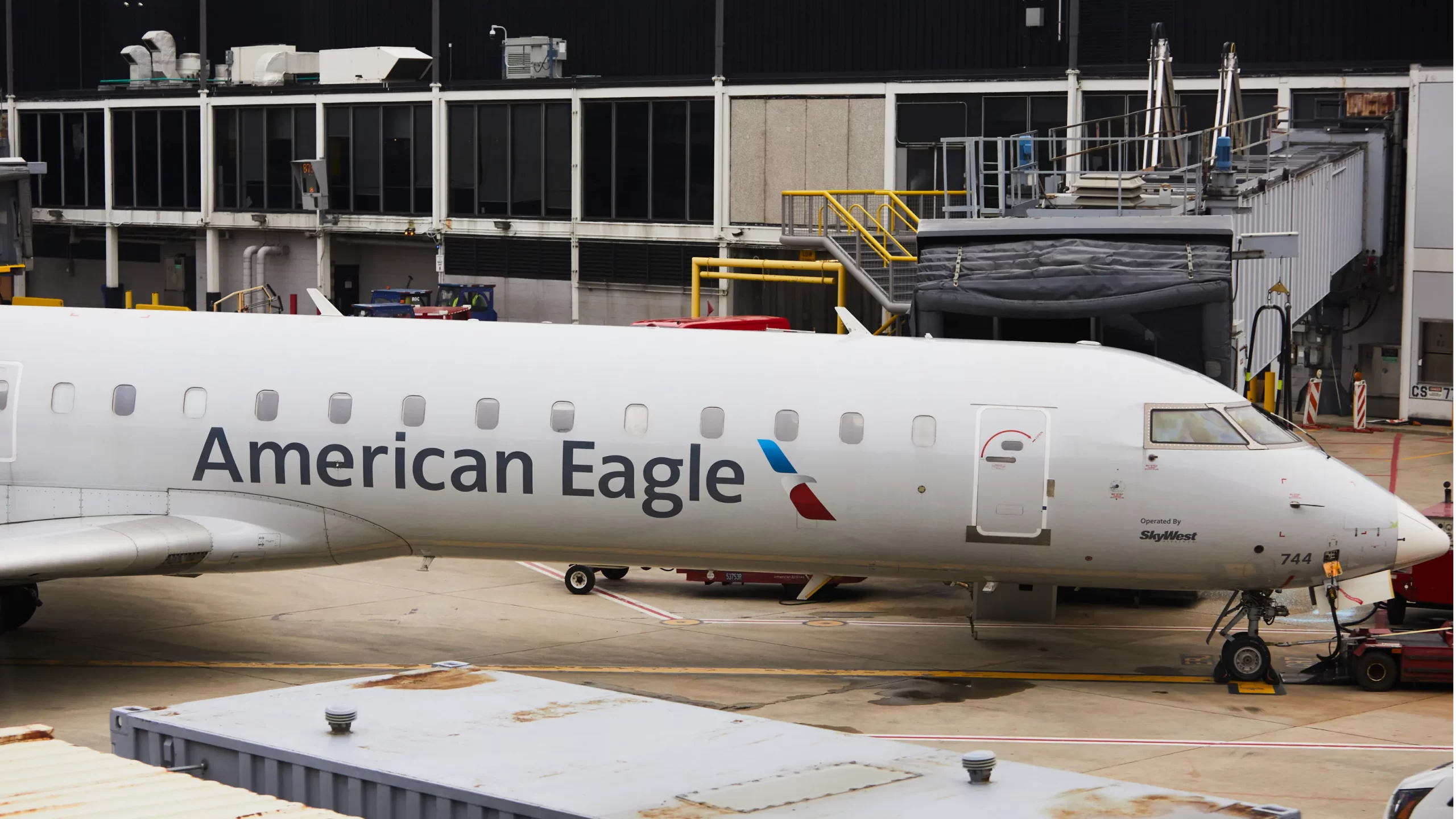
Crew Squawks 7700 With 30 Minutes of Fuel Remaining
After the third missed approach, the flight crew transmitted transponder code 7700, the international signal used to alert air traffic control to an emergency and declared a fuel emergency. Reports indicate the aircraft had approximately 30 minutes of fuel remaining at that point. Controllers immediately prioritized the flight and vectored it toward Evansville, roughly 115 miles further west, where conditions were reported as more favorable.
The Embraer touched down safely on Evansville’s Runway 22 close to 5 p.m. local time, nearly three hours after leaving Dallas. Emergency ground crews met the aircraft as a standard precaution. Passenger video circulating on social media appeared to show flashes near an engine during one of the diversions, though American Airlines told outlets there was no indication of a fire.
The storm system that grounded Flight 3927’s first three approaches was not isolated to Lexington and Louisville. Other flights in the region were reported holding or diverting during the same window, reflecting a broader line of severe weather moving across that stretch of U.S. airspace on Tuesday afternoon. Kentucky and southern Indiana saw repeated rounds of convective activity through the evening, with the kind of rapidly shifting visibility and precipitation that can turn a routine approach into a go-around within seconds.
What a Fuel Emergency Declaration Actually Means
Declaring a fuel emergency does not mean an aircraft is at immediate risk of running out of fuel mid-flight. It signals to air traffic control that the crew can no longer accept holding patterns or further delay and needs priority handling to land as soon as practicable. Airlines build in reserves for exactly this kind of scenario, but three consecutive missed approaches across two airports is an unusually demanding sequence for those reserves to absorb.
The distinction between the radio calls pilots use in these situations matters for how ATC responds:
- Pan-Pan signals urgency: a real safety concern that needs priority handling but does not yet threaten the aircraft or people on board.
- Mayday signals distress: serious or imminent danger requiring immediate assistance, which takes absolute priority over all other radio traffic.
- Squawking 7700 is a transponder-based emergency alert that flags the aircraft to controllers even without a verbal Mayday or Pan-Pan call, which is the method the AA3927 crew used.
The decision to escalate rests with the pilot in command, and the FAA has long encouraged crews to declare an emergency without hesitation whenever there is doubt about fuel, weather, or overall flight safety.
The AA3927 diversion is the latest in a run of regional jet safety incidents connected to American Airlines and its partner carriers this year. In June, Delta Air Lines Flight 2351 was forced into an emergency go-around at Boston Logan International Airport (BOS) after an air traffic control error nearly put it on a collision course with an American Airlines Boeing 737 that had been cleared for takeoff on an intersecting runway.
All in All
Commercial flight planning requires carriers to carry enough fuel to reach the destination, hold if necessary, divert to an alternate, and still land with a minimum reserve on board. Regional jets like the Embraer E175LR operate on tighter fuel margins than long-haul widebodies, since their routes are shorter and their tanks smaller relative to the delays a single severe-weather system can cause.
Envoy Air, which operates a large share of American Eagle’s regional network using Embraer E170 and E175 aircraft, has not commented publicly on Tuesday’s diversion beyond confirming the safe landing. The incident is likely to be reviewed internally, as is standard practice whenever a flight crew declares a fuel emergency, even where the outcome is a safe, uneventful touchdown.
The E175LR itself carries up to 76 passengers and around three crew members, and is the largest aircraft Envoy can operate under the scope clauses that govern American’s regional flying agreements.
