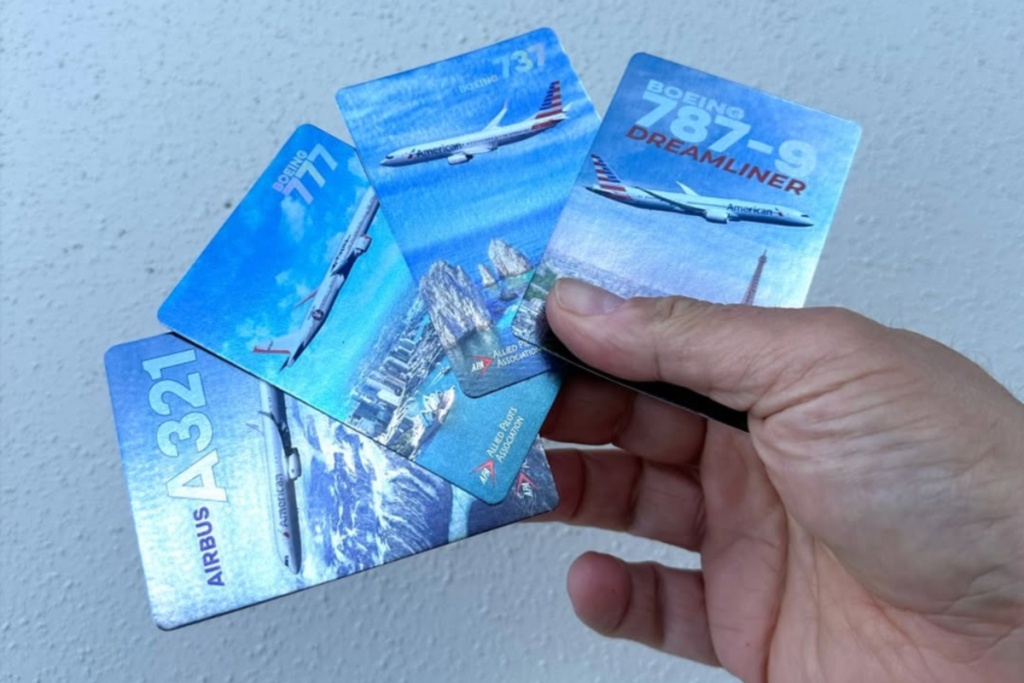
After more than 20 years on the sidelines, American Airlines (AA), the carrier with one of the largest fleet in the world, has officially joined the increasingly popular airline trading card movement. According to Paddle Your Own Kanoo, the effort was spearheaded by the Allied Pilots Association (APA), the union representing over 16,000 American Airlines pilots, who took matters into their own hands to create and distribute the cards.
For years, passengers—especially aviation enthusiasts—would approach pilots at major hubs like Dallas Fort Worth (DFW) and New York JFK, hoping to collect trading cards, only to leave empty-handed. That experience has now changed. Travelers can finally request these collectible items directly from pilots during boarding, at the gate, or even after landing.
American Airlines’ Trading Card Trend Not a Corporate Campaign
What makes American Airlines’ entry into the trading card trend unique is its grassroots origin. Rather than being launched as a top-down marketing initiative, the program emerged from frontline employees responding to passenger demand.
The APA designed the collection independently, reinforcing how strongly pilots themselves supported the idea. This approach contrasts with many airline programs that are typically driven by branding or promotional strategies.
The cards aim to enhance passenger interaction, turning routine moments—like greeting the flight crew—into memorable experiences.
What’s on AA’s Trading Cards?
Initial images shared by the APA reveal a thoughtfully curated set of aircraft-themed trading cards. These include some of American Airlines’ most recognizable planes:
| Aircraft | Description |
|---|---|
| Airbus A321 | Printed cruising over a dramatic mountain range backdrop. |
| Boeing 777-300 | Pictured over Sydney, Australia, in the 100th-anniversary retro Flagship livery. |
| Boeing 737 | Featured flying over a scenic coastal setting. |
| Boeing 787 Dreamliner | Depicted flying over the iconic cityscape of Paris. |
Each card features aircraft flying over iconic global destinations such as Paris Charles de Gaulle (CDG) and Sydney (SYD). One standout design showcases the Boeing 777-300 in a special retro livery created for the airline’s 100th anniversary. This design pays tribute to the historic “Flagship” paint scheme that once adorned Douglas DC-3 aircraft more than 90 years ago.
A Brief History of US Airlines’ Trading Cards
Airline trading cards are far from new—but their recent surge in popularity is.
Alaska: The Pioneer of Trading Cards
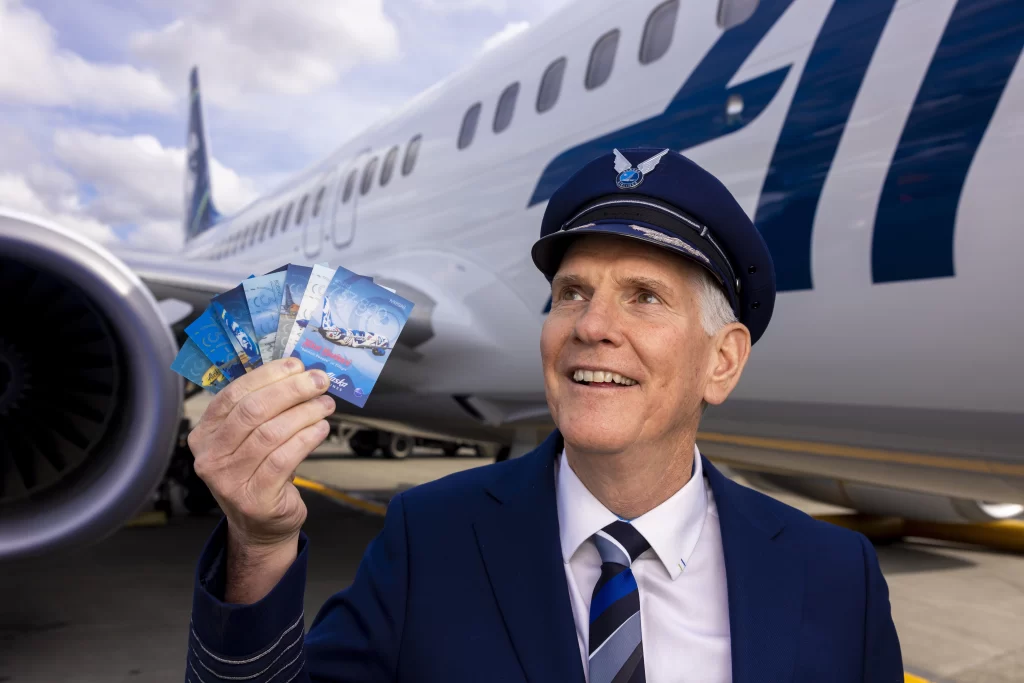
Alaska Airlines (AS) is widely credited as the first U.S. carrier to introduce the concept, quietly distributing limited-edition aircraft cards as early as the 1990s. Initially printed on simple cardstock, these cards were something of an “if you know, you know” collectible. But the carrier’s trading cards took flight World Pilots’ Day in 2025. It has been over a decade since new cards debuted, and the following table gives us a glimpse into the cards:
| Category | Details |
|---|---|
| Launch Period | First introduced in the 1990s |
| Recent Release | New 8-card collection launched for World Pilots’ Day |
| Time Gap | Over a decade since new cards debuted and several years since cockpit distribution |
| Design Evolution | Originally printed on basic cardstock → now upgraded with holographic film and lenticular coating for a multi-dimensional effect |
| Theme of Latest Set | Celebrates iconic modern Alaska Airlines liveries |
| Purpose (Original) | Designed to inspire future aviators |
| Current Appeal | Popular among collectors and aviation enthusiasts |
| Revival Driver | Renewed interest driven largely by airline pilots |
| Key Figure | Scott Day (System Chief Pilot for Hawaiian Airlines; formerly Alaska Airlines) |
| Distribution Method | Handed out by pilots, often during flight interactions with passengers |
| Educational Value | Each card includes aircraft details and unique stories |
| Emotional Value | Acts as a meaningful keepsake—especially for children |
| Cultural Impact | Helps spark interest in aviation careers, often through early exposure to cockpit experiences |
| Collector Growth | Popularity has grown over time as more cards circulated among travelers |
Delta Airlines’ 5 Million Trading Cards
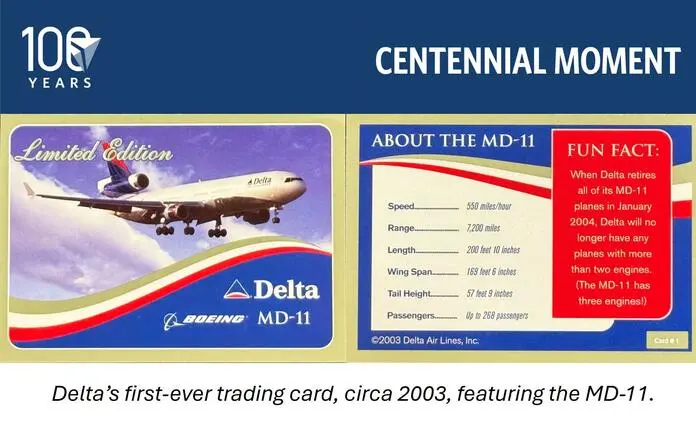
Delta Air Lines later modernized the concept in 2003, releasing a commemorative card tied to the retirement of its McDonnell Douglas MD-11 fleet. Over time, Delta expanded its lineup to include various aircraft types.
For years, however, the trend remained relatively niche—until social media changed everything.
In 2023, airline trading cards went viral on TikTok, dramatically increasing awareness and demand. By 2024, Delta passengers alone had collected more than 3 million cards, highlighting just how mainstream the hobby had become.
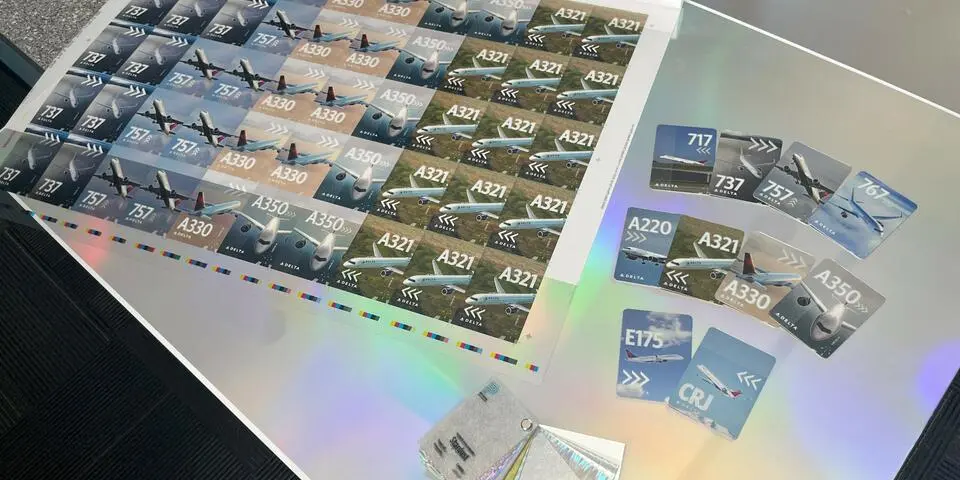
In response to the growing popularity of trading cards, last year Delta expressed its plans to produce more than 5 million cards, set to be available from March 25 for pilots to distribute to passengers. The collection will include aircraft such as:
- A220-300
- Boeing 717
- Boeing 737-800
- Airbus A321neo
- Boeing 757-200
- Boeing 767-300
- Airbus A330-900
- Airbus A350
Travelers flying on Delta Connection services may also receive cards featuring the CRJ-900 or Embraer E175, depending on the operating carrier.
Senior Vice President of Flight Operations, Ryan Gumm, said that
“Delta pilots have handed out millions of trading cards over the past 22 years, with over 3 million distributed in 2024 alone….This simple, yet impactful interaction between our pilots and customers elevates and enriches the flight experience – and has created meaningful connections and memorable moments along the way.”
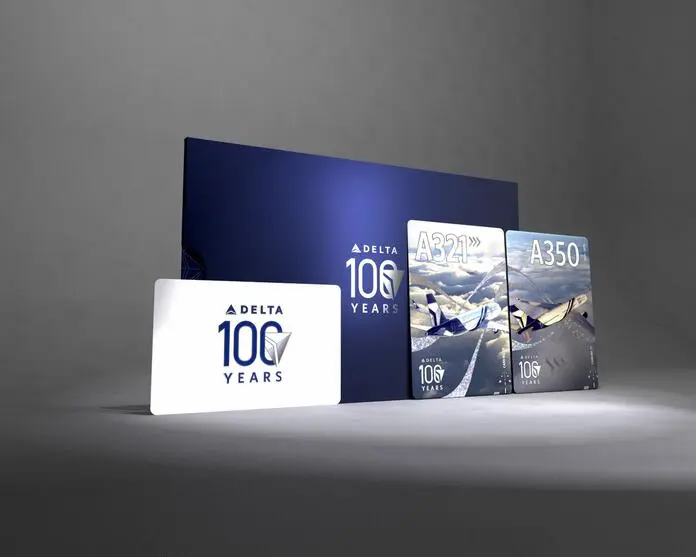
As part of the centennial celebrations, Delta announced that customers who purchase a physical Delta gift card could choose a special commemorative set that includes two exclusive limited-edition Centennial livery trading cards.
Why These Cards Matter More Than Ever
At their core, airline trading cards are simple: small, free collectibles handed out by pilots. But their appeal runs deeper.
They create a direct connection between passengers and crew, encourage curiosity about aviation, and turn ordinary travel moments into something memorable. The distribution model itself—just asking politely—adds to the charm and accessibility.
According to Simple Flying, the new cards are part of “a marketing effort and a paradigm shift that carriers like Delta are working towards by making the travel experience more personal and enjoyable for travelers“.
The increasingly strong demand for air travel in the post-COVID-19 era has seen Delta and other carriers attempt to address concerns over the dehumanization of air travel in many ways. This has accompanied an increase in ‘premiumization’ of aircraft cabins and features, but has also extended to smaller touches like the cards themselves.
For American Airlines, joining this trend is about more than catching up. It’s about responding to passenger enthusiasm and empowering employees to shape the customer experience.
