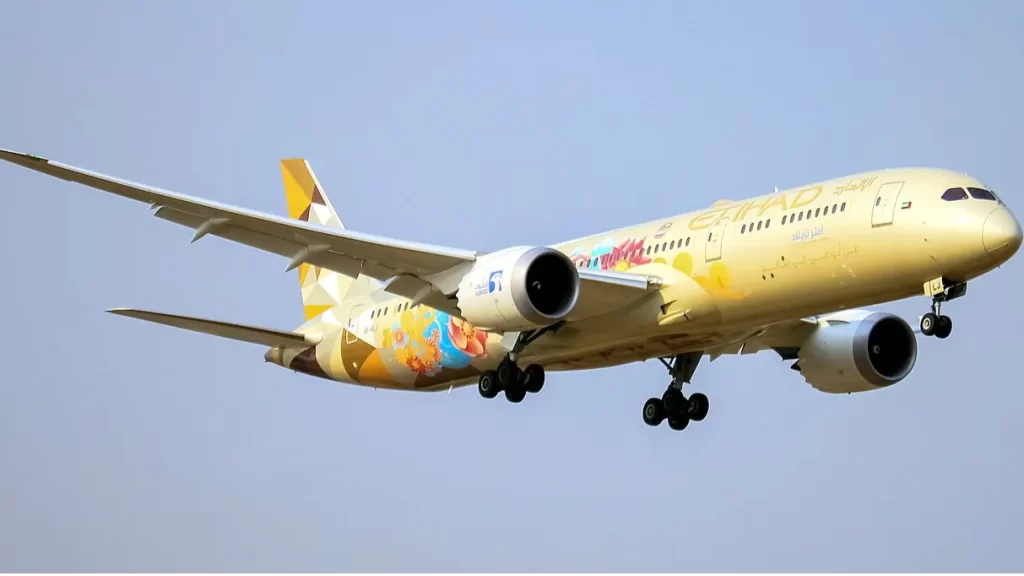
Etihad Airways (EY) has announced a major expansion of its mainland China operations, adding five new routes and 28 additional weekly services from Zayed International Airport (AUH), Abu Dhabi. The expansion, which announced that all routes will be part of Etihad’s joint venture with China Eastern Airlines (MU), will increase Etihad’s China network to 35 weekly flights across six key gateways.
Etihad’s Five New Destinations in China
Etihad Airways will launch new services from Zayed International Airport (AUH), Abu Dhabi to five major Chinese cities, broadening its footprint across key economic and industrial hubs. The newly added destinations include:
- Shanghai Pudong International Airport (PVG), Shanghai
- Guangzhou Baiyun International Airport (CAN), Guangzhou
- Chengdu Tianfu International Airport (TFU), Chengdu
- Hangzhou Xiaoshan International Airport (HGH), Hangzhou
- Shenzhen Bao’an International Airport (SZX), Shenzhen
During the announcement, his Excellency Mohamed Ali Al Shorafa, Chairman of Etihad Airways, said:
The ties between the UAE and China continue to flourish, with today’s announcement reflecting the enduring strength and growing promise of our cooperation. The expanded network, made possible by our long-standing partnership with China Eastern, connects unique tourism destinations with burgeoning trading hubs, delivering shared and lasting economic prosperity and value to our people
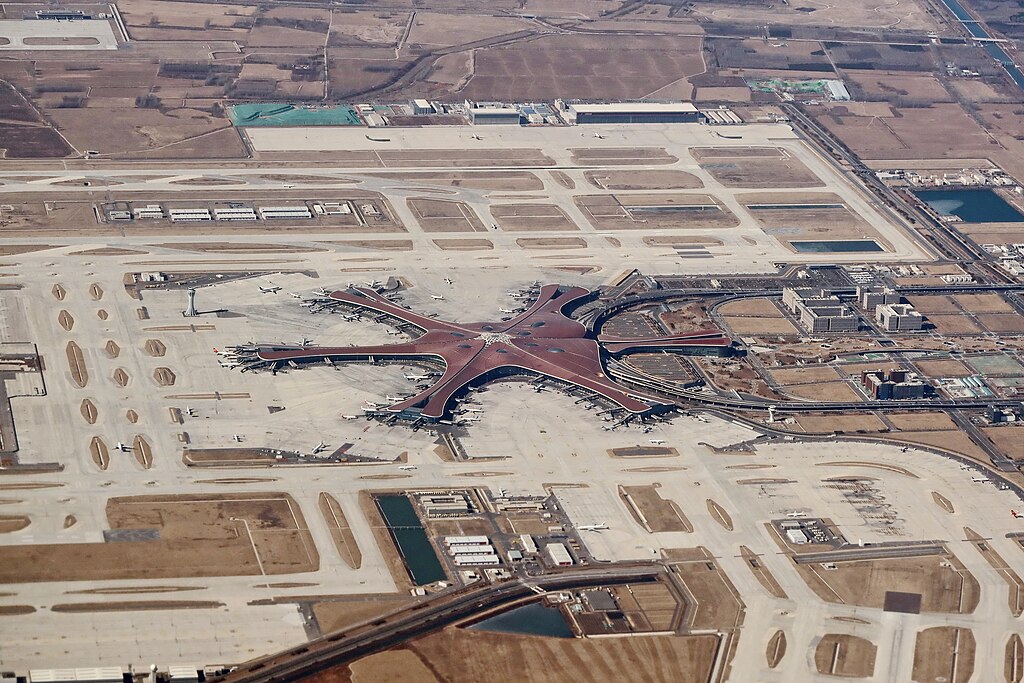
Photo: Siyuwj|Wikimedia Commons
Details of Etihad’s 35 Weekly Flights Between UAE and China
These additions complement Etihad’s existing daily service to Beijing Daxing International Airport (PKX), Beijing, consolidating a six-destination network within mainland China.
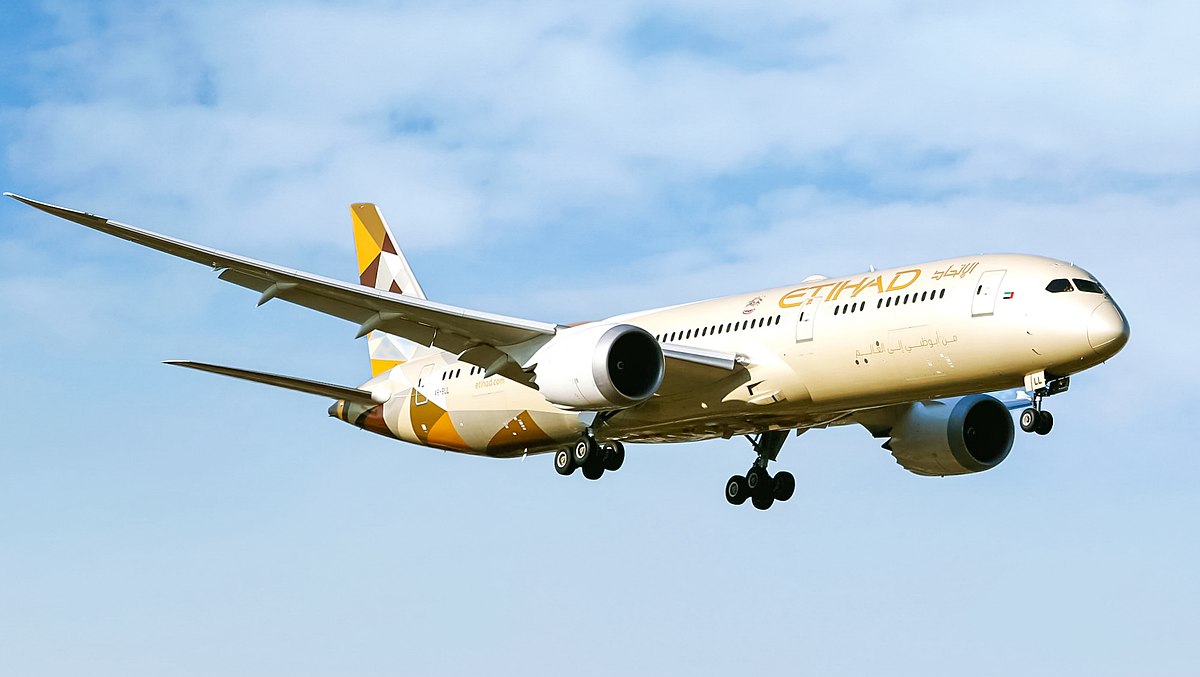
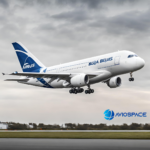
All routes will be operated using the Boeing 787-9 Dreamliner. Etihad has 37 aircraft of this type in its fleet and these average 7.4 years. The following table gives information in detail:
| Reg | Config | Delivered | Age |
|---|---|---|---|
| A6-BLA | F8C28Y190 | Dec 2014 | 11.3 Years |
| A6-BLB | F8C28Y190 | Feb 2015 | 11.2 Years |
| A6-BLC | F8C28Y190 | Jul 2015 | 10.8 Years |
| A6-BLD | F8C28Y190 | Jun 2015 | 10.9 Years |
| A6-BLE | F8C28Y190 | Jun 2015 | 10.8 Years |
| A6-BLF | C28Y262 | Apr 2016 | 10 Years |
| A6-BLG | C28Y262 | May 2016 | 9.9 Years |
| A6-BLH | C28Y262 | Jul 2016 | 9.8 Years |
| A6-BLI | C28Y262 | Jul 2016 | 9.7 Years |
| A6-BLJ | C28Y262 | Oct 2016 | 9.5 Years |
| A6-BLK | C28Y262 | Jan 2017 | 9.3 Years |
| A6-BLL | C28Y262 | Feb 2017 | 9.2 Years |
| A6-BLM | C28Y262 | May 2017 | 8.9 Years |
| A6-BLN | C28Y262 | Jun 2017 | 8.9 Years |
| A6-BLO | C28Y262 | Jul 2017 | 8.8 Years |
| A6-BLP | C28Y262 | Jul 2017 | 8.8 Years |
| A6-BLQ | C28Y262 | Sep 2017 | 8.6 Years |
| A6-BLR | C28Y262 | Oct 2017 | 8.5 Years |
| A6-BLS | C28Y262 | Dec 2017 | 8.4 Years |
| A6-BLT | C28Y262 | Apr 2018 | 8 Years |
| A6-BLU | C28Y262 | Aug 2018 | 7.7 Years |
| A6-BLV | C28Y262 | Nov 2018 | 7.4 Years |
| A6-BLW | C28Y262 | Jan 2019 | 7.2 Years |
| A6-BLX | C28Y262 | Feb 2019 | 7.2 Years |
| A6-BLY | C28Y262 | Mar 2019 | 7.1 Years |
| A6-BLZ | C28Y262 | Jun 2019 | 6.8 Years |
| A6-BNA | C28Y262 | Jun 2019 | 6.8 Years |
| A6-BNB | C28Y262 | Jul 2019 | 6.8 Years |
| A6-BNC | C28Y262 | Sep 2019 | 6.6 Years |
| A6-BND | C28Y262 | Oct 2019 | 6.5 Years |
| A6-BNE | C32Y271 | Feb 2024 | 2.6 Years |
| A6-BNF | C32Y271 | Feb 2024 | 2.4 Years |
| A6-BNG | C32Y271 | Feb 2024 | 2.4 Years |
| A6-BNH | C32Y271 | Jun 2025 | 0.9 Years |
| A6-BNI | C32Y271 | Jul 2025 | 0.8 Years |
| A6-BNJ | C32Y271 | Jul 2025 | 0.7 Years |
| A6-BNK | C32Y271 | Sep 2025 | 0.6 Years |
But Etihad has said that its 787-9s operating on this route will have 28 Business and 262 Economy seats.
Based on the table, the oldest Boeing 787-9 Dreamliner in Etihad Airways’ C28Y262 configuration is A6-BLF, delivered in April 2016 and now around 10 years old. This aircraft represents the earliest batch of this higher-density two-class layout introduced into the fleet.
At the other end of the spectrum, the youngest aircraft in the same configuration is A6-BND, delivered in October 2019 and currently about 6.5 years old. This shows that Etihad’s C28Y262-configured 787-9 fleet spans a delivery window of roughly three and a half years, reflecting a gradual expansion of this cabin layout before the airline later transitioned to newer configurations such as C32Y271 for its most recent deliveries.
Here are the details of the seats:
- Business class on the Boeing 787-9 Dreamliner features 28 seats with a 73-inch pitch, 22-inch width, and full 180° recline, offering a luxurious experience with spacious seating, gourmet dining, premium entertainment
- Economy class on the Boeing 787-9 Dreamliner includes 262 seats with a 31-inch pitch, 17-inch width, and 5-inch recline, providing a practical and comfortable travel option with in-flight entertainment.
Etihad–China Eastern Joint Venture
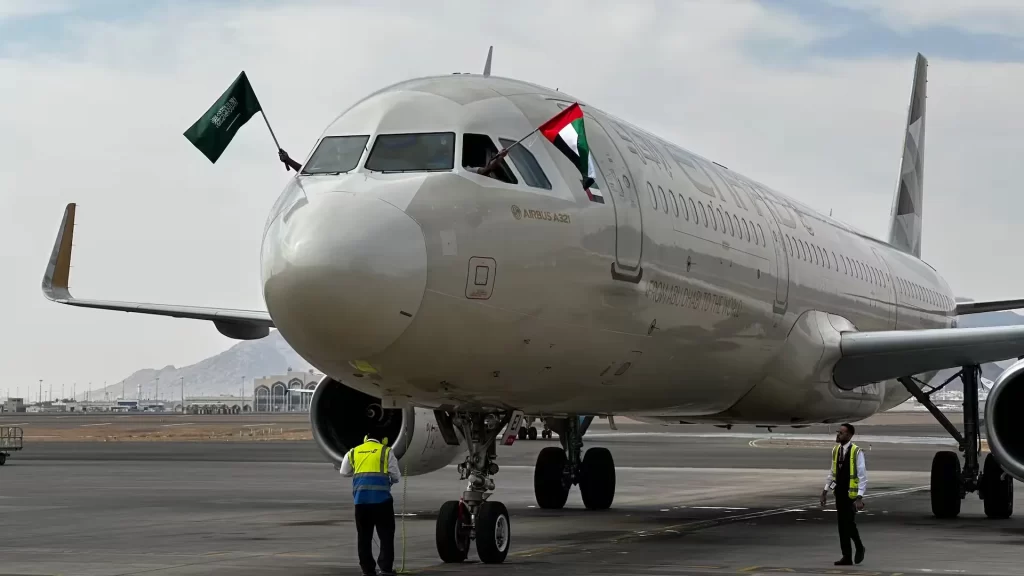
The expansion is intrinsically linked to the Etihad–China Eastern joint venture, a landmark agreement first announced in 2024 and operationalized in 2025.
This joint venture enables both airlines to coordinate schedules, optimize capacity, and jointly develop routes across a defined geographic scope, effectively functioning as a unified network on select corridors.
Under this framework:
- Passengers benefit from seamless connections across Abu Dhabi and major Chinese cities
- Loyalty programmes—Etihad Guest and Eastern Miles—are integrated for earning and redemption
- Coordinated scheduling enhances transfer efficiency and load factors
Antonoaldo Neves, Chief Executive Officer, Etihad Airways, said that China, a nation whose C919 is undergoing tests for expansion into the European market, is a “strategically important market for Etihad and a key pillar of our network growth”:
By adding five new destinations and increasing frequencies, we are strengthening connectivity across one of the world’s most important economic corridors. This will support growing demand for travel and trade, while creating new opportunities for cargo, business and tourism. At the same time, we are strengthening Abu Dhabi’s role as a key destination and gateway for travel and trade, supporting the emirate’s long-term economic ambitions.
Strategic importance of the UAE–China aviation corridor
Etihad’s latest expansion reflects the growing geopolitical and economic significance of the UAE–China corridor. The airline emphasized that the move will:
- Strengthen trade and investment flows
- Enhance tourism connectivity
- Support high-value cargo logistics across manufacturing hubs
The move represents a major expansion of Etihad’s footprint in China, offering travelers from the Middle East, Africa, Europe, and the Americas improved connectivity to key commercial and cultural centers across China through Abu Dhabi.
_Boeing_787-9_Dreamliner_MSN-39657.jpg)