Japan Airlines (JL) and Singapore Airlines (SQ) offer the widest economy class seats in the world in 2026, according to aircraft configuration data compiled by Simple Flying. Japan Airlines reaches roughly 18.5 inches on its Boeing 777s by seating passengers nine-abreast in a 3-3-3 layout instead of the ten-abreast standard most rivals use. Singapore Airlines reaches close to 19 inches on select widebody jets, particularly its Airbus A380 fleet.
Most other mainline carriers, including Qatar Airways (QR), Etihad Airways (EY), Delta Air Lines (DL), United Airlines (UA), and American Airlines (AA), sit closer to 17 to 18 inches [three of these American carriers are the ones with the largest fleet in the world]. The gap exists because of seating choices airlines make within a fixed cabin width, not because of anything passengers can control. It matters because on a long-haul flight, an extra inch or two of shoulder room is often the difference between a bearable trip and a miserable one.
How Japan Airlines Reaches 18.5 Inches on The Boeing 777
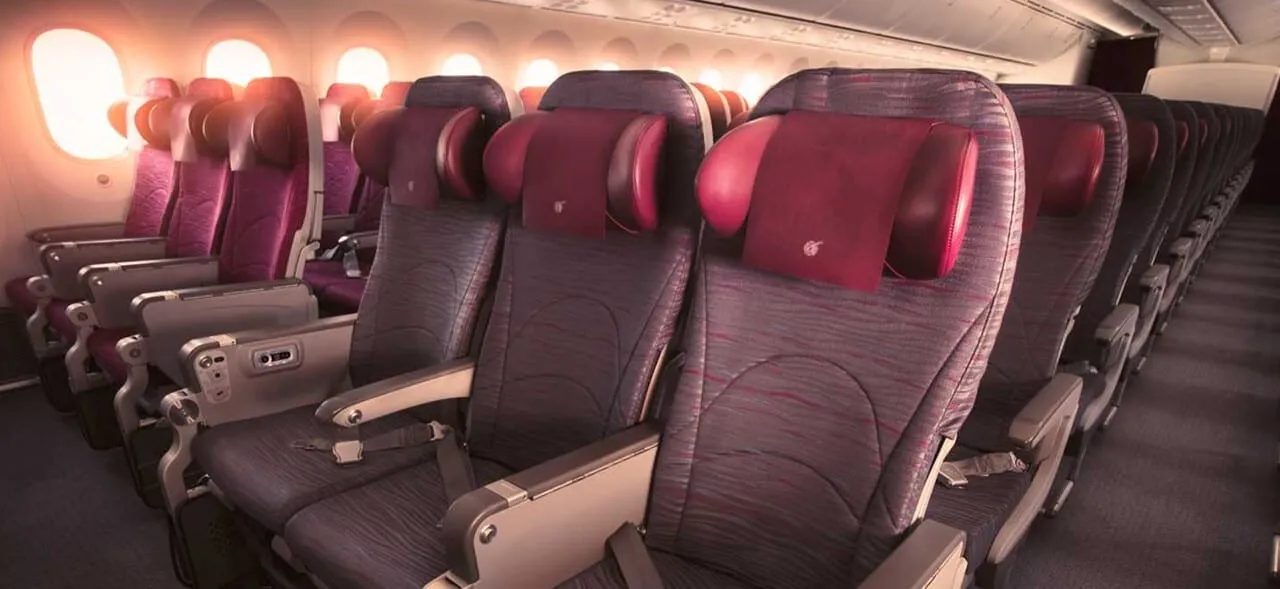
Japan Airlines configures its Boeing 777-300ER nine-abreast in economy, keeping the 3-3-3 layout instead of squeezing in a tenth seat. The airline states its JAL SKY SUITE 777 seats measure roughly 47 cm, or about 18.5 inches, based on figures reported by Simple Flying. Its older Boeing 767s measure close behind at 17.7 inches.
The airline goes further on its Boeing 787 Dreamliners, where the industry standard is nine seats across. Japan Airlines instead uses an eight-abreast, 2-4-2 layout, describing its Dreamliner cabin as “a more relaxed eight-across seat layout rather than the industry standard nine-across.” That single decision pushes width to nearly 18.9 inches, among the widest of any 787-economy seat flying today.
Korean Air (KE) also keeps its 777-300ERs nine-abreast, and it recently considered switching to ten-abreast before reversing course after passenger backlash. All Nippon Airways (NH), Japan Airlines’ closest domestic rival, once matched JAL’s eight-abreast Dreamliner layout but has since moved most of its fleet to the tighter nine-across standard.
Singapore Airlines and Cathay Pacific Lead Asia’s Widebody Comfort Race
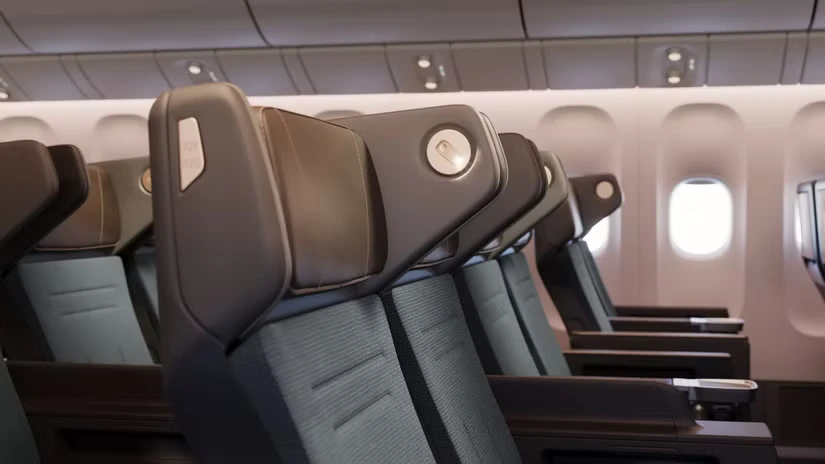
Singapore Airlines and Cathay Pacific (CX) round out the top tier, both keeping their Boeing 777s at nine-abreast rather than ten. Singapore Airlines offers between 18.5 and 19 inches on select widebody aircraft, while Cathay Pacific reaches up to 18.5 inches on its own fleet.
The Airbus A380, which falls in the list of the five biggest aircraft ever, delivers some of the widest seats in the sky. Singapore Airlines’ A380 economy cabin includes extra back support and a six-way adjustable headrest alongside its 18.5-inch-wide seats, based on details Airbus has published about the configuration. All Nippon Airways offers close to 18 inches on its three A380s, and Asiana Airlines (OZ), now being absorbed into Korean Air, advertises 18.9-inch seats with 33 inches of pitch on the same aircraft type.
Switzerland’s flag carrier SWISS has taken a similar approach on a smaller scale. Its “SWISS Senses” cabin overhaul reconfigured the Airbus A330-300 and Boeing 777-300ER from 3-4-3 to 2-4-2 in parts of the economy cabin, reaching seats up to 18.5 inches wide, roughly an inch more than the airline’s previous economy design, Simple Flying reported in March 2026.
Why Most Long-Haul Seats Land At 17 To 18 Inches
Most economy cabins worldwide, including those on Virgin Atlantic (VS), Air France (AF), Qantas (QF), Ethiopian Airlines (ET), Air New Zealand (NZ), and Air India (AI), fall in the 17-to-18-inch range. Cabin width is fixed by the aircraft manufacturer, and airlines can only adjust seat width at the margins.
Narrowbody jets like the A320 and Boeing 737 always seat six across. The Airbus A350 (the aircraft type deployed in some of the longest routes in the world) and Boeing 787 typically seat nine across, while the Boeing 777 seats ten in almost every real-world configuration. Airlines can gain small amounts of width through thinner armrests or slimmer sidewalls, but these changes rarely add more than half an inch per seat.
The Boeing 777 Versus Airbus A350 Width Paradox
The Boeing 777 has a physically wider fuselage than the Airbus A350, yet A350 passengers often end up with more personal space. The reason is that nearly every airline flying the 777 fits ten seats across, even though Boeing originally designed the cabin for nine-abreast comfort.
The A350 started out narrower, but a newer production standard added close to four inches of interior space through thinner cabin walls, and most operators have kept it at nine-abreast. That leaves United and American passengers with seats as narrow as 17 inches on their 777s, while A350 passengers on the same routes often get more room.
French Bee (BF) shows how far the other direction an airline can go. It fits 480 seats into its Airbus A350-1000s at just 16.7 inches wide in standard economy, among the tightest of any long-haul cabin, though its Premium Bee section jumps to 18 to 19 inches.
The Airbus A220 Gives Narrowbody Flyers An Edge
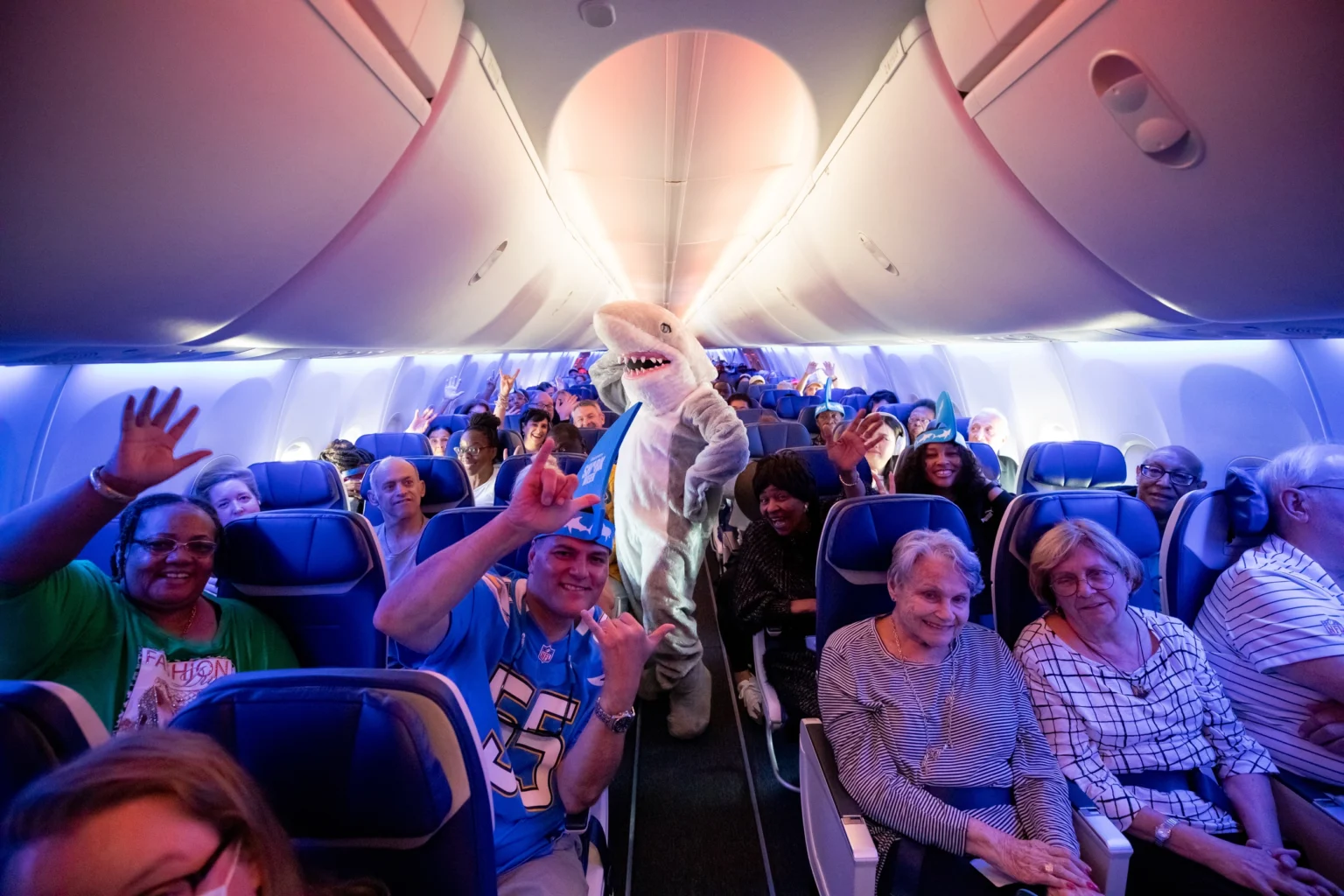
The Airbus A220, originally developed as the Bombardier CSeries, seats five across instead of the usual six on narrowbody jets, and that extra space shows up clearly in the numbers. According to a comparison of US carriers by Simple Flying, Delta offers the widest economy seats of any American airline on its A220 fleet, the largest in the world at 82 aircraft.
Seat widths on the A220 include:
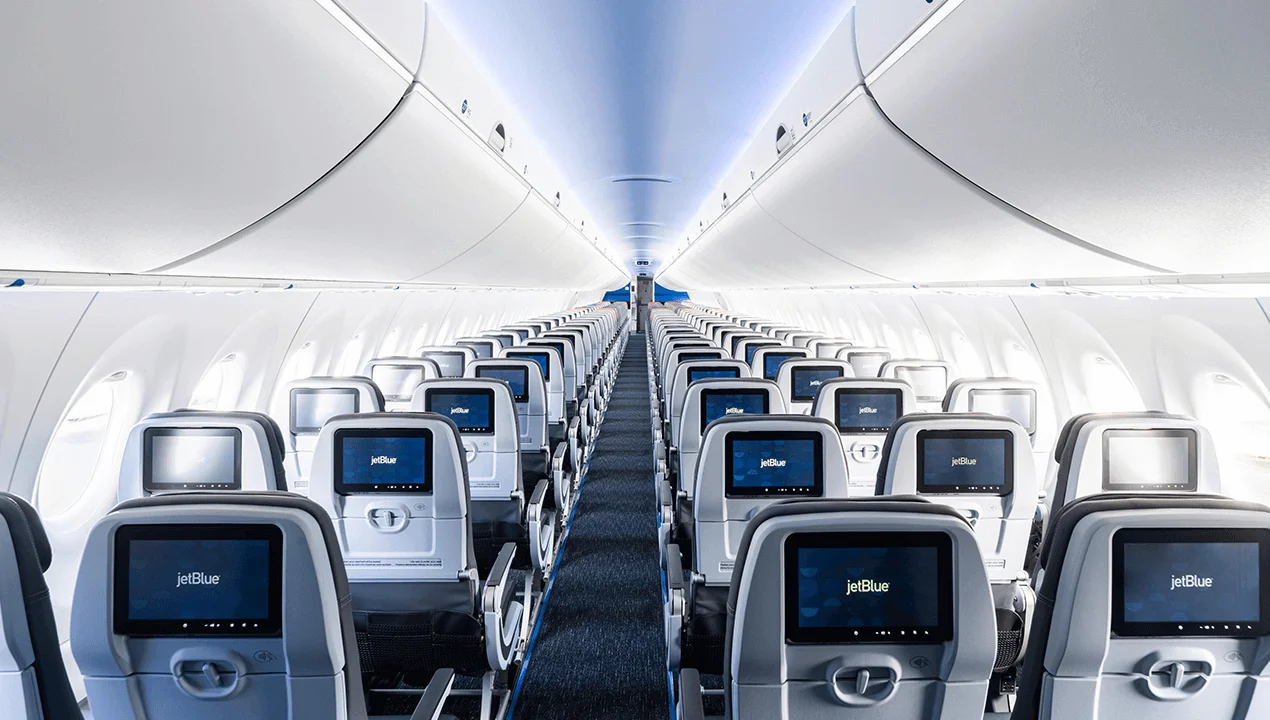
- JetBlue (B6): 18.5 inches at the window and aisle, 19 inches in the middle seats
- Delta: 18.6 inches in Delta Main, 18.1 inches in Delta Comfort+
- Breeze Airways (MX): 18 inches with 30 inches of pitch
- Air Canada (AC): operates 41 A220s across its fleet
Simple Flying’s separate ranking of US-only carriers confirms Delta’s A220 as the widest seat among domestic airlines, based on aeroLOPA seat-mapping data, reinforcing the aircraft-driven pattern seen globally rather than an airline-specific one.
Southwest Stretches Its 737 Seats, Then Changes Its Size Policy Twice
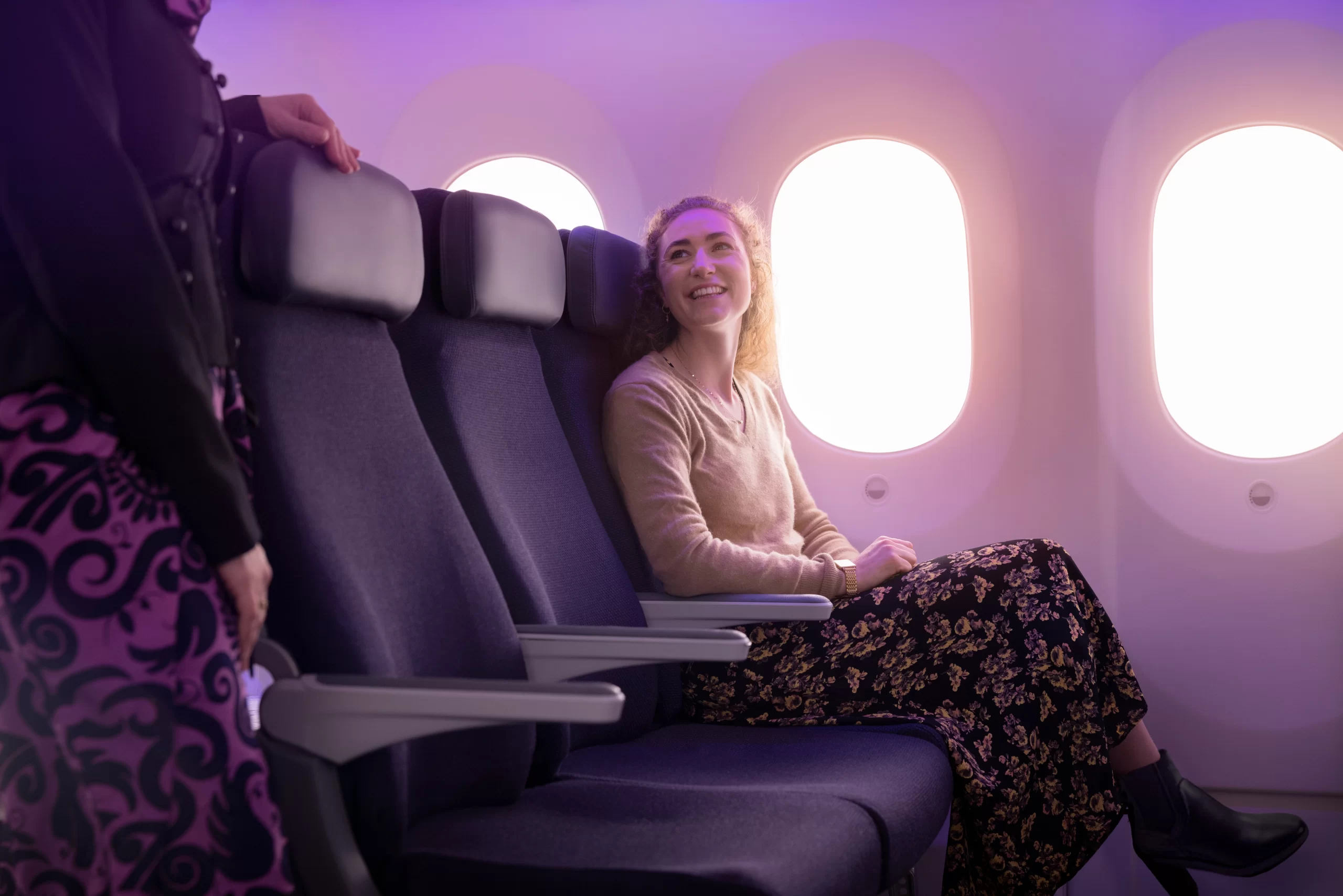
American budget carrier Southwest Airlines (WN) stands out among carriers flying only the Boeing 737. Through slimmer armrests and thinner seatbacks on its 737 MAX 8 and retrofitted 737-800 aircraft, it reaches about 17.8 inches, ahead of American’s 17 inches, United’s 17.3 inches, and Delta’s 17.5 inches on comparable jets.
The airline’s seating comfort made headlines for a different reason in 2026. Starting January 27, Southwest required passengers who could not fit within a single seat’s armrests to purchase a second seat in advance, ending a policy that once let larger passengers request a free extra seat at the gate. The shift aligned Southwest with Delta, United, and American, which already required advance purchase, CBS News reported.
The change drew sharp criticism from plus-size travelers and advocacy groups. By late May 2026, Southwest reversed much of the policy, and according to a statement reported by ABC News, the airline said gate agents would again “provide an additional seat at no extra cost” when adjacent seats were available. The Washington Post described the reversal as a direct response to public backlash following the January rollout.
What This Means for Travelers Booking Long-Haul Flights
Seat width data changes as airlines retrofit cabins, so figures can shift within the same calendar year. Travelers who prioritize shoulder room should check the specific aircraft type operated on their route, since the same airline can offer very different widths on a 787 versus a 777, or an A220 versus an A320.
For most flyers, the widest and most consistent economy experience in 2026 still comes down to two choices: fly Japan Airlines or Singapore Airlines on a widebody aircraft, or book an Airbus A220 route on Delta, JetBlue, or Breeze Airways. Both paths trade the ten-abreast squeeze most economy passengers know for something closer to a business-class-adjacent breathing room.