China has developed a new beyond-visual-range (BVR) air-to-air missile called the PL-16 — and defense analysts across the Indo-Pacific believe it could challenge the United States’ most advanced equivalent, the Lockheed Martin AIM-260 Joint Advanced Tactical Missile (JATM). Analysts say the PL-16, as described in leaked presentations from a Chinese military aviation seminar in mid-2025, features a range estimated between 200 and 300 kilometers (km), a variable-thrust rocket motor, and a compact airframe optimized for internal carriage on China’s Chengdu J-20 stealth fighter. The implications, experts warn, could prove significant in any conflict over Taiwan or the South China Sea.
Beijing has not officially confirmed the PL-16’s existence, development status, or specifications. Despite the uncertainty, the missile’s reported design philosophy is clear: China wants a weapon that is smaller, faster to produce, and capable of fitting more units inside its fifth-generation fighters — while retaining or even improving on the impressive range of its predecessor, the PL-15.
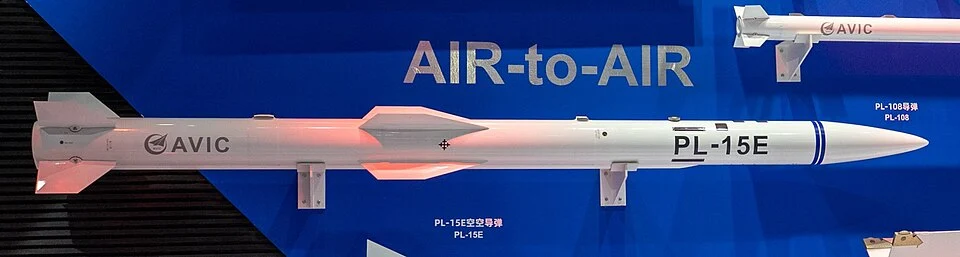
What The PL-16 Is and Why It Matters for Indo-Pacific Air Power
The PL-16 is China’s next-generation long-range air-to-air missile, designed to succeed the PL-15 as the primary BVR weapon of the People’s Liberation Army Air Force (PLAAF). It reportedly features an AESA (Active Electronically Scanned Array) radar seeker, a two-way datalink, and folding control surfaces for internal carriage aboard stealth fighters such as the J-20, J-35, and future J-36/J-50 aircraft.
A variable-thrust solid rocket motor allows thrust to be continuously adjusted throughout the flight, improving fuel management and maximizing kinematic performance — particularly during the terminal phase — thereby increasing effective range compared to dual-pulse rocket motors. This propulsion architecture is a significant departure from previous Chinese BVR missiles and gives the PL-16 a technological edge that analysts are watching closely.
The PL-16’s name follows a Chinese military tradition. The “PL” prefix stands for “Pi Li,” which is Chinese for “thunderbolt.” That tradition of naming has continued through a lineage of increasingly capable missiles, each extending range and lethality beyond the previous generation.
What Experts Say About The PL-16’s Threat to US And Allied Forces
Defense analysts have offered a range of assessments on the PL-16’s strategic implications. Malcolm Davis, a senior analyst for defense strategy and national security with the Australian Strategic Policy Institute (ASPI), provided the clearest picture of the missile’s intended targets and strategic purpose.
Davis said the PL-16 is designed to hit airborne early warning and control platforms, refueling tankers, and reconnaissance aircraft, so “the likelihood of a kill, even at very long range is very high.”
Defence Security Asia reported that the missile’s alleged propulsion breakthrough could fundamentally alter long-range aerial combat economics, as it reduces the traditional energy-loss penalties suffered by conventional solid-rocket missiles operating at extreme distances against manoeuvring fighter aircraft or retreating high-value airborne assets.
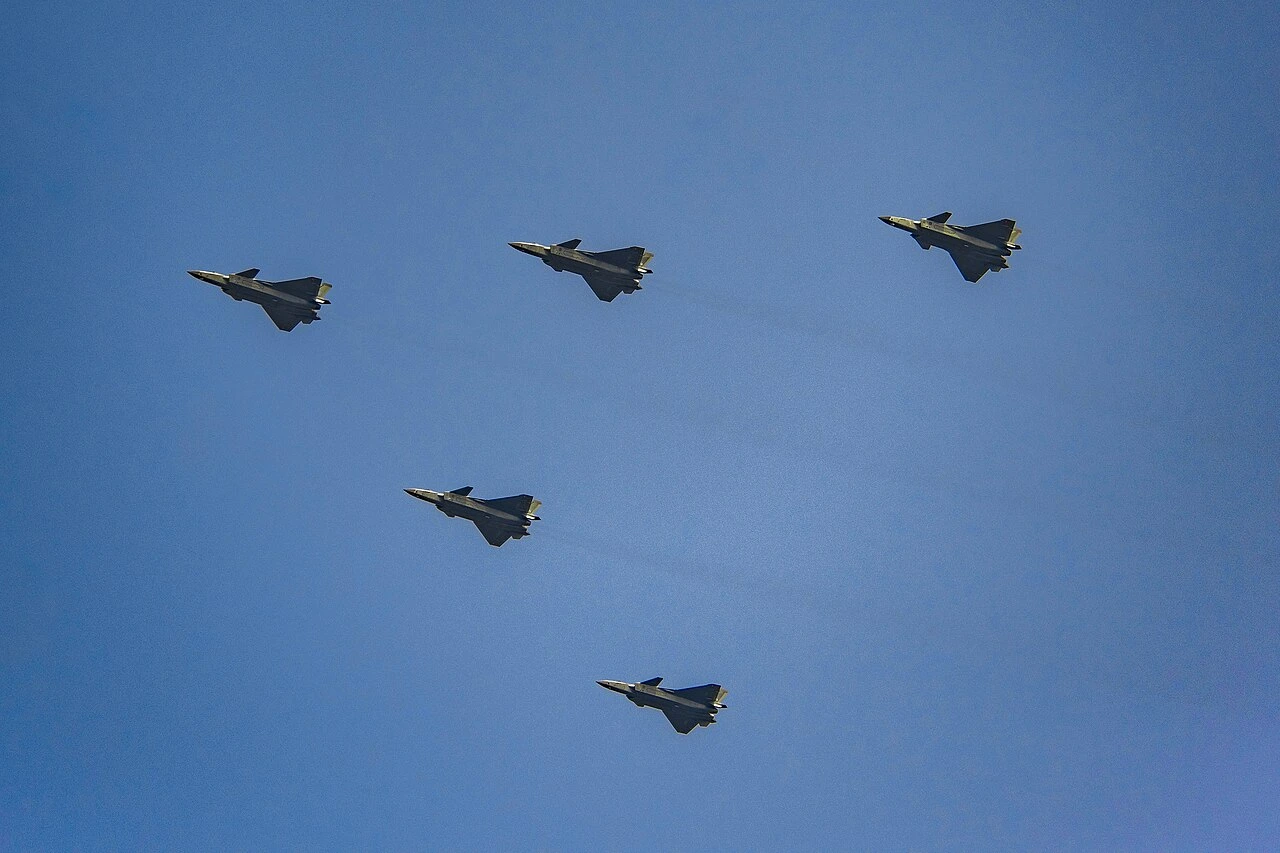
The US AIM-260 JATM
The AIM-260 Joint Advanced Tactical Missile (JATM), developed by Lockheed Martin, is America’s primary response to China’s BVR missile advances. The AIM-260 program began in 2017 in response to long-range missiles developed by potential adversaries, specifically the Chinese PL-15.
The AIM-260 will eventually replace the AIM-120 AMRAAM, in service since 1993, and will exceed its range of about 160 km. The Air Force said the new weapon “will have increased range over existing air-to-air weapons and will be effective in a variety of threat scenarios.”
Range figures are classified. Aviation Week’s Steve Trimble noted that restricted airspace charts at Eglin show a JATM test range circle roughly double the size of the AMRAAM’s. Defense analysts put the range at least 100 miles, with some reporting a design requirement of at least 120 miles — far enough to outreach the Chinese PL-15.
Key reported features of the AIM-260 JATM include:
- Developer: Lockheed Martin Missiles and Fire Control, Orlando
- Program start: 2017 (Special Access Program)
- Range: Classified; analysts estimate over 200 km, possibly 250 km or more
- Propulsion: Advanced; details remain classified
- Seeker: Multi-mode, reportedly combining active radar with additional classified guidance modes Platforms: F-22 Raptor, F-35 Lightning II, F/A-18 Super Hornet (in testing)
- Speed: Likely above Mach 4
The world got its clearest look at the AIM-260 on May 15, 2026, when the first confirmed public photographs were published by The Aviationist. Photographer Jonathan Tweedy captured a VX-31 F/A-18F Super Hornet departing Eglin Air Force Base with an AIM-260 mounted externally. About an hour later, the aircraft returned — without the missile — strongly suggesting a live-fire or separation test was conducted over Gulf of Mexico test airspace.
Despite years of development, the JATM has faced delays. On October 15, 2025, Air & Space Forces Magazine was told by a top service official that JATM is not yet operational, citing issues with “integration” of the weapon on USAF’s fifth generation fighters, the F-22 and F-35. Another official disputed those comments and said the program is “progressing well,” though he acknowledged it has missed its intended IOC date.
The Race for Production
The speed of production is emerging as a critical variable in the US-China missile competition. Lockheed Martin’s AIM-260 Joint Advanced Tactical Missile is set to surge toward operational deployment after securing a major funding boost in the Trump administration’s latest defense budget proposal. Newly released documents show the program jumping from $894 million in FY2026 to $2.9 billion in FY2027, a sharp escalation that signals the Pentagon is fast-tracking production of its next-generation air-to-air weapon.
The U.S. Air Force requested $368 million for first-time production, plus $300 million on its annual “Unfunded Priorities List,” while the Navy asked for $301 million. Analysts at Melius Research said in 2024 the AIM-260 could become a $30 billion program depending on quantities produced.
The United States has also moved to arm its closest Indo-Pacific ally with the JATM. The United States approved a $3.16 billion sale of up to 450 AIM-260 JATM missiles to Australia to extend allied air combat reach. The January 2026 congressional notification clears Australia to move toward acquiring the AIM-260A Joint Advanced Tactical Missile, including test vehicles and full support infrastructure. The package combines $2.61 billion in missiles with $550 million in sustainment, training, and integration systems.



.jpg)