


China is the world’s second-largest civil aviation market and one of the fastest-growing. Its airports handled 770 million passengers in 2025, a 5.5% rise year-on-year, according to the Civil Aviation Administration of China (CAAC). The country operates a fleet of more than 4,000 commercial aircraft, 270 certified transport airports, and a set of domestic manufacturers that are beginning to challenge the Boeing–Airbus duopoly for the first time.
The scale of China’s aviation expansion over the past two decades is remarkable. Passenger volumes rose from 229 million in 2009 to a pre-pandemic peak of 659.93 million in 2019, before rebounding strongly after the country lifted Covid-19 restrictions. The CAAC projects 810 million passenger trips and 10.7 million tonnes of cargo and mail for 2026, driven by continued international recovery and an expanding domestic middle class. This article provides a comprehensive look at the industry’s regulator, airlines, airports, aerospace manufacturers, and safety record.
The CAAC is China’s Apex Civil Aviation Regulator
The Civil Aviation Administration of China (CAAC) is the ministry-level authority that governs all civil aviation affairs in the country. It sits under the Ministry of Transport and exercises jurisdiction over aviation safety oversight, airspace management, airline licensing, and accident investigation.
The CAAC issues Air Operator’s Certificates to new Chinese carriers before they begin commercial operations. It also grants type certification to new aircraft, a process that has become increasingly significant as Chinese manufacturer COMAC advances its domestically built jets. Beyond domestic certification, the CAAC coordinates with international bodies including the International Civil Aviation Organization (ICAO) and the European Union Aviation Safety Agency (EASA) on mutual recognition of standards.
During the 14th Five-Year Plan period from 2021 to 2025, the industry recorded 630 billion yuan (approximately $90 billion) in fixed-asset investment, added 49 new runways, and increased the number of transport airports from 241 to 270. CAAC head Song Zhiyong described this period as one of “steady recovery and high-quality growth” at the authority’s January 2026 annual conference.
China’s Airport Network: Scale, Rankings, And Key Hubs
China’s airport network is one of the densest in the world. As of the end of 2025, the country had 270 certified transport airports, with 266 offering regular flight services, according to CAAC data. Airports collectively handled nearly 1.53 billion passenger trips in 2025, a 4.8% increase year-on-year. Aircraft takeoffs and landings totalled almost 12.45 million — a 0.4% rise.
Forty-one Chinese airports handled more than 10 million passenger trips annually in 2025, accounting for 83.7% of total national passenger throughput. The country’s three busiest airports now rank among the top 10 globally:
- Guangzhou Baiyun International Airport (CAN): Handled 83.58 million passengers in 2025, re-entering the world’s top 10 at ninth place according to ACI rankings. International passengers now account for more than one-fifth of total traffic. In Q1 2026, Baiyun overtook Shanghai Pudong as the single busiest airport in China by passenger volume.
- Shanghai Pudong International Airport (PVG): The primary international gateway for mainland China, ranked second in the Asia-Pacific region with 51.1 million scheduled seats in 2025. It serves as a hub for Air China (CA), China Eastern Airlines (MU), China Southern Airlines (CZ), Juneyao Airlines, Shanghai Airlines, and Spring Airlines.
- Beijing Capital International Airport (PEK): Handles more than 80 airlines and serves an extensive network spanning 260 destinations. It remains the primary international hub for northern China, despite the rise of the newer Beijing Daxing airport.
- Beijing Daxing International Airport (PKX): Covers 46.6 square kilometres, making it the largest single-structure airport terminal in the world. It serves as a second Beijing hub for China Southern Airlines and several other carriers.
China’s 14th Five-Year Plan included 140 airport projects covering greenfield construction, relocation, renovation, and expansion. The country’s plan to address capacity overload at its 32 largest and busiest airports remains an ongoing infrastructure priority.
China’s ‘Big Three’ And Their Networks
China’s airline sector is dominated by three state-owned carriers — China Southern Airlines, China Eastern Airlines, and Air China — that together control approximately 71% of the national market. These also fall in the list of the ten biggest airline fleet in 2026. All three are majority-owned by the Chinese government. The CAAC has encouraged their continued dominance as anchors of domestic and international network connectivity.
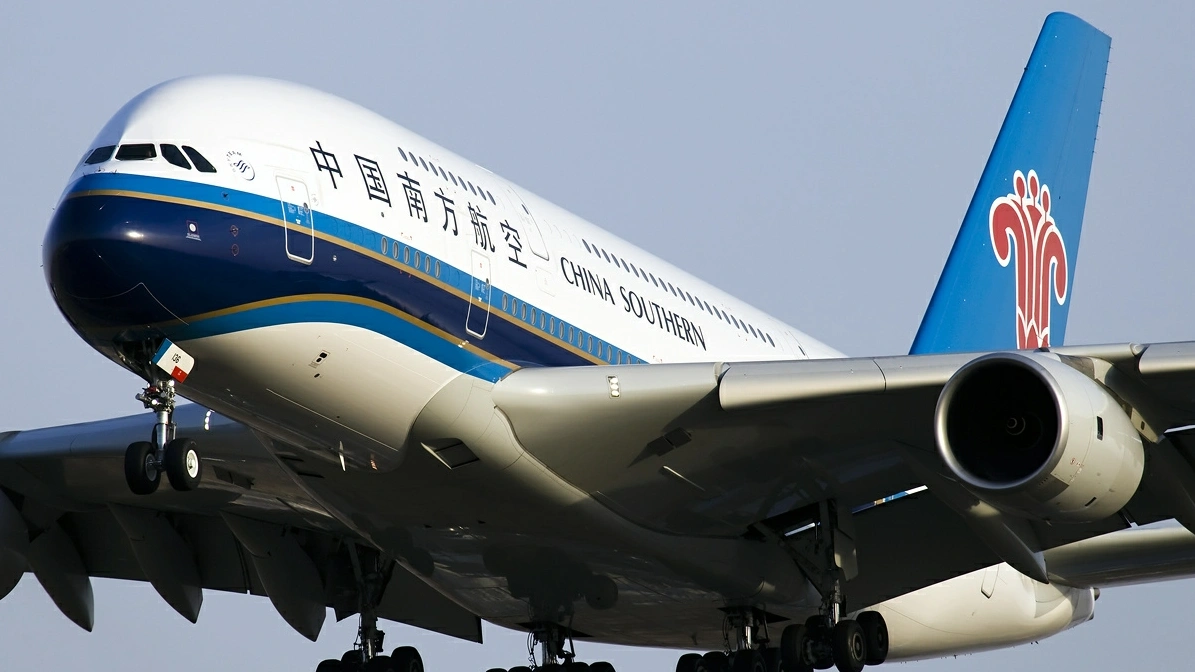
China Southern Airlines (CZ) — Guangzhou Baiyun International Airport (CAN)
China Southern Airlines is the largest airline in China and one of the largest in Asia by fleet and passengers. Its group-level fleet reached 972 aircraft by December 2025, with approximately 174 million passengers carried during the year. Revenue reached RMB 182.26 billion (approximately USD 26.4 billion), with a net profit of RMB 2.7 billion.
Its international capacity grew 17.6% in 2025, with Japan representing the largest international market at 1.3 million seats — a 45% increase over 2024. The airline operates more than 2,000 daily flights to over 224 destinations across 40 countries. It departed the SkyTeam alliance on January 1, 2020, and currently operates as an independent carrier. Its modern fleet includes:
- Airbus A319, A320, A321 family (including neo variants)
- Airbus A330-200 and A350-900
- Airbus A380-800
- Boeing 737-700, 737-800, 737-900, 737 MAX 8
- Boeing 777-300ER, 787-8, 787-9
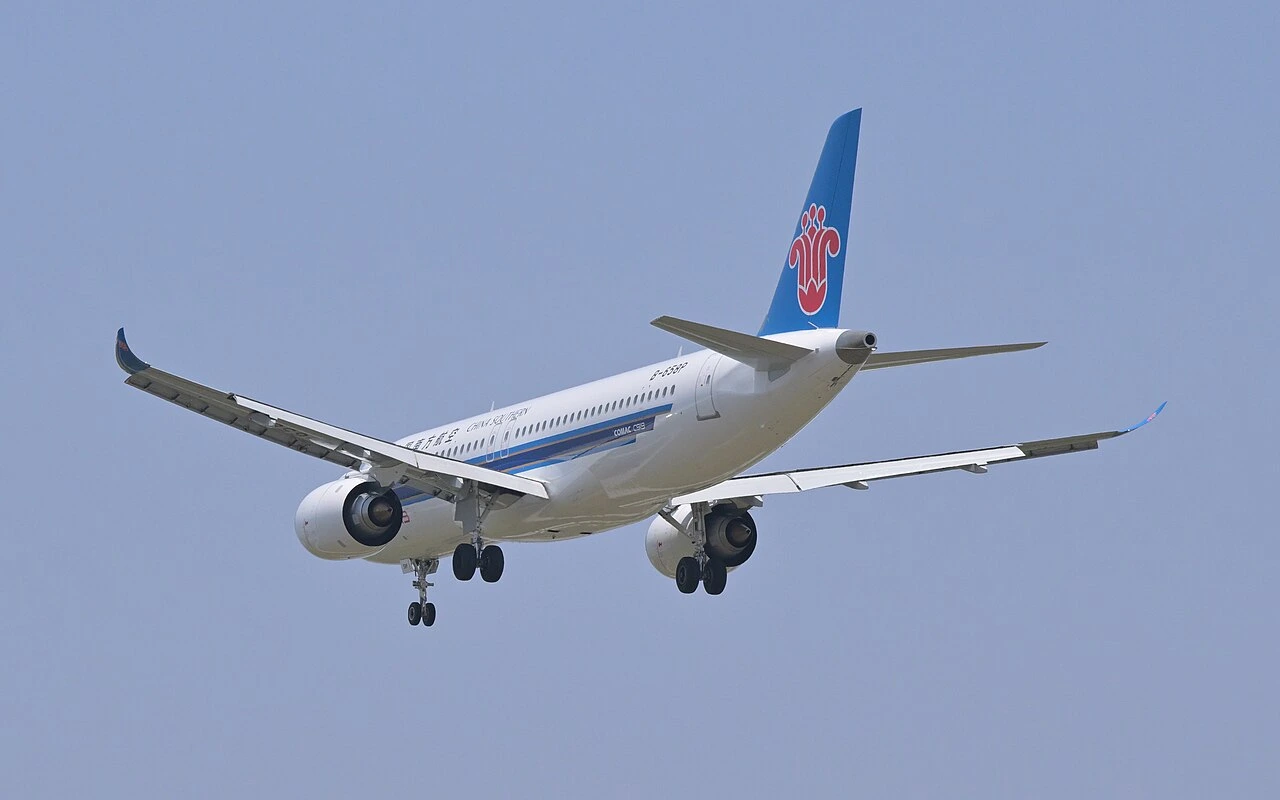
- COMAC ARJ21-700 (rebranded C909) and C919
Data: planespotters.net
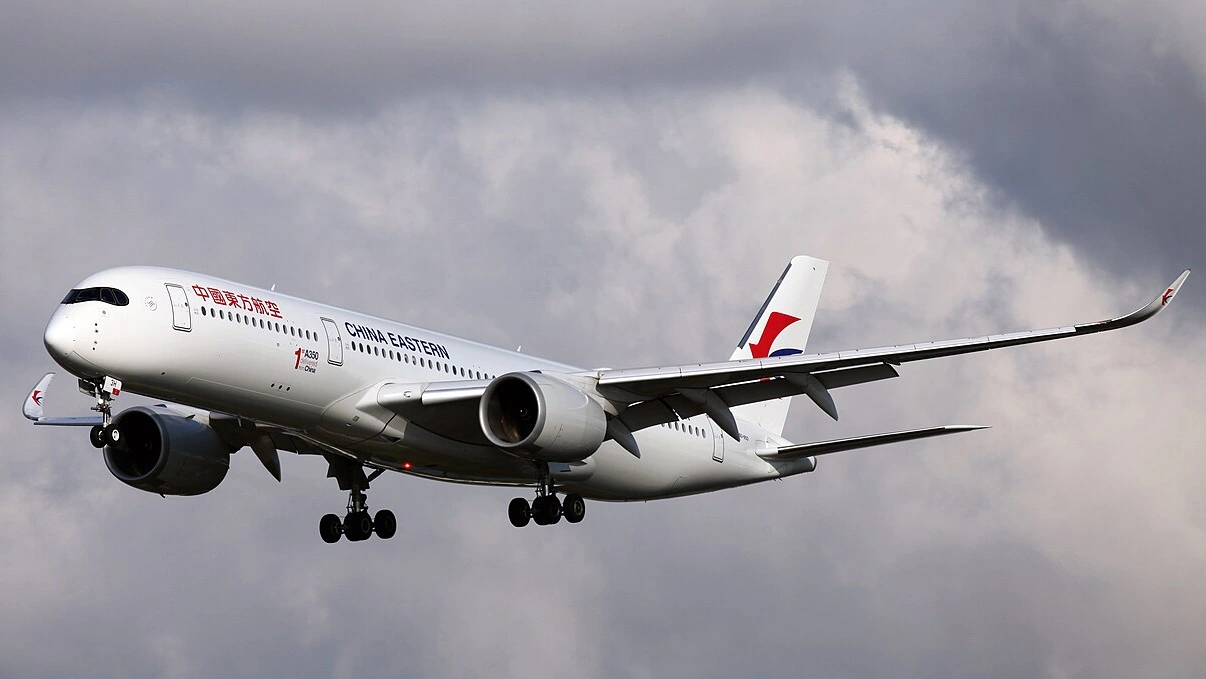
China Eastern Airlines (MU) — Shanghai Pudong International Airport (PVG)
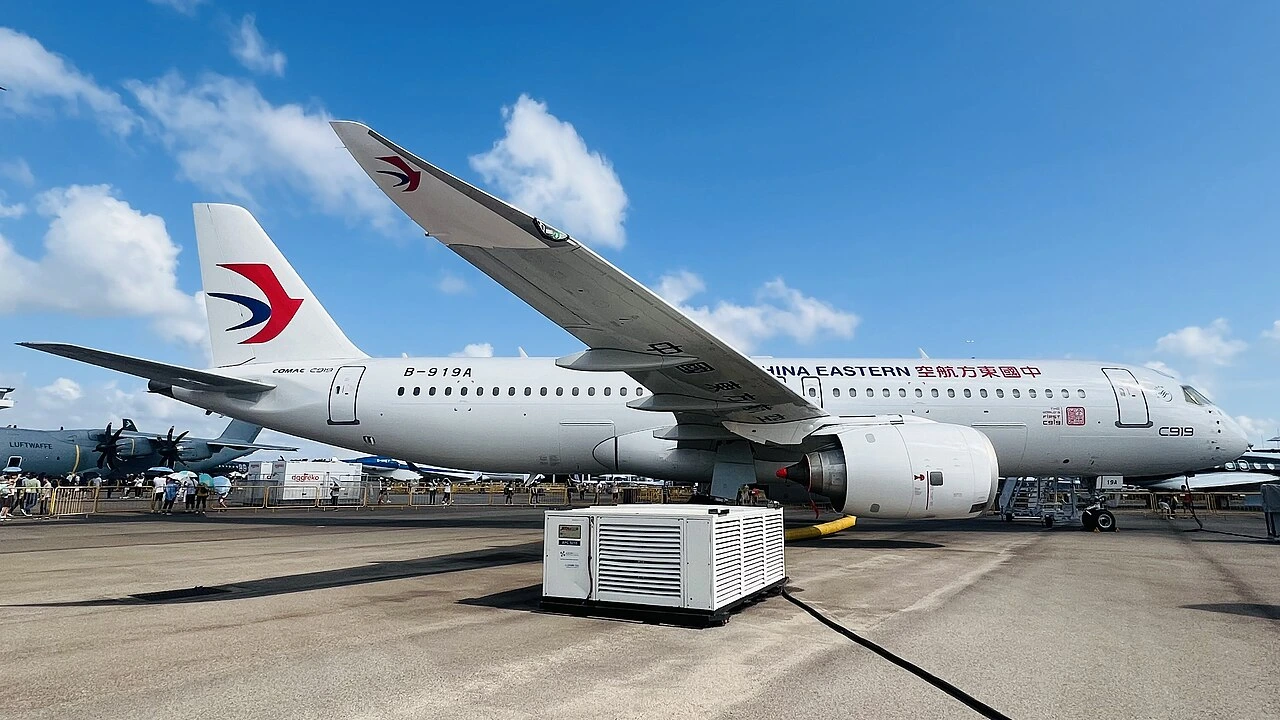
China Eastern Airlines is China’s second-largest carrier and remains a member of the SkyTeam alliance. Its fleet stood at approximately 608 aircraft as of 2022, with continued expansion since. The airline operates from hubs at Shanghai Pudong International Airport (PVG), Shanghai Hongqiao International Airport (SHA), and Kunming Changshui International Airport (KMG), serving over 240 destinations in Asia, North America, and Europe. China Eastern is the launch operator of the COMAC C919, having received the first-ever delivery in December 2022 and accumulated over 500,000 passengers on the type by end-2024.
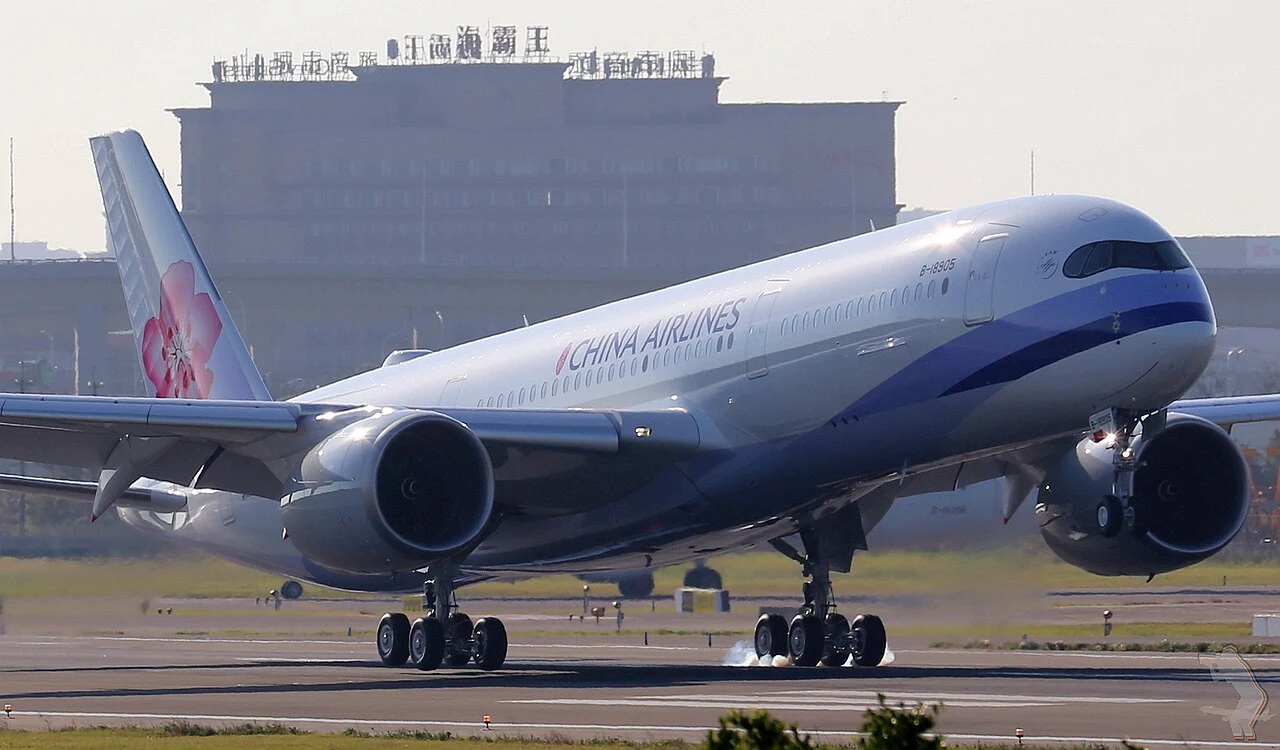
Air China (CA) — Beijing Capital International Airport (PEK)
Air China is China’s flag carrier and a member of the Star Alliance. It transports senior government officials, including the head of state, on official missions, and simultaneously serves the general public across approximately 200 domestic and international destinations. Its international network spans Asia, the Middle East, Western Europe, and North America. The airline’s fleet of approximately 479 aircraft is dominated by Boeing 737-800s, Airbus A321-200s, and A320neo family jets.
| Aircraft Type | In Service | Parked | Current Total | Avg. Age |
|---|---|---|---|---|
| Airbus A319 | 25 | – | 25 | 12.7 Years |
| Airbus A320 | 76 | 15 | 91 | 8.6 Years |
| Airbus A321 | 105 | 3 | 108 | 9.6 Years |
| Airbus A330 | 39 | 4 | 43 | 13.6 Years |
| Airbus A350 XWB | 26 | 2 | 28 | 5.6 Years |
| Boeing 737 | 136 | 5 | 141 | 12.2 Years |
| Boeing 747 | 5 | 4 | 9 | 15.3 Years |
| Boeing 777 | 22 | 6 | 28 | 12.2 Years |
| Boeing 787 Dreamliner | 13 | 1 | 14 | 9.4 Years |
| COMAC ARJ21 / C909 | 32 | 3 | 35 | 3.4 Years |
| COMAC C919 | 11 | – | 11 | 0.9 Years |
| Total | 490 | 43 | 533 | 10 Years |
In Q2 2026, the Chinese market saw a notable shift: South Korea overtook Japan as China’s largest international market by seat capacity, as the three major carriers sharply cut Japan capacity following diplomatic tensions that emerged in late 2025.
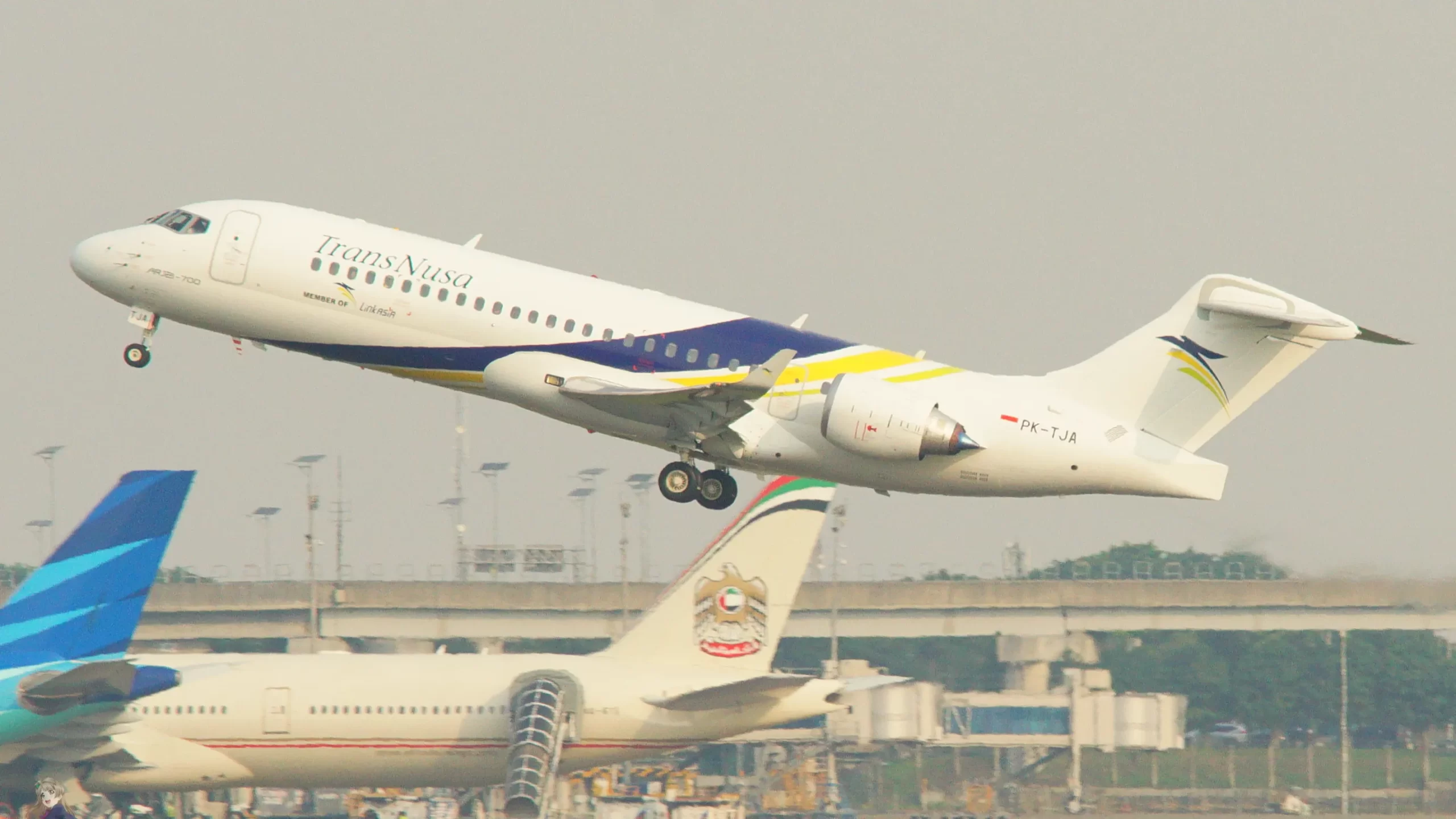
COMAC is China’s Bet On Domestic Commercial Aircraft
The Commercial Aircraft Corporation of China (COMAC) is the state-owned manufacturer of large passenger aircraft in China. It was established to reduce China’s dependence on Boeing and Airbus and to develop an indigenous narrowbody that could compete at scale in the domestic market. Its primary products are the C909 (formerly the ARJ21) regional jet and the C919 narrowbody.
COMAC C909 (ARJ21 Xianfeng)
The C909 is a 78–90 seat regional jet powered by twin rear-mounted General Electric CF34 engines. It cruises at Mach 0.78 with a maximum range of up to 1,200 nautical miles. The type is operated exclusively by Chinese carriers, including Air China, China Eastern Airlines, China Southern Airlines, Chengdu Airlines, OTT Airlines, China Express Airlines, Genghis Khan Airlines, and Jiangxi Air. COMAC has begun marketing the C909 in Southeast Asia, with demonstration flights in the region and an in-service example operating in Laos.
COMAC C919
The COMAC C919 is a single-aisle, twin-engine narrowbody designed to compete with the Airbus A320neo and Boeing 737 MAX. Its key specifications include:
- Passenger capacity: Up to 174 in high-density single-class configuration
- Cruise speed: Mach 0.785
- Range: 2,200 nautical miles
- Engines: CFM International LEAP-1C28 (two)
- Type certification: Received from CAAC on September 29, 2022
- Entry into service: May 28, 2023, with China Eastern Airlines
By the end of 2025, COMAC had delivered 32 C919s to the Big Three carriers. China Eastern received 4 aircraft in 2025, Air China 6, and China Southern 5. The programme faced significant setbacks: an original 2025 target of 75 deliveries was slashed to 25 and ultimately only 15 aircraft were delivered, primarily due to supply chain bottlenecks and a five-week suspension of US engine exports in mid-2025. For 2026, China’s Big Three collectively expect 33 C919 deliveries. COMAC aims to target at least 28 deliveries.
The C919 relies heavily on foreign systems, including its CFM LEAP-1C engines, Collins Aerospace avionics, and other Western components. EASA certification — required for the aircraft to operate commercially outside China — is not expected before 2028. Meanwhile, COMAC is expanding its Shanghai production facility and has rolled out the first prototype of the stretched C919-600 variant, which completed its rollout on January 8, 2026. Tibet Airlines is the launch customer, holding 40 orders with entry into service projected around 2030.
We have previously covered the C919’s MRO milestones in detail, including the first LEAP-1C engine overhaul achieved by a Sichuan-based CFM joint venture in May 2026 and HAECO’s completion of the first C909 landing gear overhaul at Xiamen.
Other Chinese Aerospace Manufacturers
China produces several turboprop airliners through Xi’an Aircraft Industrial Corporation, based in Yanliang District. These include the MA-60, MA-600, and MA-700 turboprop regional aircraft. China also has a well-developed military aerospace sector with manufacturers including the Aviation Industry Corporation of China (AVIC), Chengdu Aerospace Corporation (CAC), Shenyang Aircraft Corporation (SAC), and Harbin Aircraft Industry Group (HAIG).
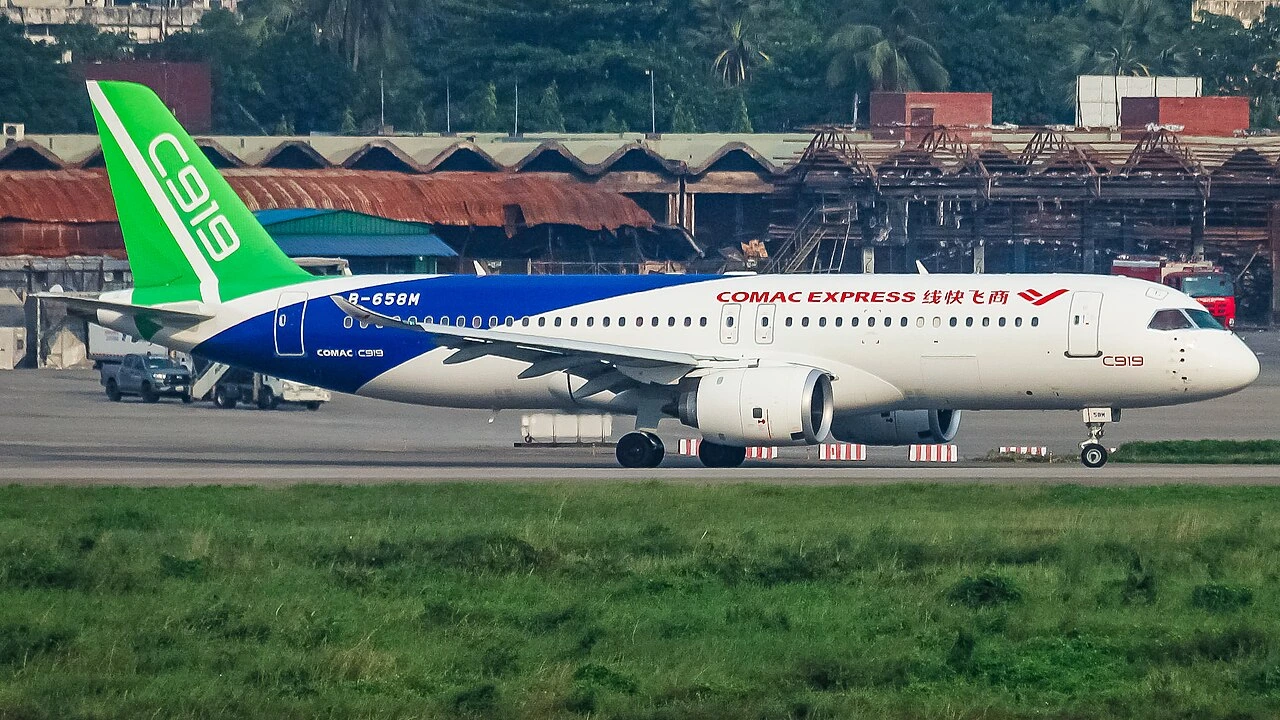
How China’s C919 Compares With Airbus And Boeing
The C919 occupies the same market segment as the Airbus A320neo and Boeing 737 MAX 8. The table below highlights how the three aircraft compare on core performance parameters:
| Parameter | COMAC C919 | Airbus A320neo | Boeing 737 MAX 8 |
|---|---|---|---|
| Capacity (typical) | 158–174 | 150–194 | 162–178 |
| Range | 2,200 nm | 3,400–3,500 nm | 3,550 nm |
| Cruise speed | Mach 0.785 | Mach 0.78 | Mach 0.79 |
| Engine | CFM LEAP-1C | CFM LEAP-1A or PW1100G | CFM LEAP-1B |
| EASA certification | Not yet (expected 2028+) | Yes | Yes |
| Western operator orders | None | Thousands | Thousands |
The C919’s greatest current competitive limitation is its range, which is approximately 35–40% shorter than its Western rivals. This restricts it primarily to shorter domestic Chinese routes. Its dependence on Western components — especially its engines — also remains a structural vulnerability in the context of US–China trade tensions.
China’s Aviation Safety Record
China built one of the world’s most impressive aviation safety records over the 11 years prior to March 2022 without a fatal accident on the Chinese mainland. That record ended on March 21, 2022, when China Eastern Airlines Boeing 737-800 (registration B-1791), operating flight MU5735, crashed into a mountainous area near Wuzhou in the Guangxi Zhuang Autonomous Region. All 132 people on board — 123 passengers and 9 crew members — were killed. The aircraft was flying from Kunming Changshui International Airport (KMG) to Guangzhou Baiyun International Airport (CAN).
The accident remains China’s deadliest aviation disaster since 1994. Preliminary CAAC reports confirmed that the aircraft descended from its cruising altitude at approximately 29,000 feet, briefly stabilised, and then entered a near-vertical final dive. No distress call was made. Both flight recorders were recovered from the crater, which measured 2.7 metres deep at the main impact point.
In May 2026, CNN reported that data released by the US National Transportation Safety Board (NTSB) — obtained through a Freedom of Information request — appeared to show that fuel switches to both engines were shut off simultaneously before the aircraft descended. The CAAC has not issued a final accident report or addressed the cockpit action question publicly. It issued progress updates on the first and second anniversaries of the crash but missed the third anniversary deadline in March 2025. A CAAC report released on the second anniversary noted that no anomalies were found in preflight qualifications or procedures for crew, maintenance, or air traffic control.
The absence of a final report has drawn criticism from international aviation safety groups. The previous major accident on Chinese soil before MU5735 occurred in 2010, when an Embraer ERJ-190 operated by Henan Airlines crashed on approach to Yichun Lindu Airport in fog, killing 44 of 96 people aboard.
China’s safety record in the years between those two events was widely regarded as strong. The country made a 100 million consecutive hours of safe flying by Chinese carriers over a decade. The MU5735 accident disrupted that record but has not fundamentally reversed the country’s trajectory of safety investment and regulatory development.
_China_Eastern_Airlines_Comac_C919-100ER_B-919A_@_Singapore_Airshow_2024-02-25_(1).jpg)


.jpg)
_@_TPE,_Dec_2016_(02).jpg)


.jpg)
Leave a Reply