Brazilian aerospace manufacturer Embraer is willing to open a dedicated production facility for the C-390 Millennium military transport in India as part of its bid to win one of the largest transport aircraft procurement programmes in South Asian history. India’s Medium Transport Aircraft (MTA) programme aims to recapitalise a Soviet-era fleet of more than 100 Antonov An-32 turboprops and 17 Ilyushin Il-76 jets that have served the Indian Air Force (IAF) for nearly four decades. No formal request for proposal (RFP) has yet been issued, but Embraer executives told FlightGlobal that New Delhi is in what they describe as “hurry mode.”
The company has partnered with Indian industrial conglomerate Mahindra to pursue the MTA contract. Their alliance, formalised through a Strategic Cooperation Agreement signed in October 2025, covers local manufacturing, assembly, and maintenance, repair and overhaul (MRO) operations for the C-390. Embraer’s chief executive and its chief marketing officer for defence have both stated publicly that the company is prepared to transfer substantial industrial capabilities to India to secure the contract.
What Embraer Is Offering India Under the MTA Programme
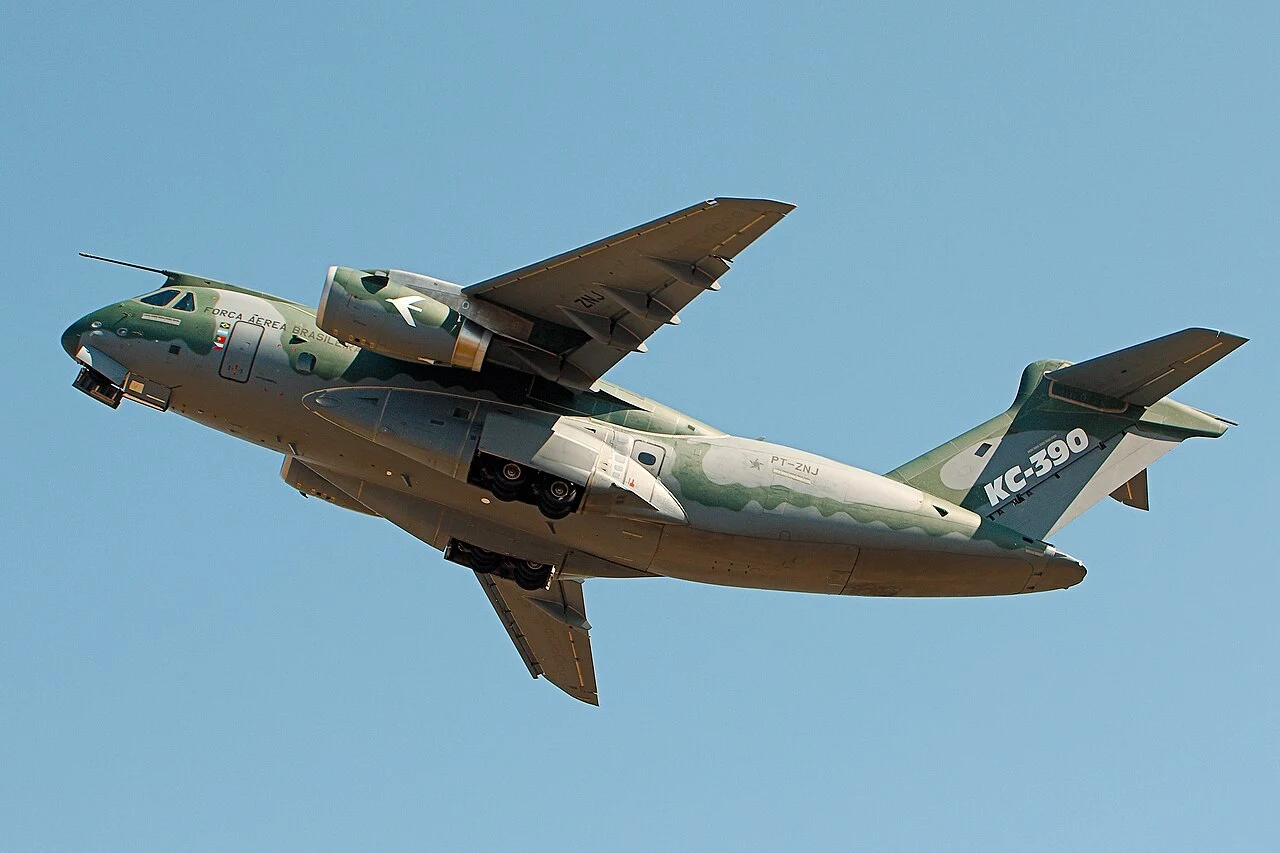
Embraer’s chief marketing officer for defense, Marcio Monteiro, told FlightGlobal on June 16, 2026 that the company is prepared to relocate core production capabilities to India. “We are willing to transfer everything, as much as possible,” Monteiro said. “We are also talking to our supply chain, checking with them what can be transferred to India, given the size of the potential… order.”
The proposed Indian facility would replicate Embraer’s Gavio Peixoto complex in Brazil, which currently houses two hangars for both structural assembly of C-390 fuselage sections and final aircraft assembly. Monteiro confirmed the Indian site would start with at least that level of capability. “That’s how the factory in India would look, at least,” he said. “Depending on the requirements of percentage of localisation, we may need to do more.”
That additional scope could include building new factories in India to fabricate core structural components. Those components are currently manufactured offsite in Brazil and shipped to Gavio Peixoto. Monteiro noted that such a facility could also support C-390 exports to other global customers beyond India. “I think India would be interested in doing that sort of business,” he said.
Embraer chief executive Francisco Gomes Neto confirmed the company’s commitment directly. “We are working very hard with… Mahindra in India to be ready for this bid,” he told FlightGlobal.
The Scale of India’s MTA Requirement
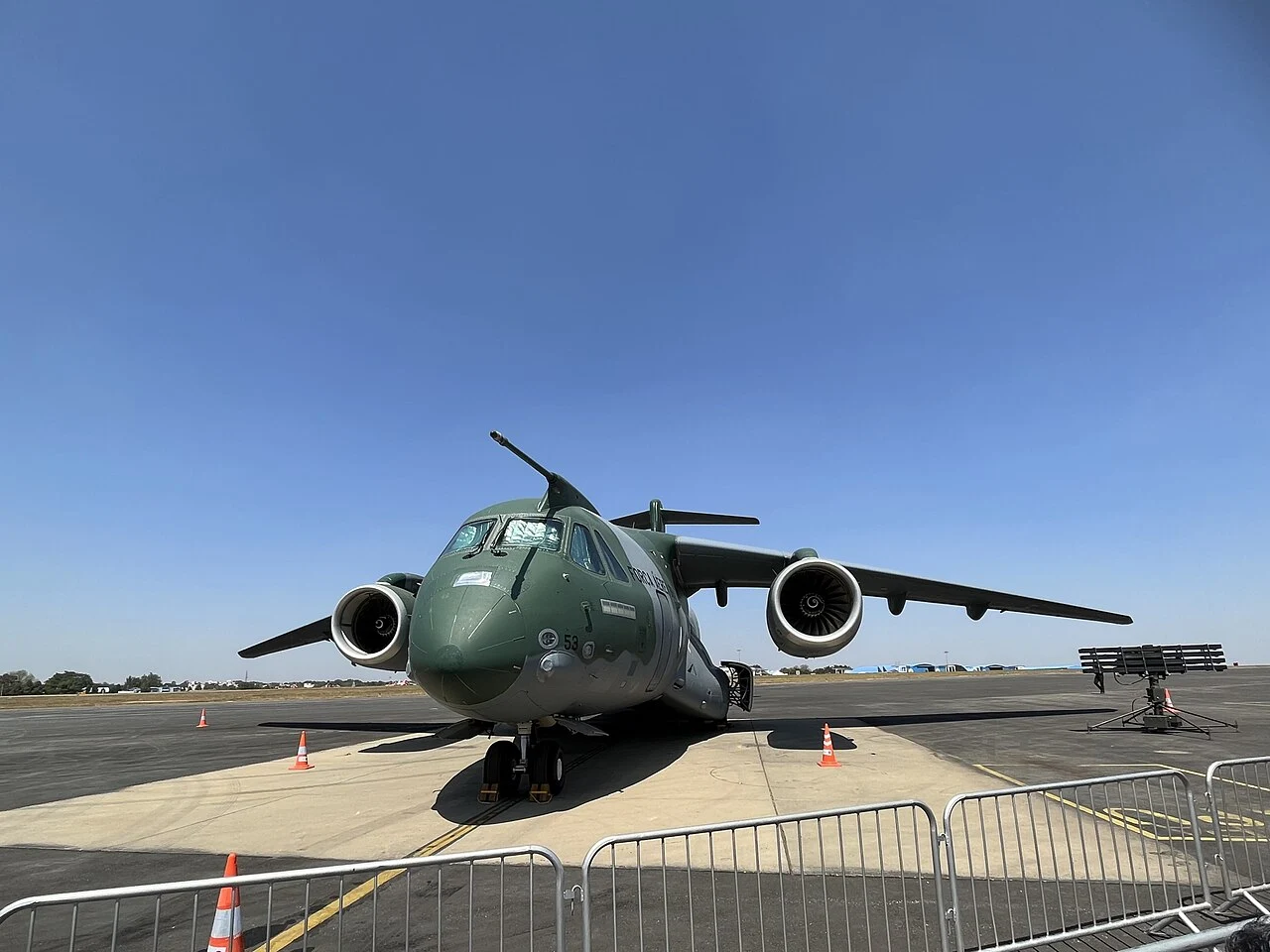
India’s MTA programme is one of the most consequential military aviation tenders in the region. The IAF’s current transport fleet includes over 100 An-32 turboprops, 14 operational Il-76s, 11 Boeing C-17 Globemasters, and 12 Lockheed Martin C-130J Super Hercules. The An-32s entered IAF service in 1984 and have become increasingly difficult to maintain due to aging airframes and dwindling spare parts availability.
The programme was formally cleared in early 2026 with a requirement for approximately 60 aircraft, though Embraer believes the final order could cover 60 to 80 aircraft. An order at the top of that range would nearly double Embraer’s current C-390 backlog, which covers about 90 aircraft in orders and options. India’s defence acquisition guidelines generally require at least 50% locally sourced content for major purchases, making an Indian production line essential rather than optional for any serious bidder.
The new aircraft will replace the An-32 fleet and are also expected to assume some missions currently performed by the Il-76. The requirement specifically calls for aircraft capable of operating from short or semi-prepared runways and high-altitude airfields, including advanced landing grounds in Ladakh and India’s northeastern regions. These conditions became operationally critical during India’s military standoff with China in eastern Ladakh, when airlift was essential for sustaining forward deployments.
A Timeline of Embraer–Mahindra Partnership
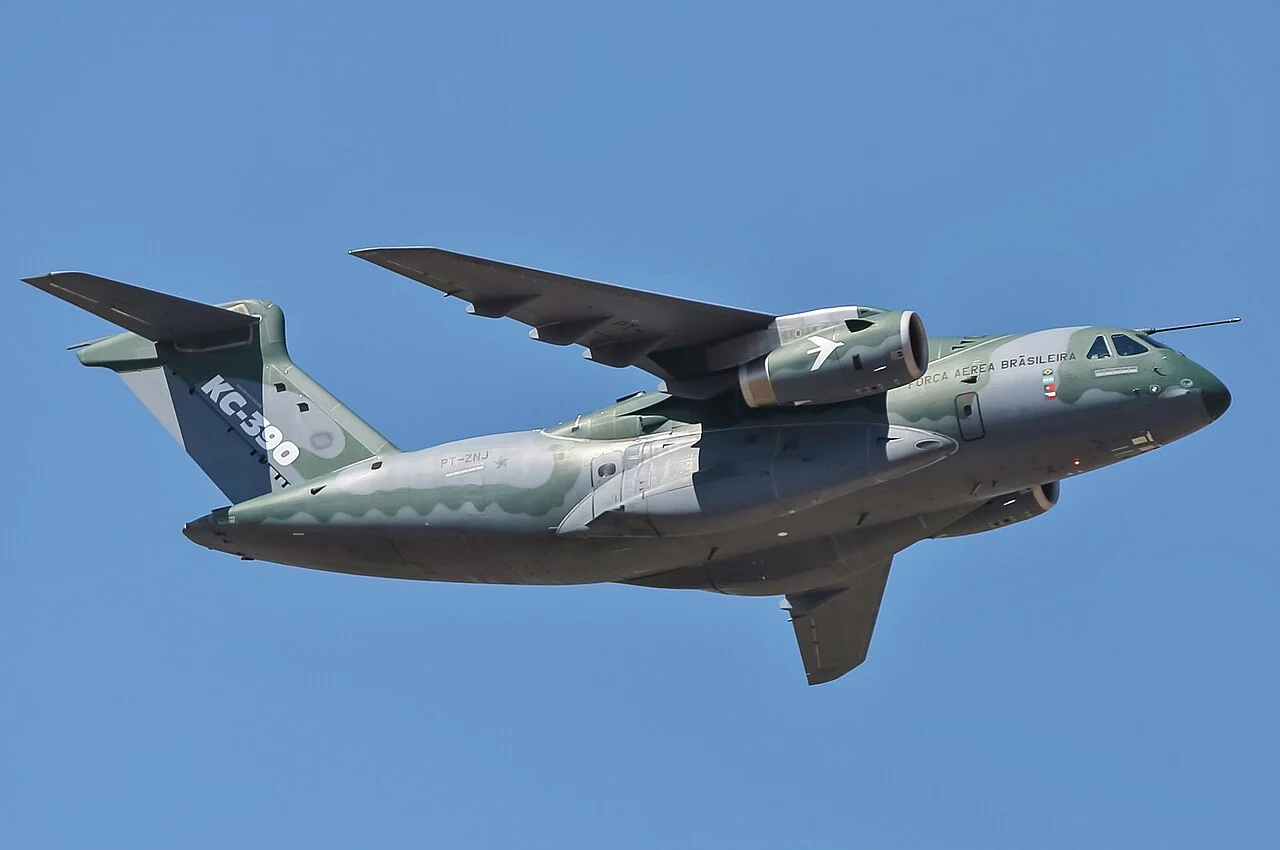
The Embraer–Mahindra alliance has developed through a structured series of formal agreements. Their cooperation ahead of the MTA bid now spans initial teaming through to MRO planning:
- February 2024: Embraer Defense & Security and Mahindra signed a Memorandum of Understanding at the Brazilian Embassy in New Delhi to jointly pursue the MTA programme.
- October 2025: The two companies upgraded their arrangement to a Strategic Cooperation Agreement, signed at the inauguration of Embraer’s national office in New Delhi. This agreement covers production of the C-390 in India and deepens the ‘Make in India’ and ‘Atmanirbhar Bharat’ industrial commitments.
- February 2026: Embraer and Mahindra announced plans for a dedicated C-390 MRO facility in India, contingent on IAF selection. The planned facility would provide base and heavy maintenance, structural inspections, avionics support, and crew training.
- June 2026: Embraer executives publicly confirmed readiness to open a full C-390 assembly line in India, including potential fabrication of structural components currently produced in Brazil.
Bosco da Costa Junior, President and CEO of Embraer Defense & Security, described the partnership’s ambition at the October 2025 signing:
“India has a diverse and strong defense and aerospace industry and we have chosen Mahindra as our partner to jointly pursue the MTA program,”
he said:
“India is a key market for Embraer and we fully support India’s ambitions for ‘Atmanirbhar Bharat’.”
High-Altitude Performance is the Key Battleground for the MTA Contract
One critical and unresolved area of competition is the requirement to operate from high-altitude airfields, particularly in Ladakh and the northeastern frontier. The C-130J has an established track record here, having supported NATO operations in Afghanistan and conducted covert missions in the Himalayas during Cold War operations. The C-390’s heavier weight and longer take-off roll might, in theory, place it at a disadvantage in these environments.
Embraer’s Monteiro disputes this directly. “We have looked into [it] with the Indian air force,” he told FlightGlobal. “The airplane is completely capable of meeting those requirements.” Gomes Neto, the company’s chief executive, went further. “In terms of operations, in terms of maintenance cost, in terms of performance, we believe it is the best solution for the Indian air force,” he said.
From a pure performance comparison, the C-390 has a shorter normal take-off distance at 16-tonne payload — 1,165 metres versus the C-130J’s rough-field performance — and its jet engines offer significantly higher power-to-weight ratios at altitude. High-altitude airfield performance data for the C-390 specific to Indian requirements has not been made public.


.jpg)

.jpg)