Air New Zealand (NZ) is formally assessing the viability of launching direct flights to Indian cities. The airline’s Chief Executive Officer, Nikhil Ravishankar, made the disclosure on the sidelines of the International Air Transport Association (IATA) Annual General Meeting held in Rio de Janeiro in June 2026. He told the Press Trust of India (PTI) that the airline is evaluating how to better connect the two countries, and that it is working closely with Singapore Airlines (SQ) and Air India (AI) to develop that connectivity.
Ravishankar, who was born in Bengaluru and relocated to New Zealand at the age of 14, took over as Air New Zealand’s CEO in October 2025, succeeding Greg Foran. He told PTI: “We are thinking about how to better connect the two countries… we are working closely with Singapore Airlines and Air India around servicing and connecting with India.” The timing of his statement is significant. India and New Zealand signed a landmark Free Trade Agreement (FTA) on April 27, 2026, creating a commercial environment that Ravishankar described as presenting expanded opportunities for people-to-people connectivity, IBEF.org reported.
What the India–New Zealand Free Trade Agreement Means for Aviation
India and New Zealand concluded their FTA on April 27, 2026, in Delhi, signed by India’s Union Minister for Commerce and Industry, Piyush Goyal, and New Zealand’s Minister for Trade and Investment, Todd McClay. The agreement followed five formal rounds of negotiations that began in March 2025 and concluded in December 2025. It is yet to enter into force, pending domestic ratification in both countries.
The FTA has wide-ranging trade implications:
- New Zealand provides duty-free access to 100% of Indian exports from the date the agreement enters into force
- India provides tariff reductions on 70.03% of tariff lines, covering 95% of bilateral trade value
- New Zealand commits to invest USD 20 billion in India over 15 years
- Around 5,000 annual work visas are provisioned to facilitate talent mobility between the two countries
- Bilateral trade is targeted to double to USD 5 billion within five years
The two-way trade between India and New Zealand currently stands at NZD 3.95 billion annually. New Zealand Prime Minister Christopher Luxon, commenting on the agreement, stated:
“The benefits of this FTA are widespread, and our business community is excited to see the doors of opportunity open to 1.4 billion people whose economy is set to become the third largest in the world.”
For aviation, the FTA creates both demand-side incentives — more business travel, more student mobility, more tourism — and a diplomatic context that supports bilateral air service negotiations.
Air India and Air New Zealand’s 16-Route Partnership
Before any direct service can take shape, the two airlines have already built a commercial bridge. Air India and Air New Zealand signed a Memorandum of Understanding (MoU) in March 2025, establishing a new codeshare partnership on 16 routes spanning India, Singapore, Australia, and New Zealand. The MoU was signed in Mumbai in the presence of New Zealand Prime Minister Christopher Luxon.
The codeshare, which went live in April 2025, allows passengers to travel on a single ticket across four Indian cities and four New Zealand cities via Australian or Singaporean hubs. The specific connectivity it enables includes:
- Indian departure cities: Indira Gandhi International Airport (DEL), Delhi; Chhatrapati Shivaji Maharaj International Airport (BOM), Mumbai; Kempegowda International Airport (BLR), Bengaluru; Chennai International Airport (MAA), Chennai
- New Zealand arrival cities: Auckland Airport (AKL), Auckland; Christchurch Airport (CHC), Christchurch; Wellington Airport (WLG), Wellington; Queenstown Airport (ZQN), Queenstown
- Connecting hubs: Sydney (SYD), Melbourne (MEL), or Singapore Changi Airport (SIN)
The Air India press release confirming the MoU stated that the partnership would also see both airlines explore “the introduction of a direct service between India and New Zealand by the end of 2028, subject to new aircraft deliveries and approvals from relevant government regulators.”
Both Air India and Air New Zealand are members of the Star Alliance, which further strengthens their interoperability across frequent flyer programmes and baggage agreements. Singapore Airlines is also a Star Alliance member, reinforcing the trilateral cooperation Ravishankar referenced at the IATA AGM.
Why India Matters for Air New Zealand
The case for direct India-New Zealand flights is grounded in multiple structural factors, both demographic and commercial.
The Indian diaspora is the third-largest ethnic group in New Zealand, according to census data. This creates a substantial visiting friends and relatives (VFR) travel market. India’s outbound travel sector is among the fastest-growing globally, driven by a rising middle class and increasing appetite for long-haul leisure travel. New Zealand is an emerging destination in that context, with Tourism New Zealand running seasonal marketing campaigns specifically targeting Indian travellers.
There is also an intriguing bilateral human connection at the airline CEO level. Ravishankar is a Bengaluru native. Air India’s outgoing CEO Campbell Wilson, who oversaw the codeshare deal from Air India’s side, is himself a New Zealand native. The two carriers share not just an alliance membership but an unusual symmetry in leadership backgrounds.
India’s Commerce Minister Piyush Goyal met Ravishankar directly during an official visit to New Zealand for the fourth round of FTA discussions in November 2025. During that meeting, Goyal discussed expanding opportunities in India’s aviation sector with Ravishankar — a signal that government-level engagement between the two countries on aviation predates the CEO’s public comments at the IATA AGM.
Air New Zealand’s Fleet and Capability for India Routes
A direct flight between Auckland International Airport (AKL) and any major Indian city would rank among the longest commercial routes in the world. Delhi lies approximately 11,700 kilometres from Auckland, putting the route at the edge of current long-range aircraft capability.
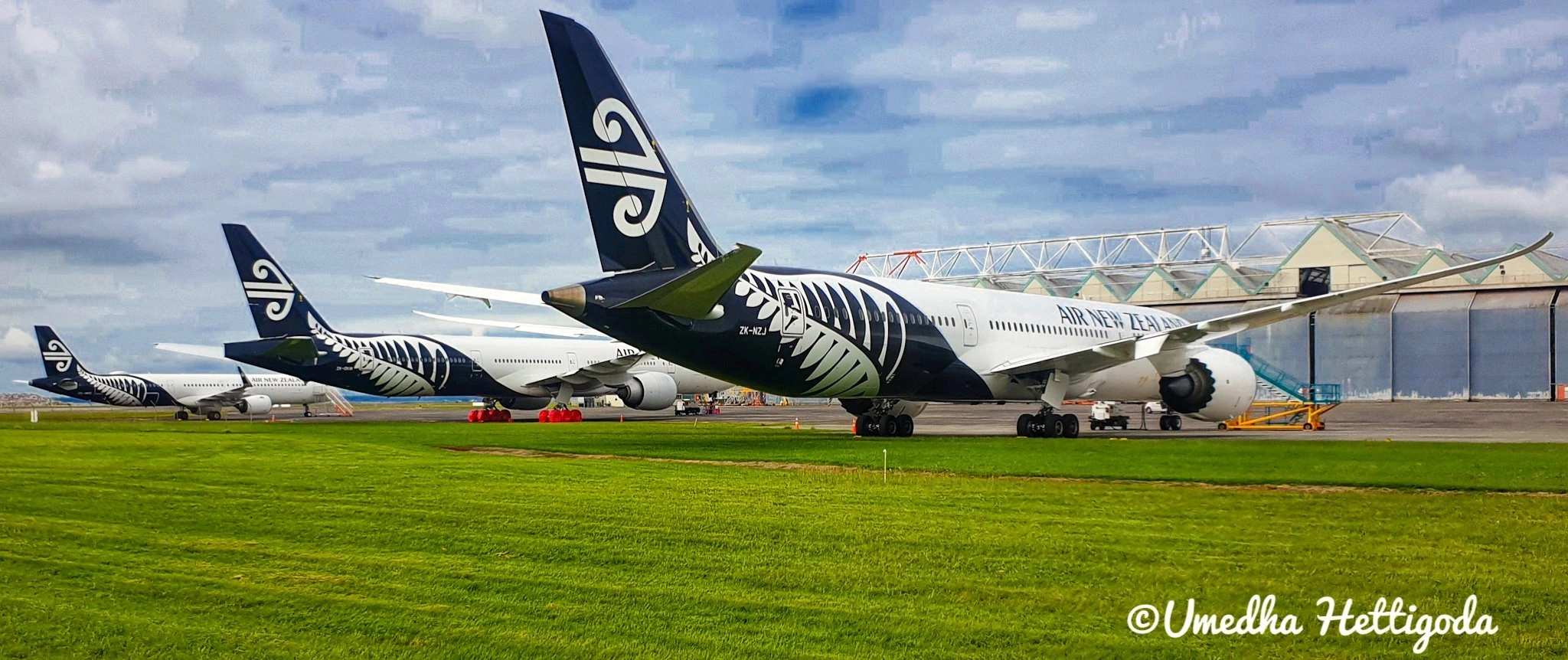
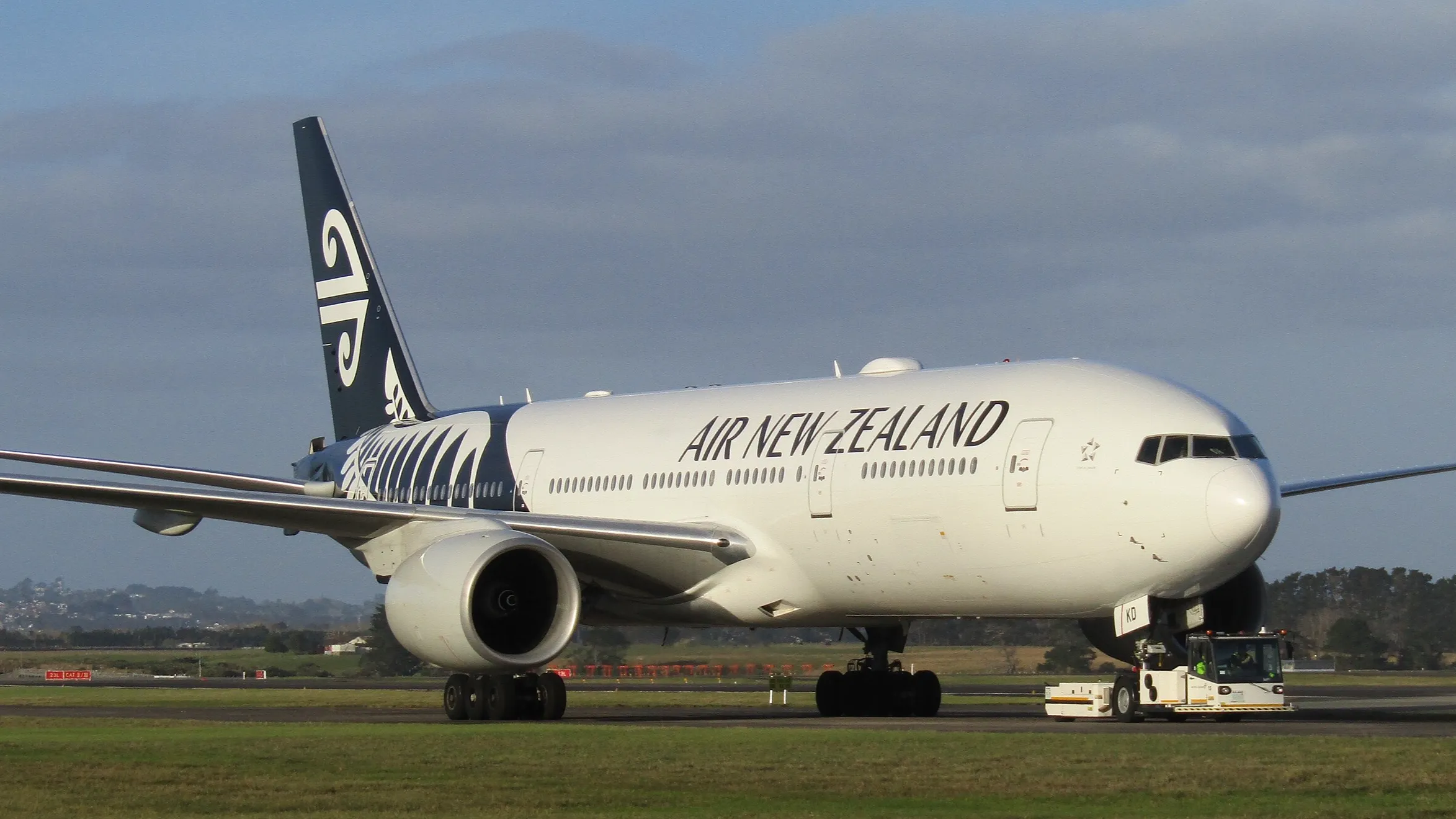
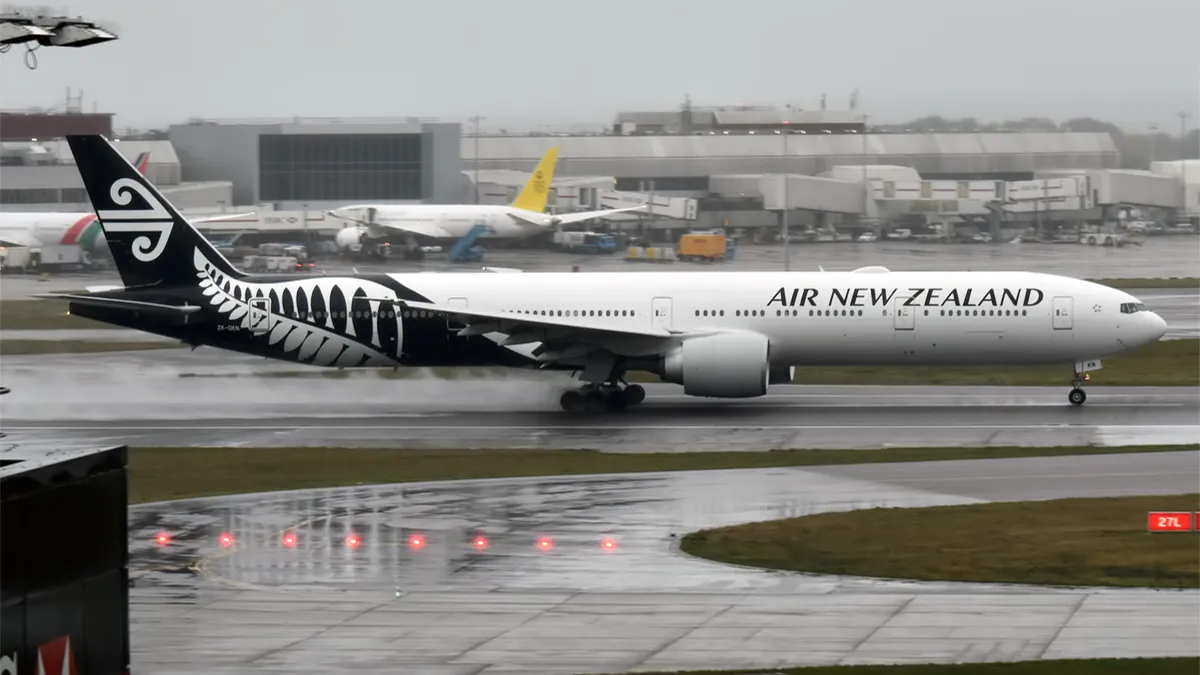
Air New Zealand operates a fleet of around 115 aircraft, comprising wide-body Boeing 777s and Boeing 787 Dreamliners on long-haul international routes, alongside narrowbody jets for shorter sectors. The Boeing 787-9, which forms the backbone of the airline’s long-haul operations, has a maximum range of approximately 14,140 kilometres — sufficient to operate a nonstop Auckland–Delhi sector with appropriate payload management.
Air New Zealand has been expanding its Boeing 787 deployment aggressively in 2026, including new services from Christchurch International Airport (CHC) to Singapore Changi Airport (SIN) and other Asia-Pacific points. The airline is also deploying a newly configured 219-seat Boeing 787-9 on proving routes ahead of long-haul assignments.

.jpg)


.jpg)