Millions of people dream of flying an aircraft, but few understand the licensing framework that separates a weekend hobby pilot from a professional airline captain. The two most important licences on that journey are the Private Pilot License (PPL) and the Commercial Pilot License (CPL) and confusing the two — or underestimating the gap between them — is one of the most common mistakes aspiring aviators make. This article explains what each licence is, who issues it, what training it requires, what it permits, and how it fits into the broader career path toward the flight deck of a commercial airline.
The stakes for getting this right have never been higher. Boeing’s 2025 Pilot and Technician Outlook projects a global demand for 660,000 new qualified pilots through 2044. The supply gap is widening fastest in 2026, with one analysis estimating a shortfall of 24,000 pilots this year alone. For anyone considering aviation as a career, the PPL and CPL are the first two rungs on the ladder.
What A Private Pilot License (PPL) Is and What It Lets You Do
A Private Pilot License is the entry-level certification that authorizes the holder to fly an aircraft for personal, non-commercial purposes. The PPL is issued by the civil aviation authority of each country — the Federal Aviation Administration (FAA) in the United States, the European Union Aviation Safety Agency (EASA) across Europe, and equivalent bodies in other jurisdictions. In every case, the certificate confirms that the holder has met minimum standards of aeronautical knowledge, health, and flying ability.
The key practical constraint of the PPL is that the holder cannot be paid to fly. A PPL holder cannot charge passengers for a flight, cannot work as a commercial charter pilot, and cannot transport cargo for hire. However, the license opens a significant range of legitimate flying activities, including:
- Flying friends and family in single-engine aircraft
- Using a private aircraft for business travel
- Volunteering for charitable aviation missions such as search and rescue or disaster relief
- Towing gliders and unpowered ultralights for limited remuneration
- Working as a ground instructor for aviation theory and instrument training
- Pursuing flying as a hobby including balloons, gliders, and powered aircraft
The PPL also serves as a critical precursor to the CPL. The flight hours a pilot logs under PPL count toward the total experience required for a Commercial Pilot License, making consistent private flying one of the most efficient ways to advance a professional aviation career.
FAA PPL Requirements: Age, Hours, And Tests
The FAA governs PPL certification in the United States under Parts 61 and 141 of the Federal Aviation Regulations. To be eligible for a PPL, an applicant must:
- Be at least 17 years of age (16 for glider or balloon ratings)
- Read, speak, and write English to a proficient standard
- Hold a current FAA medical certificate
- Log a minimum of 40 hours of flight time
That 40-hour minimum breaks down into specific categories, including at least 20 hours of dual instruction with a certified flight instructor, 10 hours of solo flight, 3 hours of cross-country flying, 3 hours of night flying, and 3 hours of instrument training. The applicant must also pass a written knowledge examination and a practical skills test (the checkride) with an FAA examiner.
The realistic cost of obtaining a FAA PPL in 2026 ranges from $10,000 to $18,000, depending on the school, aircraft type, and location. Most students complete the training in 60 to 75 hours rather than the 40-hour minimum, because the regulatory floor sets an ideal rather than an average. The written knowledge test has a pass rate of approximately 92%, while the practical checkride passes roughly 75% of candidates on their first attempt.
EASA PPL Requirements: How Europe Differs
Under EASA Part-FCL regulations, the PPL minimum is 45 flight hours rather than the FAA’s 40. The EASA PPL also requires candidates to pass nine theory examinations, each with a minimum pass mark of 75%.
EASA licences are recognised across 35 member states, including the UK (via its own CAA system post-Brexit), Switzerland, Norway, Iceland, and Liechtenstein. This portability makes the EASA PPL the preferred route for pilots intending to build careers in Europe.
The cost of EASA PPL training is broadly comparable to the FAA route, ranging from €10,000 to €18,000. As with the FAA path, most candidates complete training in 60 to 70 hours regardless of which regulatory framework they train under. The most important difference between the two systems is the theory examination structure: EASA requires more formal academic assessment at every stage of the licensing ladder.
What A Commercial Pilot License (CPL) Is and What It Permits
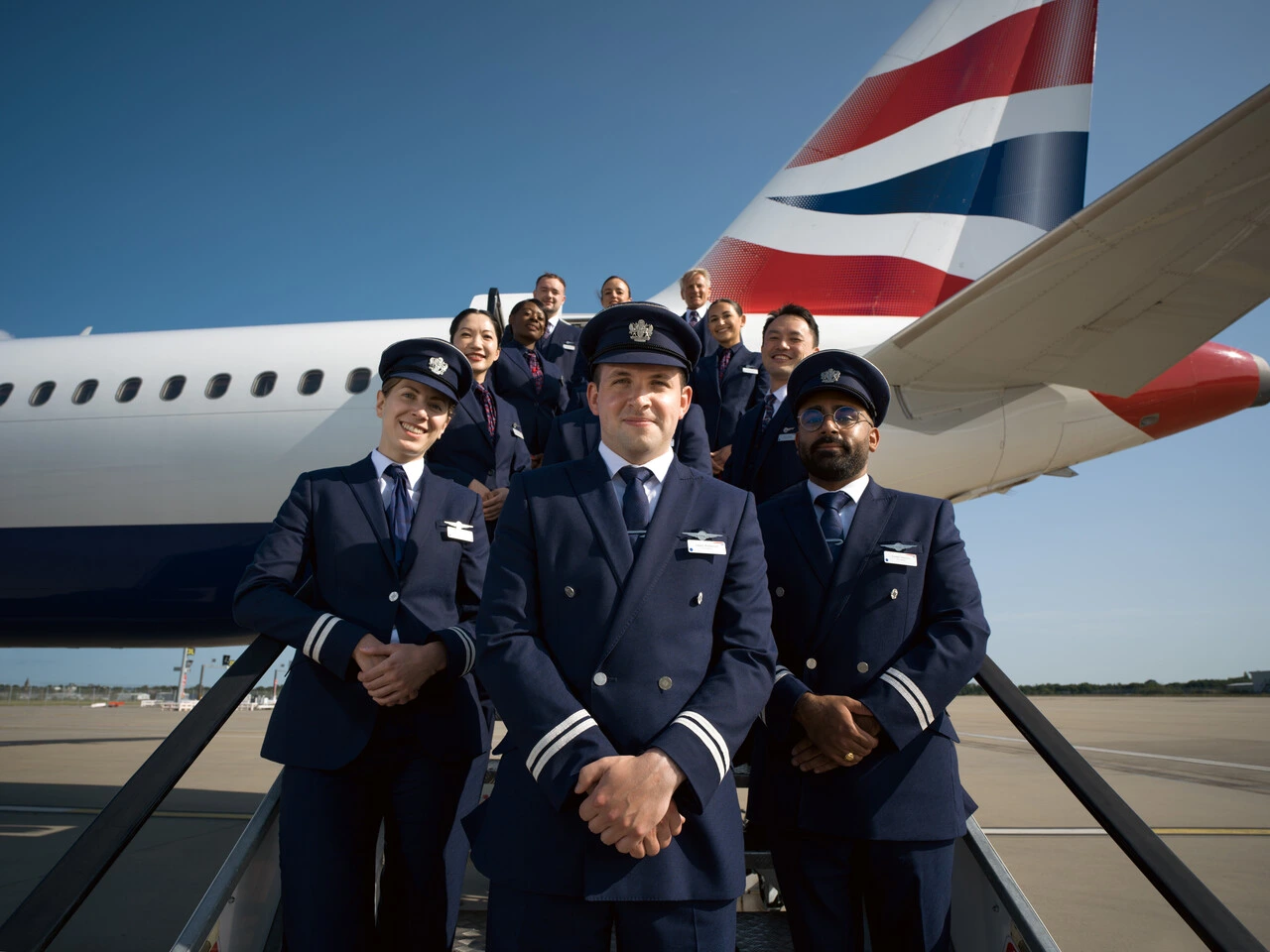
A Commercial Pilot License is the certification that authorizes a pilot to receive compensation for flying. The CPL is issued by the relevant national civil aviation authority and allows the holder to act as pilot-in-command of an aircraft for compensation or hire. This is the license that transforms a flying enthusiast into a professional aviator.
With a CPL, a pilot can legally:
- Transport passengers on charter or scheduled services
- Fly cargo on behalf of operators or freight companies
- Work as an aerial survey, banner towing, or crop-dusting pilot
- Fly for television or radio stations conducting traffic or news coverage
- Work as a certified flight instructor (CFI) to build hours while being paid
- Act as a co-pilot on multi-crew commercial aircraft operations
The CPL comes with significantly higher training requirements, medical standards, financial investment, and practical skill demands than the PPL. It is not the highest pilot certification — that distinction belongs to the Airline Transport Pilot License (ATPL) — but it is the essential gateway to the airline industry.
FAA CPL Requirements: Flight Hours, Medical, And Examinations
Under FAA regulations, a Commercial Pilot Certificate requires a minimum of 250 total flight hours, including at least 100 hours as pilot-in-command and at least 50 hours of cross-country flight. The applicant must also hold a PPL, be at least 18 years of age, pass a commercial pilot knowledge test, and hold an FAA second-class or first-class medical certificate.
The practical skill demands at CPL level are considerably more advanced than at PPL. Candidates must demonstrate commercial manoeuvres including steep turns, chandelles, and precision landings on complex multi-engine aircraft. The oral and flight examination tests both aeronautical knowledge and cockpit proficiency under realistic operating conditions.
Total training costs for an FAA CPL in 2026 typically run $50,000 to $100,000 when all ratings and experience-building costs are factored in. The training timeline from zero hours to CPL — including the PPL, instrument rating, and hour-building — typically spans 12 to 18 months on a full-time programme or 24 to 36 months part-time.
EASA CPL Requirements Have Lower Hours but More Theory
EASA CPL requires 200 total flight hours, including at least 100 hours as pilot-in-command. This is a lower threshold than the FAA’s 250-hour requirement, but it comes paired with a more demanding theory burden: EASA CPL candidates are typically expected to pass 14 ATPL theory examinations. These exams — covering subjects including meteorology, navigation, flight performance, aircraft systems, and air law — must each be passed with a score of at least 75%. All subjects must be passed within an 18-month window from the date of the first attempt.
The EASA CPL is obtained either through an integrated training programme (where students train from zero hours to CPL in a single unbroken course at one school) or a modular route (where students build each licence and rating independently at their own pace). Integrated programmes typically cost between €50,000 and €140,000 and take 18 to 24 months full-time. Modular routes are considerably cheaper but require greater self-discipline and typically take longer.
The Key Differences Between PPL And CPL At a Glance
| PPL | CPL | |
|---|---|---|
| Purpose | Personal / recreational flying | Professional / paid flying |
| Minimum age (FAA) | 17 years | 18 years |
| Minimum flight hours (FAA) | 40 hours | 250 hours |
| Minimum flight hours (EASA) | 45 hours | 200 hours |
| Theory examinations (EASA) | 9 subjects | 14 ATPL subjects |
| Medical certificate required | Class 2 | Class 1 |
| Can fly for compensation? | No | Yes |
| Typical cost (FAA/USD) | $10,000–$18,000 | $50,000–$100,000 (all-in) |
| Typical cost (EASA/EUR) | €10,000–€18,000 | €50,000–€140,000 |
| Training duration | 3–6 months | 12–18 months (full-time) |
| Leads to | CPL pathway | ATPL / airline career |