A Lufthansa (LH) Airbus A380 superjumbo operated as Flight LH459 from San Francisco International Airport (SFO) to Munich Airport (MUC) was forced to divert to Boston Logan International Airport (BOS) in the early hours of 12 June 2026 after a passenger physically attacked a seatmate, according to a statement by the Massachusetts State Police. The aircraft, registration D-AIMM, had 508 people on board at the time of the incident and was flying over central Canada when the crew took the decision to abandon the transatlantic crossing.
Lufthansa confirmed the diversion in a statement, saying the stop was necessitated by “an unruly passenger who posed a threat to the safe continuation of the flight.”, Boston Globe flagged. The passenger was taken into custody by security authorities at Boston Logan after the aircraft landed safely. The A380 refuelled, had the passenger and their luggage removed, and then continued on to Munich.
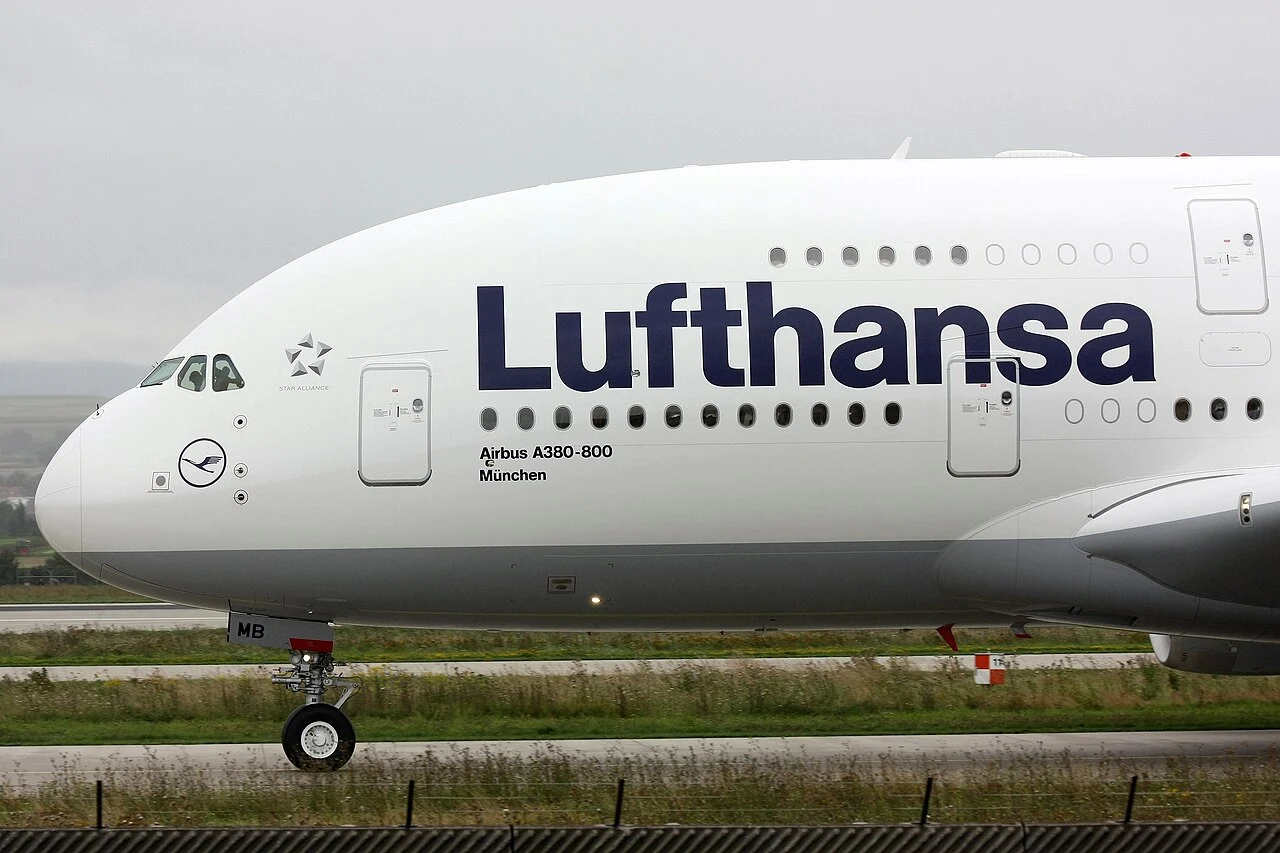
Flight LH459: The Route, The Aircraft, And What Went Wrong Over Canada
Lufthansa Flight LH459 departed SFO at approximately 10:39 pm local time on 10 June 2026, more than an hour behind its scheduled 9:05 pm departure time. The flight operates the San Francisco–Munich nonstop, a route that takes roughly 11 hours eastbound and follows a polar path over Canada, which is the shorter transatlantic track.
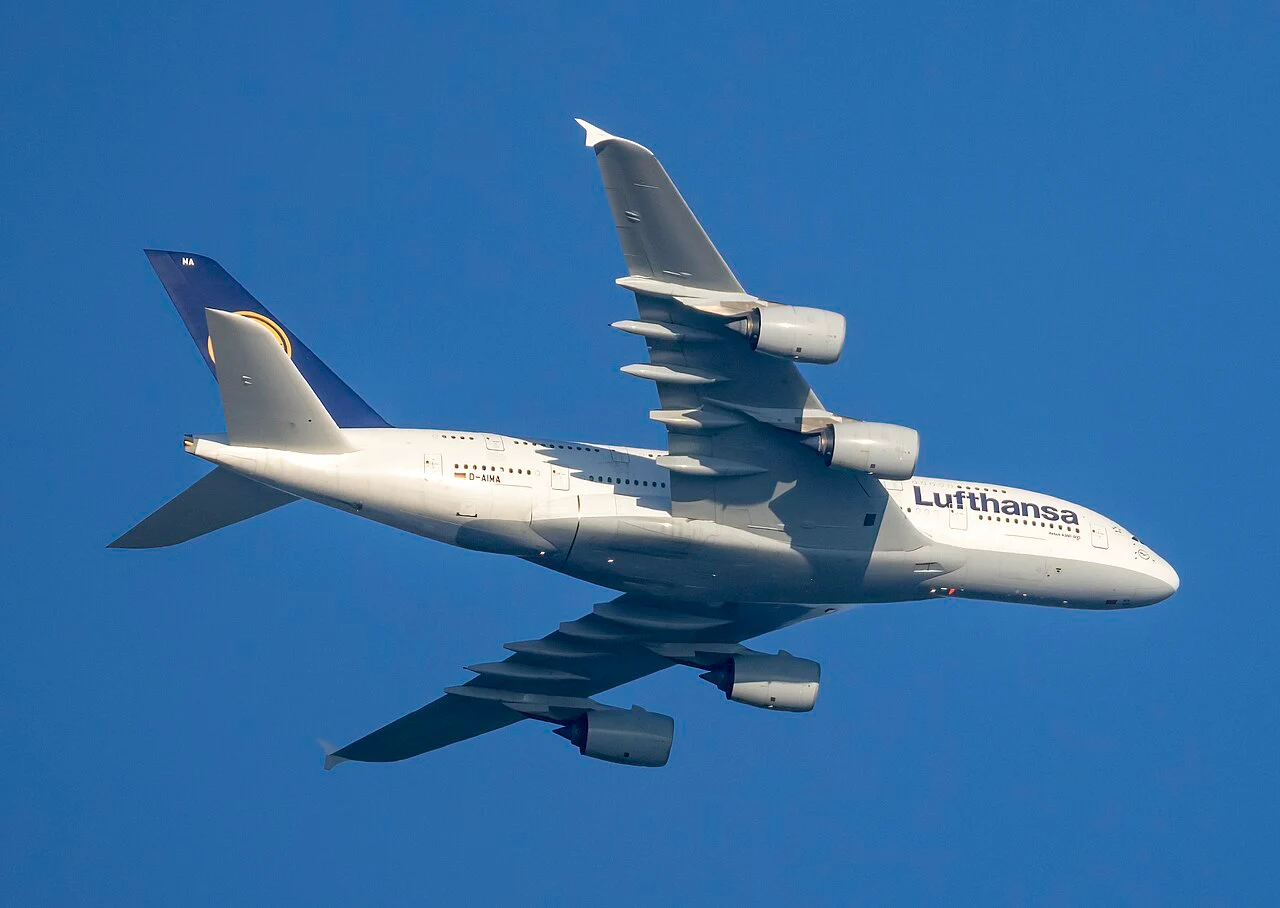
The aircraft was a Lufthansa Airbus A380-800, registration D-AIMM. According to data from planespotters.net, the aircraft has a Manufacturer Serial Number (MSN) 175, was built in Toulouse, France (TLS) and first flew under the test registration F-WWSP. At 11.6 years old, the aircraft remains in active service.
It was delivered to Lufthansa in March 2015 and registered as D-AIMM. Powered by four Rolls-Royce engines, the aircraft was configured with 8 First Class, 78 Business Class, 52 Premium Economy, and 371 Economy Class seats upon delivery.
The A380, which was named “Delhi” until April 2024, was ferried from Airbus Hamburg Finkenwerder Airport to Frankfurt Airport on March 14, 2015, following delivery. During the COVID-19 pandemic, it was withdrawn from service and stored at Frankfurt from April 10, 2020, before being moved to Teruel Airport for long-term storage on June 1, 2021. The aircraft returned to service on June 13, 2023, and continues to operate within Lufthansa’s fleet.
Flight tracking data shows the aircraft climbed to its cruising altitude of 35,000 feet and proceeded normally for roughly three hours, crossing out of US airspace and deep into northern Ontario.
At that point, the crew received reports that an unruly passenger was attacking a seatmate. Flight attendants restrained the passenger. However, the pilots judged that the passenger still posed a threat to the safe continuation of the flight and initiated a diversion. Tracking data shows the aircraft was initially vectored toward Chicago O’Hare International Airport (ORD) but ultimately diverted to Boston.
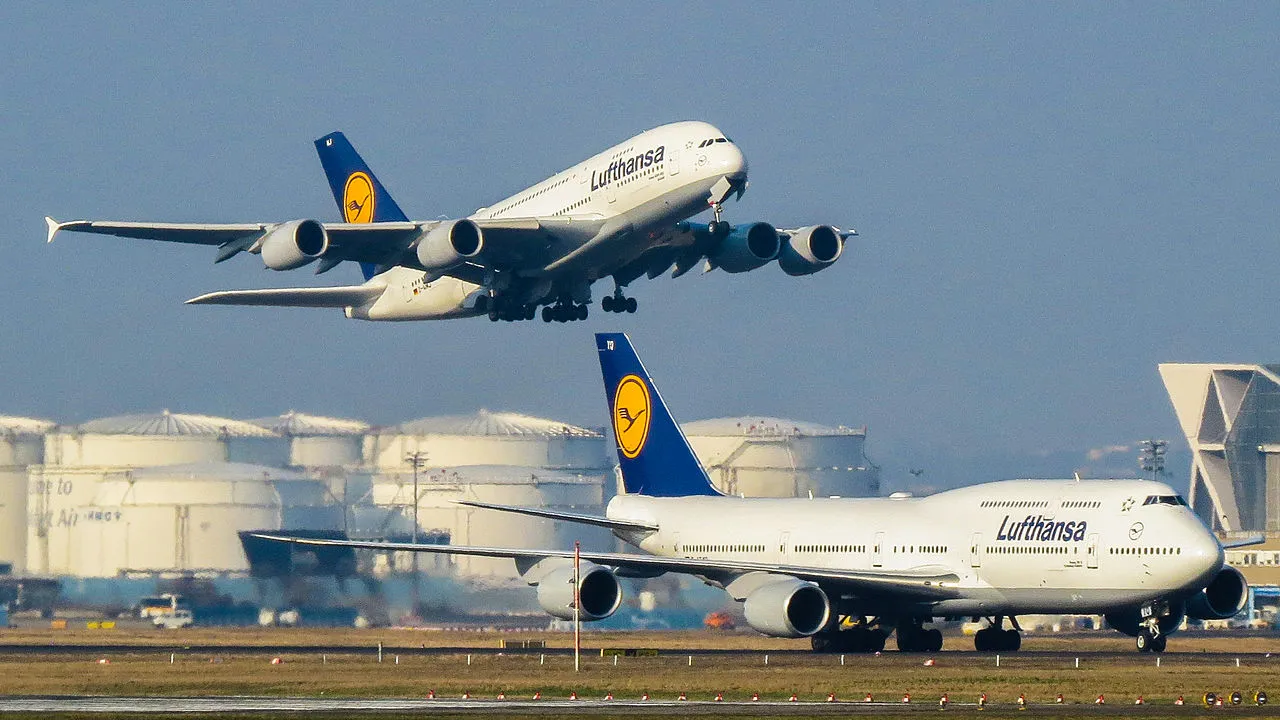
Why Boston Was Chosen as the Diversion Airport
The choice of Boston Logan was not arbitrary. The Airbus A380 requires airports with specific infrastructure — including long runways, heavy-duty taxiways, and the right gate facilities — which severely limits diversion options over the wilderness of central Canada. Boston is a regular Lufthansa A380 destination. The airline operates its superjumbo on the Munich–Boston route during the summer season, which means BOS has the handling infrastructure in place for the type.
NBC Boston reported, citing Massachusetts State Police, that the passenger had been handcuffed to their seat before landing. Once on the ground, the Boston Globe identified the alleged attacker as a female passenger. The State Police have not released the suspect’s name, and it was unclear at the time of publication whether charges would be formally pursued.
Diverting an aircraft the size of an A380 is an operationally complex and expensive decision. Industry estimates place the cost of such diversions at hundreds of thousands of dollars when accounting for fuel burn, crew time, ground handling fees, and passenger rebooking costs. Despite the disruption, passengers on board were not eligible for EU 261/2004 compensation because the delay was caused by extraordinary circumstances — a passenger conduct incident — rather than an airline operational failure.
The aircraft departed Boston at approximately 10:30 am local time on 12 June 2026 and continued to Munich, arriving several hours late.
What The LH459 Passengers Are Entitled To
Under European Union Regulation EC 261/2004, which applies to Lufthansa as an EU-based carrier, passengers may claim compensation for significant delays on departure. However, airlines are exempt from compensation obligations when a delay is caused by extraordinary circumstances that could not have been avoided even if all reasonable measures had been taken.
An assault by a passenger is generally classified as an extraordinary circumstance. Lufthansa confirmed the flight continued to Munich after refuelling and the passenger’s removal, meaning the delay was incurred entirely as a result of the incident rather than an operational shortcoming. Passengers on LH459 were therefore not entitled to fixed EU 261 compensation payments for the disruption.
Airlines do, however, retain a duty of care under EU 261, which requires them to offer meals, refreshments, and accommodation where a delay exceeds a certain threshold. As the aircraft made a technical stop rather than cancelling the flight, passengers remained on the routing to Munich.

.jpg)
