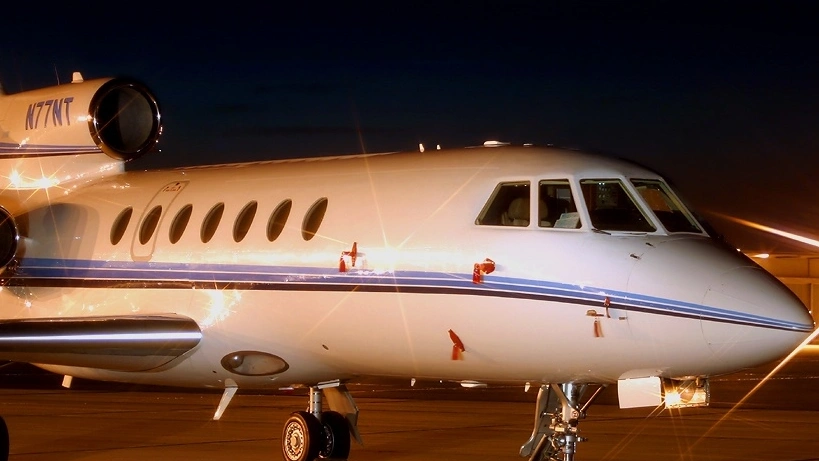
On June 12, 2026, Pope Leo XIV’s chartered Iberia Airlines (IB) flight failed to depart from Tenerife Norte-Ciudad de La Laguna Airport (TFN) due to an engine malfunction. King Felipe VI of Spain, who was present at the farewell ceremony, personally escorted the Pope off the aircraft and offered his government Dassault Falcon 900B to fly the pontiff to Rome. The Pope and his core delegation departed more than three hours behind schedule, marking an extraordinary and unprecedented end to a week-long apostolic journey.
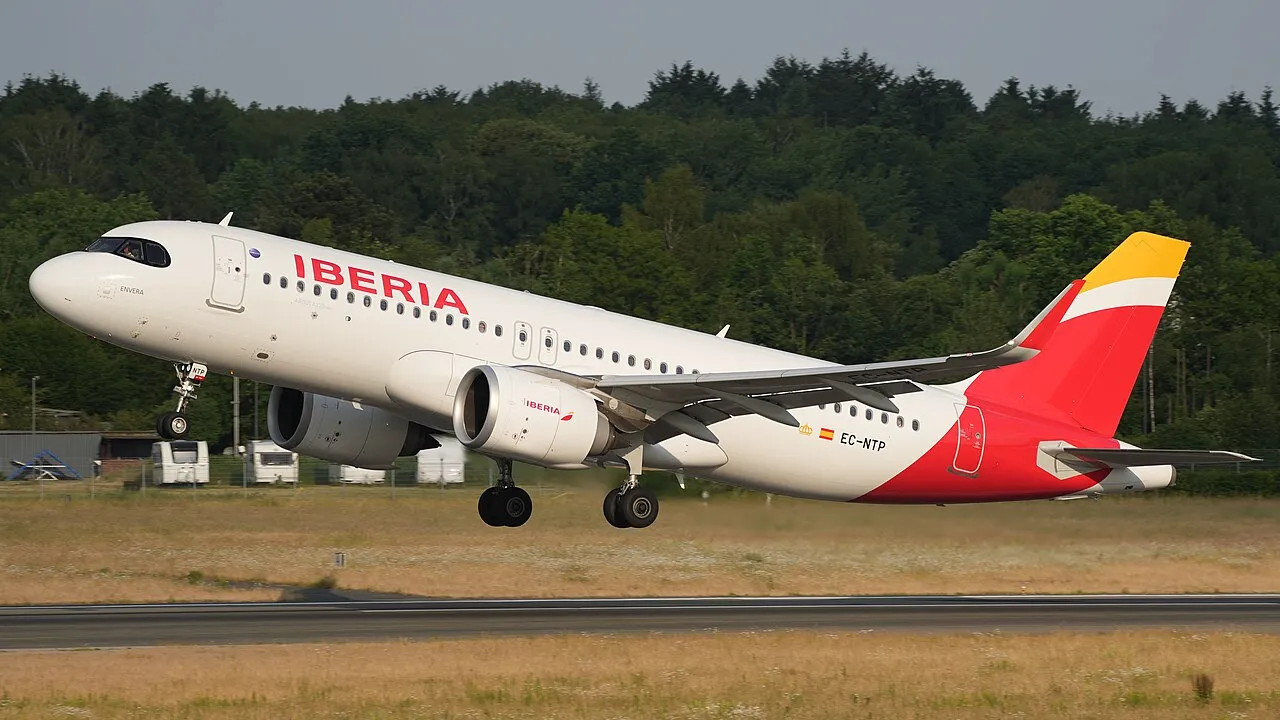
The incident occurred on flight IB1477, operated by an Airbus A320-200 registered EC-MDK, which was scheduled to depart at 15:20 local time. The Iberia pilot announced that strong headwinds had caused an engine failure, ncronline.org reported. After repositioning the aircraft to face the wind and attempting a restart, ground staff brought back the boarding stairs and all passengers disembarked. This was the first time in decades that a papal flight experienced a problem so serious that it required the Pope to change planes.
The Engine Failure That Grounded Flight IB1477
Flight IB1477 was scheduled to depart at 15:20 local time. According to the flight commander, pilots noted that one of the engines was not functioning as expected while the aircraft was preparing to move toward the runway.</cite>
The Iberia pilot announced that strong headwinds had caused an engine failure. After the plane changed position and again attempted to start the engine, staff announced that everyone onboard would need to disembark.</cite>
After the problem was detected, the aircraft’s boarding stairs were repositioned and the Pope was escorted back to the airport’s VIP lounge by King Felipe VI, who had just completed the official farewell ceremony. Senior Vatican officials, including Cardinal Pietro Parolin, also disembarked from the aircraft.
The departure was delayed for a considerable time due to a technical problem with the engine of the Iberia Airbus A320. The aircraft began its takeoff procedures at around 4:15 p.m. local time.</cite>
According to Newsy Today, the flight commander suggested repositioning the aircraft to face the wind to attempt a restart, as a slight tailwind may have contributed to the mechanical fault. The effort failed after more than an hour of waiting on the tarmac.

King Felipe VI Offered the Royal Falcon to the Pope
Leo, meanwhile, escorted by the king, crossed the tarmac to a Falcon jet with “Kingdom of Spain” printed along the side in Spanish. The jet, originally intended to take Felipe back to Madrid, instead carried the pope and members of his entourage to Rome.
Felipe escorted Leo to his Falcon on the tarmac at the airport in Santa Cruz de Tenerife, in the Canary Islands. Leo and members of his delegation boarded the plane and took off, more than three hours after he was originally due to leave.
Vatican News confirmed that the Falcon departed Tenerife shortly after 18:00 local time. It was expected to arrive in Rome at approximately 23:00 local time.
Vatican officials described the king’s gesture as “a gesture of friendship and solidarity.”
According to CNN, the Falcon 900B that carried Pope Leo XIV departed Tenerife Norte-Ciudad de La Laguna Airport on June 12, 2026, with clergy members waving from the tarmac as it took off. Iberia said it was sending another plane from Madrid to fetch the Vatican officials and journalists who were not with Leo on the Falcon.
Inside The Spanish Royal Falcon 900B
The aircraft that stepped in to carry Pope Leo XIV was a Dassault Falcon 900B, operated by the Spanish Air and Space Force. The Falcon 900B is a tri-engine business jet built by French manufacturer Dassault Aviation and is widely used for VIP government transport worldwide. Below are the key specifications of the aircraft type:
- Engines: Three Honeywell TFE731-5BR-1C turbofan engines, each producing 4,750 lbs of thrust (GlobalAir)
- Range: Approximately 3,450 to 4,000 nautical miles (GlobalAir)
- Cruise Speed: Mach 0.80, maintaining efficiency at altitudes up to 45,000 feet (Jettly)
- Cabin Capacity: 8–12 passengers in executive configuration, up to 19 in high-density seating (Luna Jets)
- Cabin Dimensions: 10.06 m length, 2.34 m width, 1.88 m height (Luna Jets)
- Cockpit Avionics: Honeywell SPZ 8000 flight director, dual FMZ flight management system, Collins ProLine ARINC 429 receivers (GlobalAir)
- Maximum Takeoff Weight: 20,640 kg (Fort Aero)
- Production Period: 1991–1999 (Air Charter Service)
According to Wikipedia, the Spanish Air and Space Force operates the Falcon 900 as part of its VIP transport fleet, alongside aircraft such as the Airbus A330, A310, and A400M. The Spanish Air Force Falcon 900B wears “Reino de España” (Kingdom of Spain) livery on its fuselage.
The Falcon 900B’s trijet design provides redundancy that twin-engine jets cannot offer, making it a preferred choice for missions where engine-out reliability is essential. Its transatlantic range — sufficient to connect Madrid to Washington or Tenerife to Rome with ease — made it fully capable of completing the papal transfer without a fuel stop.

The Airbus A320 EC-MDK: The Aircraft at the Centre of the Incident
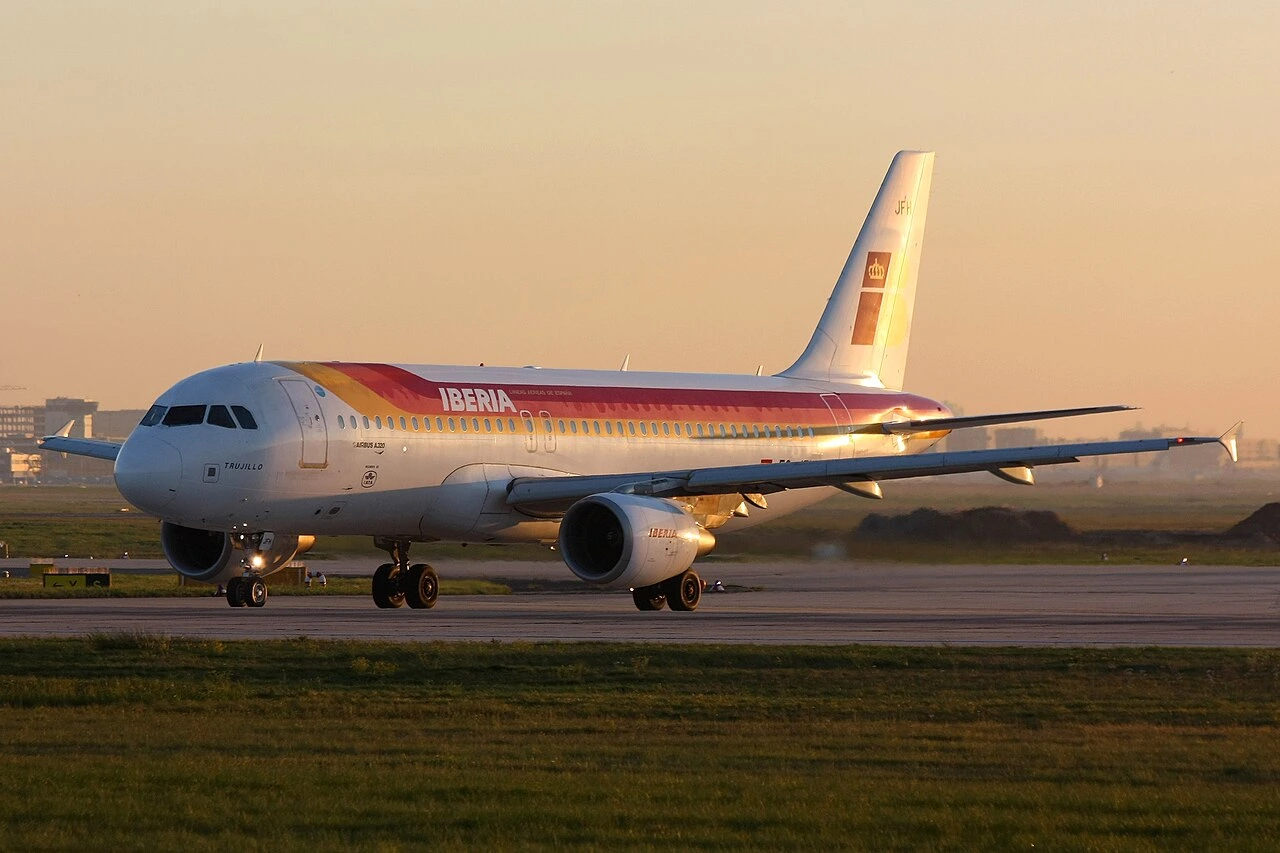
The aircraft that failed to depart was an Airbus A320-214(SL) registered EC-MDK, with manufacturer serial number 6328. According to Plane Finder, the aircraft is approximately 11 years old and is operated by Iberia.
This is not the first time EC-MDK has appeared in safety reports. AeroInside records show that an Iberia Airbus A320-200 with the registration EC-MDK, operating as flight IB-694 from Catania (CTA), Italy to Madrid Adolfo Suárez Madrid-Barajas Airport (MAD), Spain, was previously the subject of a published safety incident report in November 2025. The details of that incident remain behind a subscription paywall.
The Airbus A320 is a narrow-body, single-aisle aircraft and one of the most widely operated commercial jets in the world. It is typically powered by either CFM International CFM56 or IAE V2500 engines. The engine-start failure that grounded the papal flight is an uncommon but documented type of technical fault in commercial aviation operations.
Iberia’s Role In The Papal Visit And Its Response To The Breakdown
Iberia Airlines (IB) served as the official carrier for Pope Leo XIV’s domestic and international legs during his apostolic journey to Spain. Iberia had proudly provided video earlier in the trip of Leo seated in the cockpit, smiling broadly as the plane carried him from Madrid to Barcelona, and then Barcelona to the Canary Islands. In both cases, Spanish military aircraft provided an airborne escort, a sign of respect for visiting dignitaries, and in one clip of the video Leo is seen waving to the escorting pilot.
The airline’s involvement in the papal trip was therefore a matter of national pride. The engine failure on IB1477 came as an embarrassment. An Iberia spokesperson confirmed that the technical problem could not be resolved immediately. <cite index=”12-1″>Iberia said it was sending another plane from Madrid to fetch the Vatican officials and journalists who were not with Leo on the Falcon.
As for the journalists stranded in Tenerife, Iberia sent another plane from Madrid to take them back to Rome, where they arrived in the early hours of Saturday morning.

Iberia’s Recent Parallel News: A Carrier Under Scrutiny
The Tenerife engine failure is not the only notable incident involving Iberia in recent weeks. We had reported on June 5, 2026 — just one week before the papal incident — Iberia’s Airbus A350-900 sustained visible wingtip damage at José Joaquín de Olmedo International Airport (GYE) in Guayaquil, Ecuador. An airport fire truck’s extendable arm struck the aircraft during a ceremonial water cannon salute. The aircraft was operating as flight IB-132 bound for Adolfo Suárez Madrid-Barajas Airport (MAD). The flight was cancelled to allow maintenance engineers to conduct a full structural assessment.
Earlier, in November 2025, Iberia also disclosed a significant cybersecurity incident. Iberia notified affected customers that a third-party supplier had suffered unauthorised access to its systems, exposing customer names, email addresses, and Iberia Club loyalty card identification numbers. The airline said no financial data or passwords were compromised.
Euronews also reported that Iberia suspended its direct Madrid–Havana route at least until November 2026, affecting a historically significant air link between Spain and Cuba.

Past Papal Flight Disruptions
Veteran Vatican reporters recalled a few plane-related incidents during the pontificate of St. John Paul II. During a 1986 return trip from India, John Paul’s plane was forced to land in Naples because of a snowstorm in Rome. The passengers and pope took a special train back to Rome. In 1988 en route to Lesotho, bad weather forced John Paul’s plane to land in South Africa, a country he had excluded from his African trip at the time because of apartheid. He was later driven into the kingdom.
It was the first time in decades that a papal flight had experienced a problem so serious that it required the pope to change planes.
Typically on papal trips, the Italian national carrier ITA Airways brings the pope to his destination and that country’s national carrier brings him home, with ITA sometimes doing the round trip if the voyage is particularly long or to a place that doesn’t have the capacity.
For the Spain visit, Iberia assumed the role of the host-country carrier. The breakdown of that arrangement placed King Felipe VI in an unexpected but historically significant position: the first reigning monarch to personally intervene in resolving a papal travel disruption by offering his own aircraft.

Pope Leo XIV’s Apostolic Journey to Spain
The Tenerife engine failure capped a highly symbolic week-long apostolic visit. Pope Leo XIV’s fourth international apostolic journey took him to Madrid, Barcelona, Gran Canaria, and Tenerife from June 6 to 12, 2026. The visit focused on migration, Catholic heritage, and pastoral outreach.
In Madrid, the Pope became the first leader of the Catholic Church to address Spain’s parliament. He spoke on national unity in one of Europe’s most politically polarised nations.
In Barcelona, the Pope celebrated Mass at the Sagrada Família and inaugurated the Tower of Jesus Christ, the crowning feature of Antoni Gaudí’s masterpiece, making it the tallest church in the world. The inauguration coincided with the centenary of Gaudí’s death on June 10.
In Tenerife, he met migrants at the Las Raices camp in Santa Cruz de Tenerife, as he highlighted the plight of those risking their lives on wooden boats to cross the sea from West Africa to Europe. The pope condemned those trafficking migrants, telling them to “stop” and “repent,” adding that they would face “divine justice.”
The glitch marked an unusual end to an otherwise successful trip to Madrid, Barcelona and the Canary Islands.