Spanish flag carrier Iberia Airlines (IB) suffered an embarrassing and costly ground incident on June 4, 2026, when its Airbus A350-900 sustained visible wingtip damage after the extendable arm of an airport fire truck struck the aircraft during a ceremonial water cannon salute at José Joaquín de Olmedo International Airport (GYE), Guayaquil, Ecuador, AeroTime reproted.
The aircraft, operating as flight IB-132 bound for Adolfo Suárez Madrid-Barajas Airport (MAD) in Madrid, Spain, was forced to return to the terminal building, with its scheduled departure subsequently cancelled to allow maintenance engineers to conduct a full structural assessment.
The salute had been arranged by Guayaquil airport authorities to mark the first departure of an A350-900 from GYE, as Iberia had temporarily deployed the type on its Guayaquil–Madrid route (according to Paddle Your Own Kanoo) in place of its usual Airbus A330.
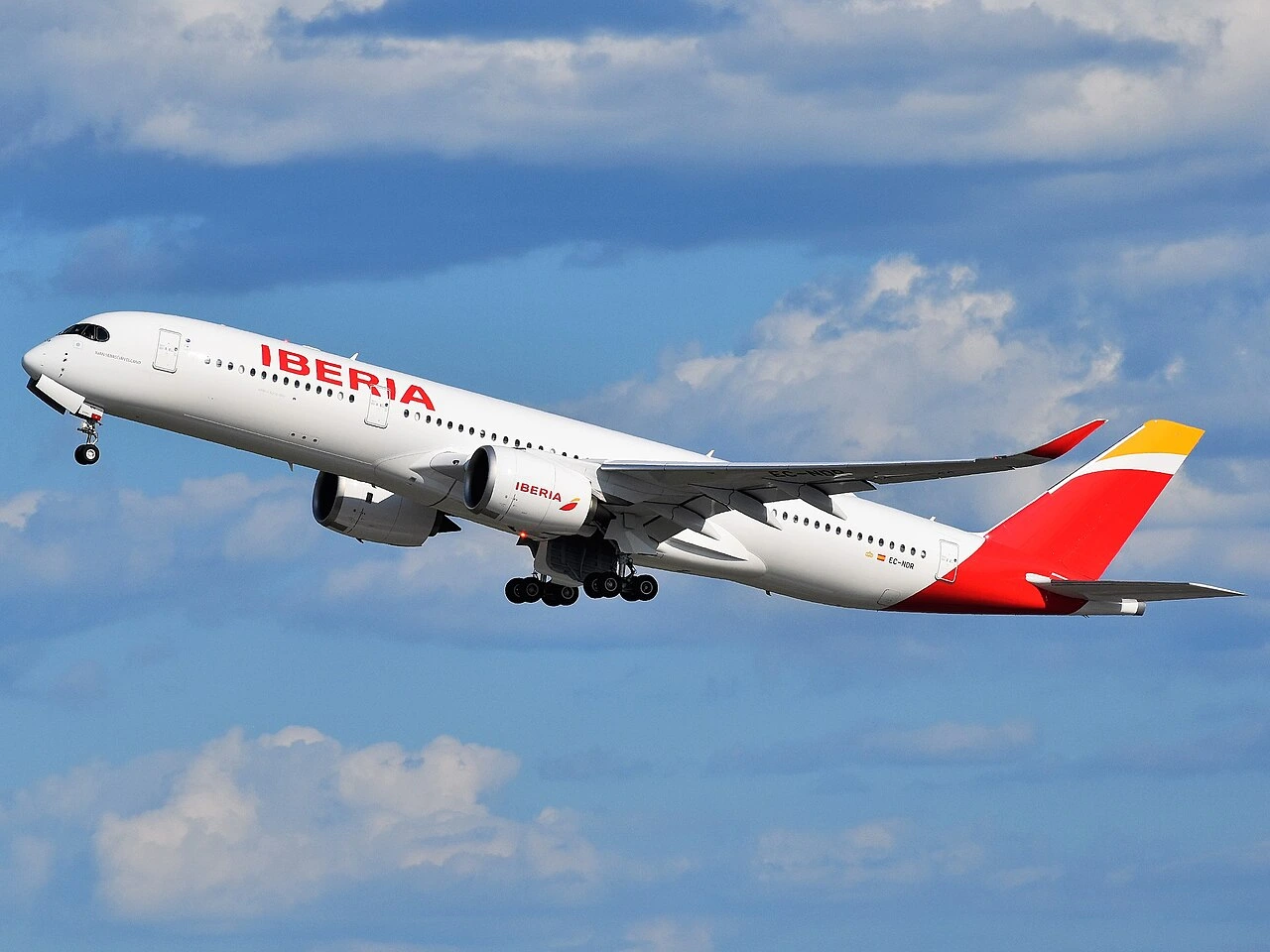
How Iberia’s Celebratory Tradition That Turned into A Costly Mishap
As the A350-900 taxied toward the runway for departure, two fire trucks stationed on either side of the taxiway began spraying arcs of water over the aircraft in the customary fashion. The fire truck on the left side of the aircraft appeared to have been parked too close to the taxiway edge, and as the aircraft moved forward, its wingtip made direct contact with the truck’s extended water cannon arm, leaving a deep groove in the composite wingtip structure.
The flight crew immediately halted the taxi and returned to the terminal. The flight was subsequently cancelled, stranding passengers in Guayaquil while engineers began their assessment.
Footage of the collision was captured both by planespotters positioned at the airfield perimeter and by passengers aboard the aircraft and swiftly circulated across social media platforms. According to The Bulkhead Seat, Iberia moved quickly to provide affected passengers with accommodations, meals, and alternative travel arrangements.
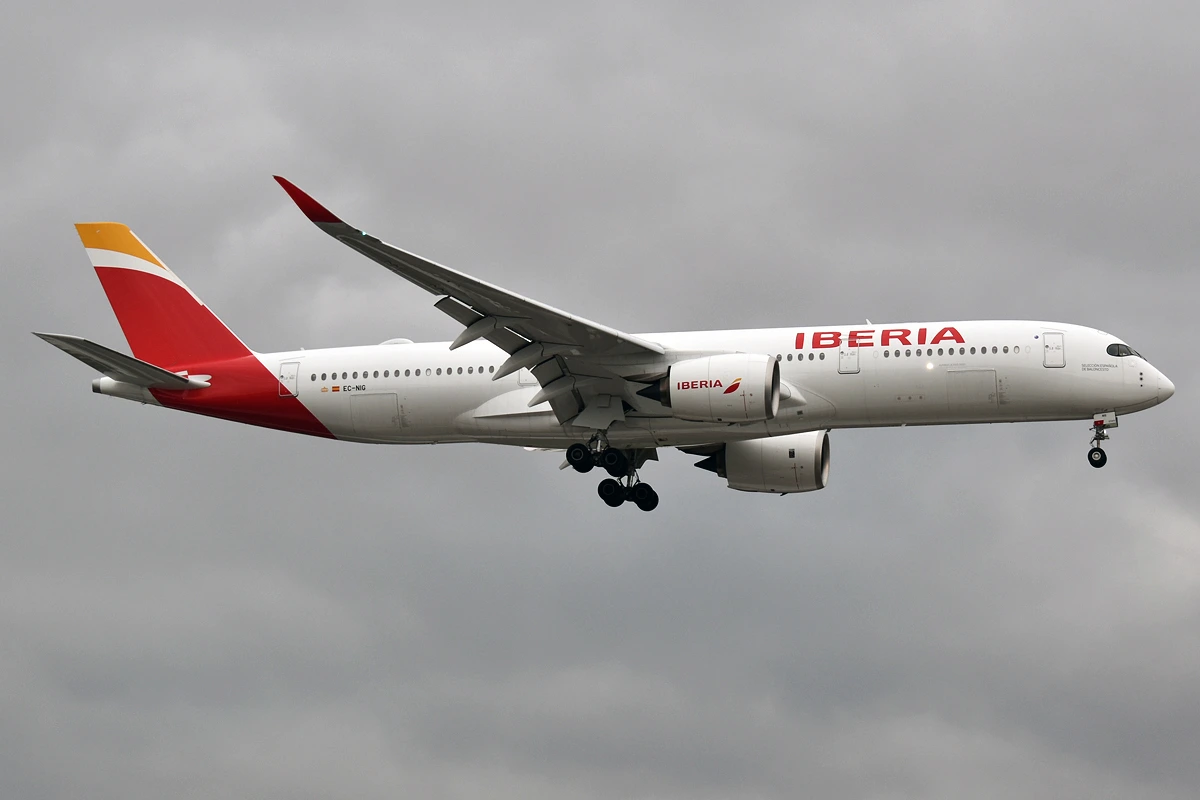
Why The A350’s Composite Construction Makes Even Minor Damage Serious
The Airbus A350-900 is not a conventional aluminium airframe. It is constructed from approximately 53% carbon fibre reinforced polymer (CFRP), making it one of the most composite-intensive commercial aircraft in existence — surpassing even the Boeing 787 Dreamliner, which uses approximately 50% composites by weight.
This material profile, while delivering exceptional fuel efficiency and structural longevity, also means that surface damage cannot be assessed by eye alone; composite structures can sustain internal delamination that is invisible without specialist non-destructive testing.
The aircraft’s wingtip is itself fashioned from carbon fibre composites and integrated seamlessly into the overall wing structure. The A350’s scimitar-shaped winglets extend the effective wingspan without adding to the geometric span and are aerodynamically critical to the aircraft’s performance. Any damage to this structure requires sign-off from Airbus-certified maintenance personnel before the aircraft may return to revenue service.
Key technical specifications of the Airbus A350-900 involved in the incident:
- Wingspan: 64 metres (210 ft) — substantially wider than the A330-200 it replaced on this route (60.3 metres)
- Fuselage material: Over 53% CFRP by structural weight, including wing spars and fuselage panels
- Wingtip design: Carbon fibre composite scimitar-shaped winglets, aerodynamically integrated into the wing
- Range: Up to 14,800 km (approximately 8,000 nautical miles)
- Engines: Two Rolls-Royce Trent XWB turbofans
- Typical seating (Iberia configuration): Approximately 348 passengers across three cabins — Business, Premium Economy, and Economy
- Fuel efficiency advantage: Burns approximately 25% less fuel than comparable previous-generation widebodies
- Entry into Iberia fleet: First unit delivered June 2018
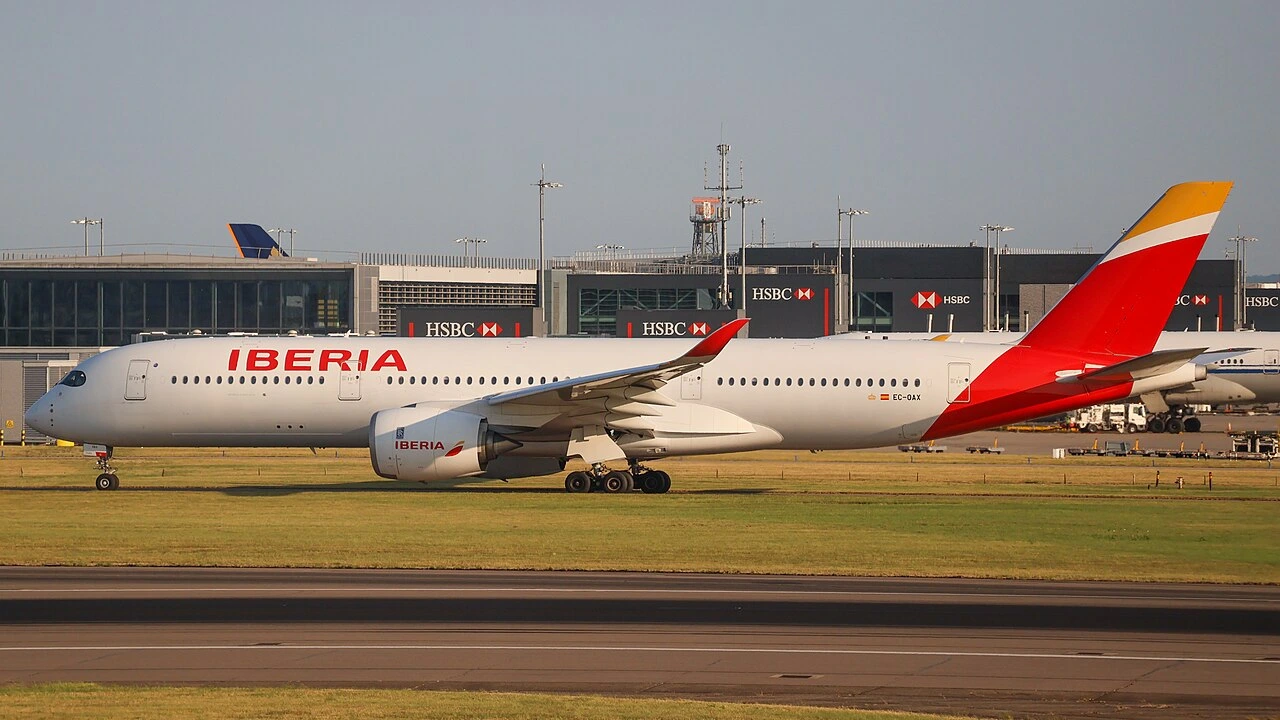
When Water Salutes Go Wrong
The Guayaquil incident joins a broader catalogue of water cannon salute mishaps that have caused aircraft damage or unintended system activations over the years. The most formally documented precedent involved a Saudia (SV) Airbus A320 arriving at Dubai International Airport (DXB) as flight SV566 from Jeddah King Abdulaziz International Airport (JED) in Saudi Arabia.
According to an incident report published on April 11, 2019 by the General Civil Aviation Authority (GCAA) of the UAE, a roof turret malfunction on one of the fire trucks caused a high-pressure water jet to suddenly shift trajectory just as the aircraft passed underneath. The jet opened the left forward over-wing emergency exit hatch, which fell into the cabin.
The left over-wing emergency slide ramp then deployed, and the master warning system sounded — this was the first moment the flight crew became aware that any water salute was taking place at all, as the ceremony had not been communicated to them. One passenger seated next to the emergency exit sustained a minor injury.
The GCAA’s findings highlighted a systemic concern: the process of conducting water cannon salutes is not generally formalised by airlines, airport operators, or airport fire services, leaving the procedure vulnerable to the kinds of equipment malfunctions and coordination failures that have resulted in multiple incidents.

.jpg)
_Iberia_Airbus_A350-941_EC-OAX_@_EGLL_2025-06-17.jpg)