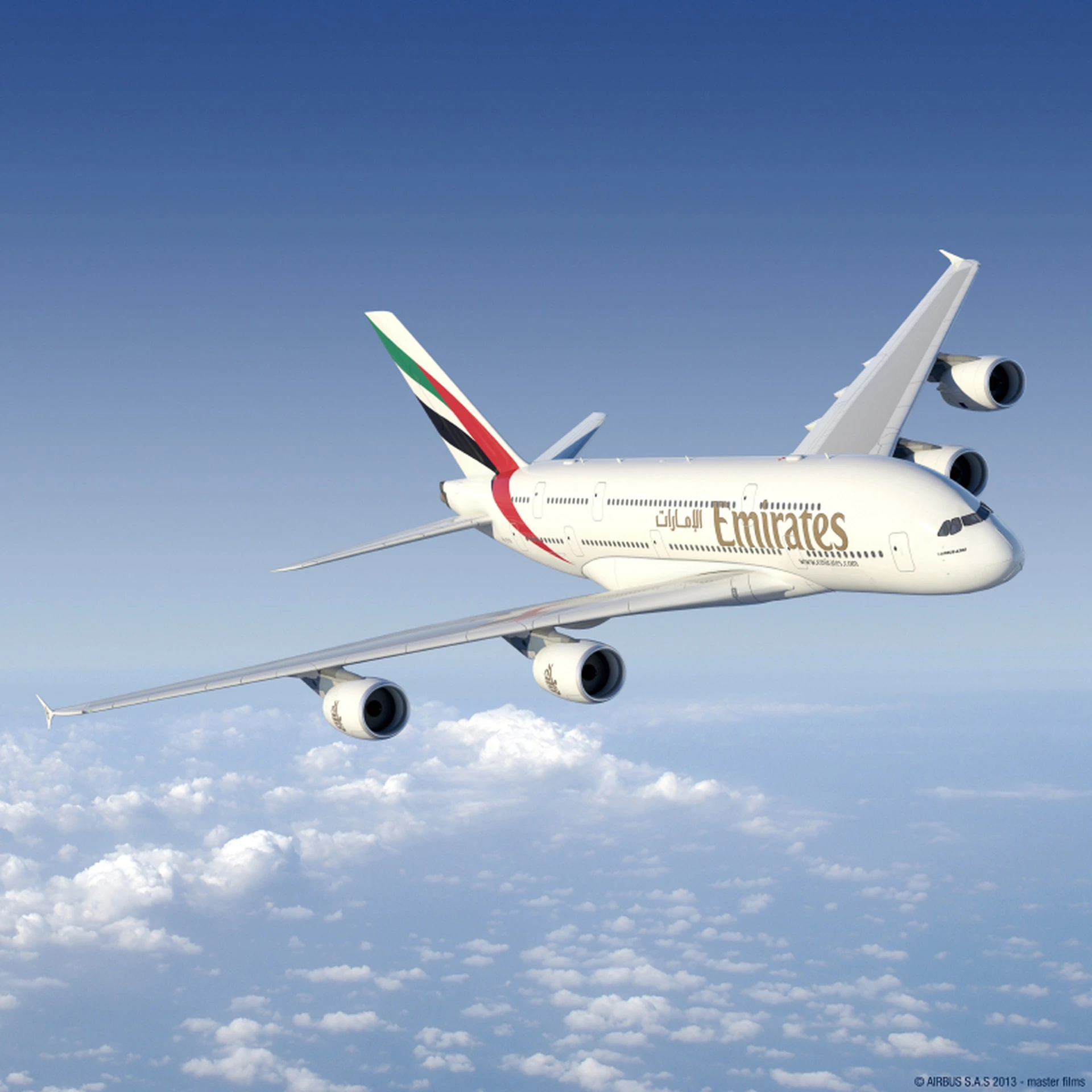
Emirates (EK), the Dubai-based carrier and the world’s largest operator of the Airbus A380, will deploy the double-deck superjumbo to 48 global destinations in July 2026, according to a report published by Simple Flying. The airline will operate approximately 2,139 A380 flights throughout the month, generating around 69 daily departures from its hub at Dubai International Airport (DXB). July’s expanded network adds four destinations that were absent from the A380 schedule in June: Copenhagen, Munich, Manchester, and London Gatwick.
The airline’s July schedule reflects a deliberate recovery from disruptions caused by the regional conflict in the Middle East, which had forced Gulf carriers to restructure operations earlier in 2026. Despite those headwinds, Emirates has steadily rebuilt its A380 network. The July deployment stands as one of the broadest single-month A380 schedules the airline has executed since the conflict began.
A Regional Breakdown of Emirates’ 48 Destinations
Emirates’ July A380 network spans five major geographic regions. The following is the complete list of 48 destinations the airline will serve with the superjumbo during the month, per the airline’s latest scheduling data:
Europe (21 destinations)
- Amsterdam Airport Schiphol (AMS), Amsterdam
- Barcelona–El Prat Airport (BCN), Barcelona (operated by Boeing 777-300ER on select EK185/186 rotations from July)
- Birmingham International Airport (BHX), Birmingham
- Copenhagen Airport (CPH), Copenhagen
- Düsseldorf Airport (DUS), Düsseldorf
- Frankfurt Airport (FRA), Frankfurt
- Istanbul Airport (IST), Istanbul
- London Gatwick Airport (LGW), London
- London Heathrow Airport (LHR), London
- Madrid–Barajas Adolfo Suárez Airport (MAD), Madrid
- Manchester Airport (MAN), Manchester
- Milan Malpensa Airport (MXP), Milan
- Munich Airport (MUC), Munich
- Nice Côte d’Azur Airport (NCE), Nice
- Paris Charles de Gaulle Airport (CDG), Paris
- Rome–Fiumicino Airport (FCO), Rome
- Vienna International Airport (VIE), Vienna
- Warsaw Chopin Airport (WAW), Warsaw
- Zurich Airport (ZRH), Zurich
- Athens International Airport (ATH), Athens
- Edinburgh Airport (EDI), Edinburgh
Asia-Pacific (14 destinations)
- Suvarnabhumi Airport (BKK), Bangkok (3 daily A380 services)
- Kempegowda International Airport (BLR), Bengaluru
- Guangzhou Baiyun International Airport (CAN), Guangzhou
- Hong Kong International Airport (HKG), Hong Kong (2 daily)
- Kuala Lumpur International Airport (KUL), Kuala Lumpur
- Auckland Airport (AKL), Auckland
- Melbourne Airport (MEL), Melbourne (2 daily)
- Perth Airport (PER), Perth
- Shanghai Pudong International Airport (PVG), Shanghai
- Singapore Changi Airport (SIN), Singapore
- Sydney Kingsford Smith Airport (SYD), Sydney (3 daily)
- Narita International Airport (NRT), Tokyo
- Incheon International Airport (ICN), Seoul
- Brisbane Airport (BNE), Brisbane
North America (5 destinations)
- Los Angeles International Airport (LAX), Los Angeles
- John F. Kennedy International Airport (JFK), New York
- Toronto Pearson International Airport (YYZ), Toronto
- Dallas/Fort Worth International Airport (DFW), Dallas
- Washington Dulles International Airport (IAD), Washington D.C.
Middle East & Africa (5 destinations)
- Queen Alia International Airport (AMM), Amman
- Cairo International Airport (CAI), Cairo
- King Abdulaziz International Airport (JED), Jeddah
- Dubai International Airport (DXB) (hub)
- Johannesburg OR Tambo International Airport (JNB), Johannesburg
Indian Subcontinent (3 destinations)
- Chhatrapati Shivaji Maharaj International Airport (BOM), Mumbai
- Indira Gandhi International Airport (DEL), Delhi
- Bandaranaike International Airport (CMB), Colombo
Routes with the Highest A380 Frequencies in July
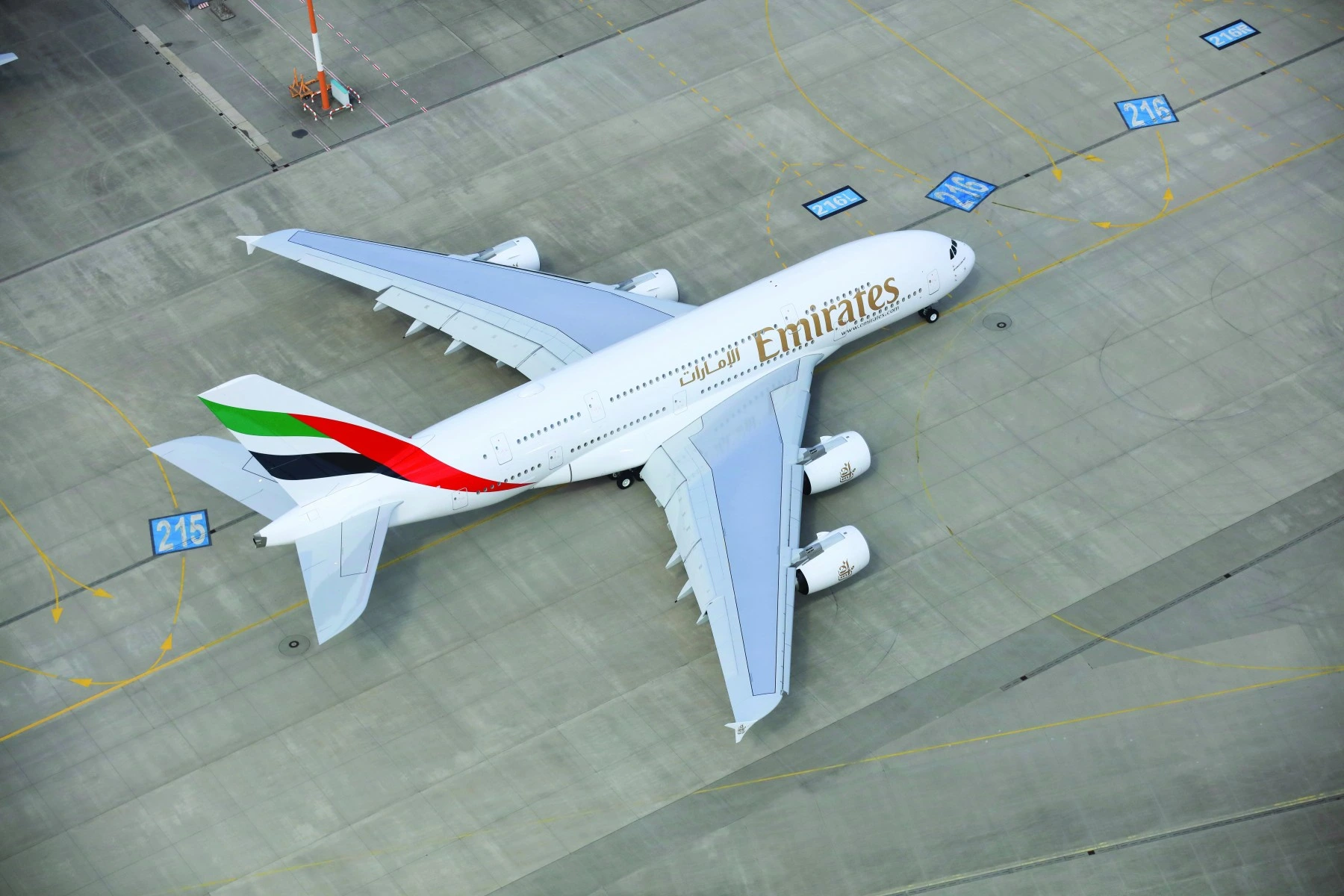
Most A380 routes in July operate at a single daily frequency. A small number of routes receive two or more daily superjumbo rotations. Heathrow and Bangkok lead the network in this regard.
- London Heathrow (LHR): 5 daily A380 departures
- Bangkok Suvarnabhumi (BKK): 3 daily A380 departures
- Sydney (SYD): 3 daily A380 departures
- Paris CDG (CDG): 3 daily A380 departures
- Hong Kong (HKG): 2 daily A380 departures
- Melbourne (MEL): 2 daily A380 departures
- Milan (MXP): 2 daily A380 departures
London Heathrow’s five daily A380 services make it the single largest A380 destination in Emirates’ network by frequency. The route is slot-constrained, making the A380’s high seat count a strategic advantage for maximising passenger throughput per movement.
Routes Reinstated and Routes Downgraded in the July Reshuffle
July’s A380 schedule is not a straight expansion. Emirates announced on June 9, 2026 that it would simultaneously reinstate the aircraft on some routes and withdraw it from others. This is a surgical redistribution of fleet types, not a broad capacity cut.
Routes reinstated with A380 service in July:
- Copenhagen (CPH): returns to 1 daily A380 after 777-300ER operation
- Düsseldorf (DUS): A380 resumes from June 26
- Manchester (MAN): 1 daily A380 reinstated
- Munich (MUC): 1 daily A380 reinstated
- Perth (PER): 1 daily A380 restored
- Washington Dulles (IAD): 1 daily A380 returns
Routes where the A380 was downgraded or replaced:
- Glasgow Airport (GLA): switches to Boeing 777-300ER
- Osaka Kansai International Airport (KIX): switches to Boeing 777-300ER
- Barcelona (BCN, EK185/186): select rotations switch to Boeing 777-300ER
- Cairo (CAI): overall A380 frequency reduced from 3 daily to 2 daily
Aviation information service AeroRoutes, cited by Simple Flying, provided the scheduling data underlying this analysis. The airline itself advises passengers to check the latest Emirates schedule directly, as timetables may continue to evolve in response to the regional situation.
Emirates’ Latest Cabin Configuration Enters Service in July
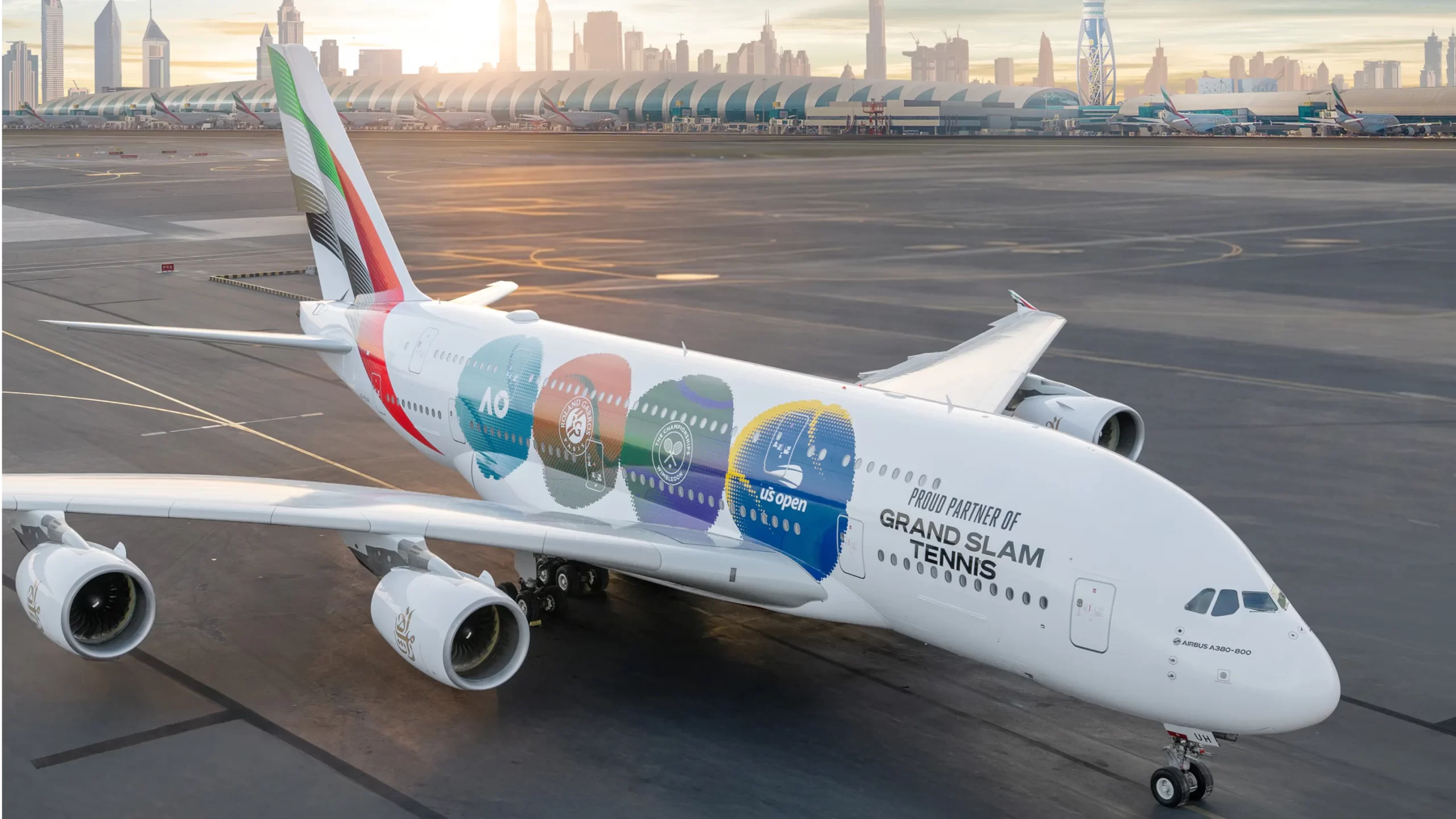
July 2026 also marks the deployment of Emirates’ newest A380 cabin configuration on a wider range of routes. Emirates confirmed on May 20, 2026 that the first of its two-class, 615-seat A380s had been successfully converted to a three-class layout. The retrofitted aircraft, registration A6-EUX, re-entered service on the Dubai–Birmingham route as flight EK39/40 and is now also scheduled on Copenhagen services from July.
The new configuration features the following cabin layout:
- Business Class: 76 seats (up from 58)
- Premium Economy: 56 seats (newly introduced on this variant)
- Economy Class: 437 seats (down from 557)
- Total: 569 seats (down from 615)
The retrofit removed 120 Economy Class seats from the upper deck and replaced them with 56 Premium Economy seats and 18 additional Business Class seats. Total capacity fell by 7.5%, but premium seat count rose significantly. Emirates plans to complete the conversion of all 15 two-class A380s by November 2026.
The retrofitted aircraft is part of a broader $6 billion cabin upgrade programme covering 219 aircraft across the Emirates fleet, including both A380s and Boeing 777s.