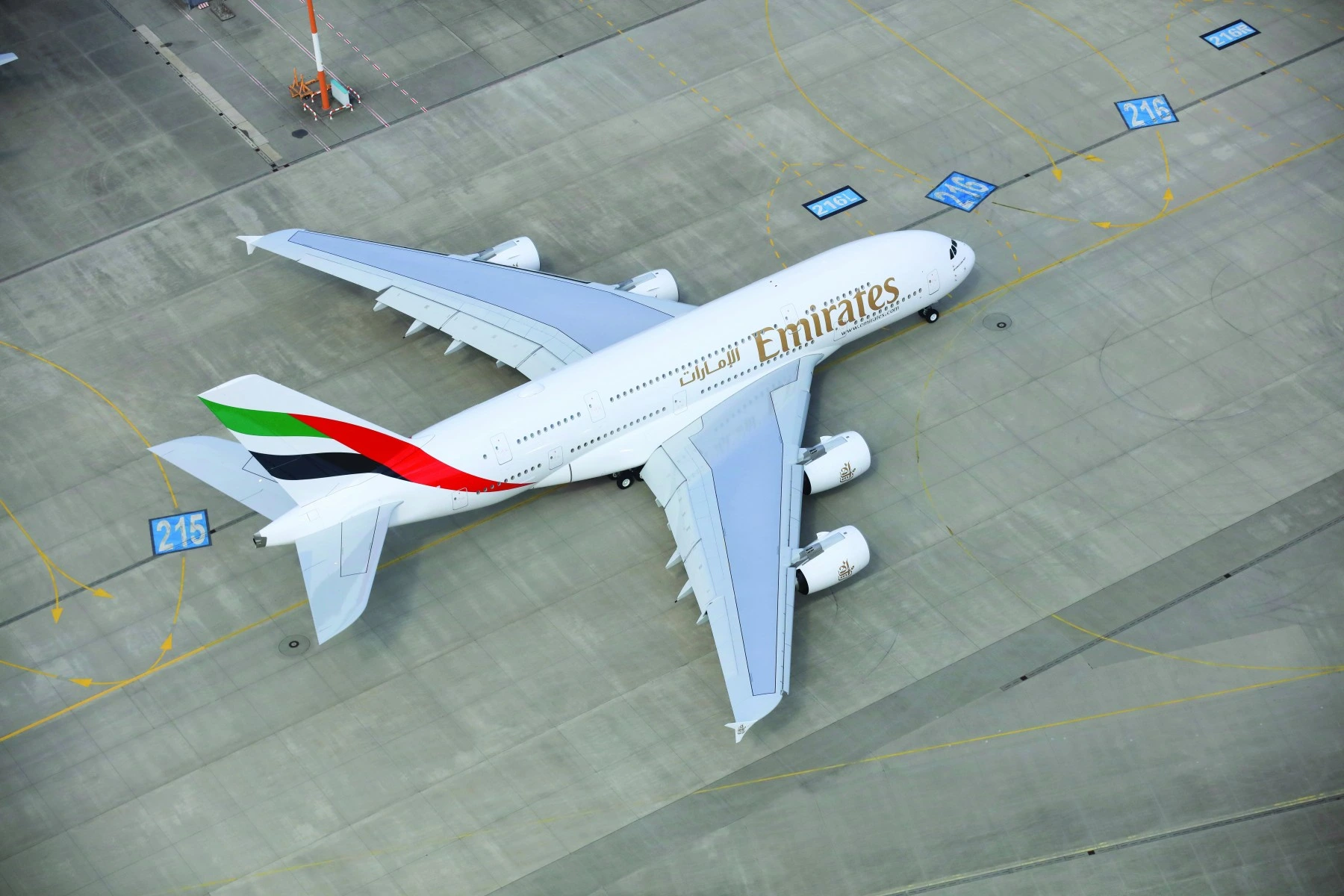
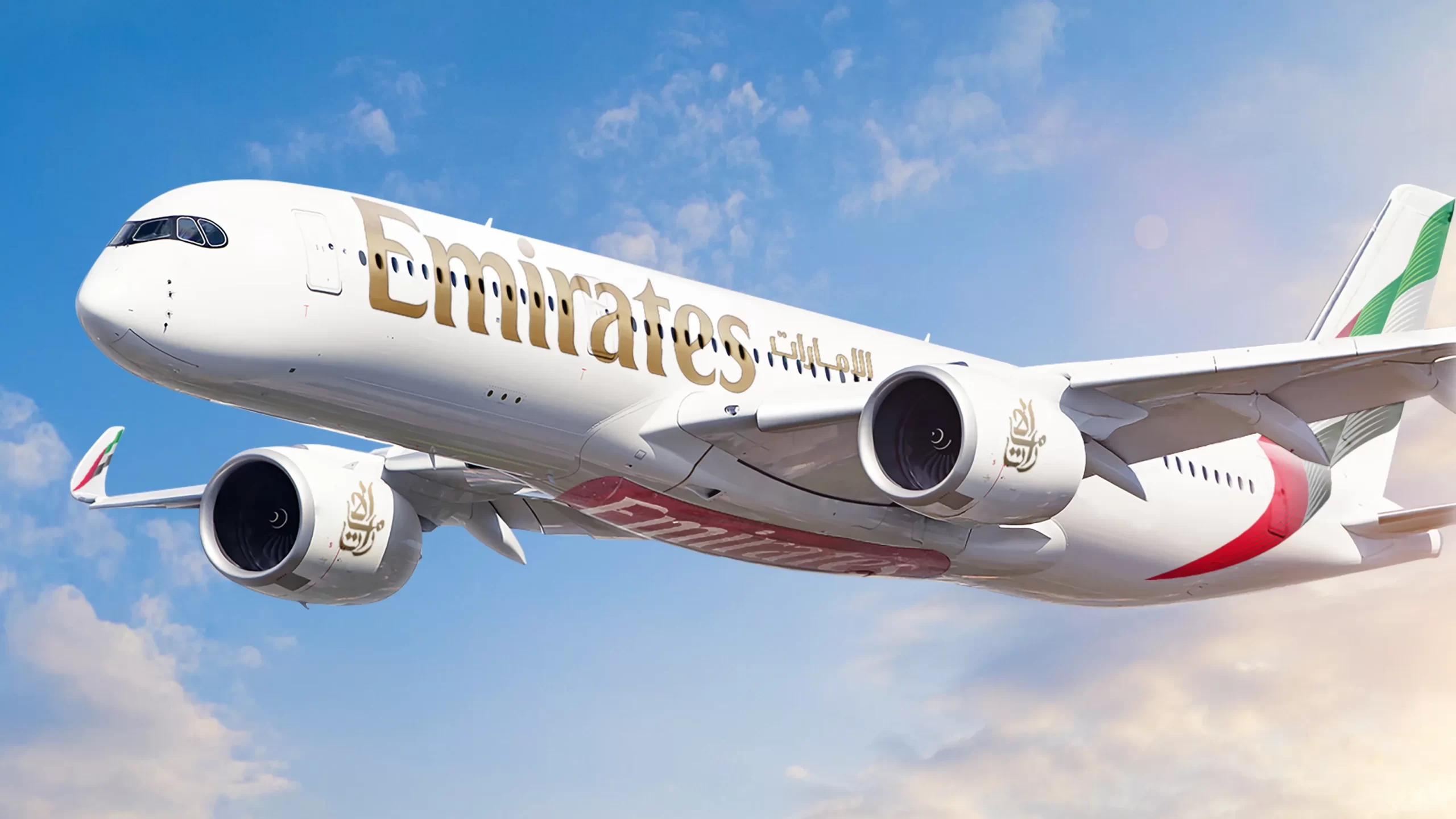
Emirates airline (EK) will roll out a package of incentives aimed at winning back passengers worried about the protracted Iran war (which prompted the carrier to roll out UAE’s flag livery on its A380), focusing on safety assurances and reliable travel connections rather than lower fares. Emirates President Sir Tim Clark made the announcement on 9 June 2026 on the sidelines of an industry summit in Berlin, in what Reuters described as his first interview with a global news agency since the conflict began in late February. The state-backed carrier is committing to maintain its full flight schedules despite rising operational costs, elevated fuel prices, and ongoing airspace restrictions across the Middle East.
The conflict began on 28 February 2026, when the United States and Israel conducted coordinated military strikes on targets inside Iran. Iran responded with retaliatory missile and drone attacks across the wider Gulf region, including strikes targeting the vicinity of Dubai International Airport (DXB). The war has left Emirates operating at around 65% of its pre-conflict capacity, with approximately 13% of the airports in its global network still inaccessible due to ongoing airspace restrictions.
Emirates’ Offers to the Passengers Amid the War
Emirates President Tim Clark confirmed the airline will not compete on price during the current period of conflict-driven uncertainty. Instead, the carrier will offer what Clark described as “all sorts of incentives other than price” to encourage passengers to fly through Dubai again.
In a Reuters report published on 9 June 2026, Clark elaborated on what those incentives would look like. “That could be new means of ensuring their safety of operation, for instance,” he told Reuters journalists at the Berlin Aviation Summit, adding that the airline would also address concerns about cancelled flights and passengers getting stranded.
Clark was explicit that Emirates would rebook stranded passengers onto rival carriers where necessary. “We’ll take care of all of that, including flying them on other carriers if necessary to bring them home or get the kids into school,” he said. The assurance directly addresses one of the most pressing concerns raised by travellers since the conflict began.
Why Emirates Cannot Cut Ticket Prices Right Now
Clark explained the reason Emirates is unable to offer fare reductions to win back passengers. The cost of operating long-haul flights through the region has risen sharply, driven largely by fuel price volatility.
“The ticket price is very much conditional on what the oil price starts, and at the moment the oil price fluctuates,” Clark told Reuters. Oil prices have risen to around $90 a barrel as a direct consequence of the Iran conflict, which has disrupted traffic through the Strait of Hormuz. Clark predicted that oil prices would eventually fall from around $90 to around $70 a barrel once a resolution is found. “And then we’ll be back,” he said. “But it’s a question of how long it takes.”
The fuel cost pressure Emirates now faces echoes a pattern described in a prior Gulf News report, in which Clark noted that fuel accounted for 43% of the airline’s costs. A sustained increase in oil prices to $150–$160 per barrel would force the airline to review its pricing strategy entirely, he had said.
Emirates Safety Strategy
A core part of Emirates’ passenger reassurance strategy centres on demonstrating operational safety through intelligence sharing and active engagement with governments and regulators. Clark said the airline is in close contact with regional governments and that intelligence sharing with airlines is extensive to ensure safe operations.
Clark specifically said Emirates is pushing back against what it considers overly broad conflict-zone advisories. The European Union Aviation Safety Agency (EASA) has issued Conflict Zone Information Bulletins (CZIBs) advising airlines to avoid all altitudes and flight levels within a wide range of Middle East airspace, covering Bahrain, Iran, Iraq, Israel, Jordan, Kuwait, Lebanon, Oman, Qatar, the UAE, and Saudi Arabia’s Jeddah FIR.
“We are talking to them,” Clark said, referring to governments and regulators in the region, while acknowledging their duty to protect passengers. “We rely on governments to be a little less restrictive in the warnings they issue about travelling across the Middle East.” The airline’s goal is to have restrictions eased in areas that the airline considers safe to fly, based on real-time intelligence data.
Emirates Capacity Today and the First-Class Problem
Emirates is currently operating at more than 65% of its pre-conflict capacity, with only around 13% of the airports in its network still blocked. Clark shared that figure in his April 2026 appearance at the CAPA Airline Leader Summit in Berlin, which was conducted via videolink from Dubai.
However, the impact on premium cabins has been particularly pronounced. Clark acknowledged in his June Reuters interview that the conflict had left first-class cabins around half full. For Emirates, which operates some of the world’s most profitable and recognisable first-class products, this represents a meaningful revenue drag that price-cutting in economy class cannot compensate for.
Clark nonetheless expressed confidence in a summer rebound. He predicted Emirates would become the most profitable airline by the end of 2026, citing the strength of underlying demand for Dubai as a destination and transit point. “What we have found is that whenever we’ve been through these traumas before, the strength of demand [remains] so strong,” he said.
Clark’s Long-Term View
Clark offered a specific timeline for how Emirates expects the recovery to unfold. He said that once the Strait of Hormuz reopens, there should be one to two months of disruption before conditions return to normal.
He also rejected the idea that competitors would be able to capitalise on Emirates’ difficulties. The airline is banking on its history of recovering quickly from crises and on the enduring appeal of Dubai as a global destination and transit hub. Clark made this point explicitly at the April CAPA summit, where he noted that rivals have limited capacity to absorb diverted traffic at scale.
Clark made a broader prediction about how quickly the market can recover once political conditions allow.
“If a solution is found and this goes away in the next two to four weeks, by the end of the summer, nobody will remember what has happened,” he said, as reported by Gulf Business.