Ten Airlines That Allow Large Dogs in the Cabin

According to Paws Abroad, no major commercial carrier consistently permits large dogs to fly in the cabin under standard pet policies, with most capping in-cabin pets at 8–10 kg (17–22 lbs) including the carrier. The result is that owners of Labradors, Golden Retrievers, German Shepherds, and other large breeds face a stark choice: book cargo, pay for a charter, or leave their dog behind. A small but growing group of semi-private carriers, pet-focused charters, and specialist operators now offers a third path.

These airlines serve routes across the United States, Europe, and parts of the Caribbean, operating under policies that allow dogs well above the commercial weight threshold to sit beside their owners in the cabin. This article profiles ten such options, covering their policies, routes, fees, and key rules for 2025 and 2026.
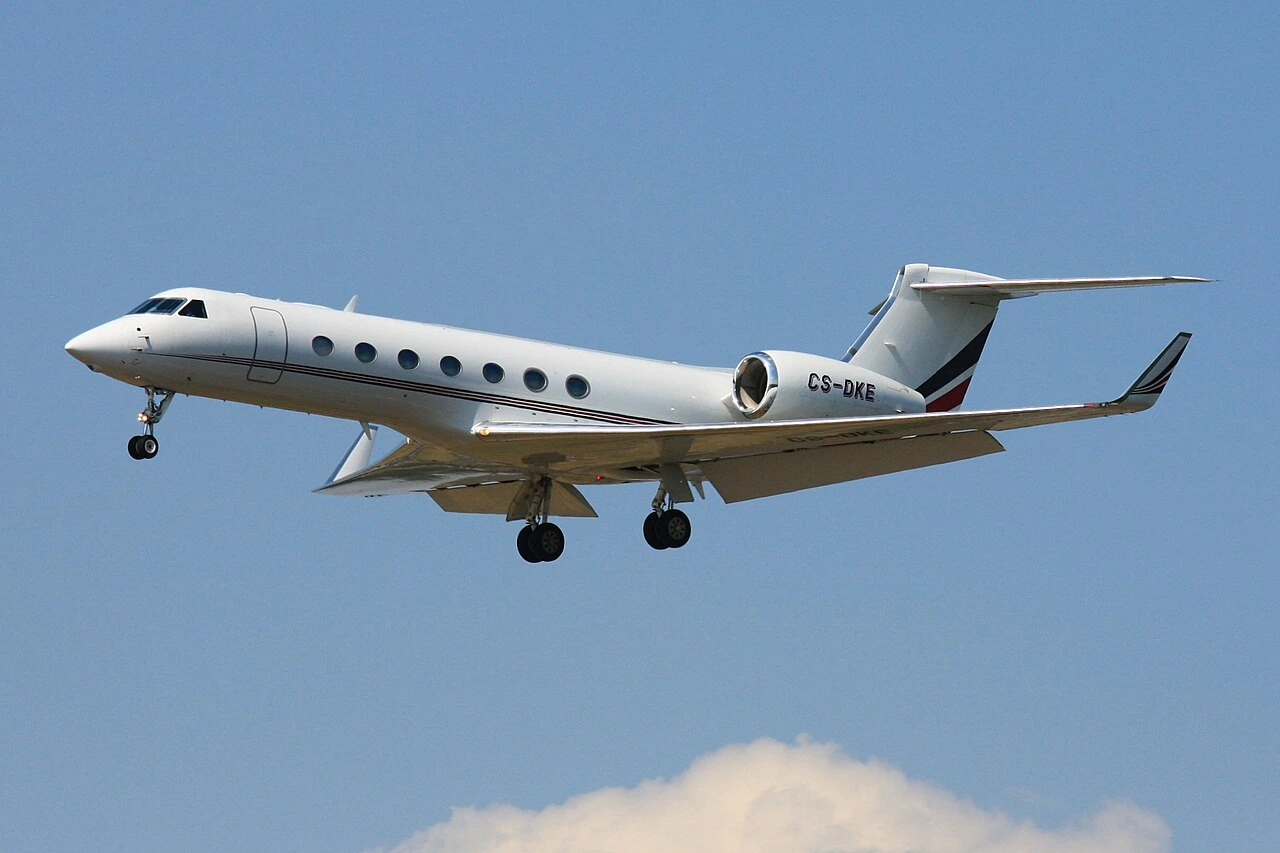
Photo: Wo st 01/Wikipedia | Wikimedia Commons

10. NetJets: Private Jet Access with Flexible Pet Accommodation
NetJets is the world’s largest private jet company, offering fractional ownership and on-demand private jet charter services to clients globally.

NetJets operates a global route network and accommodates large dogs in the cabin on its private aircraft. Because clients either own a share of a specific aircraft or charter an entire jet, there are no breed restrictions or weight limits of the kind commonly imposed by commercial airlines.

The company reportedly offers special gift packs for canine passengers and cozy sleeping mats on select routes.

International travel may require additional documentation depending on the entry requirements of the destination country.

NetJets is considered a premium option and is significantly more expensive than most semi-private operators.

9. BLADE: Urban Air Mobility with Seat Purchases for Dogs

BLADE is an urban air mobility company offering helicopter and fixed-wing charter flights primarily across the northeastern United States, with routes in Europe and India.

Dogs over 25 lbs are permitted in BLADE cabins as long as the owner purchases an additional seat.

On by-the-seat flights, pets under 25 lbs can travel on their owner’s lap for a fee of $95, while heavier dogs require the purchase of an extra seat.

Chartered BLADE flights accommodate pets at no additional charge.

Photo: MarcelX42 | Wikimedia Commons

8. ITA Airways: Domestic Italy Flights Under a New Regulatory Framework

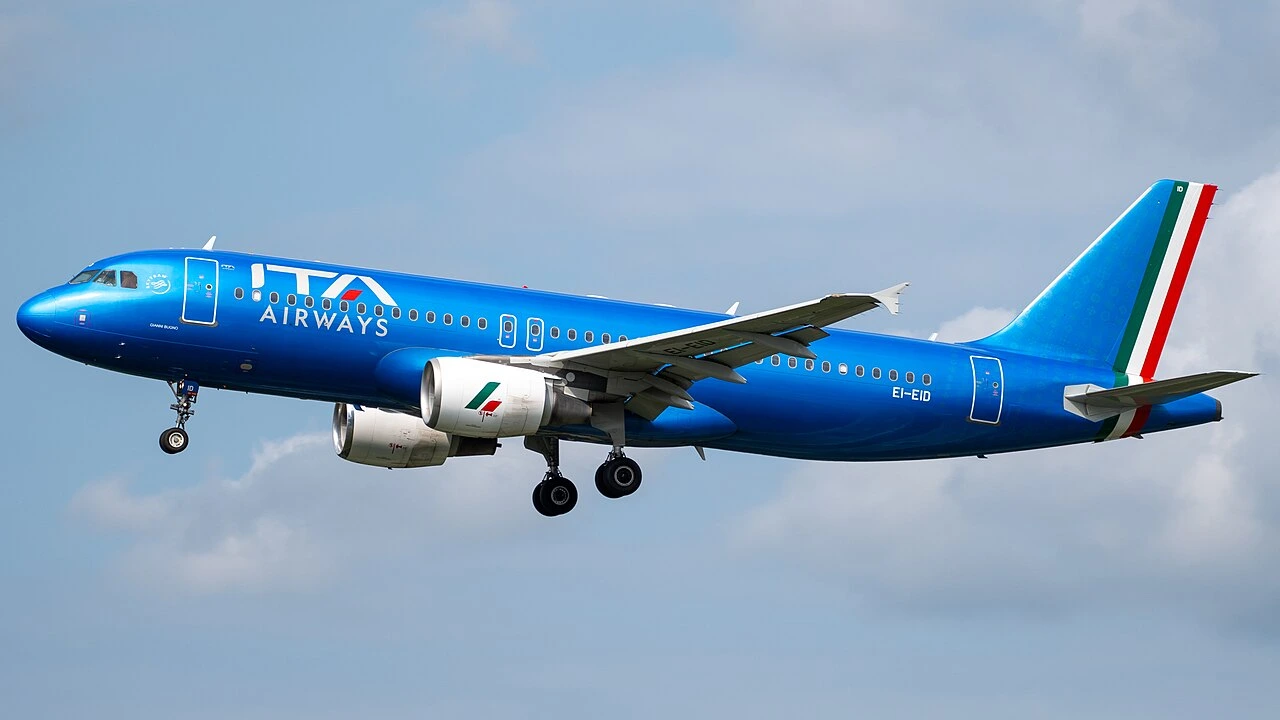
ITA Airways is Italy’s national carrier and the successor to Alitalia.

In February 2026, the airline announced plans to allow pets weighing up to 30 kg to travel in the cabin on designated large pet-friendly domestic flights, following a change in Italian aviation regulations introduced in May 2025.

However, the announcement later disappeared from the airline’s website, and no further updates had been issued as of May 2026, creating uncertainty over whether the policy would be implemented for the summer 2026 travel season.

Under the Italian regulatory changes, larger pets would be required to remain in carriers secured with seat belts or other anchoring systems. The proposed policy would apply only to domestic flights within Italy and would not extend to international services.

Travelers interested in using the service should monitor ITA Airways’ official website for updates before making travel arrangements.

7. Aero: Embraer Flights With No Weight Maximum

Aero operates book-by-the-seat semi-private flights on Embraer aircraft from its hub in Los Angeles, serving destinations in California, Colorado, Nevada, Utah, Idaho, and Los Cabos, Mexico.

The airline has no maximum weight limit for dogs, making it an option for owners of especially large breeds.

Aero holds the ARGUS Platinum safety rating, placing it among the top 5% of private aviation operators worldwide.

Dogs weighing more than 20 lbs require the purchase of a full-price additional seat. Each flight can accommodate a maximum of five pets, with no more than two large dogs permitted on a single flight.

Dogs must be at least four months old, toilet-trained, and remain leashed throughout the flight. Pets are not permitted to sit in exit rows.

Aero currently does not allow pets on its European routes.

The airline accepts medium and large dogs up to 65 lbs, provided an additional seat is purchased for them.

Photo: Richard Silagi | Wikimedia Commons

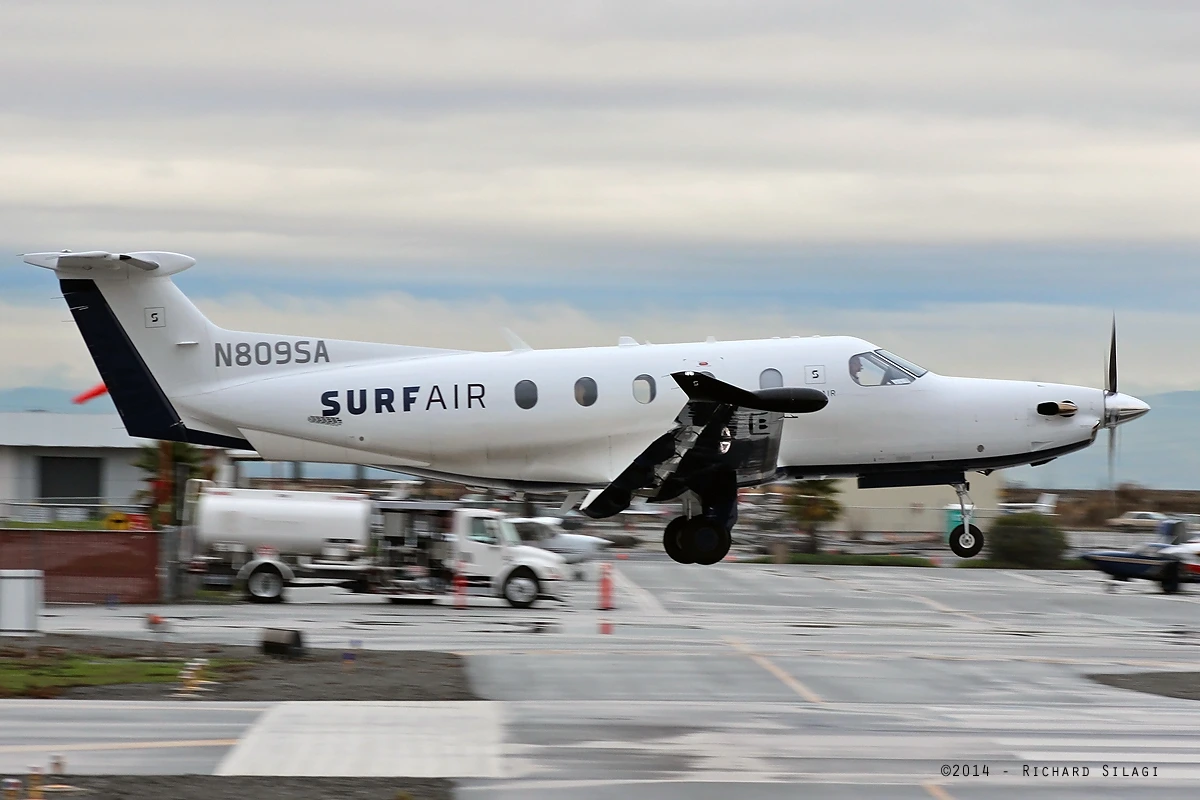
6. Surf Air: Membership-Based Flights with Seats for Dogs

Surf Air is a Los Angeles-based membership airline offering scheduled semi-private flights and on-demand jet services.

Owners can travel with a dog weighing more than 20 lbs in the cabin, provided they notify Surf Air in advance and purchase a separate single-use flight pass. Dogs may occupy their own seat as long as they are properly harnessed.

Surf Air’s membership plans range from $199 per month to $3,000 per month and provide access to 48 destinations across the United States.

The airline permits a maximum of one or two large pets per flight. Dogs must weigh no more than 100 lbs, be at least four months old, clean, well-behaved, and fully vaccinated.

Service animals receive priority boarding.

Owners must notify the airline at least 48 hours before departure. Final approval is granted at the airport after Surf Air personnel inspect the dog.

Photo: Dave Montiverdi | Wikimedia Commons

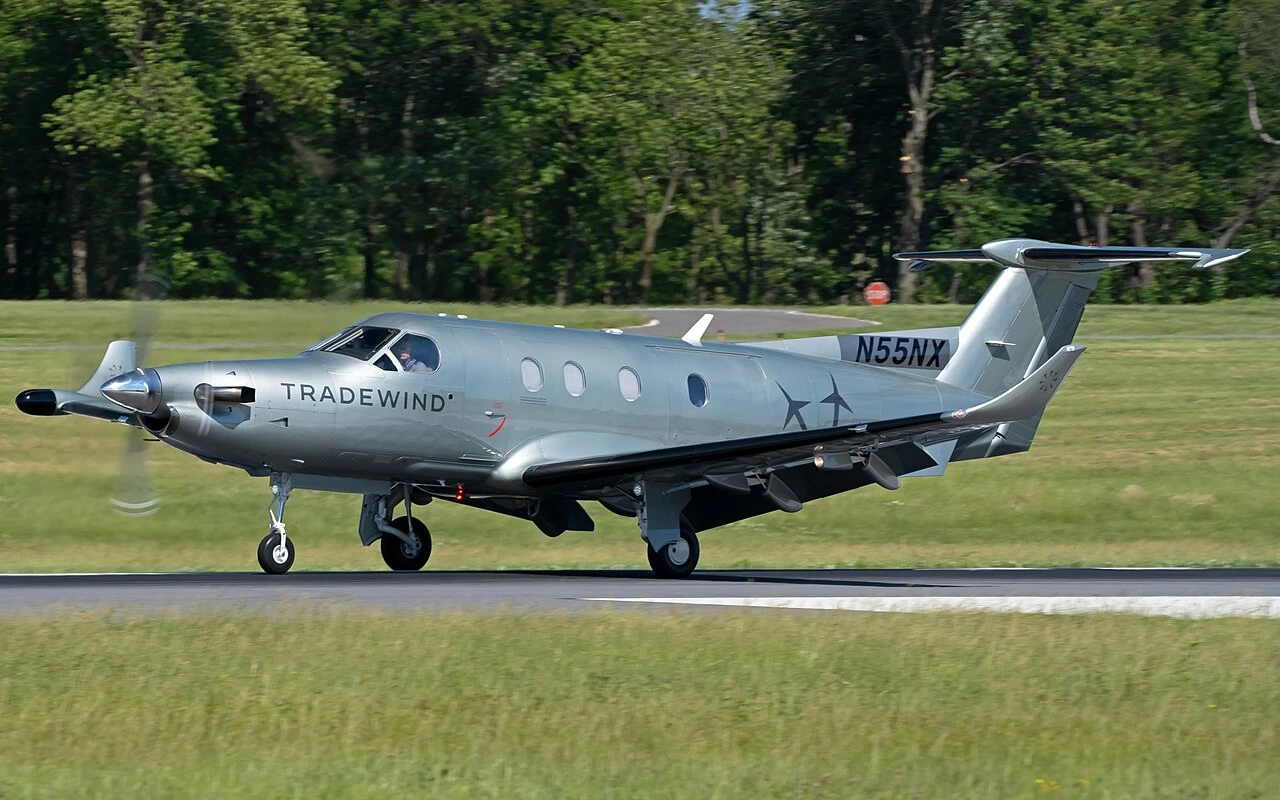
5. Tradewind Aviation: Scheduled Flights to Nantucket and the Caribbean

Tradewind Aviation is an Oxford, Connecticut-based operator founded in 2001, offering both scheduled and on-demand flights across the northeastern United States, the Bahamas, and the Caribbean.

The airline allows passengers to travel with pets of all sizes in the cabin on its Citation CJ3 and Pilatus PC-12 aircraft, including large-breed dogs.

Up to three pets are permitted on each flight, although only one travel party may bring large pets, defined as animals weighing more than 21 lbs (9.5 kg). Large pets are required to travel in the last row of the aircraft.

Tradewind Aviation was ranked the fourth-best airline in the 2024 Condé Nast Readers’ Choice Awards.

Owners are only required to purchase an additional seat if their dog weighs more than 100 lbs (45 kg).

All pet reservations must be arranged in advance, and owners must provide the pet’s weight when booking.

4. K9 Jets: Private Jet Seats on International Routes

K9 Jets launched in March 2023 and is based in the United Kingdom. The company operates as a public charter broker, arranging flights through licensed air carriers rather than owning and operating its own aircraft.

The airline uses a pay-by-seat model on private heavy jets, with average ticket prices ranging from $8,000 to $11,000 for one human and one dog.

Dogs weighing more than 51 lbs (23 kg) require one seat. Two dogs weighing less than 50 lbs (22.7 kg) combined may share a single seat.

K9 Jets’ primary East Coast hub is in New Jersey, with routes to London, Paris, Lisbon, Dublin, Frankfurt, Geneva, and Milan, as well as newer services to the United Arab Emirates and Canada.

More than 95% of flights operate as scheduled, and departures are confirmed once bookings reach 75% of available capacity.

Dogs travel without crates and may sit on the floor or on the seat beside their owner if an additional ticket is purchased. Cats must remain in a soft-sided carrier throughout the flight.

The airline does not impose breed restrictions, making it an option for owners of breeds that may be restricted by some commercial carriers.

3. JSX: Semi-Private Hops for Dogs Up to 80 lbs

JSX describes itself as a “hop-on jet service” operating semi-private routes across the United States and to Baja California Sur in Mexico.

Dogs that are too large to fit in an under-seat carrier, with a maximum carrier size of 17 x 13 x 11 inches, can travel if their owner purchases the adjacent seat. Dogs must weigh under 80 lbs (36 kg).

JSX permits up to five pets per flight. During the flight, dogs must remain leashed and lie on the floor in front of their window seat, while the owner occupies the aisle seat. Dogs may not sit on the actual aircraft seat.

The airline uses private terminals, which reduces check-in stress compared with a major commercial airport.

JSX represents one of the most affordable options for traveling with a large dog domestically in the United States.

2. RetrievAir: A Pet Charter Built on Shark Tank Funding

RetrievAir launched in May 2025, founded by two Labrador Retriever owners who decided to build the airline industry they wanted to see. The company secured backing from investor Alexis Ohanian and generated $500,000 in sales within weeks of its launch.

It operates a 30-seat refitted Embraer regional jet, originally configured for 50 passengers, giving each flight extra floor space for dogs.

RetrievAir allows pets of any size with no weight limits and no carrier requirements. Smaller dogs may sit on their owner’s lap, while larger dogs can be assigned to seats in rows B and C for additional legroom.

The airline makes pit stops roughly every two hours on longer routes, allowing dogs to use a relief area and the aircraft to be cleaned.

As of 2026, RetrievAir operates between Los Angeles, New York City, Chicago, Dallas-Fort Worth, Denver, Fort Lauderdale, Scottsdale, Washington, D.C., Seattle, San Francisco, Atlanta, and Tampa Bay.

Key pricing data includes:

  • A Basic ticket for a small pet on a New York City–Fort Lauderdale route in early 2026 was priced at $1,004
  • A ticket for a medium-sized dog with its own seat cost $1,928
  • Flights average around $775 per seat

Note that flights operate less frequently than commercial services and may be cancelled if insufficient seats are sold.
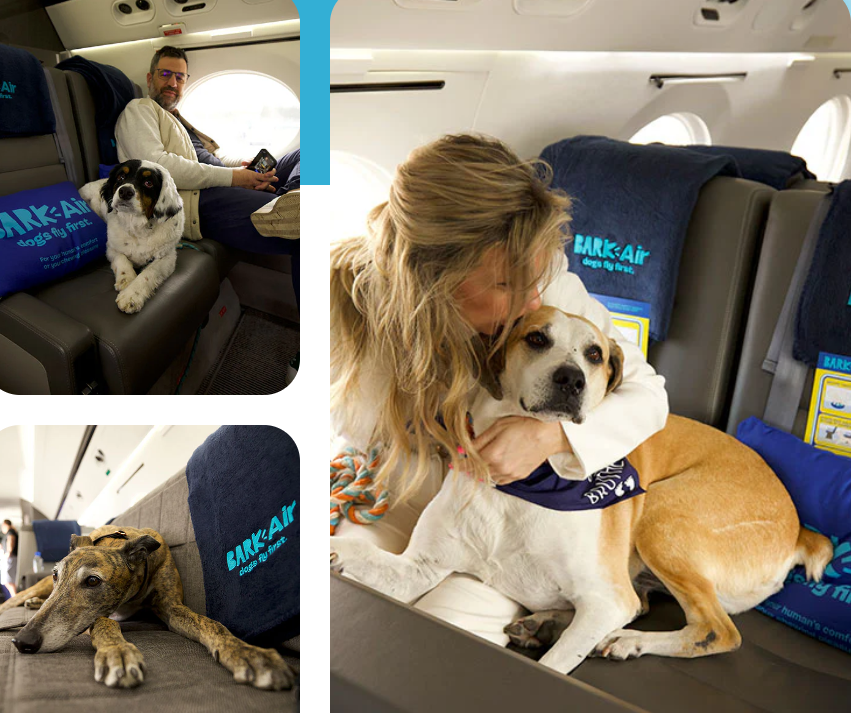
Photo: Bark AIr

1. BARK Air: The World’s First Airline Built Around Dogs

BARK Air was launched in May 2024 as a spin-off of BarkBox, the dog-products subscription brand operated by BARK Inc. The airline initially operated on Gulfstream G550 private jets and later expanded to CRJ-200 aircraft through direct air carrier Air Wisconsin, with fares dropping below $1,000 on select routes.

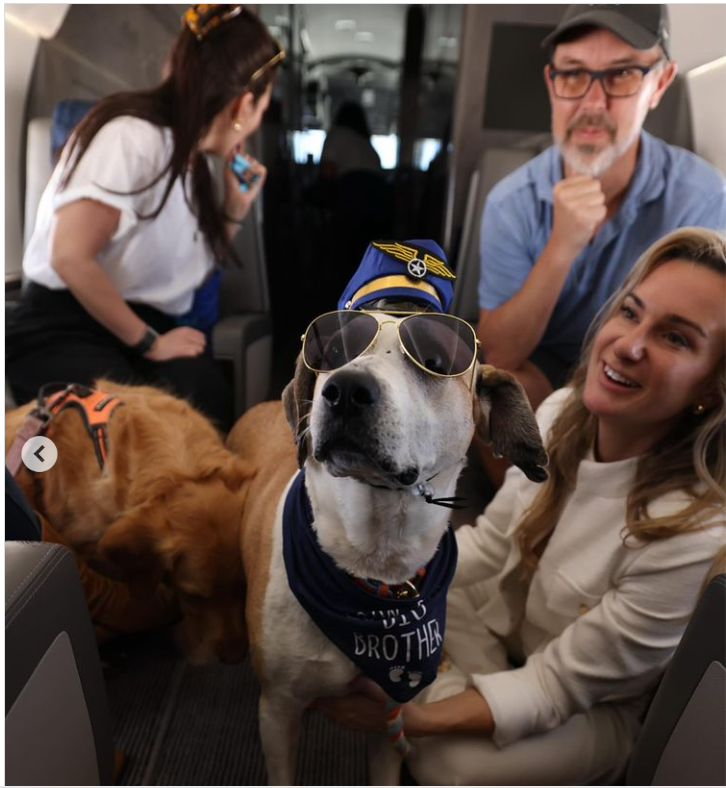
There are no weight, breed, or size restrictions on BARK Air. Dogs do not require crates and can sit or lie on the cabin floor beside their owner.

Travelers must arrive 60 minutes before departure and undergo a quick security process, after which they wait in a private area. If an owner prefers extra space for their dog, an additional ticket can be purchased. Each base ticket covers one human and one dog.

Key features of BARK Air include:

  • No weight, breed, or carrier restrictions for dogs
  • Calming aids on board, including pheromones, music, and lavender-scented towels
  • Dog-friendly cabin layout with dogs sitting on the floor beside owners
  • Concierge service with calming treats, leashes, and waste bags
  • Dogs receive a beverage during ascent and descent to ease pressure discomfort
  • Up-to-date vaccination records required
  • Human passengers must be 18 or older

Routes as of 2026 include New York City, Los Angeles, London, Paris, Lisbon, Seattle, San Francisco, and Madrid.

Why Commercial Airlines Still Refuse Large Dogs? And What Is Changing?
The absence of large dogs from mainstream commercial airline cabins is largely driven by regulatory and operational constraints. FAA and IATA guidelines generally require animals to remain inside carriers during flight, while the design of standard commercial aircraft cabins leaves insufficient space for large pet carriers beneath passenger seats.

Most major airlines limit the number of in-cabin pets to four or five per flight and typically impose a combined pet-and-carrier weight limit of around 20 lbs.

Demand for pet-friendly alternatives has grown in recent years due to concerns about transporting animals in cargo holds, including reports of pet injuries, deaths, and lost animals during travel. Restrictions on certain breeds, particularly bully breeds and brachycephalic (snub-nosed) dogs, have also encouraged some owners to seek alternative travel options.

Semi-private and charter operators have responded to this demand. RetrievAir generated $500,000 in bookings within weeks of launching, while BARK Air has reportedly sold out flights on multiple routes.

A growing number of airlines and specialty operators now serve major routes within the United States and between North America and Europe, with further expansion into Asia and the Middle East expected in the coming years.

Photo: Bark Air

Comparing Costs and Key Rules

Operator Dog Size/Weight Limit Seating Requirements Approximate Cost
BARK Air No size limit Crate-free travel Under $1,000 on some CRJ-200 routes to several thousand dollars on private jet routes
RetrievAir No size limit Large dogs may receive their own seat Approximately $775–$1,928 per ticket depending on route and dog size
JSX Up to 80 lbs (36 kg) Extra seat required for larger dogs Among the most affordable semi-private options
K9 Jets No size limit Dogs over 51 lbs require one seat $8,000–$11,000 per seat
Tradewind Aviation All sizes accepted Extra seat required only for dogs over 100 lbs (45 kg) Varies by route
Surf Air Up to 100 lbs (45 kg) Extra seat required for dogs over 20 lbs (9 kg) Membership-based pricing plus flight costs
Aero Up to 65 lbs confirmed; no stated maximum policy Extra seat required for dogs over 20 lbs Varies by route
ITA Airways Up to 30 kg (66 lbs) under proposed policy Carrier secured with seat belt or anchoring system Standard airline fares
BLADE Dogs over 25 lbs permitted Extra seat required for dogs over 25 lbs Varies by route and service type
NetJets No breed or weight restrictions Full charter or fractional ownership model Highest price tier

Additional notes:

  • All operators require advance booking for pets.
  • Most require current vaccination records, including rabies vaccination.
  • Service animals typically travel free of charge or at reduced rates.
  • Pet policies can change frequently, so travelers should verify requirements directly with the operator before booking.
Leave a Comment

Your email address will not be published. Required fields are marked *

Scroll to Top