Wizz Air (W6), the Budapest-headquartered ultra-low-cost carrier (ULCC) that serves approximately 950 routes across Europe and beyond, announced on 8 June 2026 that it has signed an agreement with SpaceX’s Starlink to deploy fleet-wide satellite Wi-Fi connectivity across all its aircraft, with the rollout scheduled to begin in 2027, as the airline described itself as the “first European ultra-low-cost carrier” to commit to the satellite-based service, AeroTime reported. The announcement marks a notable strategic inflection for a segment of the airline industry that has historically deprioritised inflight connectivity as incompatible with its ultra-lean cost architecture.
The agreement arrives at a moment of deliberate brand repositioning for Wizz Air. The carrier launched its “Customer First Compass” transformation framework in April 2025, backed by an investment commitment of €14 billion over three years, with the four stated pillars of Product, Price, Service, and Communication. The Starlink partnership represents the most headline-grabbing product announcement to emerge from that framework since its inception and extends a global wave of Starlink aviation deals that now spans legacy carriers, full-service groups, and — for the first time in Europe — a ULCC.
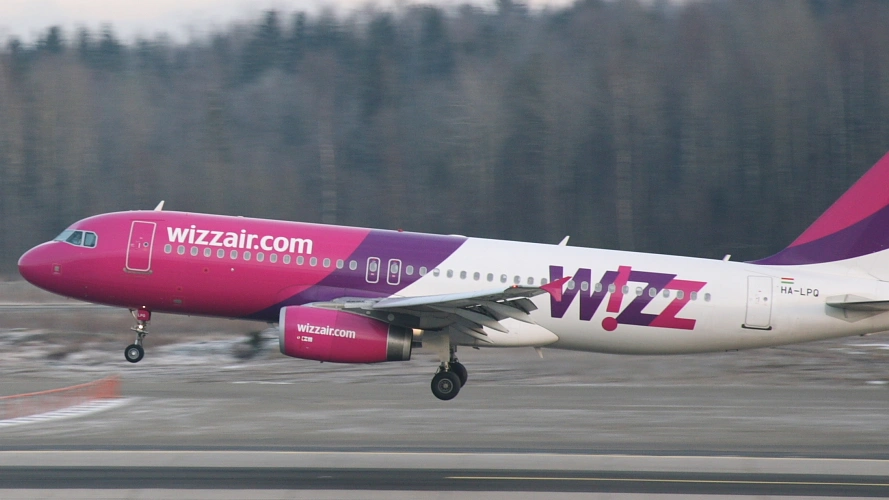

The Scope of Wizz Air’s Starlink Commitment
The announcement, made on 8 June 2026, confirmed that all Wizz Air aircraft will eventually be equipped with Starlink, providing what the carrier described as a “consistent onboard experience” regardless of route or destination. According to AertoTime, the rollout is scheduled to begin in 2027, though neither Wizz Air nor SpaceX disclosed specific timelines for completing fleet-wide installation, the number of aircraft to be initially equipped, or the financial terms of the agreement.
Wizz Air Chief Commercial Officer Ian Malin framed the deal in explicit terms of democratisation. “Ultra-low-cost travel has always been about making opportunities accessible to more people,” he said in the airline’s announcement:
“In 2027, we’re taking that philosophy into the space era. Our customers shouldn’t have to choose between affordable fares and reliable internet onboard to stay connected to the people, work, and moments that matter most. We’re proud to lead that change by collaborating with Starlink to bring maximum benefit to Wizz Air!”
Jason Fritch, Vice President of Starlink Enterprise Sales at SpaceX, confirmed the significance of the partnership from the technology side. “We’re thrilled to bring Starlink onboard Wizz Air and transform the travel experience for millions of its customers,” he said:
“Keeping passengers and crew seamlessly connected at 30,000 feet is exactly what this technology was built to do. We look forward to delivering reliable, high-speed internet from departure to arrival.”


Why Starlink Represents a Step Change from Legacy Inflight Wi-Fi
Traditional inflight connectivity systems have historically relied on geostationary Earth orbit (GEO) satellites, which orbit at altitudes of approximately 35,000 kilometres above the Earth’s surface. That enormous distance introduces a structural latency problem: round-trip signal travel times of approximately 600 milliseconds make real-time applications such as video calls, cloud computing, and responsive web browsing unreliable or impractical.
Starlink operates on an entirely different principle. The SpaceX constellation uses low Earth orbit (LEO) satellites deployed at altitudes between roughly 500 and 1,200 kilometres — a fraction of the distance used by GEO systems. This dramatically reduces signal latency to between 20 and 40 milliseconds, broadly comparable to a home broadband connection. Key technical specifications of the Starlink Aviation system:
- Download speeds: Up to 150–450 Mbps
- Upload speeds: Up to 20–70 Mbps
- Latency: 20–40 milliseconds (versus approximately 600 ms for GEO systems)
- Satellite constellation: Over 9,000 LEO satellites, with inter-satellite laser links enabling global coverage including oceanic and polar routes
- Antenna hardware: Electronically steered phased-array flat-panel antennas mounted on the fuselage, tracking satellites without mechanical gimbals and capable of maintaining connectivity during high-bank manoeuvres
- Coverage: Gate-to-gate, including over oceans and remote areas where traditional GEO coverage has been inconsistent
The system’s LEO architecture delivers aggregate throughput and coverage that industry analysts have described as “twice as fast” as competing inflight connectivity technologies. This enables simultaneous streaming, video calling, and cloud-based work on multiple passenger devices without the buffering and dropped sessions that have characterised legacy inflight Wi-Fi for decades.
Why ULCCs Have Resisted Inflight Wi-Fi Until Now
The decision by Wizz Air to commit to Starlink is commercially counterintuitive in a narrow sense. Ultra-low-cost carriers have traditionally viewed inflight connectivity as a cost-driver incompatible with their per-seat cost disciplines. As recently as March 2026, only 43 percent of low-cost airlines offered inflight Wi-Fi, compared to 89 percent of legacy carriers. The expense of installing and operating onboard connectivity systems, including hardware acquisition, certification, maintenance, and ongoing satellite service fees, has kept most ULCCs on the sidelines of a market that legacy operators entered years ago.
Starlink’s aviation business plan starts at approximately $2,000 per month per aircraft, a figure that must be offset against either passenger charging for the service or ancillary revenue generated through its availability. Wizz Air has not yet disclosed its pricing model for the onboard Wi-Fi — whether it will be free to all passengers, charged as an ancillary add-on, or offered within a loyalty or subscription framework — a decision with material implications for whether the investment anchors new revenue or functions purely as a service differentiator.
What appears to have changed the calculus is the Starlink pricing and installation model itself, which offers a more favourable cost-per-aircraft proposition than legacy GEO systems and provides superior performance per dollar.


Wizz Air’s Fleet and the Scale of its Commitment to Starlink
The fleet-wide scope of the Wizz Air announcement becomes more legible when set against the carrier’s current and projected aircraft inventory. As of mid-2026, Wizz Air operates a total of 264 Airbus aircraft, of which approximately 200 — roughly 75 percent of the fleet — are new-engine option (neo) variants. The carrier’s fleet is composed almost entirely of the Airbus A320 family, with the A321neo the dominant type. A summary of the current fleet composition:
- Airbus A321neo: 186 aircraft in service (the dominant type)
- Airbus A321XLR: 8 aircraft delivered, with remaining firm orders under review
- Airbus A320neo: 6 aircraft
- Airbus A320ceo and A321ceo: Residual legacy types being phased out
The airline reached the milestone of 200 A321neo-family deliveries earlier in 2026 and is targeting an all-neo fleet by 2029. Fleet trajectory projections indicate approximately 305 aircraft by March 2028 and a longer-term target of 380 or more all-neo/XLR aircraft by 2033, suggesting the Starlink rollout will encompass a substantially larger fleet by the time full deployment is complete.
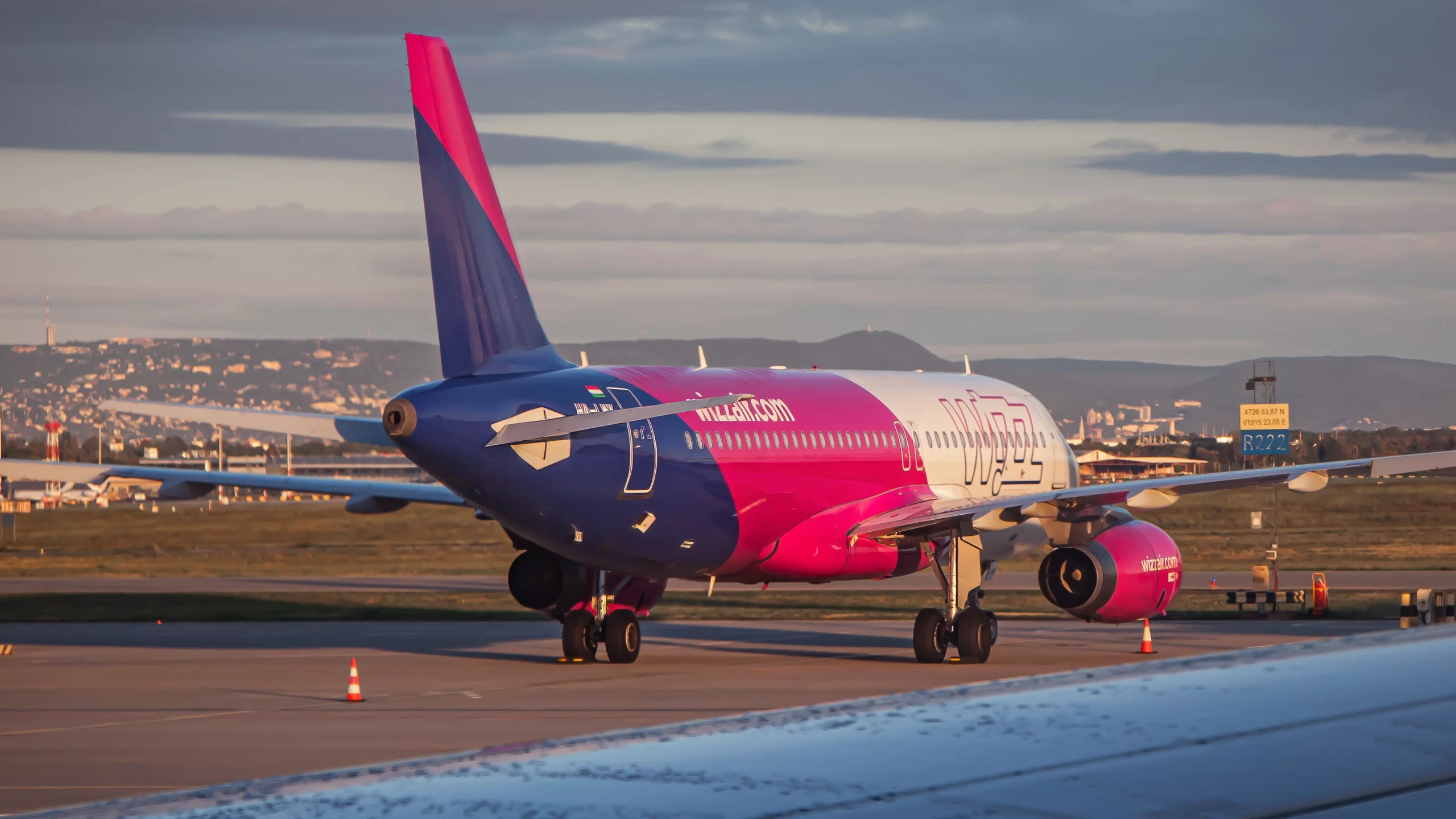

Wizz Air’s Position Among European Carriers Offering Inflight Connectivity
The Wizz Air announcement needs to be understood in the context of an accelerating, industry-wide shift towards Starlink in European aviation. Several of the continent’s largest carriers and airline groups have already committed to the technology, and the competitive pressure on holdouts has been building.
International Airlines Group (IAG) — parent of British Airways (BA), Iberia (IB), Aer Lingus (EI), Vueling (VY), and LEVEL — signed a fleet-wide Starlink agreement in November 2025 covering more than 500 of its approximately 600 aircraft, making it the European group with the most high-speed Wi-Fi-equipped aircraft. British Airways operated its first Starlink-equipped passenger flight on 19 March 2026 and aims to complete its rollout across its fleet of more than 300 aircraft before the end of 2028.
Lufthansa Group formalised its own Starlink partnership in January 2026, committing to equip its entire fleet of approximately 850 aircraft across Lufthansa (LH), SWISS (LX), Austrian Airlines (OS), Brussels Airlines (SN), Edelweiss Air (WK), and Discover Airlines by 2029, with installations beginning in the second half of 2026. The Lufthansa Group deal includes the provision of Starlink free of charge for frequent flyers and Travel ID members across all travel classes.
Ryanair (FR) CEO Michael O’Leary had been publicly sceptical of Starlink’s economics for ultra-low-cost operations, a position that now leaves Europe’s largest low-cost carrier as the most conspicuous holdout in a market rapidly reaching saturation. Wizz Air’s decision to commit ahead of Ryanair hands it a potentially durable competitive differentiator among passengers who place increasing value on digital connectivity during their journeys.
In the United States, United Airlines (UA), Southwest Airlines (WN), Alaska Airlines (AS), and American Airlines (AA) have all committed to Starlink, with Southwest targeting more than 300 equipped aircraft by the end of 2026 across its all-Boeing 737 fleet.
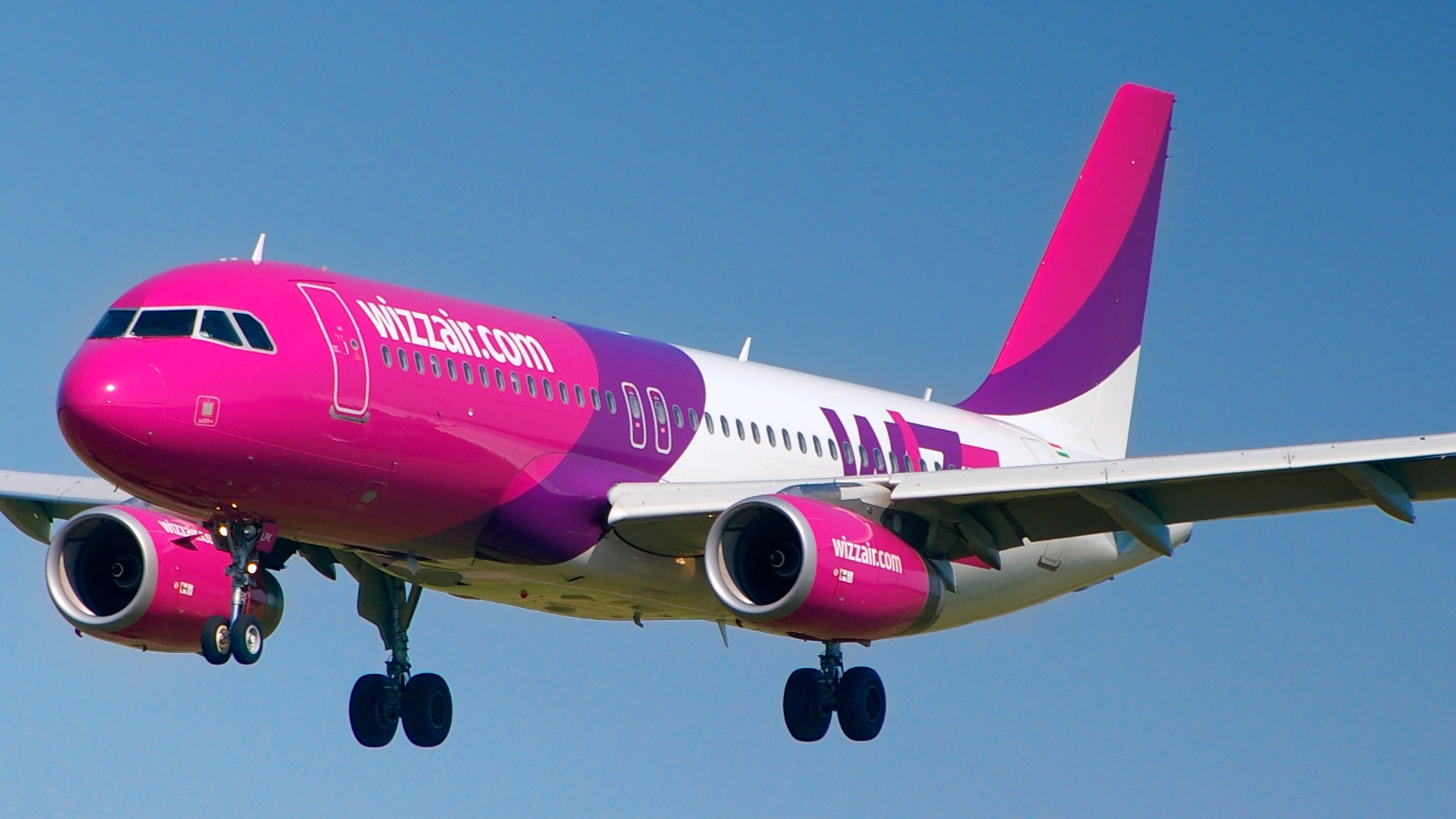

Wizz Air’s Broader Transformation
The Starlink announcement is not an isolated product decision. It sits within a broader and deliberate strategy to redefine what passengers should expect from a ULCC. The Customer First Compass framework, launched in April 2025 with a €14 billion, three-year investment commitment, rests on four pillars — Product, Price, Service, and Communication — and was explicitly framed as a response to the reputational damage Wizz Air sustained during the post-pandemic operational disruptions.
At an event marking the framework’s first anniversary in April 2026, Ian Malin stated that Wizz Air had achieved a 10 percent improvement in overall customer satisfaction and a 99.5 percent flight completion rate, while operating 7 percent more flights than in 2024. The carrier carried 68.6 million passengers in 2025 and is targeting 80 million in 2026, supported by a peak operational capability of up to 1,200 flights per day. With 40 percent of tickets available for less than €40, Wizz Air is keen to demonstrate that its cost leadership is not synonymous with inferior service.