Why Starlink Is Not Good Enough for Ryanair’s Short-Haul Flights

Only a day after Lufthansa announced that it would be upgrading Starlink to all its 850 aircraft by the end of 2029, Ryanair (RY), the Irish ultra-low-cost airline, has rejected Elon Musk’s Starlink satellite internet for its aircraft, despite the technology’s reputation as the fastest inflight connectivity solution available. According to a report published in Reuters, Ryanair’s CEO, Michael O’Leary, announced on 14 January 2026 that the carrier would not equip its fleet with Starlink’s high-speed system, citing fuel efficiency concerns, added aerodynamic drag, and economics misaligned with short-haul flights.
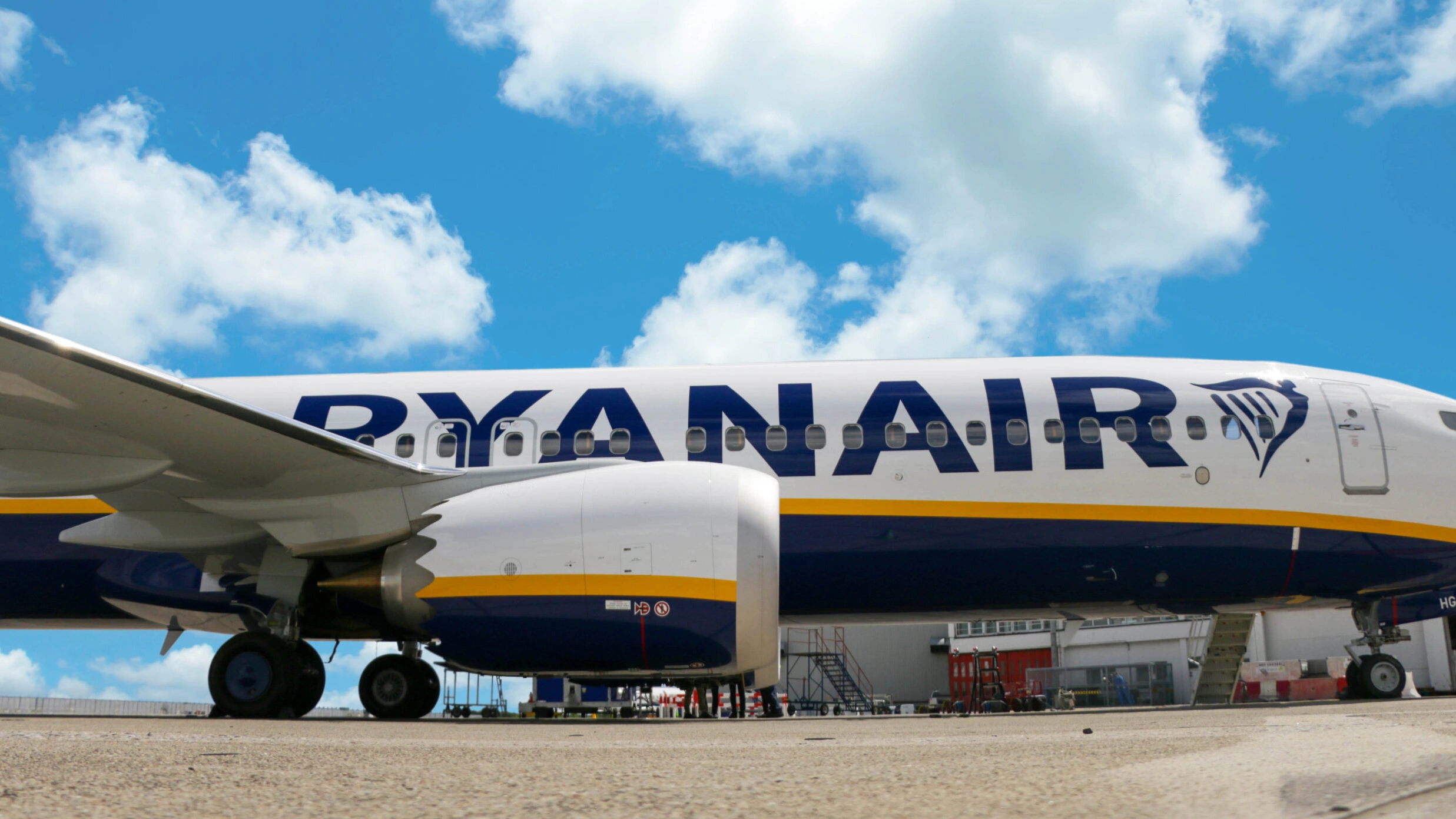
Photo: Ryanair

Ryanair operates a large fleet of Boeing 737 aircraft on short routes across Europe (according to data from planespotters.net, the carrier has a total of 349 aircraft and has one of the largest fleets in 2026), where average flights last around one hour. The airline’s business model depends on strict cost control and minimal unit costs. According to O’Leary, installing a satellite internet antenna on the aircraft fuselage produces a 2% fuel penalty through increased drag and weight — a cost the airline views as unjustifiable given its flight profiles and customer base.

ryanair at a glance: carrier profile

Attribute Details
Carrier Name Ryanair DAC
IATA Code FR
Founded 1984
Headquarters Dublin, Ireland
Primary Hub Dublin Airport (DUB), Ireland
Fleet Size ~349
Network Extensive European short-haul routes
Business Model Ultra-low-cost carrier
Photo: Ryanair

What Starlink Offers — and Why It Should Have Mattered to Ryanair

Starlink, a satellite internet service developed by SpaceX, uses low-Earth orbit (LEO) satellites to deliver high-speed, low-latency internet connectivity. Its aviation solution is marketed as superior to legacy satellite systems due to reduced latency and improved coverage — particularly advantageous for long overwater segments. Such systems have enabled airlines to offer 150 Mbps and higher throughput allowing passengers to:

  • Stream movies and TV from various online platform such as Netflix
  • Joining conference calls, and work as you would do from home or the office
Photo: Ryanair

Qatar Airways has gone so far as to stage an in-flight online gaming tournament aboard an aircraft equipped with Starlink connectivity. According to Simple Flying, among the earliest global adopters of the system was European airline airBaltic, which rolled out Starlink across its Airbus A220 fleet in 2023:

“The airline saw the appeal of the service it provided, which is that the carrier could offer high-speed connectivity to passengers at low installation costs, making the service free of charge and not having to collect any information from passengers.”

Here are the aircraft types that have been certified to offer Starlink connectivity onboard:

Airbus Boeing
A350 777-300ER
A220 787-8
A330 737-800
A321neo 777-200LR
A320 737 MAX 8
Photo: Ryanair

The table above shows that the Boeing 737-800 and Boeing MAX8 have been certified to install Starlink – the two aircraft that are predominant in Ryanair’s fleet:

Aircraft Type In Service Parked Total Average Age
Boeing 737-800 189 16 205 16.3 years
Boeing 737 MAX 8 141 141 2.6 years
Bombardier Challenger 3500 3 3 0.8 years

Data: planespotters.net

Photo: Ryanair

Fuel Economics vs Connectivity: Ryanair’s calculus

Ryanair’s decision pivots on fuel economics more than technical performance. CEO Michael O’Leary explained:

“You need to put the antenna on the fuselage; it comes with a 2% fuel penalty because of the weight and drag. We don’t think our passengers are willing to pay for Wi-Fi for an average one-hour flight.”

This statement underscores Ryanair’s philosophy: ancillary services must generate revenue without undermining unit cost leadership. A 2% increase in fuel burn may appear marginal when viewed in isolation, but when applied across millions of flight operations per year on narrowbody aircraft, it materially affects operating margins.

In addition, Ryanair’s short flight durations limit the time passengers could realistically use Wi-Fi — especially when compared to long-haul carriers where connectivity may be monetized over multiple hours.

Photo: SpaceX | Wikimedia Commons

Elon Musk’s Reply

Elon Mus, however, claimed that O’Leary was “misinformed” about the whole issue:

” I doubt they can even measure the difference in fuel use accurately, especially for a one hour flight, where the incremental drag is basically zero during the ascent phase due to high angle of attack. And compared to most other connectivity solutions, there would actually be gains in efficiency”.

The following table gives us an idea of all the airlines that have adapted Starlink:

Airline Starlink Status Aircraft Types (Installed/Planned) Notes
airBaltic Installed Airbus A220-300 First European carrier to offer Starlink free onboard; roll-out across A220s by 2025.
United Airlines (UAL) Rolling Out Embraer E-175 (regional), Boeing 737-800 (mainline) FAA-approved, first installation in 2025; plans to outfit all regional jets then expand.
Hawaiian Airlines Installed Airbus A330, Airbus A321neo Offers free Starlink connectivity on these types; Boeing 787 planned later.
Qatar Airways (QR) Installed/Expanding Boeing 777 (fleetwide), Airbus A350 (rolling) Entire B777 fleet equipped; A350 rollout underway.
WestJet Installed/Rolling Boeing 737-800 & 737 MAX fleets Wi-Fi on ~100 aircraft; full installation by end of 2025.
SAS Scandinavian Airlines Planned/Rolling Full fleet “Phased rollout” starting late 2025 across its network.
Lufthansa Group Committed Multiple (fleetwide 2026–2029) Includes Lufthansa, SWISS, Austrian, Brussels, others; full fleet rollout by 2029.
Air France Committed Entire fleet (various types) Gradual rollout by end of 2026; free high-speed Wi-Fi for passengers.
Virgin Atlantic Planned Boeing 787, Airbus A350, Airbus A330neo Planned roll-out with expected completion 2027.
Air New Zealand Trials Airbus A320, ATR turboprop Conducted trials on domestic aircraft.
Alaska Airlines Planned Entire fleet (to 2027) Starlink onboarding to the full fleet by 2027.
British Airways (IAG group) Committed Fleetwide (various types) IAG agreement to equip >500 aircraft across brands.
flydubai Committed Boeing 737 fleet Announced Starlink provider for 100 Boeing 737s in 2026.
JSX Installed Regional Embraer jets First carrier to offer Starlink (2023).
Jin Air Planned Boeing 737-8 Starlink announcement with rollout priority.
Korean Air Planned Boeing 777, Airbus A350 Starlink rollout through 2027.
Photo: Ryanair

Ryanair vs Starlink: Aircraft Performance Claims

The business model of low-cost carriers such as Ryanair is to adopt a no-frills formula, and such airlines have been cautious about providing services such as Wi-Fi, with Simple Flying’s report claiming that (ultra) low-cost-carriers “have delayed or abandoned connectivity plans after questioning passengers’ willingness to pay for the service“:
” Rising fuel costs and increasingly strict sustainability targets further complicate decisions involving additional weight or aerodynamic drag. Ryanair’s stance fits squarely within this pattern and reinforces its long-standing focus on cost control………Ultra-low-cost carriers are likely to remain selective, while network airlines push ahead with fleet-wide installations. “

Michael Nicolls, Starlink’s Vice President of Engineering, challenged Ryanair’s assertions with quantitative detail, stating that while older satellite terminals can increase fuel burn by around 2%, Starlink’s low-profile antenna results in only about a 0.3% increase on a Boeing 737-800 consuming roughly 800 gallons per hour.

Musk intensified the discussion by urging engineers to drive the fuel penalty below 0.1% as the debate continued. He also warned that Ryanair risked ceding passengers to competitors offering onboard internet, framing connectivity as a differentiator in an age of constant digital expectation.

Leave a Comment

Your email address will not be published. Required fields are marked *

Scroll to Top