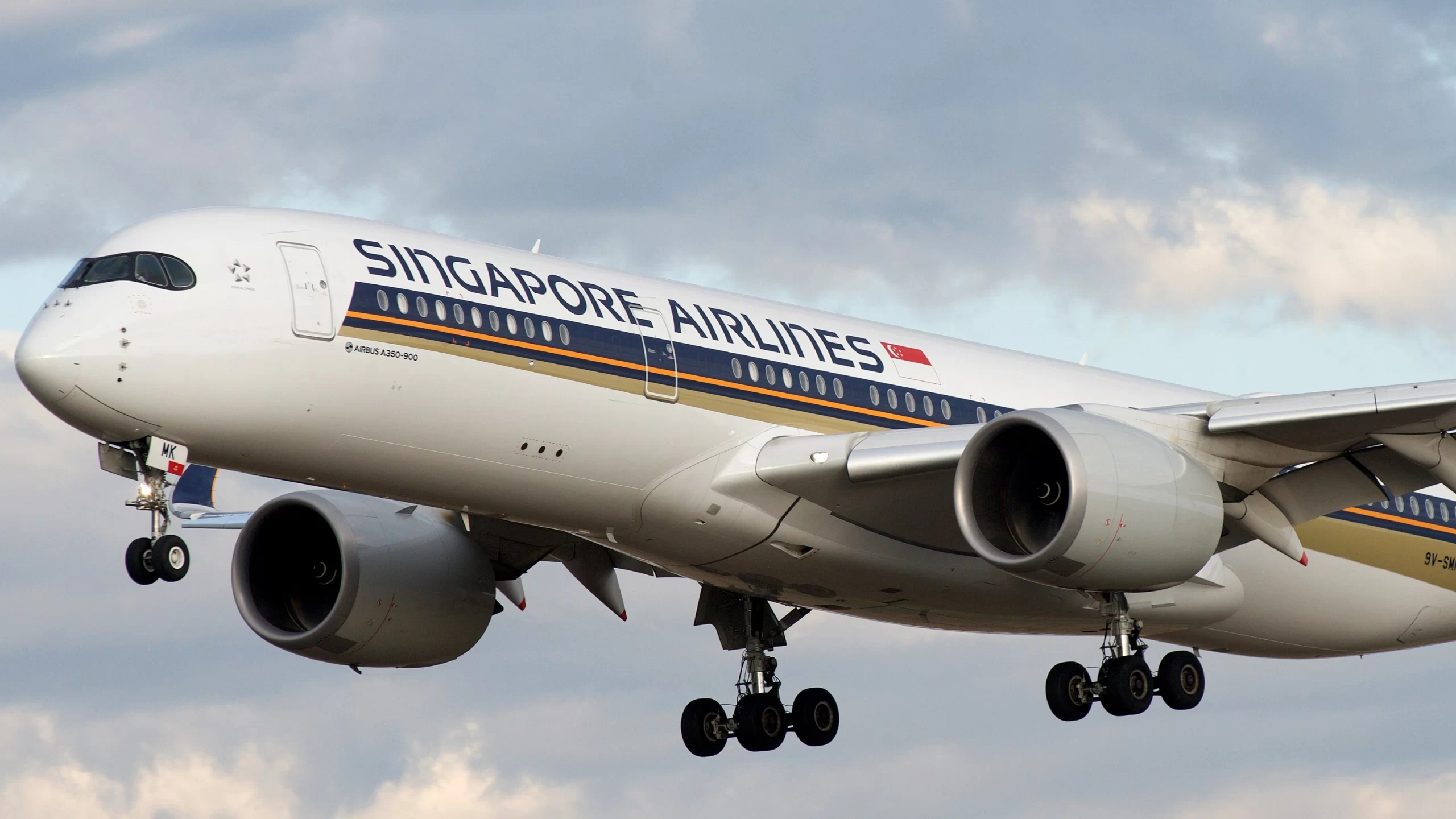
Singapore Airlines (SQ) has revised upward its cancellation fees for long-haul commercial tickets across all cabin classes and fare types, in a policy change that took effect silently for tickets issued on or after 28 April 2026, Mile Lion reported. The revisions apply to all destinations the carrier classifies as long-haul — namely Australia, Europe, New Zealand, South Africa, and the United States — and represent increases ranging from 28% to 100%, or S$110 to S$130 in absolute terms.
The timing aligns with a broader period of volatility in the global aviation market. Singapore Airlines suspended its Dubai flights until at least 2 August 2026 due to the geopolitical situation in the Middle East, and simultaneously delayed the relaunch of its Riyadh service by three months to September 2026. 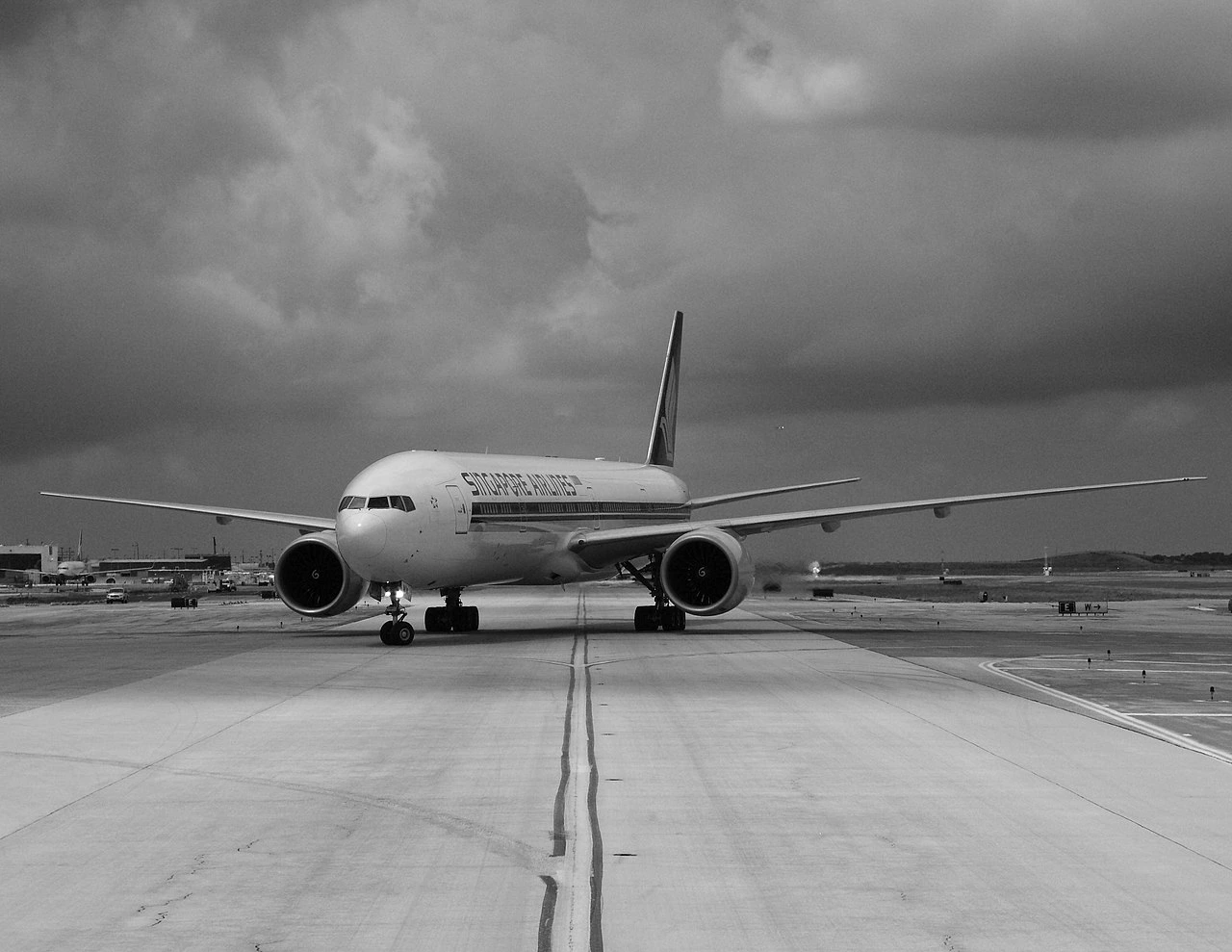
Photo: Shawn | Wikimedia Commons
How Much Have Singapore Airlines Cancellation Fees Increased?
The revised structure affects long-haul commercial tickets only. Tickets issued before 28 April 2026 retain their previous cancellation terms, irrespective of travel date. Fees are levied on a per-passenger basis, and a one-way ticket attracts the same cancellation fee as a return itinerary.
In Economy Class, the Flexi fare bucket — historically the most flexible and most expensive Economy option — has seen its long-haul cancellation fee double from S$130 to S$260. The Economy Standard fare (fare classes M, H, W) increased from S$270 to S$380, a 41% rise, while the Economy Value fare (fare classes Q, N) climbed from S$400 to S$510, an increase of 28%. Economy Lite fares carry no cancellation entitlement and remain unchanged.
Premium Economy Class mirrors the Economy escalation:
- Flexi fares have doubled from S$130 to S$260
- Standard fares increased 41% to S$380
- Premium Economy Lite (fare class R) retains a non-refundable structure.
In Business Class, the Flexi fare (fare classes Z, C, J) rose 41% to S$380, while Business Standard (fare class U) increased 32% from S$340 to S$450. Business Lite (fare class D) remains non-refundable. Most strikingly, First Class and Suites fares (fare classes F and A) — tickets priced at several thousand dollars per sector — have seen cancellation fees double from S$130 to S$260, the same nominal increase as the cheapest flexible Economy fare.
Why The Most Expensive Fares Face the Biggest Hike
The counterintuitive pattern in this fee revision is hard to overlook. Flexi fares in Economy, Premium Economy, and Business — typically priced at a substantial premium precisely because of their cancellation and change flexibility — have absorbed the largest percentage increase of 100%. First Class, similarly, has doubled despite its ticket price already running into the thousands. Standard and Value fares, by contrast, saw more moderate increases of 28% to 41%.
One explanation is straightforward supply and demand logic. A traveler purchasing a Flexi ticket in the current environment may do so specifically to hold capacity as insurance against further regional disruption, intending to cancel if an alternate routing becomes available or if the situation stabilizes.
By raising the cost of that insurance, Singapore Airlines effectively forces those passengers to price in the genuine cost of seat reservation. Premium-class passengers tend to have greater financial flexibility, and a doubling of the cancellation fee from S$130 to S$260 represents a relatively modest deterrent in absolute terms — but a stronger signal about the commercial intent behind the booking.
Singapore Airlines Award Tickets and Change Fees
The revised schedule explicitly carves out KrisFlyer award bookings. Cancellation fees for award tickets remain at US$75 for Saver redemptions and US$50 for Advantage and Access redemptions. KrisFlyer members seeking to cancel a miles-based booking are therefore entirely unaffected by this change.
Change fees across all commercial fare types and cabin classes have also been left untouched: Economy Flexi, Premium Economy Flexi, Business Flexi, and First Class all continue to attract zero change fees on long-haul routes, and Economy Standard long-haul changes remain at S$70.
Short-haul cancellation fees — governing destinations in Southeast Asia, North Asia, South Asia, and the Middle East — have not been revised either. Short-haul Economy Flexi cancellation remains at S$70, Business Flexi at S$130, and the highest short-haul cancellation fee for Economy Value remains at S$200.
No-show fees, which apply when a passenger neither cancels nor boards before scheduled departure, have also not changed. These range from S$130 to S$400 depending on cabin class and critically are no longer displayed on Singapore Airlines’ booking page at the point of fare selection.
Passengers must now click through to “Full fare rules and conditions” to view the applicable no-show fee for their ticket — a reduction in pre-purchase transparency that warrants attention.
Wego’s analysis of the Singapore Airlines fare environment notes that Singapore Airlines and Scoot have raised air fares across their networks in 2026 in response to sharply elevated jet fuel costs following the 2026 Iran Crisis, though those adjustments do not fully offset the fuel price increase.
The airline’s fuel hedging programme covers approximately 47–50% of its fuel requirements for the first two quarters of 2026, but coverage drops to around 24% in the second half of 2027 — suggesting further cost pressure could materialise. Additionally, KrisFlyer Access award rates were quietly raised by up to 10.9% in Economy and Premium Economy in March 2026.
What Passengers Should Know Before Booking
Several practical implications follow from these changes. First, any ticket issued before 28 April 2026 is fully grandfathered and governed by the prior fee schedule regardless of when travel occurs.
Second, if an itinerary involves multiple passengers, the cancellation fee is multiplied accordingly — a family of four cancelling a Business Standard long-haul booking now faces S$1,800 in cancellation charges, versus the previous S$1,360.
Third, passengers originating outside Singapore will be charged the equivalent fees in their local currency or in US dollars, which may differ in real terms depending on exchange rate movements.
The no-show fee structure deserves particular attention from those who might miss a flight without actively cancelling. Business Class no-show fees stand at S$400 and First Class at S$400 — and these are charged only at the point of rebooking or refund, not automatically. Passengers who let unused tickets lapse without contact will find these fees deducted when they eventually seek to reclaim any residual value.
The advice to cancel proactively before departure, even for non-refundable tickets, remains pertinent precisely because it preserves the residual tax and fee refund as well as prevents no-show fee accrual.
.jpg)
.jpg)
.jpg)
_taking_off_from_London_Heathrow_Airport_(5).jpg)
_landing_at_Melbourne_Airport.jpg)