DGCA, India’s civil aviation regulator, has introduced stringent safety rules that ban the use of power banks to charge devices on board flights nationwide. Under a Dangerous Goods Advisory Circular issued in November 2025, passengers are prohibited from using power banks to charge phones, tablets, or other electronic devices during flight, including via airline seat power outlets.
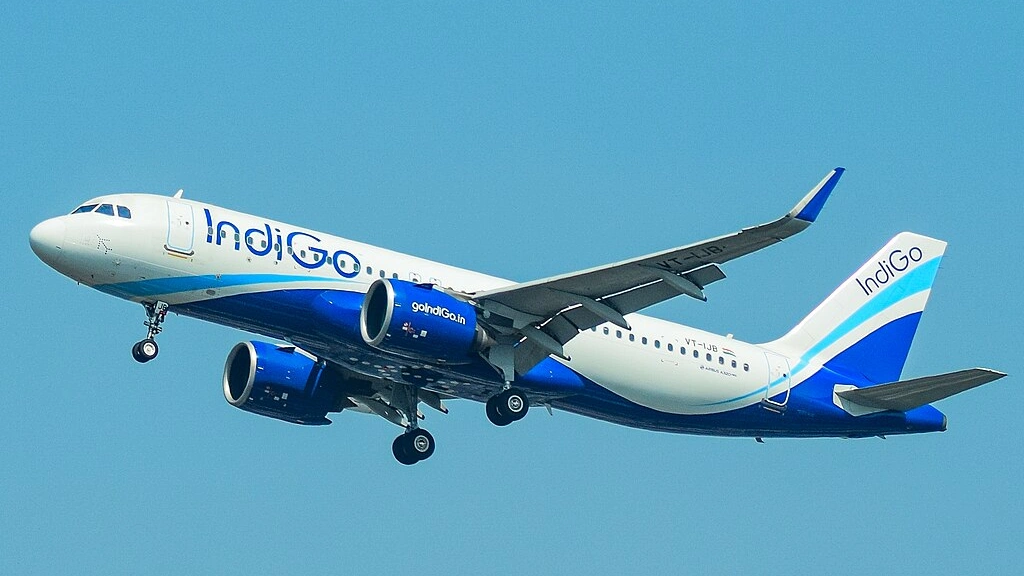
The new directive applies to all scheduled passenger services operating in and out of India, and reflects mounting global concerns over lithium‑battery fire risks in the cabin. The rule change follows multiple worldwide incidents of lithium‑ion batteries overheating, smouldering, or catching fire on aircraft, prompting aviation authorities and airlines globally to tighten controls on how such batteries are carried and used.
The DGCA’s guidance also restricts storage of power banks and other spare batteries to hand baggage only, explicitly forbidding their placement in overhead compartments due to the harder‑to‑detect nature of fires in those spaces.
Dangerous Goods Advisory Circular — what the DGCA now mandates
| Directive element | Requirement |
|---|---|
| Power bank use during flight | Prohibited (no charging of devices or power bank itself) |
| Power bank storage | Hand baggage only — Not in overhead bins |
| Power bank charging outlets | Do not use aircraft USB/seat power |
| Passenger notifications | Mandatory inflight announcements |
| Crew training | Enhanced fire/battery hazard training |
According to the circular that was quoted in NDTV,
“The widespread usage of lithium batteries in various rechargeable devices has led to an increase in carriage of lithium batteries by air. Power banks, portable chargers, and similar devices containing lithium batteries can act as ignition sources and potentially initiate on-board fires,”
This circular emphasizes the elevated hazard profile of lithium batteries, which can experience thermal runaway — a condition where an internal fault or external damage causes uncontrollable heat generation that may lead to fire or explosion. These fires are notoriously difficult to suppress at altitude because they can be self‑sustaining and emit dense smoke.

What are the Existing Aviation Laws on Power Banks?
According to IATA, Lithium battery refers to “a family of batteries with different chemistries, comprising many types of cathodes and electrolytes“. But there are various types and categories of Lithium batteries:
| Category | Description | Typical Use / Examples |
|---|---|---|
| Portable electronic device (PED) | A compact, easily transportable electronic item powered by a removable or non-removable lithium battery. These devices can store, process, or transmit text, audio, images, or video data. | Mobile phones, laptops, cameras, radios, audio players, smartwatches |
| Portable medical electronic device (PMED) | A lithium battery-powered medical device designed for personal healthcare use. These devices assist in monitoring, treating, or managing medical conditions and may have removable or built-in batteries. | Cardiac monitors, blood pressure monitors, respiratory monitors, wearable medical devices, portable oxygen concentrators |
| Lithium-ion battery | A rechargeable (secondary) battery in which lithium exists in ionic form within the electrolyte rather than as metallic lithium. Widely used in consumer and professional electronics due to high energy density. | Smartphones, laptops, tablets, medical devices |
| Lithium metal battery | A non-rechargeable (primary) battery containing lithium metal or lithium compounds as the anode. Commonly used where long shelf life and stable power output are required. | Watches, calculators, cameras, remote sensors |
| Power bank | A portable external battery designed to recharge consumer electronic devices. When carried by passengers, these units are treated as spare lithium batteries under aviation safety rules. | Phone chargers, tablet chargers |
| Smart luggage | Luggage equipped with integrated lithium battery-powered technologies such as charging ports or tracking systems. Batteries may be removable or embedded depending on design. | GPS-enabled suitcases, Bluetooth-tracked luggage, luggage with built-in power banks |
| Small personal vehicle | A lithium battery-powered mobility device intended for individual transportation, with either removable or non-removable batteries. | Ride-on suitcases, compact personal transport devices |
| E-cigarette | A handheld electronic device powered by a lithium battery that produces vapor to simulate smoking. Often subject to strict carriage and usage regulations on aircraft. | Vapes, electronic pipes |

All in All
Since April 1, 2025, Singapore Airlines & Scoot prohibited power bank charging and use on flights from April 1, 2025. Thai Airways & AirAsia enforced bans on in‑flight power bank use starting March 2025.
Passengers planning air travel should:
-
Check airline policies ahead of departure regarding power bank capacity and carriage rules.
-
Ensure power banks are within permitted watt‑hour limits (typically <100 Wh without airline approval).
-
Keep power banks in carry‑on — and never in checked baggage.
-
Inspect equipment for damage and avoid using suspect or poorly manufactured batteries.



_(51811148072).jpg)


