
The National Museum of the US Air Force (which likes just outside of Dayton, Ohio)houses aircraft that were sometimes experimental in nature, some of which that were used for space research, and others that were deployed during World Wars. The fact that the entry to the museum is free is a treat for many. Let’s have a look at the top five must-see aircraft at this museum that lies on the property of Wright Patterson AFB.
5. Avro Canada VZ-9AV Avrocar
“VZ” stood for “experimental vertical flight,” “9” for the ninth concept proposal, and “AV” for Avro
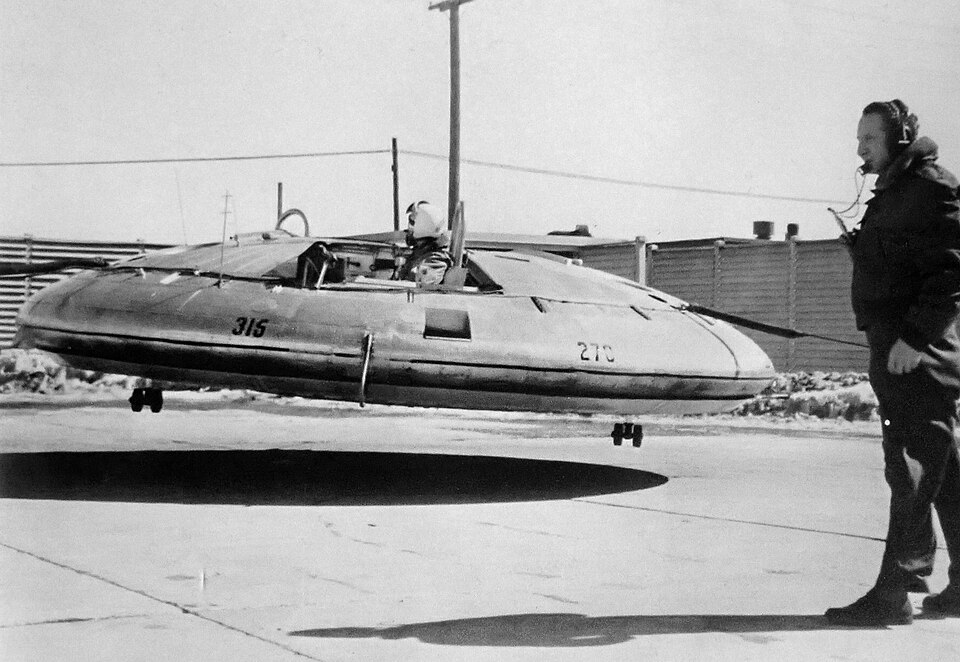
If one invested three years, pouring in $7.5 million on the development of an aircraft and it could only fly three feet off the ground, would it be dubbed as a smattering of success or an untrammelled disaster? The two units of the Avro Canada sit amidst such a cleft stick.
Avrocar was Canada’s vision to develop a supersonic aircraft, and with vertical takeoff and landing (VTOL) fighter-bomber capabilities at that. It resembles an aircraft out of science fiction movies. It was hoped that the aircraft would operate like the Caspian Sea Monster devised by the Soviet Union i.e., using ground effect technology.
.jpg)
| Max takeoff weight | 5,560 lb (2,522 kg) |
| Range | Estimated: 995 mi (1,601 km); Actual: 79 mi (127 km) (actual) |
| Empty weight: | 3,000 lb (1,361 kg) |
| Engines | three Continental J69-T-9 turbojet engines |
| Engine Thrust | 660 lb (2.9KN) |
| Height | 3 ft 6 inches (1.07 m) |
| Maximum speed | Estimate: 300 mph (480 km/h, 260 kn): Actual: 35 mph (56 km/h) |
.jpg)
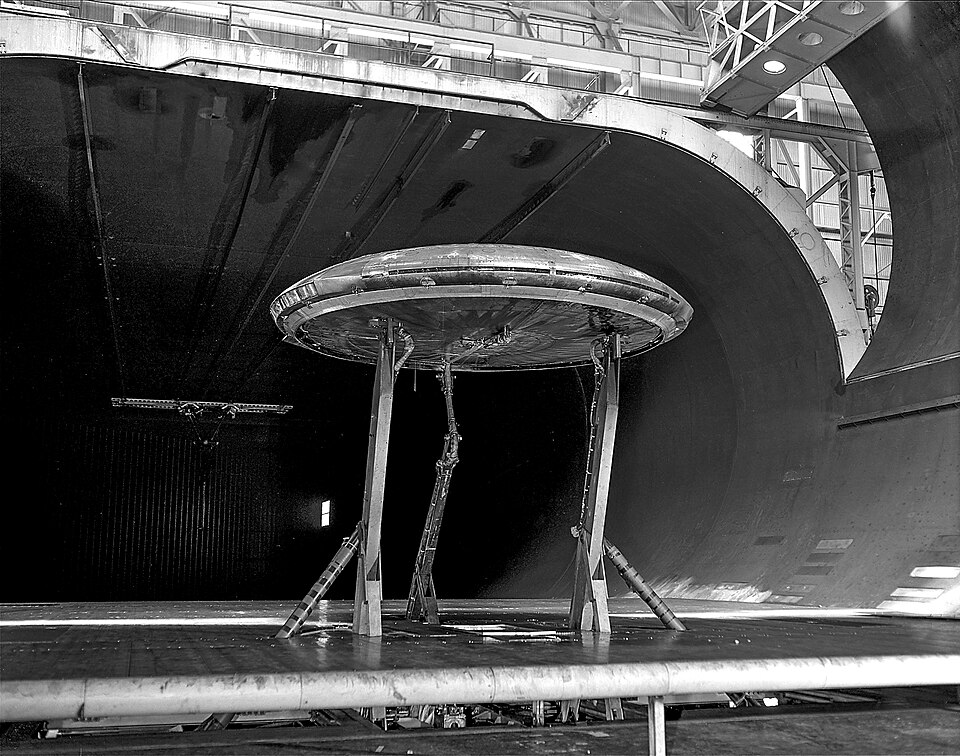
Avro Canada VZ-9AV’s first prototype came to the National Museum of the US Air Force almost fifty years after it was first rolled out. It dawned on the makers that this aircraft, designed for two crew members and one observer, wouldn’t operate. The project was started by the government of Canada in 1951 and handed to the US government in 1958. However, numerous problems were on the way:
“Tests with scale models at Wright-Patterson AFB, Ohio, indicated that the cushion of air under the Avrocar would become unstable just a few feet off the ground. The aircraft would be incapable of reaching supersonic speeds, but the testing went ahead to determine if a suitable aircraft could be developed for the Army. The first prototype — the Avrocar on display (serial number 58-7055) — was sent to the National Aeronautics and Space Administration (NASA) Ames Research Center at Moffett Field, Calif. There, wind tunnel tests proved that the aircraft had insufficient control for high speed flight and was aerodynamically unstable.”
Three years later, the United States pulled the plug on this project altogether.
4. Boeing VC-137C “SAM 26000 “
The first jet that was specifically built for use by the President of the USA
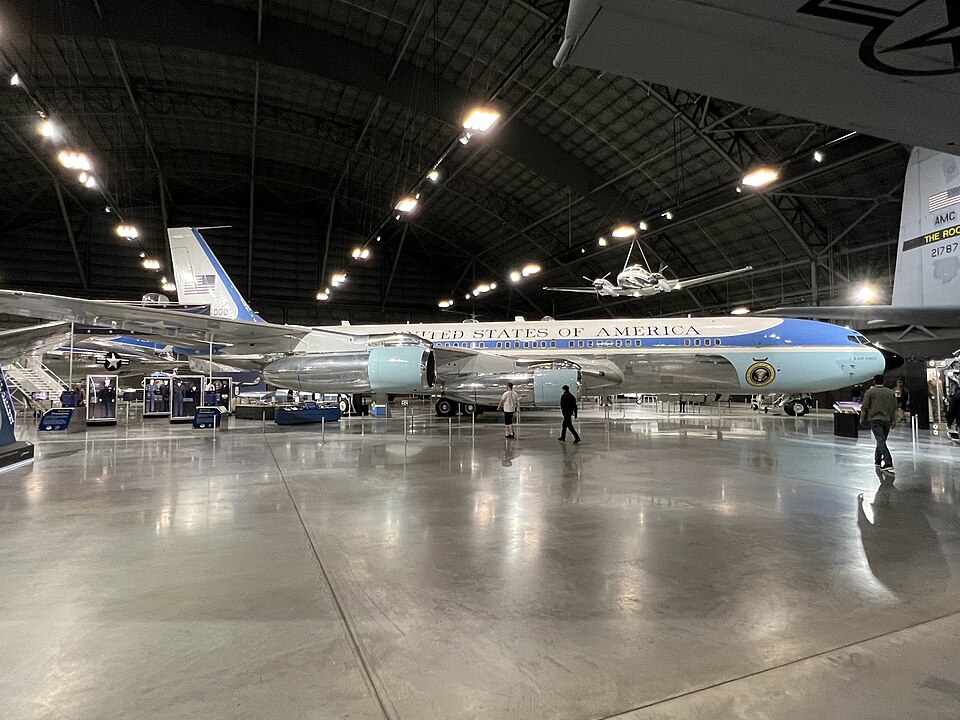
The Boeing VC-137C, which is also known as SAM (Special Air Mission), is arguably the most popular presidential aircraft. After all, this Boeing VC-137 holds many distinctions. During its near-four-decade-long journey, it carried eight sitting presidents. On Nov. 22, 1963, it carried the assassinated body of John F. Kennedy, who was the first president to board this plane , too*. The USA was left president-less for nearly three hours, and the man who was to lead this nation with the most number of aerodomes in the world, Vice President Lyndon B. Johnson, was also sworn in as the new president on this very plane. One can access this aircraft in The William E. Boeing Presidential Gallery of the National Museum of the United States Air Force.
_(5-22-2022).jpg)
The upper and the lower half of the aircraft’s nose have two distinct shades of blue, almost reminiscent of the meeting point between the Atlantic and Pacific Oceans where waters are in lambent contrast with one another. Here’s an excerpt about the aircraft’s paint scheme from the National Museum of the US Air Force:
“ At the request of President Kennedy, a new paint scheme was developed by First Lady Jacqueline Kennedy and famous industrial designer, Raymond Loewy. In addition to the vibrant blue and white colors, the words “United States of America” were emblazoned in tall letters along the fuselage and an American flag was placed on the tail. These distinctive markings reflect the stature of the Office of the President and serve as a highly visible symbol of American prestige.”
Business Insider reported that the font used for writing the name of the nation in SAM 26,000 was probably “because it resembled the lettering on an early version of the Constitution”.Some of the notable journeys undertaken by this aircraft include:
| Date | Person on board | Mission |
| June 1963 | President Kennedy | to West Berlin, where he pronounced “Ich bin ein Berliner” (“I am a Berliner”), showing his respect for, and an allegiance of solidarity with Germany to fight communism. |
| 1970 | Dr. Henry Kissinger | Trips to Paris to establish peace during the Vietnam War |
| March 1983 | Queen Elizabeth II | Visit to the United States |
SAM made it to the National Museum of the US Air Force in May 1998, and it has been on permanent display in the Presidential hangar. This 100-ton plane has been described as a the most important historical airplane in the world,”
*Almost nine years later( On October 6, 1981), Egyptian President Anwar Sadat was assassinated, too. Then President Ronald Reagan did not make it to the funeral, citing security threats but all the the living former presidents of that time (Nixon, Ford, and Carter, did) got onboard the SAM 26000 and attended the funeral.
SR-71 Blackbird
The first stealth aircraft.
The Lockheed SR-71 held an “absolute altitude record” of 85,069 feet (25,929 m) in a sustained flight, a record for its time. It also covered a distance of 3,461.53 miles (5,570.79 km) between London and New York in less than 2 hours, thus garnering the highest top “speed over a recognized course” then. This first stealth aircraft** ever was daubed with black epoxy paint (thus, discerning it was too difficult), and funnily enough, was retired twice: once in 1989 before being retired again by NASA in the 1990s. NASA had even used the Soviet Union’s (retired) Tupolev Tu-144 and dubbed it a “supersonic flying laboratory”. Since the SR-71 Blackbird could fly three time the speed of sound (Tupolev could fly two times the speed of sound), it was an aircraft that NASA could deploy for research activities.
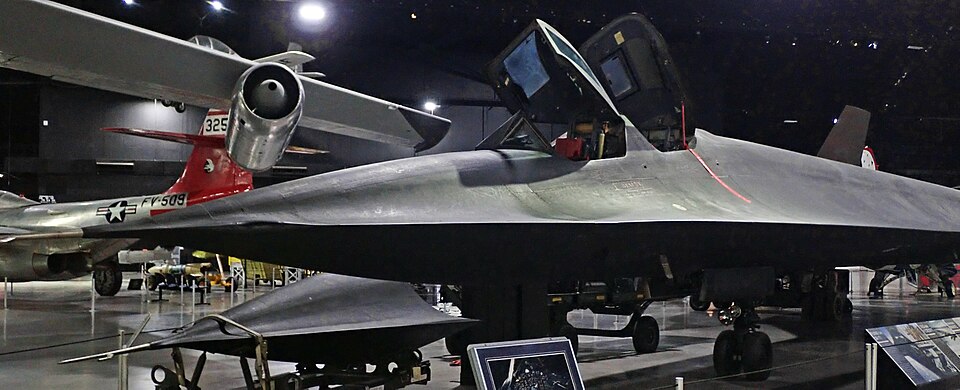

[**the Soviet Union had built the Caspain Sea Monster to lie undetected, too. But the ground effect vehicle didn’t have as many flights as the SR-71. ]
Here’s an excerpt from the LA Times, chiming in about the reasons for retiring this plane.
“ In congressional testimony, Air Force Chief of Staff Gen. Larry D. Welch identified the increased survivability of reconnaissance satellites, SR-71 vulnerability to the Soviet SAM-5 surface-to-air missile and the cost of maintaining the SR-71 fleet. The cost factor is the most significant to the Air Force because it limits expenditures in other areas. Reagan Administration Air Force Secretary Edward C. Aldridge Jr. estimated that the money used to operate the SR-71 fleet could operate and maintain two tactical fighter wings.”
John Glen, who was not the first but the third American to space, reasoned differently and claimed that the aircraft shouldn’t have been retired:
“Mr. President, the termination of the SR-71 was a grave mistake and could place our nation at a serious disadvantage in the event of a future crisis. Yesterday’s historic transcontinental flight was a sad memorial to our short-sighted policy in strategic aerial reconnaissance.”
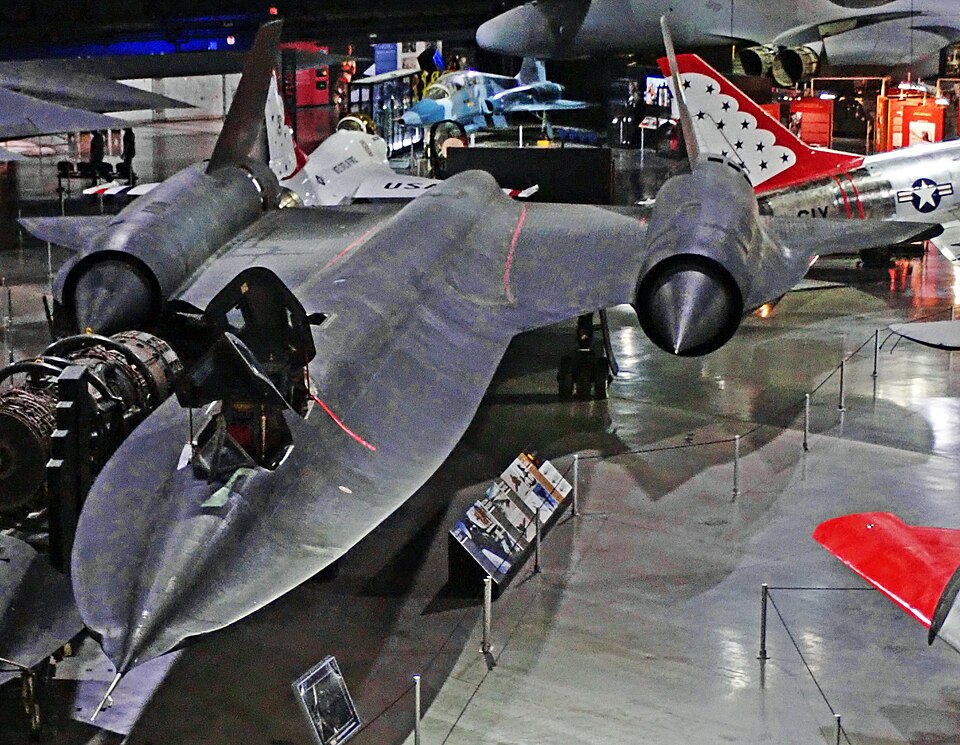

| Length | 107.4 feet (32.73 meters) |
| Wingspan | 55.6 feet (16.94 meters) |
| Height (from the ground to the top of the rudders when parked) | 18.5 feet (5.63 meters) |
| Gross takeoff weight | was about 140,000 lb (52,253.83 kilograms), |
| Fuel Weight | 80,000 lb (29,859.33 kilograms) |
The origins of the Blackbird design can be traced to the late 1950s “with the A-12 reconnaissance aircraft that first flew in April 1962 and remained classified until 1976”, reported NASA. The presence of the aircraft was revealed almost six months after the aircraft had first debuted skies in December 1964. On Feb. 29, 1964, President Lyndon Johnson publicly announced the existence of the YF-12A interceptor variant.
The terrifying speed of the Blackbird also means that when Alice Oswald, the great poet of our generation, talks about the avian species, a blackbird
three people in raincoats losing their tracks in the snow
walking as far as the edge and back again
with the trees exhausted
tapping at the sky
and every six seconds a blackbird
…it feels as if she might as well be reminiscing the S-71, almost nullifying the difference between a mechanical blackbird and a biological one.
2. Boeing B-29 Superfortress
The aircraft that expedited the end of World War II.
A poet once wrote a section called “What Shall We Call the Bomb Dropped on Hiroshima?”, and mused:
“Shall we call it
The Beginning of the End or
The End of the Beginning?”
These words will be forever, inextricably tied to the Boeing B-29 Superfortress, as it was this aircraft that dropped the bombs on Hiroshima and Nagasaki and ended World War II. And so will Toge Sankichi’s poem on the atomic bombs:
also gradually transformed into corpses beneath the sun’s scorching rays
and in the light of the flames that pierced the evening sky
the place where mother and younger brother were pinned under alive
also was engulfed in flames
and when the morning sun shone on a group of high-school girls
who had fled and were lying
on the floor of the armory, in excrement
their bellies swollen, one eye crushed, half their bodies raw flesh with skin ripped
off, hairless, impossible to tell who was who
all had stopped moving
in a stagnant, offensive smell
the only sound the wings of flies buzzing around metal basins
.jpg)
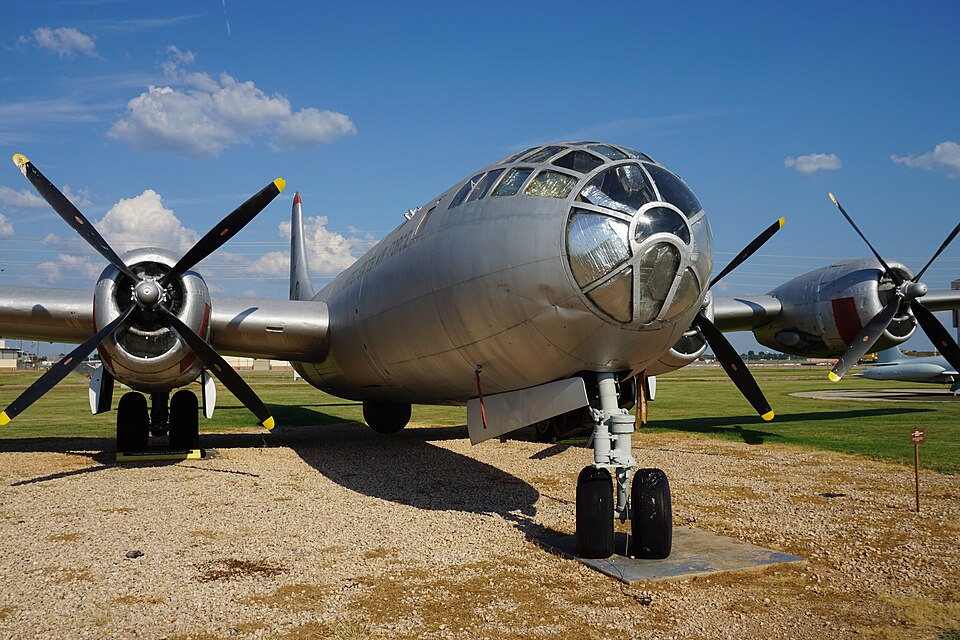
| Wingspan | 141 ft 3 in (43.05 m) |
| Length | 99 ft 0 in (30.18 m) |
| Max takeoff weight | 133,500 lb (60,555 kg) |
| Propellers | 4-bladed constant-speed fully-feathering propellers |
| Service ceiling | 31,850 ft (9,710 m) |
The Boeing B-29 Superfortress was the heaviest bomber used in the Second World War.
It was deployed by the US Army Air Forces, US Air Force, and Royal Air Force. While the afore-quoted poems might put the B-29 in purely a negative light, B-29s capabilities were almost unmatched during its time. This was exemplified by General Hap Arnold, the leader of the US Army Air Corps, when he said: “the B-29s and the B-29s only that could put tons and tons of bombs on Japan. The fleet couldn’t do it, and the Naval air couldn’t do it; the Army couldn’t do it. The B-29s could.”” Boeing’s B-29 Superfortress also held the following distinctions:
- The most sophisticated propeller-driven bomber of World War II
- The first bomber to house its crew in pressurized compartments
1. North American X-15
The aircraft that crossed the edge of outer space in the 1960
The North American X-15s comprised five aircraft. There were three North American X-15 types, and these were dubbed as Ship #1, Ship #2, and Ship#3. You can find the details in our guide below:
In Pictures: Aircraft Used In The North American X-15 Hypersonic Program
12 pilots flew the X-15. 8 of them crossed the boundary of space, and therefore qualified as “astronauts” (instead of pilots). After,, once you cross the boundary of 100 kilometers above the Earth’s surface, we’ve crossed to space, though there are differences and nuances about where space actually begins.
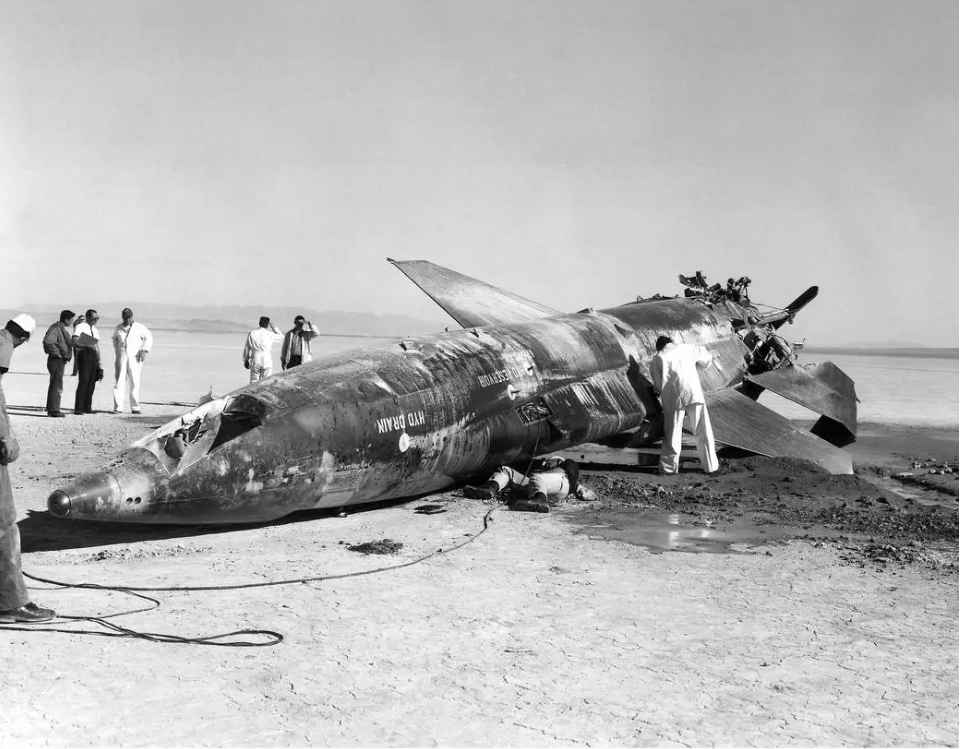
Photo: NASA
Here are a few records held by the X-15:
- It achieved a peak altitude of 354,200 feet (67 miles)
- It is the first aircraft to reach Mach 4, 5, & 6 speeds.
- It was the first aircraft where pilots donned practical pressurized space suit.
The X-15 was a rocket-powered aircraft. It helped demonstrate that pilots can control the airplane in an airless environment, and also “reenter the atmosphere and perform a precision landing at a predetermined site.” The second of the X-15, the X-15-2, even touched a mach Speed of 6.7. This made it the fastest aircraft in the series and it is this ship#2 that the National Museum of the US Air Force houses.