The United States Army is developing an overhaul program designed to keep its Sikorsky UH-60M Black Hawk utility helicopters operational beyond 2050. On 19 December 2025, the Army issued a Request for Information (RFI) to assess the feasibility of a commercial overhaul and upgrade line for its large fleet of UH-60M aircraft, with the objective of extending operational viability well into the mid-21st century.
The RFI, issued by the Army’s Utility Helicopters Project Office (UHPO), covers mechanical and structural refurbishment while also leaving room for future modernization. One area of interest is the integration of “launched effects,” small unmanned systems intended to provide additional reconnaissance, targeting, and strike capabilities.
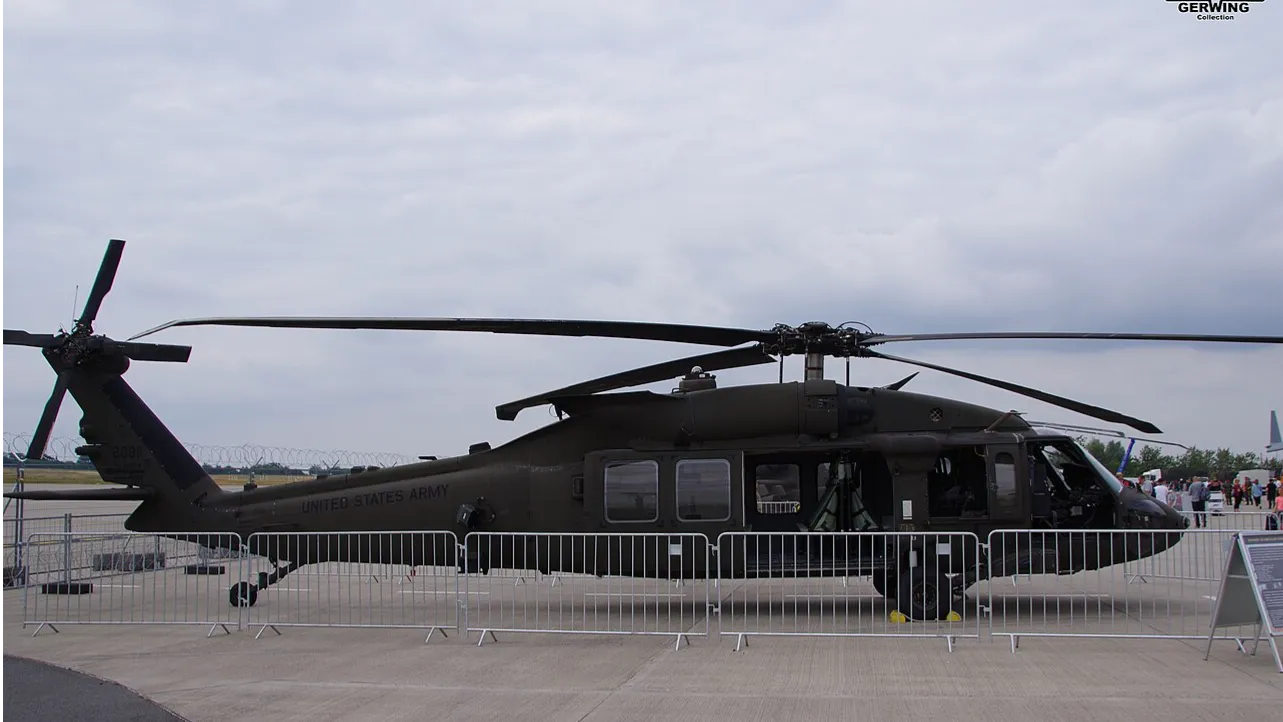
Photo: André Gerwing |Wikimedia commons
US Army Black Hawk Overhaul Plan: Scope and Intent
The overhaul plan proposed by the US Army extends beyond routine maintenance to a comprehensive refurbishment and upgrade schema for the UH-60M fleet. An RFI is a precursor to a formal Request for Proposal (RFP), seeking industry input on sustainable long-term overhaul solutions.
Under the draft statement of work, each helicopter will be completely inspected, and this will be followed by:
- worn or defective airframe components repaired or replaced.
- corrosion prevention applied wherever necessary
- addressing the problems related to fatigue
Col. Ryan Nesrsta, commander of the UHPO, was quoted in Flight Global as having emphasised that the statement of work in the following way:
“The statement of work is intentionally brief to emphasise what we believe to be the most essential tasks…..While there may be opportunities to innovate in manufacturing, repair, and supply chain management this effort assumes solution development, integration, and testing is already complete”
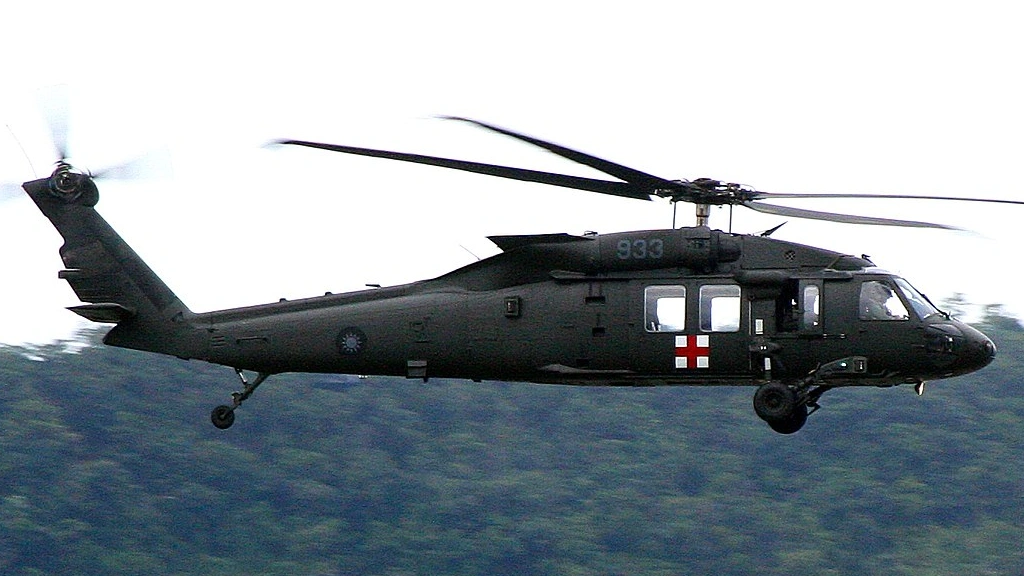
The overhaul effort aims to process approximately 12–24 UH-60Ms annually, with additional HH-60M (medical evacuation variant) aircraft included on a yet-to-be-specified basis.
Modernization Goals Beyond Structural Overhaul
Beyond structural refurbishment, the Army is also considering future capability upgrades, including the integration of launched effects. These small unmanned systems could expand reconnaissance, targeting, and strike capabilities while allowing crewed helicopters to operate with greater standoff from threats.
Brig. Gen. David Phillips, Program Executive Officer, Aviation, said launched effects are a game changing capability and will revolutionize how we operate in contested environments.
As part of broader modernization efforts, the Army is also pursuing avionics openness via contracts such as the Morton open-system architecture program with Collins Aerospace which aims to facilitate rapid integration of new technologies, reported Army Recognition:
| Category | Details |
|---|---|
| Original Lineage | Upgraded variant of the UH-60A |
| Development Program | Utility Tactical Transport Aircraft System (UTTAS) |
| Intended Replacement | UH-1 Iroquois |
| Primary Improvements | Increased payload, enhanced survivability, improved performance |
| Structural Design | Reinforced structure with redesigned airframe for extended service life |
| Avionics | Digital cockpit with multi-function displays |
| Flight Systems | Integrated flight management and advanced stability control system |
| Rotor System | Upgraded rotor blades for improved lift efficiency and fuel economy |
| Survivability Features | Crashworthy fuselage with integrated protection |
| Defensive Systems | Infrared suppression and threat detection systems |
| Operational Roles | Troop transport, medical evacuation, special operations |
| Operators | U.S. Army and international military operators |
| Upgrade Path | Successive modifications integrating new technologies |
| Mission Adaptability | Designed for evolving battlefield and mission requirements |
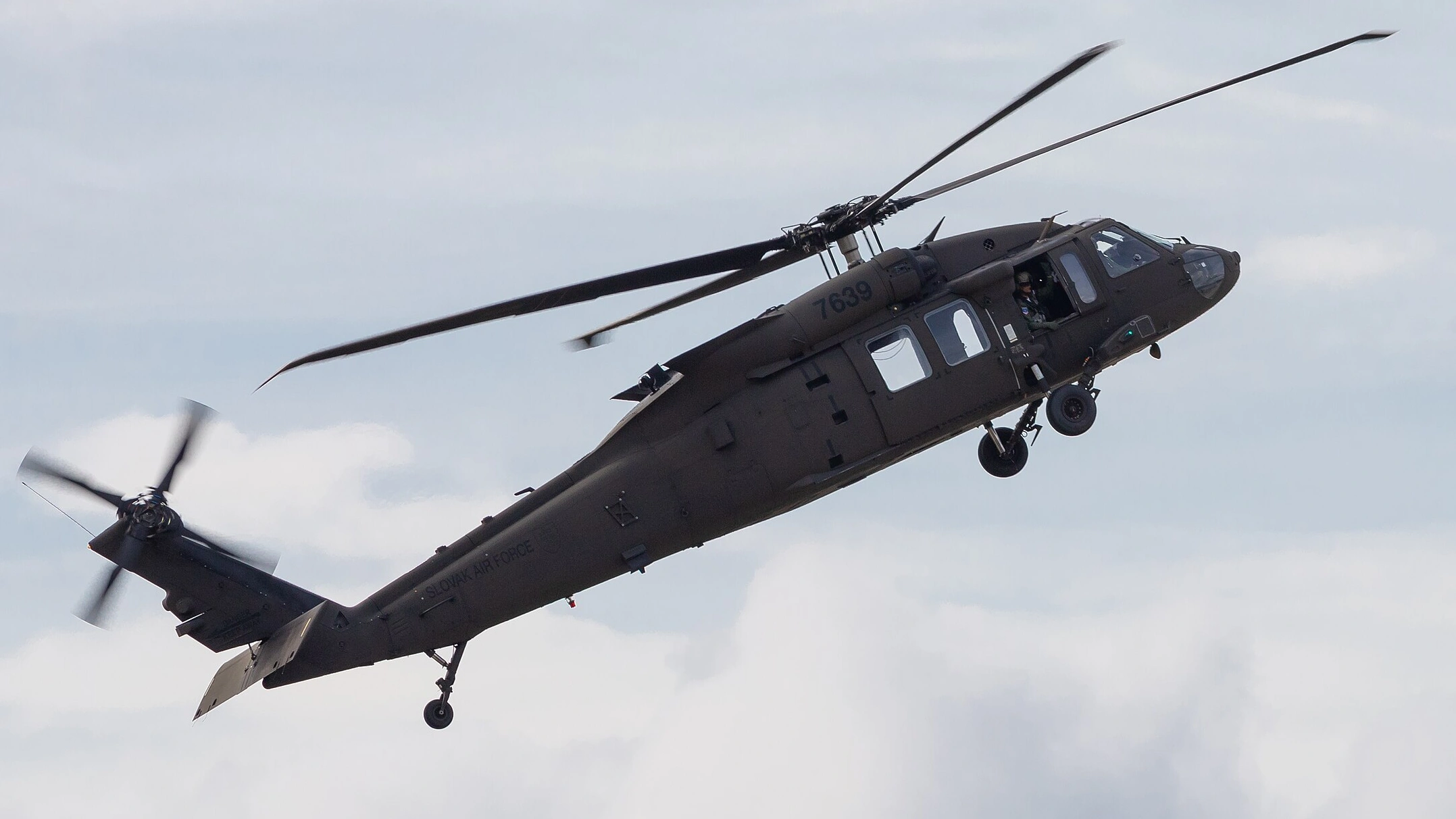
In March this year, Collins Aerospace, received an $80 million contract to upgrade the avionics system of U.S. Army Black Hawk helicopters for the H-60M MOSA Avionics Architecture Solution program, with work on this contract being set to be conducted in Cedar Rapids, Iowa and Huntsville, Alabama.
The architecture is intended to give Black Hawk cockpits an open systems architecture, allowing the Army to integrate new capabilities more rapidly and keep the aircraft technologically relevant for decades.

Conclusion
The U.S. Army’s UH-60M overhaul initiative shows that the Black Hawk is likely to remain a central part of Army aviation well into the coming decades. Rather than simply preserving aging airframes, the proposed program combines structural refurbishment with a broader effort to ensure that the helicopters can accommodate new technologies and battlefield capabilities.
With the Army considering an overhaul line capable of processing 12 to 24 aircraft annually, the initiative could provide a long-term pathway for sustaining the UH-60M fleet while newer aviation technologies mature. If the planned upgrades, including open avionics architecture and launched effects, are successfully integrated, the Black Hawk could remain relevant well beyond the aircraft’s already lengthy service history.

_2022-06-25_Andre_Gerwing_Collection_ID_015879.jpg)

.jpg)