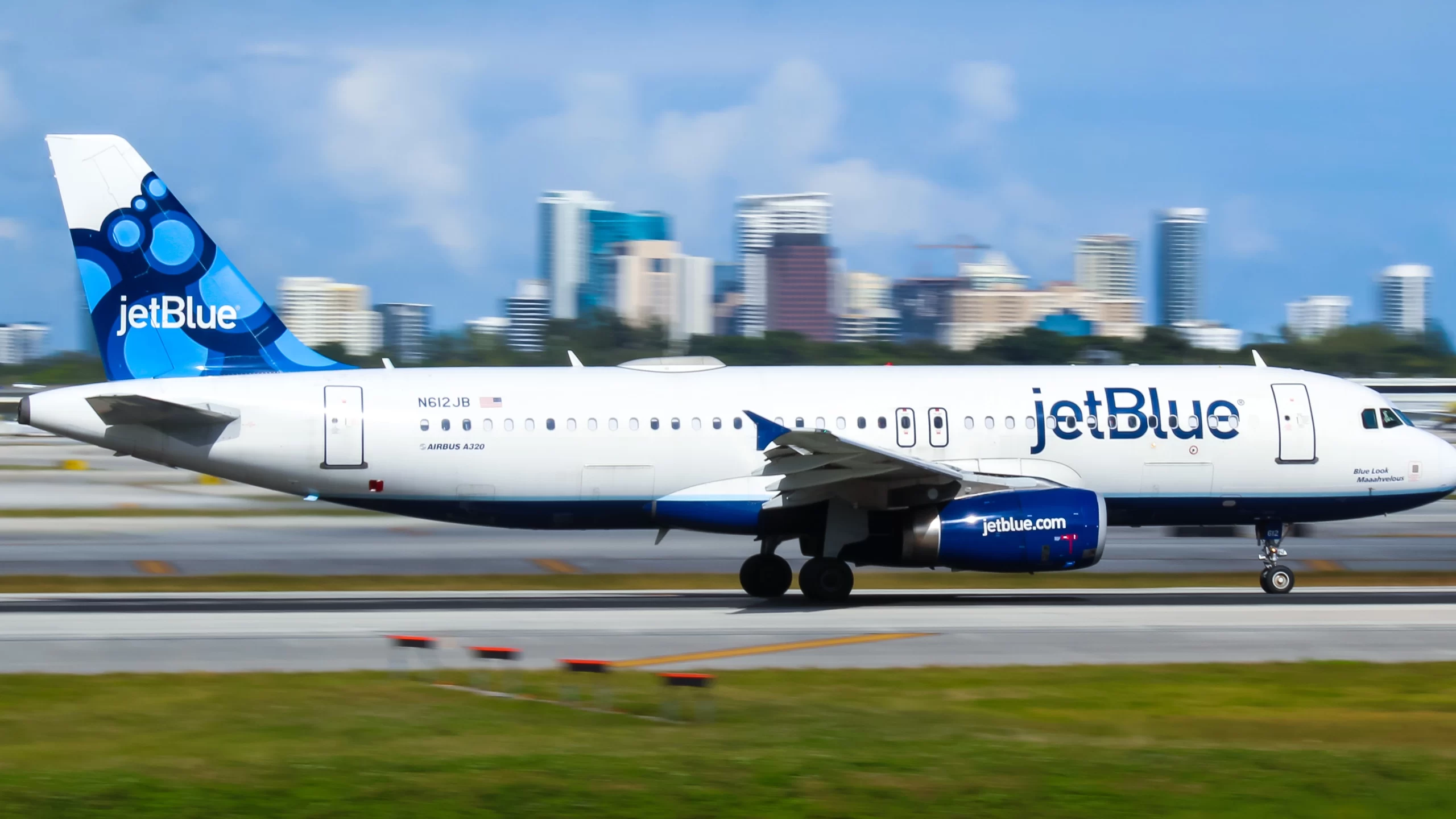
A JetBlue Airways (B6) pilot sent an urgent Aircraft Communications Addressing and Reporting System (ACARS) message to ground operations on June 23, 2026, after a passenger allegedly smuggled a dog onto a domestic flight. The flight in question was JetBlue Flight 1368, operating between Palm Beach International Airport (PBI) [the airport that could be renamed Donald Trump Airport], West Palm Beach, Florida, and Westchester County Airport (HPN), White Plains, New York. The dog reportedly defecated in the aircraft cabin mid-flight, and the passenger refused to cooperate with cabin crew after the animal was discovered.
What The ACARS Message Said?
Before the aircraft landed at HPN, the flight crew transmitted an ACARS message to ground operations requesting assistance. The message read:
“PLZ ADVISE OPS HPN, SEAT 16B, SNUCK DOG ONBOARD, IS NOT COOPERATING, DOG POOPED ON PLANE.”
The message’s blunt language captured attention well beyond aviation forums. There is a minor discrepancy in the reports — the original account by View from the Wing identified the passenger as seated in 16D, while the ACARS message itself referenced seat 16B. The core facts of the incident, however, are consistent across reporting.
ACARS is a digital messaging system that allows aircraft crews to communicate with ground operations via text. The Pilot Institute explains that ACARS was developed by ARINC in the late 1970s to let aircraft send short, routine messages without tying up radio frequencies.
Over the decades, ACARS has evolved from simple departure and arrival timestamps to covering everything from weather updates to in-flight compliance issues. In this case, the crew used ACARS specifically to alert ground staff at HPN so that appropriate personnel — potentially including airline operations representatives — could be ready on arrival.
JetBlue’s Official Pet Policy and What the Passenger Allegedly Violated
JetBlue maintains a well-defined policy for passengers who wish to travel with pets. According to JetBlue’s official website, only small dogs and cats are permitted to fly in the cabin. Every pet must travel in an FAA-approved carrier that fits under the seat in front of the passenger. The airline charges a pet fee of $150 each way, which must be paid at the time of booking. JetBlue allows a maximum of six pets per flight.
The airline’s policy also specifies that:
- Pets are not permitted in JetBlue’s Mint premium cabin.
- A maximum of two pets per traveller is allowed, each in a separate carrier.
- Pets are not accepted on flights to Trinidad and Tobago or to/from the United Kingdom and Europe.
- Pets must be able to stand, turn around, and lie down inside their carrier without touching any side or the top.
- The combined weight of the pet and carrier cannot exceed 20 pounds.
JetBlue’s website states that service animals are subject to a separate two-step request process that must be completed at least 48 hours before the flight, through a partnership with the Open Doors Organization. The airline no longer accepts emotional support animals as a distinct category.
The passenger in this case appears to have bypassed every one of these steps. No pre-registration was made, no carrier was used, and no fee was paid.
The Emotional Support Animal Rule Change That Changed Everything
The regulatory backdrop to this incident is important. In December 2020, the U.S. Department of Transportation (DOT) published a final rule that took effect on January 11, 2021. The rule narrowed the legal definition of a “service animal” to trained dogs only. It explicitly removed emotional support animals from the service animal category, allowing airlines to treat them as regular pets subject to standard fees and carrier requirements.
The Washington Post reported that JetBlue was among the carriers — alongside American, Delta, United, Alaska, Spirit, and Frontier — to stop recognising emotional support animals following the rule change. The DOT itself noted that the shift was driven by a significant volume of complaints about poorly trained animals, fraudulent ESA documentation, and incidents of misbehaviour in the cabin.
View from the Wing’s Gary Leff noted a pattern in such incidents: passengers who bring undocumented animals on board often lack the awareness — or willingness — to complete proper paperwork in advance. While registering a dog as a service animal requires only attestation forms, those forms must be submitted 48 hours before departure. Bypassing that process entirely, as the passenger in Flight 1368 apparently did, is a clear breach of federal regulations under the Air Carrier Access Act (ACAA).
How The Flight Performed Despite the Disruption
Despite the onboard incident, JetBlue Flight 1368 completed its journey without an operational delay. The aircraft pushed back approximately four minutes before its scheduled 6:38 AM departure from PBI and arrived at HPN around 13 minutes early.
The quick turnaround after arrival also stands out. The same aircraft operated JetBlue Flight 2695 from HPN to MCO approximately one hour after landing. The subsequent service departed on time, which means any cabin cleaning or inspection following the incident was completed within the normal scheduled ground time. View from the Wing noted that whatever cleaning the airline carried out, it was not extensive given the speed of the turnaround.
.jpg)
_departing_BOS.jpg)