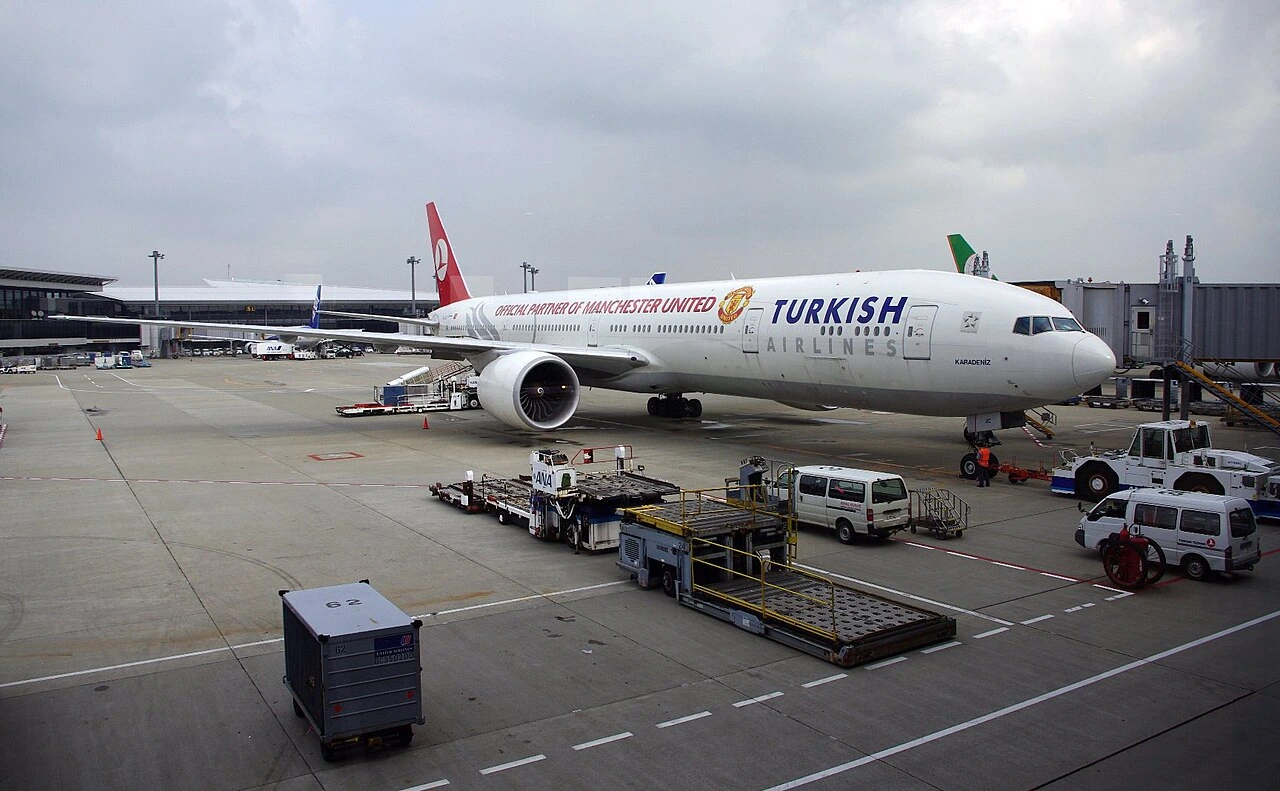
Turkish Airlines (TK) flight TK2430, operated by a Boeing 777-300ER registered TC-LKD, landed normally at Antalya International Airport (AYT), Antalya, Turkey at around 8:00 PM local time on Thursday, June 11, 2026. While manoeuvring toward its parking stand after landing, the aircraft’s right wing struck a ground radar antenna pole on apron-1, Harbeler flagged. The force of the impact toppled the mast, which then pierced the aircraft’s fuselage, creating an opening in the cabin wall. Oxygen masks deployed, an overhead bin was dislodged, and at least one passenger sustained minor injuries.
All 267 passengers on board were safely evacuated. Turkish Airlines confirmed significant damage to the aircraft’s right wing and rear fuselage. Turkey’s Ministry of Transport stated that the aircraft had entered the taxiway from the wrong lane, navigating a route that was not cleared for a widebody aircraft of TC-LKD’s size. A technical investigation has been launched.
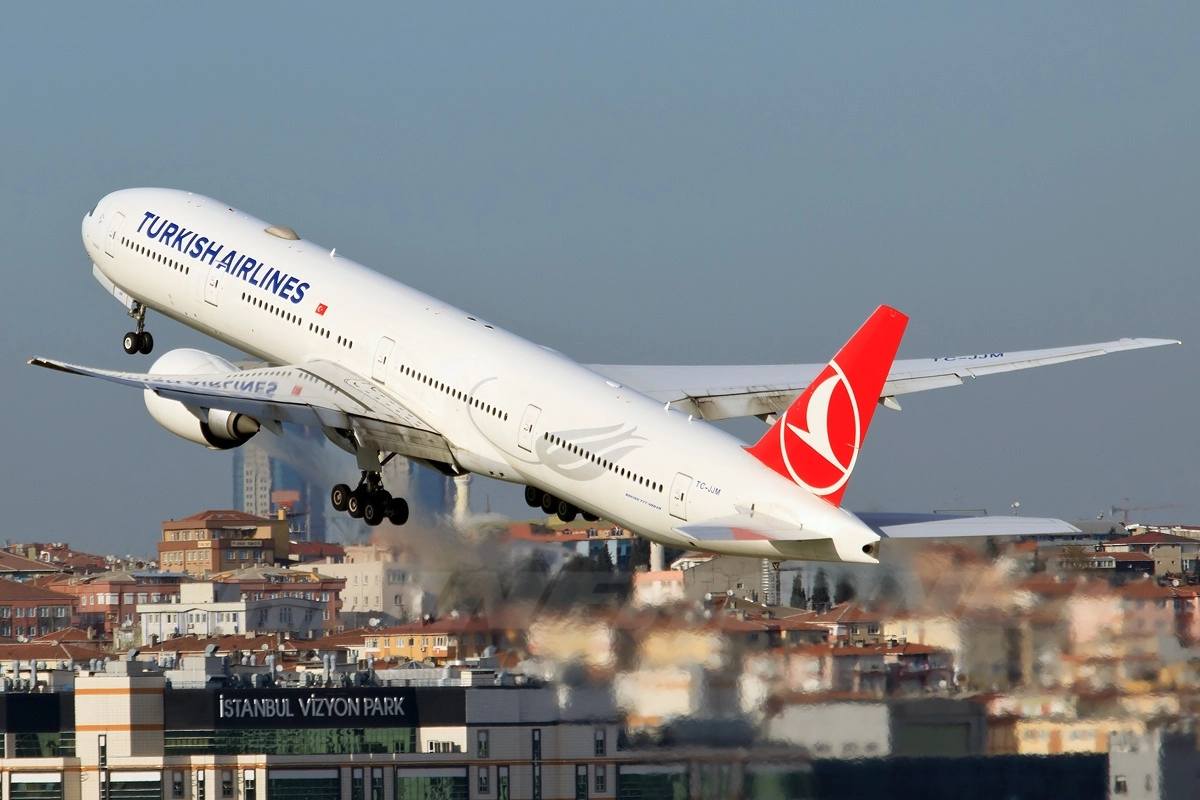
What Happened to TK2430 on Apron-1 At Antalya Airport
TK2430 departed Istanbul Airport (IST) and completed a smooth, uneventful landing at AYT. The trouble began during the post-landing taxi phase. While the aircraft was routing toward its parking position, the right wing struck a ground radar antenna pole on apron-1.
The impact caused the mast to fall onto the aircraft, and the pole was forceful enough to penetrate the fuselage skin. Inside the cabin, oxygen masks deployed automatically and at least one overhead bin broke free from its housing.
Airport emergency teams responded immediately and all 267 passengers were evacuated. One passenger sustained minor injuries, reported to be in good health after receiving medical support.
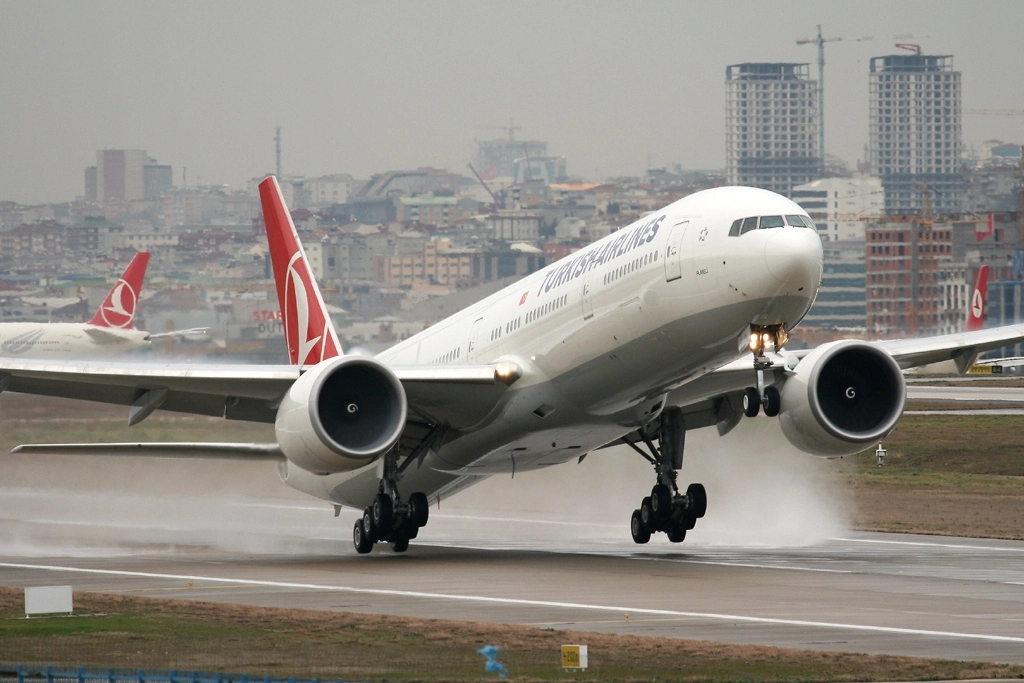
Turkey’s Ministry of Transport Issues Official Statement
Turkey’s Ministry of Transport released a formal statement on the incident. As reported by Simple Flying, the ministry stated:
“[Aircraft TC-LKD] entered the taxiway from the wrong lane after landing on our airport’s runway and collided with a ground radar mast on apron-1… After the passengers were evacuated and necessary checks were carried out, the aircraft was towed to the apron parking area.”
Turkish Airlines also issued its own statement. As confirmed by Gate Checked, the airline said:
“Our Boeing 777 aircraft, registered as TC-LKD, which operated flight TK2430 from Istanbul to Antalya, made contact with the ground radar antenna pole with its right wing while maneuvering to the parking position at Antalya Airport. All 267 passengers on our aircraft have been safely evacuated, and we have received information that the health condition of one passenger who sustained minor injuries is good. A technical investigation regarding the incident has been initiated.”
Turkish Airlines confirmed that AeroHaber has reported the Turkish Airlines Press Office stated that a comprehensive technical investigation into the incident and damage assessment has been formally launched.
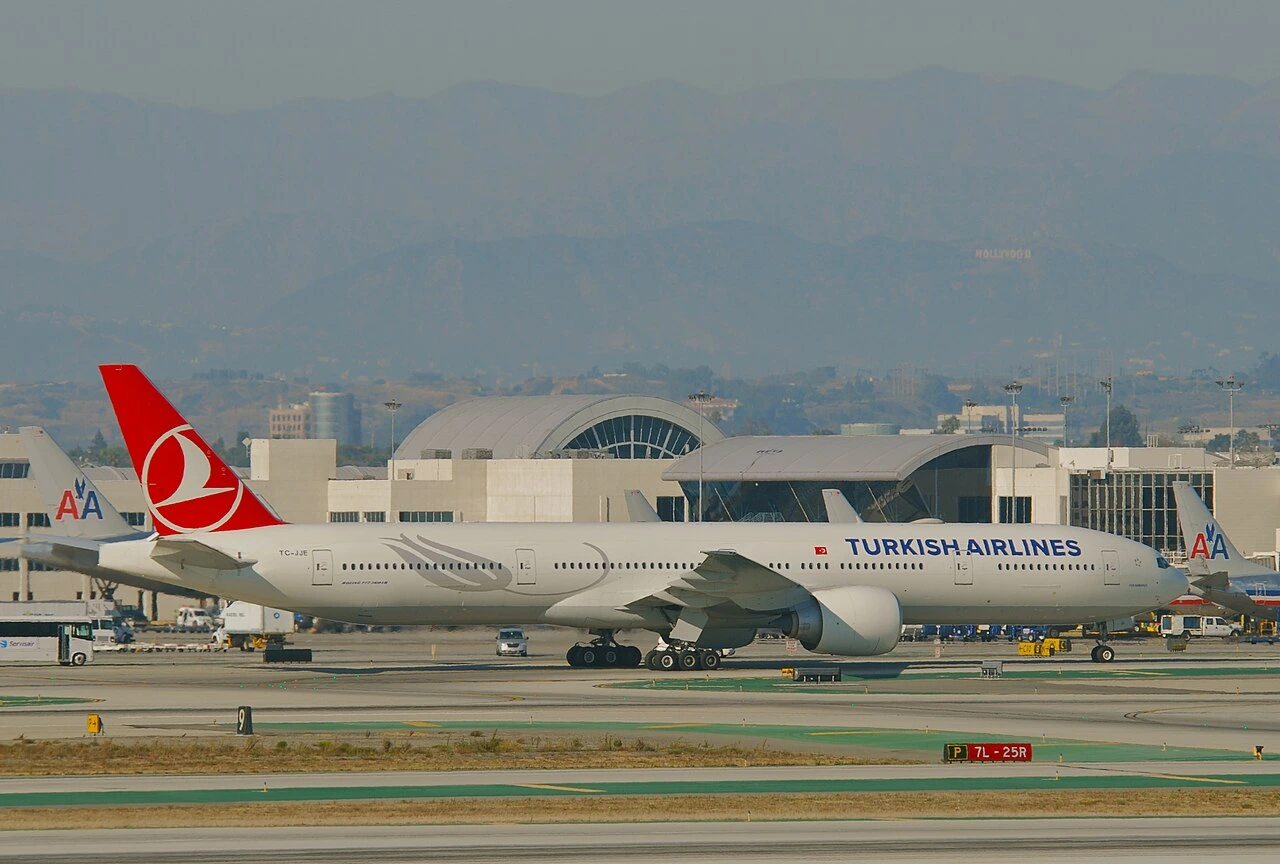
Why The Boeing 777’s Wingspan Made This Taxiway Dangerous
The physical geometry of the incident sheds light on how the collision occurred. According to a report filed with the Aviation Safety Network, the distance between the painted centreline of the taxiway and the base of the radar pole was only approximately 95.1 feet (29 metres).
The wingspan of a Boeing 777-300ER is 212.6 feet (64.8 metres). This means the aircraft’s wingtip extends exactly 106.3 feet (32.4 metres) from the taxi centreline on each side. A taxiway offering only 95.1 feet of clearance to the nearest obstacle provided nearly 11 feet less space than the wing requires. The taxiways at Antalya are visibly marked with maximum allowable wingspan restrictions for each route, and the restricted path in question was not approved for a Boeing 777.
Simple Flying noted that two probable explanations exist. First, the crew may have missed a turn or mistaken an incorrect taxiway entrance for the approved one. Second, the ground controller managing taxi traffic may have inadvertently issued a routing instruction intended for a smaller aircraft. It is also very difficult for flight deck crews to judge whether the outer wingtip of a widebody jet will clear a distant object by looking out the cockpit windows alone.
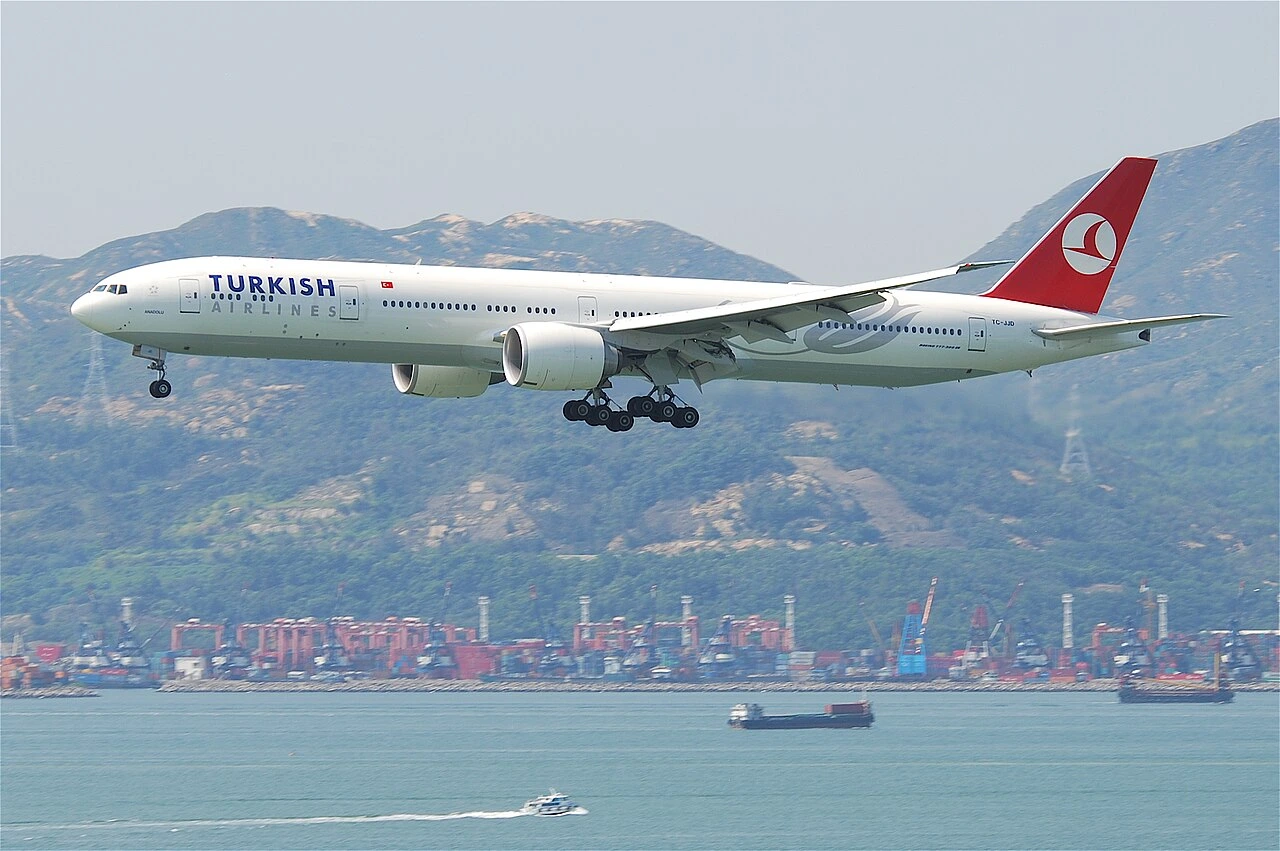
About TC-LKD: The Aircraft and Its History
The aircraft involved, TC-LKD, is a Boeing 777-3Q8ER with serial number 35783, delivered when it was 17 years old at the time of the incident. The aircraft has a Manufacturer Serial Number (MSN) 35783 and was built at Boeing’s Everett production site and is approximately 17.1 years old. It was originally test registered as N5573S and has since accumulated a complex operational history across multiple airlines and leasing companies.
TC-LKD and a sister aircraft, TC-LKE, were leased to India’s IndiGo airline for nearly three years, operating long-haul services between Delhi and Istanbul and between Mumbai and Istanbul. Both aircraft were returned to Turkish Airlines in March 2026. Here’s a look at its history:
At the time of the Antalya incident, TC-LKD had not yet been repainted into Turkish Airlines’ standard livery — it was still wearing a modified version of the IndiGo livery, with IndiGo titles removed. TC-LKE remains parked.
How Wingtip Clearance Errors Happen
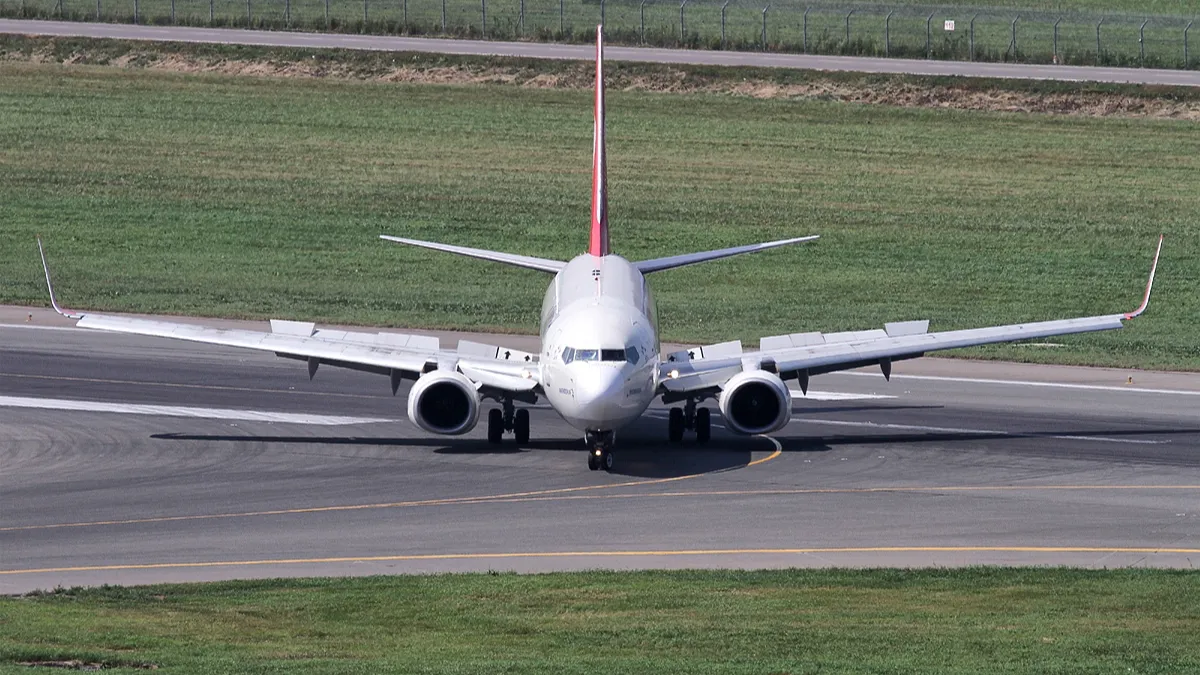
Taxiway margin violations by large aircraft are a known risk category in commercial aviation. Ground operations present unique situational awareness challenges for flight crews compared to airborne phases. Pilots cannot directly observe their wingtips from the cockpit, and the cockpit windows of a Boeing 777 sit approximately 7 metres (23 feet) above the ground — further reducing the ability to judge lateral clearances.
Ground radar systems and surface movement guidance technologies exist specifically to reduce these risks. The irony of this incident is that the object struck was itself a ground radar installation — equipment that forms part of the airport’s safety infrastructure.
Airport taxiway signage and pavement markings defining wingspan limits are the primary crew-facing tool for avoiding restricted lanes. When an aircraft departs the correct routing, even briefly, the consequences can be severe given the enormous lateral reach of widebody aircraft.
Repairs And the Investigation Timeline for TC-KLD
Simple Flying noted that the repair timeline for TC-LKD will likely take at least several weeks and could extend to several months depending on the extent of damage to the right-wing structure and rear fuselage. A mast penetration into the fuselage skin is a significant structural event that will require detailed engineering assessment before any repair scope can be defined.
The aircraft has been towed to a parking area at AYT and is grounded pending a technical inspection. Turkish aviation authorities have opened a formal investigation. Airport officials at Antalya have not yet released detailed statements regarding the maintenance status or placement of the radar installation at the time of the incident.
Under international civil aviation standards governed by the International Civil Aviation Organization (ICAO) and Turkey’s Directorate General of Civil Aviation (DGCA), all parties — the airline, the airport, and air traffic control — are expected to submit records and data to the investigation. The outcome of that process will determine whether regulatory action, procedural changes, or infrastructure modifications at AYT follow.


.jpg)
.jpg)
.jpg)
